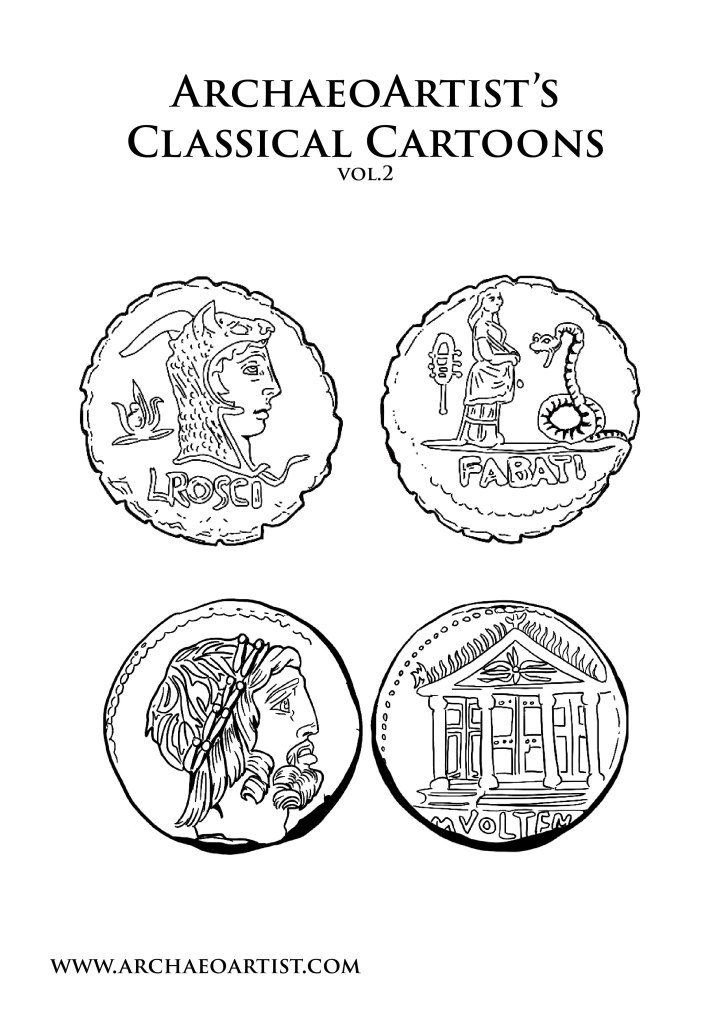
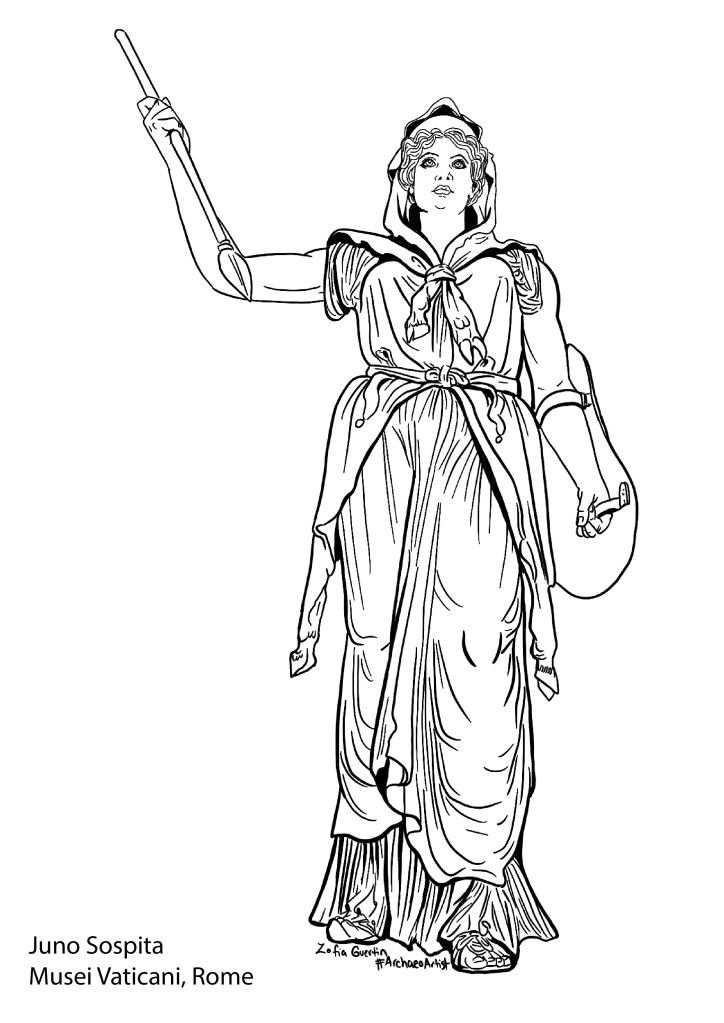
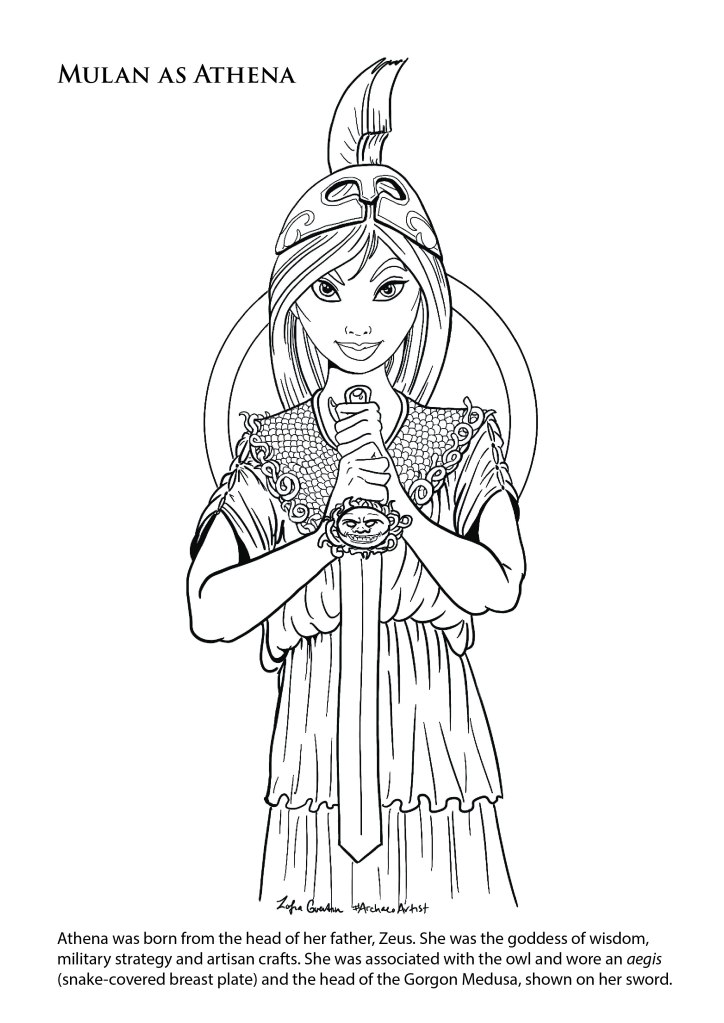
To keep my sanity and to take some art breaks during this time, I am making colouring sheets that are free to print, share and enjoy. I will be uploading printable PDFs here, and posting images to my social media pages. Since we are all staying in doors for the good of the realm/humanity, we might as well fill some of that time having some fun and learning about ancient art and archaeology!
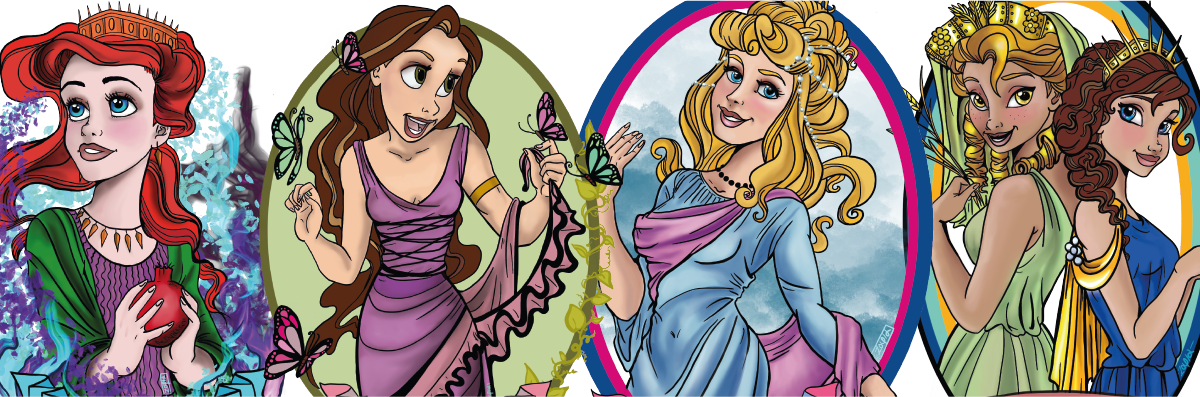
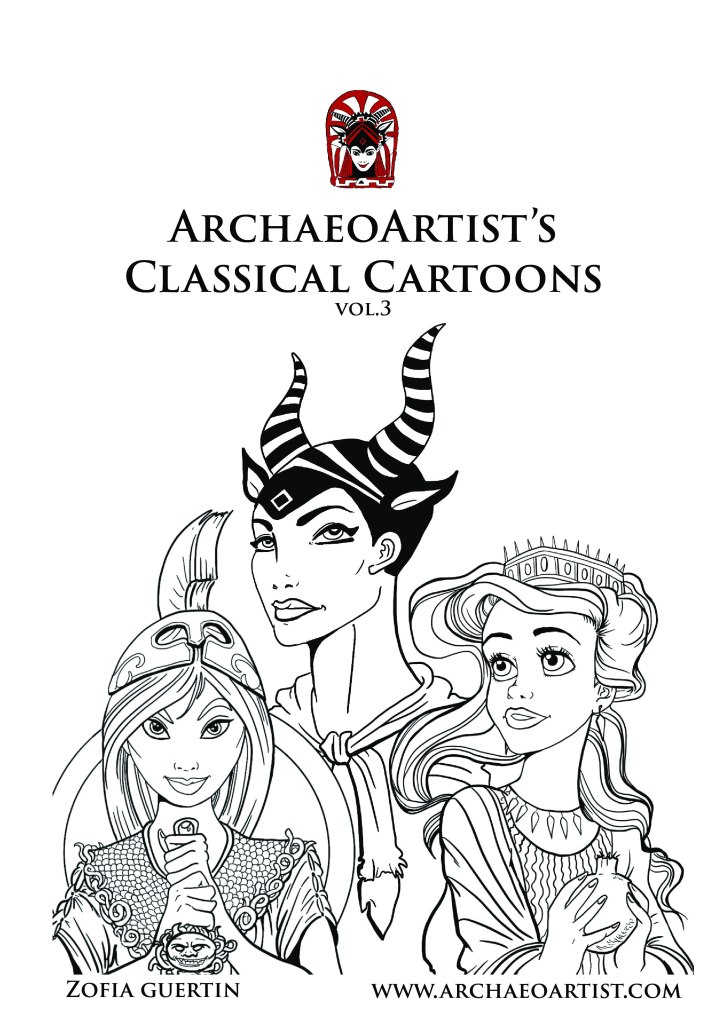
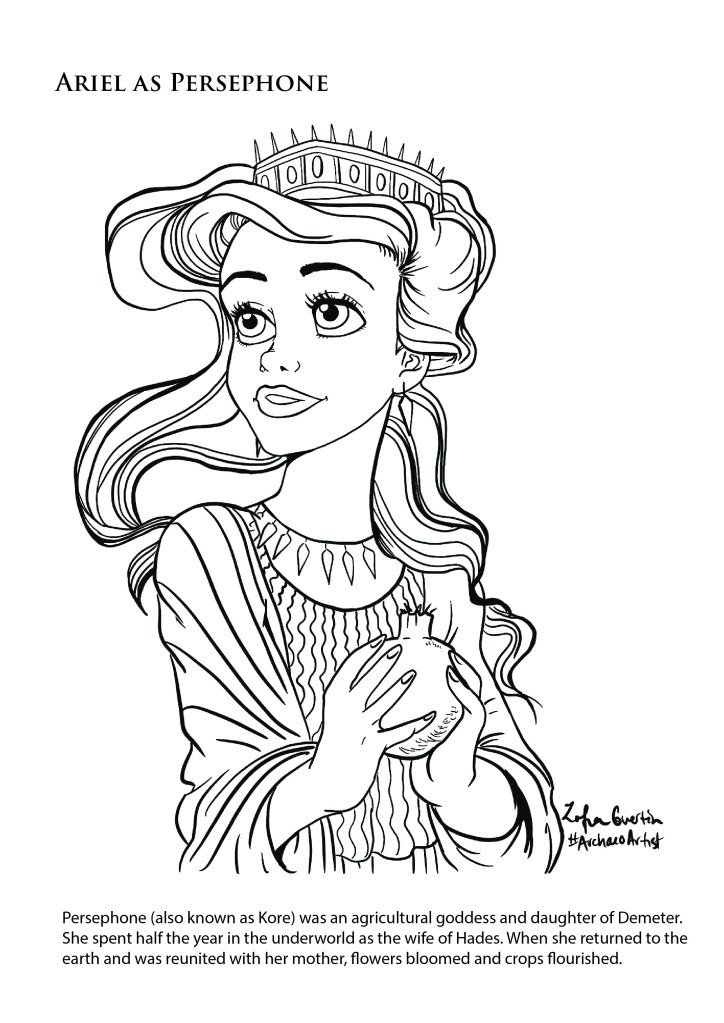
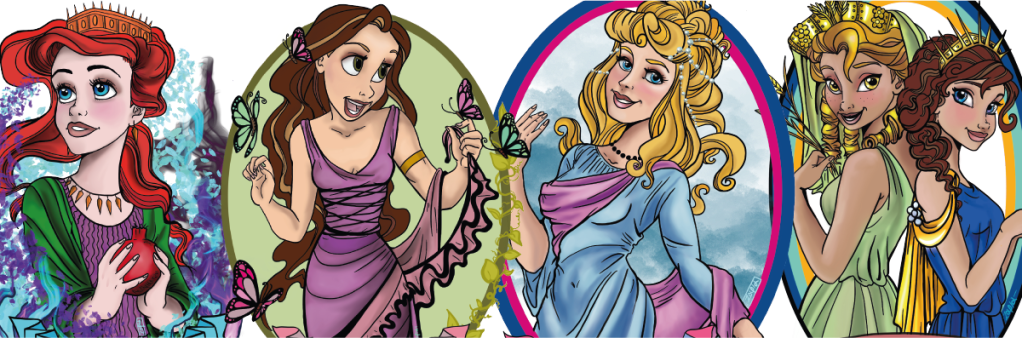
Everyone who has grown up on Disney will feel strongly about these characters and how they imagine they can or should be re-imagined. This is a bit of fun and I selected the mash-ups that made the most sense to me.
If you are an educator, practitioner or just curious about these or any of my other work, please feel free to get in touch!
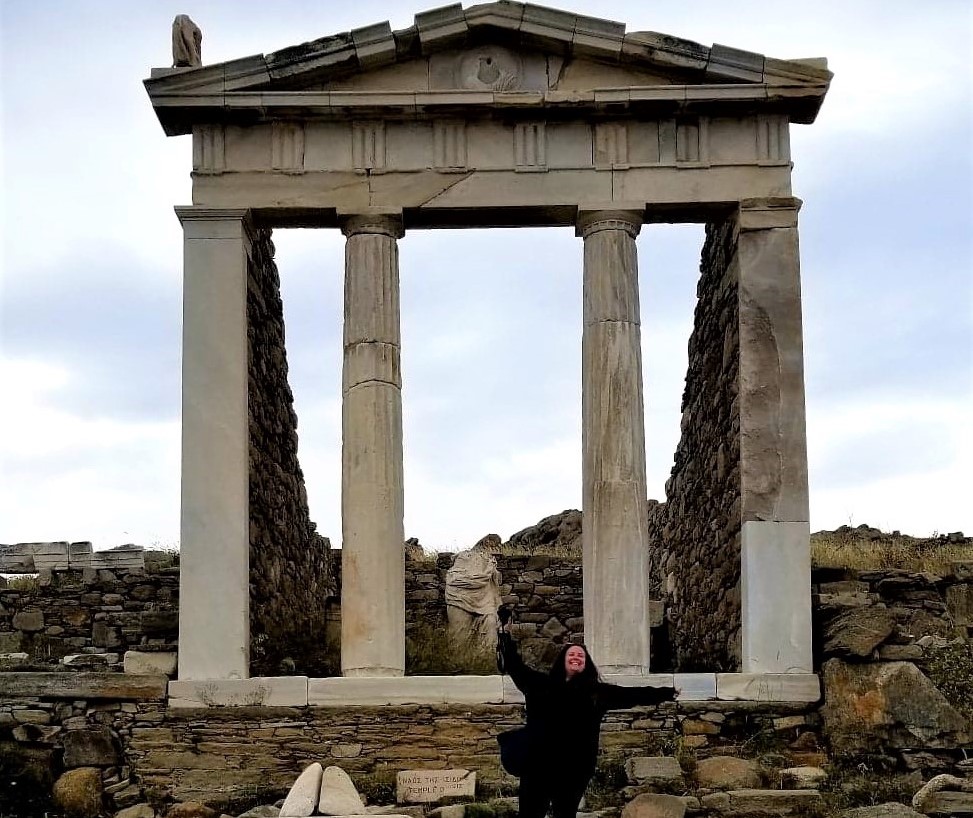
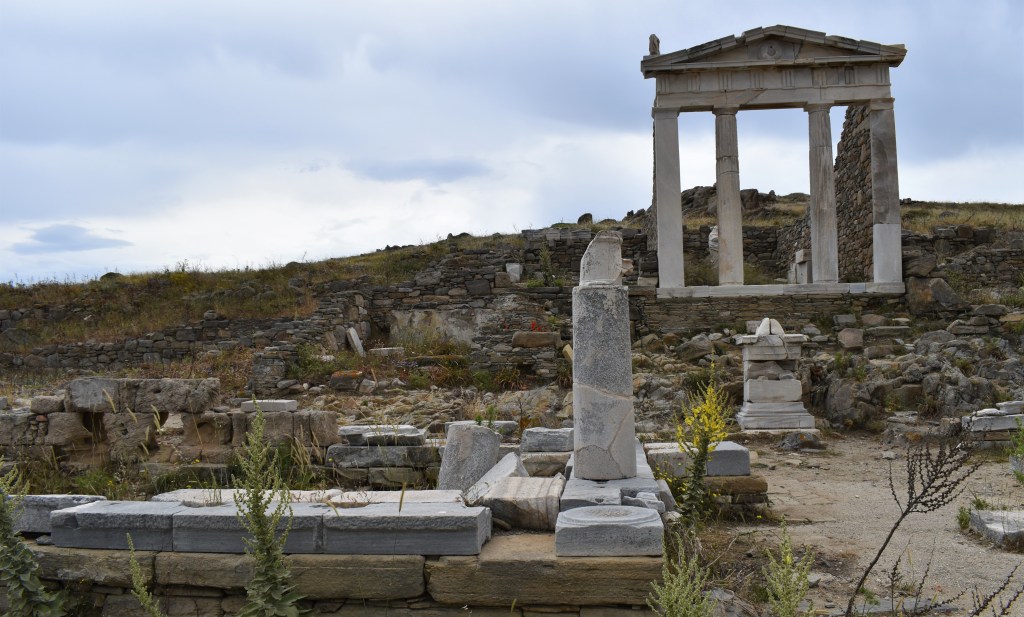
Looking out to sea from the courtyard in front of the temple of Isis, Delos.
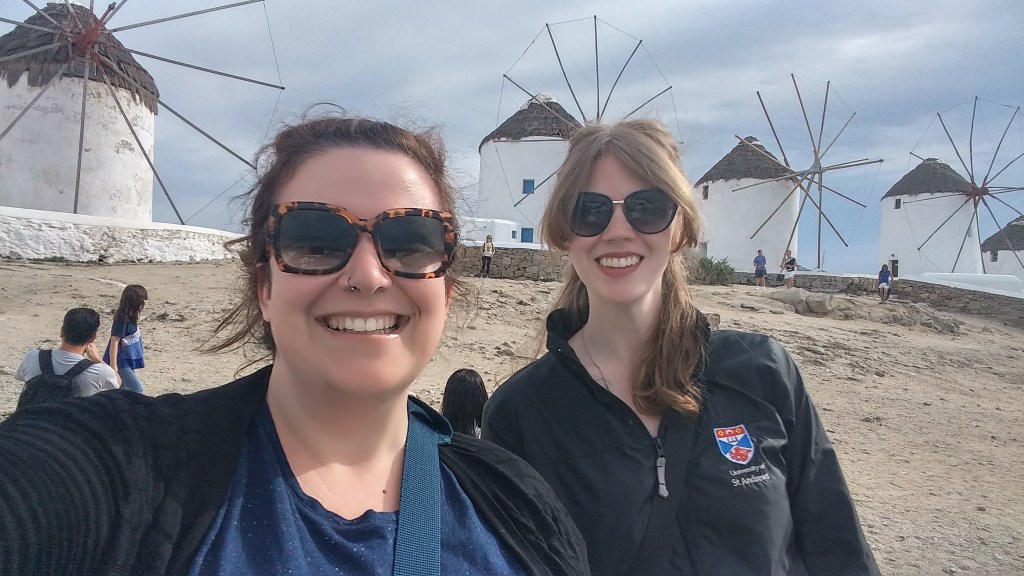
For anyone who has had to go to Mykonos on their way to Delos, I’m sorry. Mykonos in the modern period has been blessed with Instagrammable vistas, from its white-painted walls with brightly coloured doors, to the overpriced meals, it is every social media influencer’s dream. However, when one is traveling to the nearby island of Delos, a brief stay in the tourist labyrinth awaits.
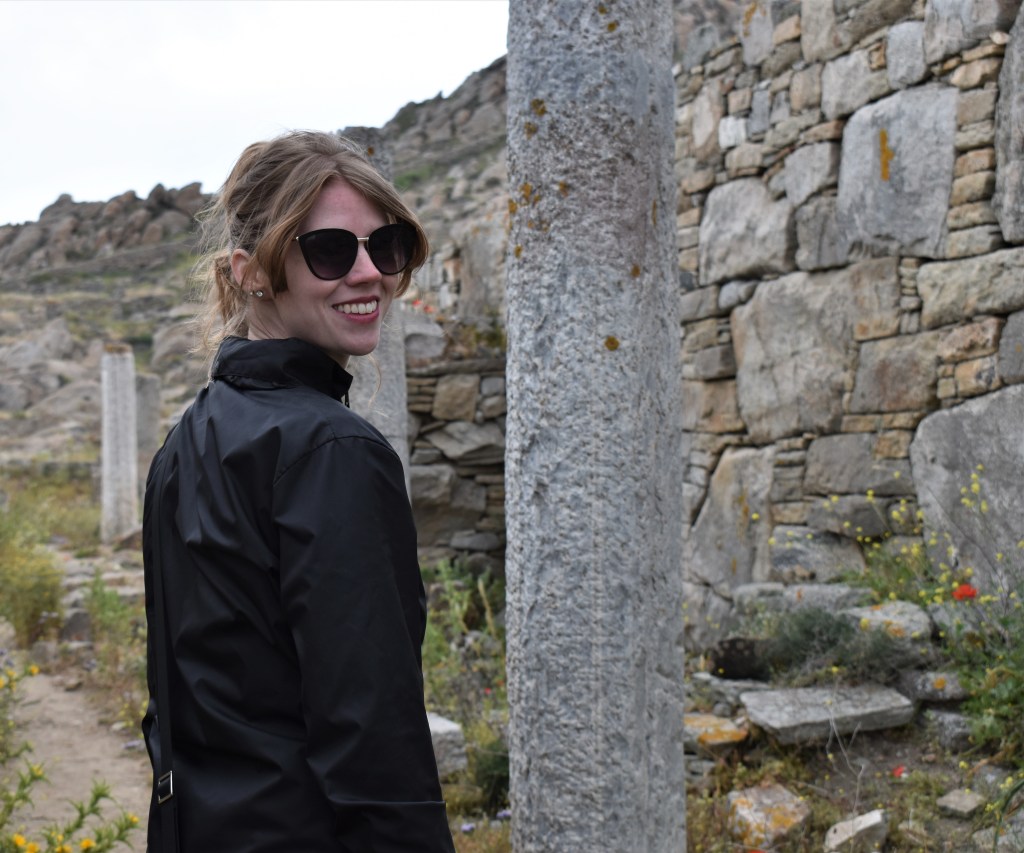
Thankfully my time in Mykonos, while conducting field work, was brief. To ensure we would be able to catch a ferry crossing to Delos, we planned a day and a half in this little seaside area. With ferry tickets and a frappe in hand, my colleague and travel buddy Ms King and I, set off to the sacred island of Delos!
Two nerds studying two goddesses: the journey continues. Disembarking the ferry, the view from the port.
Legendary birthplace of the ancient world’s deadliest twins, Apollo and Artemis, the island was a sacred site well into antiquity. A historically important trade hub for merchants crossing the Aegean, Delos was a crucial point for the exchange of ideas, art, goods and slaves. The island of Delos itself drew many cults from across the ancient world. Of particular interest to me were the several temples to Serapis and Isis located fairly high up the hill. These newcomers to Delos were part of the expanding religious landscape of the island in the Hellenistic period.
Facing the sanctuary of Isis
Delos’ sanctity was ensured during the Peloponnesian wars when under oracular guidance the island was required to divest itself of the dead. That is quite uncommon. As is the case now, communities are very connected to their dead. Disturbing graves and reburying the remains on another island seems extreme. Under the guidance of the Delphic Oracle, and just like Disneyland, all of your prayers could be answered; but you couldn’t die or give birth on Delos any longer.
Various leagues were created and centered here to deal with military and political threats, the Delian league during the Persian Wars, and the Nesiotic League during the wars of the Successors of Alexander the Great. It is at this point, during the 3rd century BCE that the island was in the hands of the Ptolemaic Empire and the influence of the Alexandrian kingdom, and its gods was most pronounced on the island.
With more temples to Egyptian gods in one city anywhere outside of Egypt, save Rome, Delos is an interesting location to try to understand the ways in which religious integration occurs and the role in which the urban landscape is a factor.
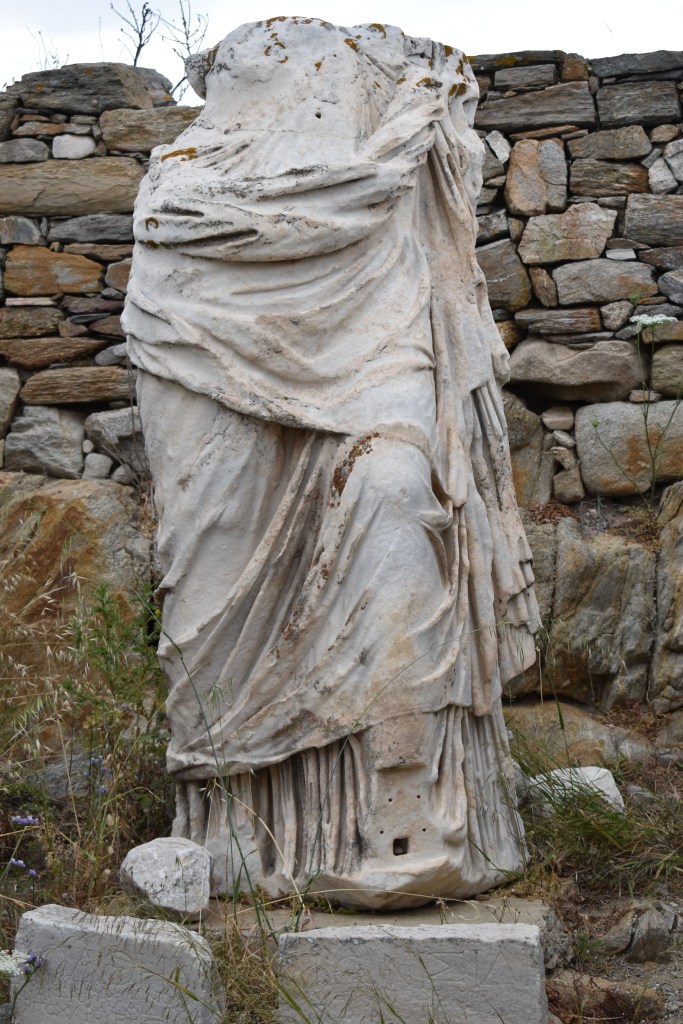
Cult statue of Isis, in-situ
In 167/166 BCE Delos’ political fortunes changed with the growing influence and meddling in the Aegean of Rome, the island was handed over to the Athenians, who expelled the Delians. As a Roman free port, Delos benefited from the Italian aggression towards competitor cities, until an enemy of Rome sought to disrupt the Republic’s income by sacking the little holy island full of people making money from slaves. The Mithradatic Wars had two waves of destruction in Delos, coming to a head in 69 BCE.
No longer the safest outpost for ensuring Rome’s transportation of slaves and non-human trade goods, Rome made the southern Italian city of Puteoli the new port-de-jour. With that decline and depopulation Delos turned into a relic.
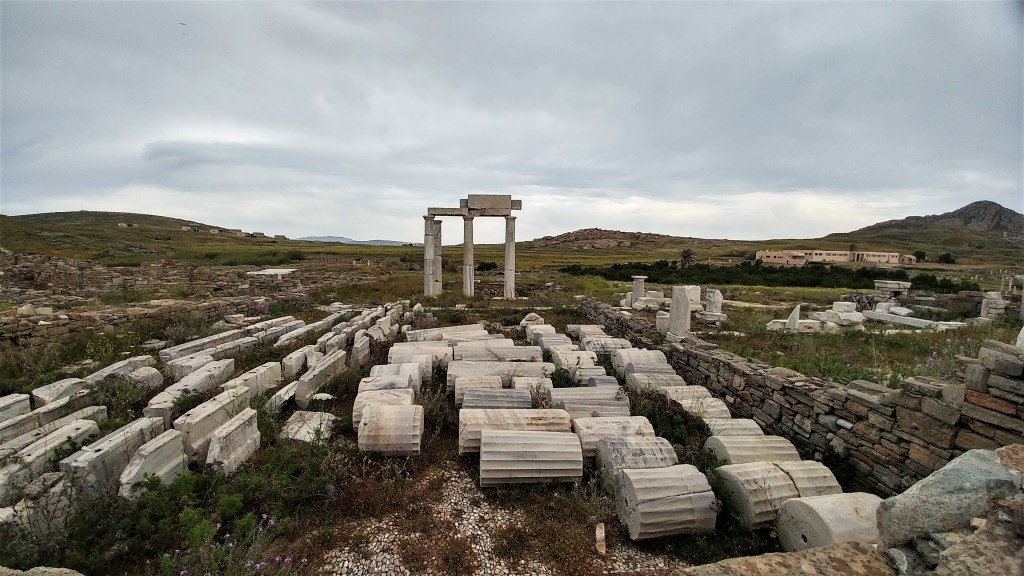
The temples of Isis and Serapis in Delos are built across several phases and interestingly took different forms while they thrived. One associating itself with a more ‘authentically’ Egyptian-style, and another with a more Hellenic-Alexandrian form, they co-existed though not always in perfect harmony.
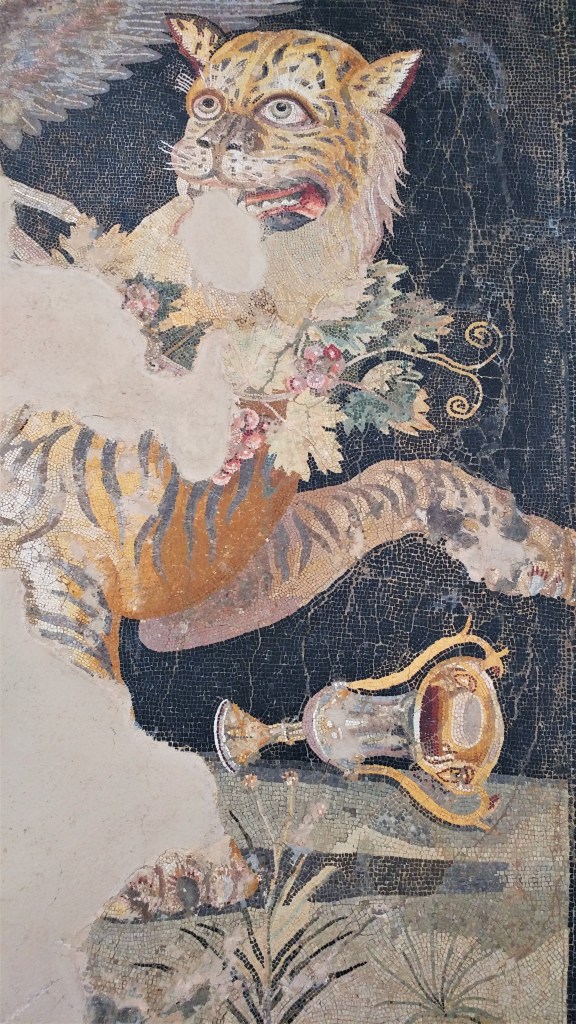
It was a perfect day to explore this incredible UNESCO World Heritage site, and as I continue with my research, it is always an enriching experience to go to these spectacular sites with my research questions in mind. After a decade passing since my last time here, much remained the same, but due to increased interest in the cults of the Egyptian gods and their relationships with Hellenic and Italic deities, the deities I study tend to get highlighted! The archaeology museum was equally worth the trip to see, with excellent mosaics and gorgeous statues.
This spring, my friend and fellow St. Andrews colleague, Dr Briana King, and I traveled to Greece for fieldwork in our studies. With intersecting interests, Briana and I were able to plan a truly spectacular trip and gain new insights into our own research questions as well as each other’s work. Through careful budgeting and receiving funding through several pathways, we were fortunate to achieve quite a lot in two weeks. We began our fieldwork in Cyprus, to investigate the earliest sanctuary site of Aphrodite!
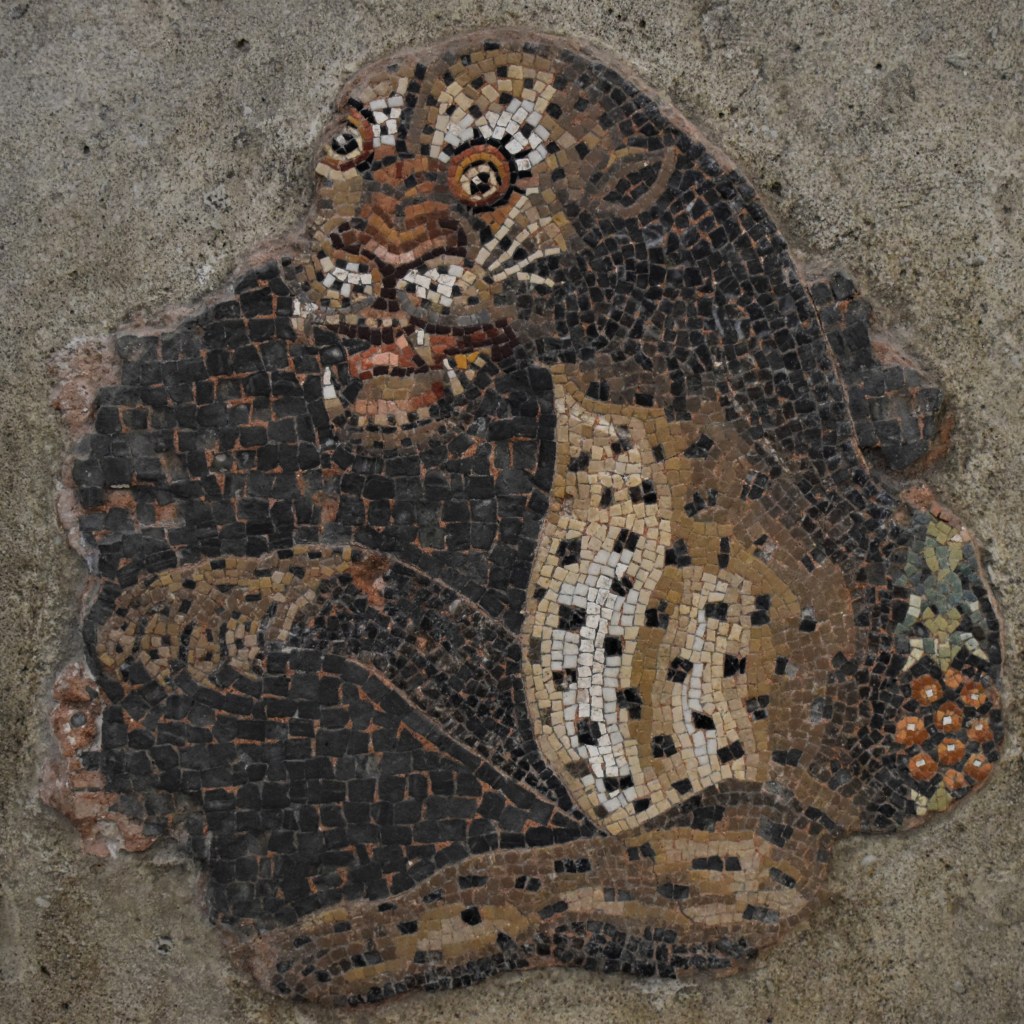
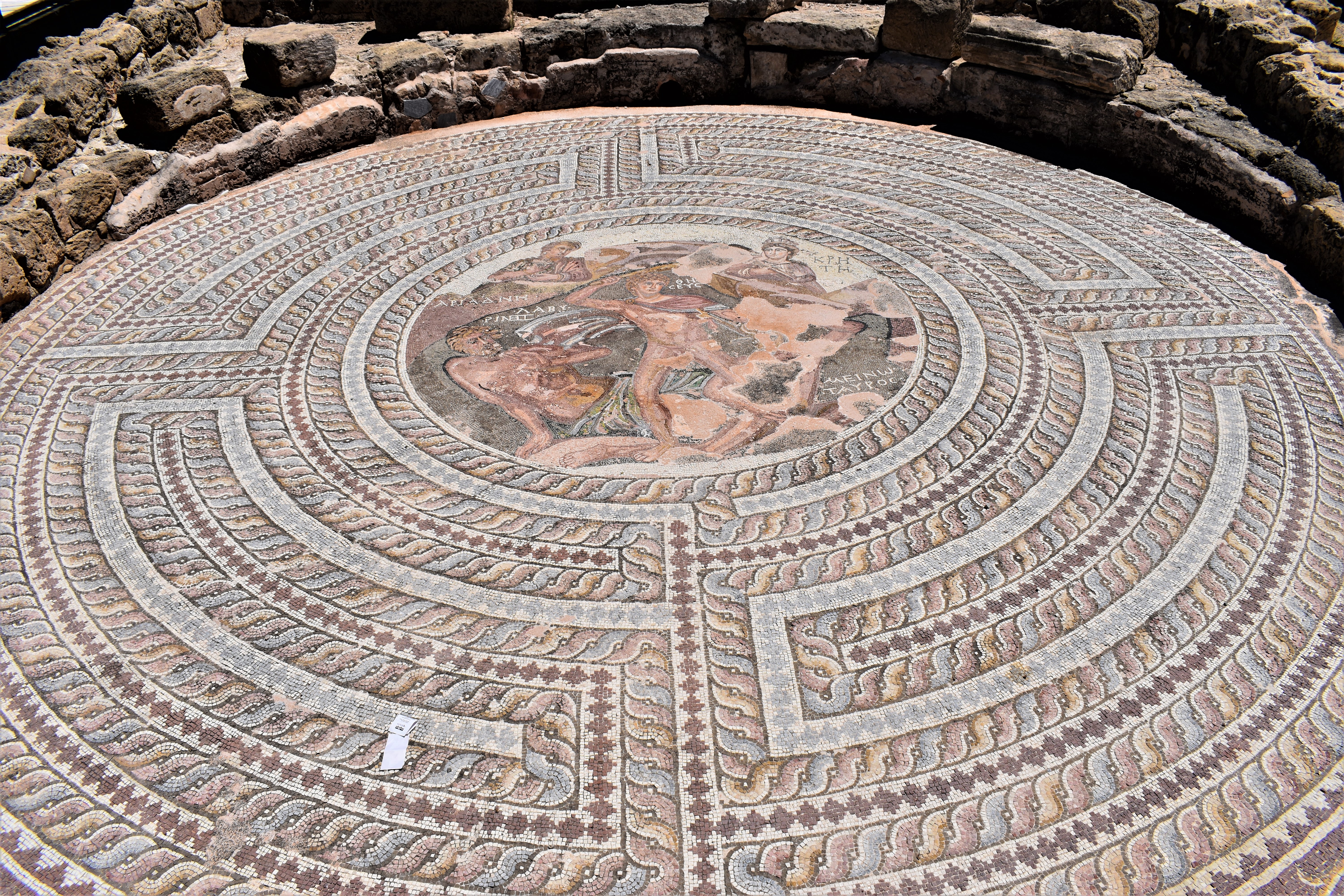
Mosaic from the House of Aion, Neopaphos
With a long history reaching back into the Neolithic period, Cyprus has seen waves of cultural and political change throughout its recorded history. Annexed in 295/4 BCE by the Ptolemy I Soter (the founder of the Ptolemaic dynasty), it remained within their dynastic control for 250 years. Though Cyprus still retained semi-autonomous government with the Boule (council), Demos (popular assembly) and the Gerousia (council of ancient Boomers). This continued until it was annexed by Rome in 58 BCE during the dynastic struggles between Cleopatra VII and her siblings, and settled into Roman hands following the civil war with Octavian and Antony. Cyprus would fall into the hands of several other powers over the next two thousand years (the Arab caliphate, the French and Venetians and the Ottomans), until today where it currently remains divided by Greece and the occupied portion under Turkey.
Cyprus’ place-names have popped into my studies for years came from this island. Unsurprisingly, due to the proximity to Egypt (a straight line to Alexandria) and the political fortunes of Cyprus, there was several connection-points with the Egyptian gods which I hope to explore further in my research.
The goddess of many names: the sanctuary of Aphrodite
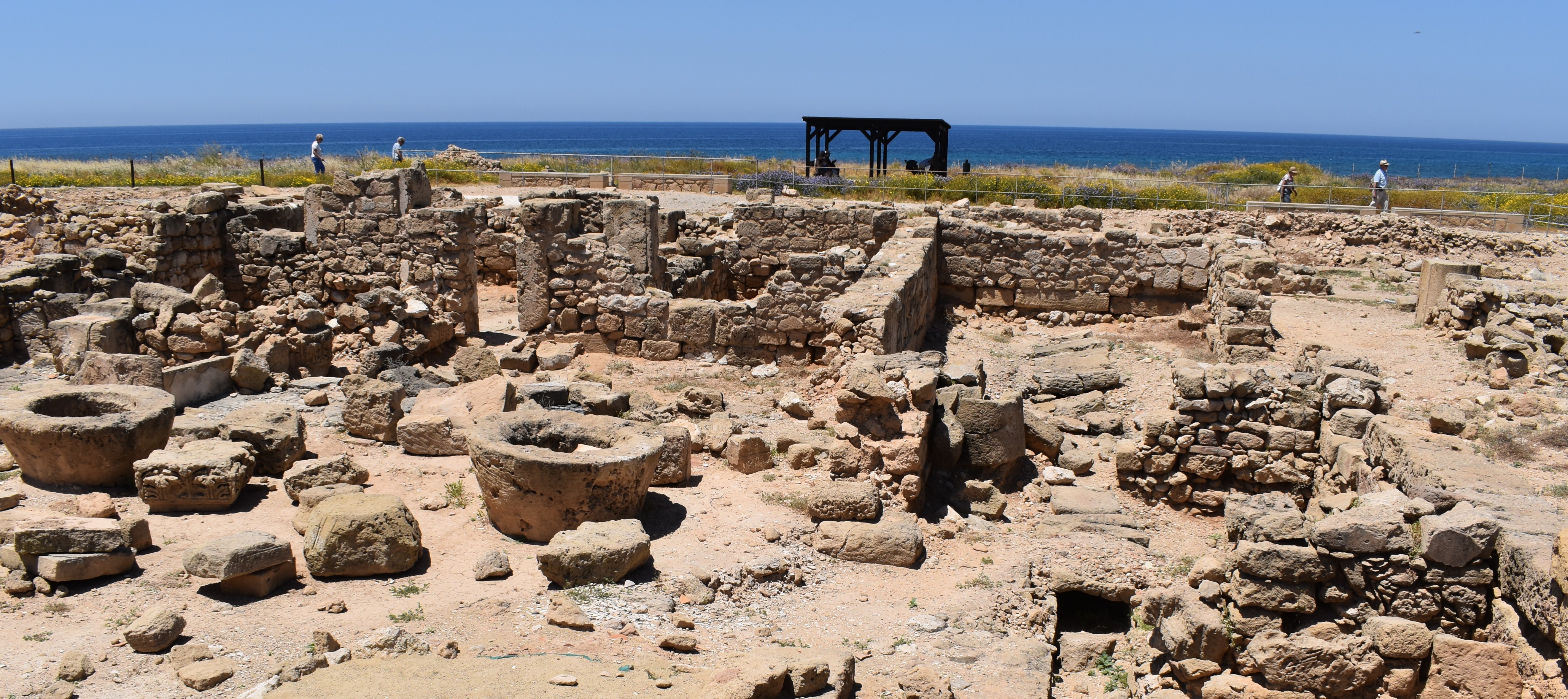
The Sanctuary of Aphrodite is located in Kouklia: the archaeological site includes the Paleopafos museum.
Starting in Cyprus was very important to Briana’s research: Paleopafos is the OG Aphrodite cult site where she was worshiped in the form of a black stone (below left). The Sanctuary of Aphrodite, barely visible on the archaeological site, requires some imagination to envisage what it could have been like. Set atop a higher elevation, the site would have commanded an impressive presence on the landscape and awarded visitors with a stunning view out to the sea.
A rose by any other name…
While Hesiod called Aphrodite ‘Cyprus-born’ around the 8th c. BCE, the goddess was not called that in Cypus until the 4th c. BCE. The significance of place-names for her identity can be seen in inscriptions where is called ‘the Golgian or Paphian’ from her sanctuaries at Golgoi and Pafos. A city’s prestige could be significantly enhanced by a notable sanctuary or cult site. You can see below some interesting details about the places or priorities associated with the goddess of Cyprus.
“Kyprogenes- Cyprus born goddess; Potnia Kyprou – the mistress of Cyprus Akraia – the goddess of promontories; Pontia, Einalia – the marine goddess Ourania – the heavenly goddess; Pandemos- goddess of all Egcheios – the goddes with the spear; Kourotrophos – the goddess patron of infants “
Dedications to Aphrodite include many interesting bird-faced, Picasso-esq clay and limestone figurines.
Figurines found across the island, and spread to other Mediterranean cities, show ongoing development in the iconography of the Great Goddess of Cyprus. Theories range about their uses, whether they are images of early forms of Aphrodite, her priestesses, companions for the dead or talismans for fertility or the afterlife.
She certainly glowed up though.
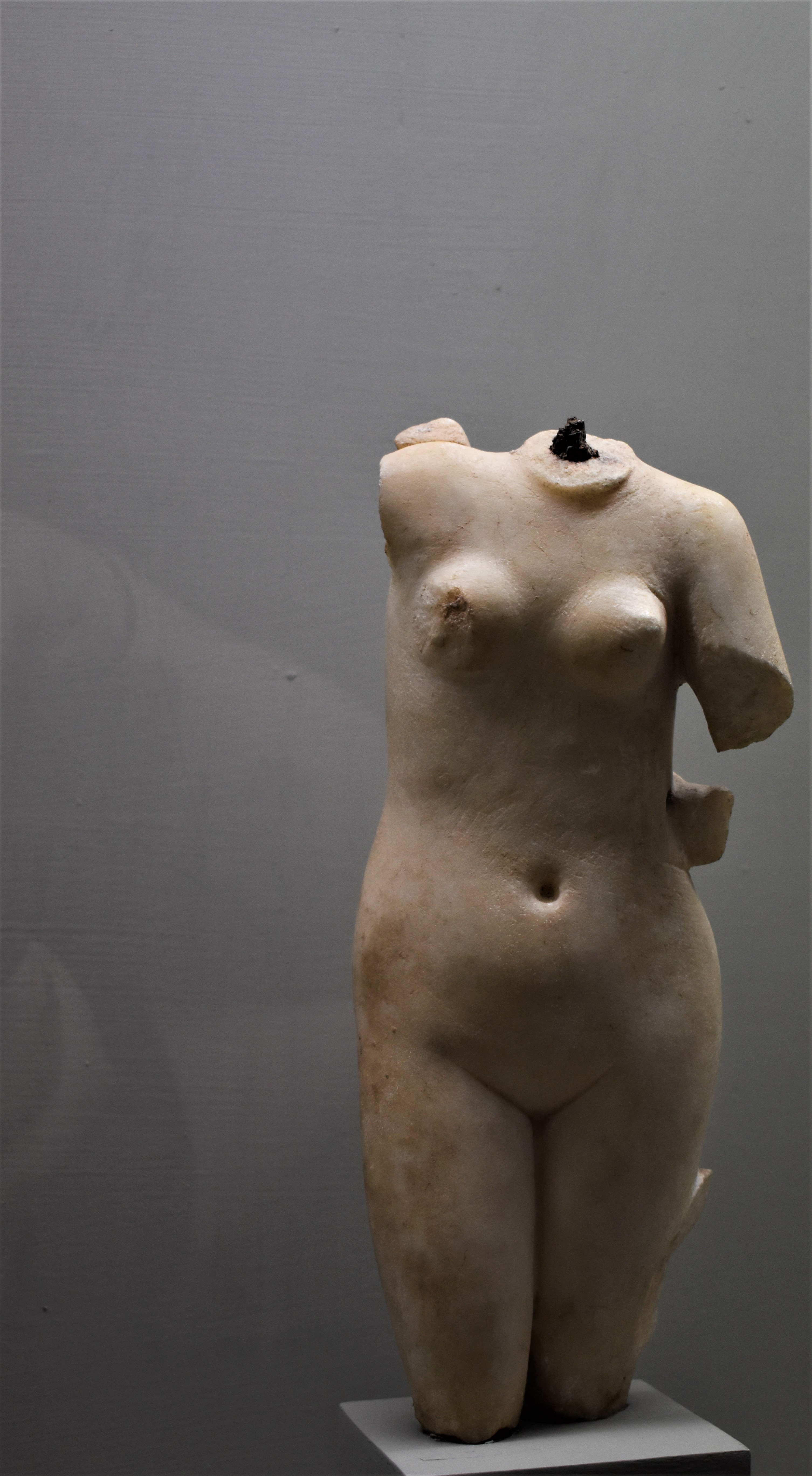
As Aphrodite’s form changes over time, you get gorgeous examples like the Aphrodite from Soloi (right) which has that sexy contrapposto!
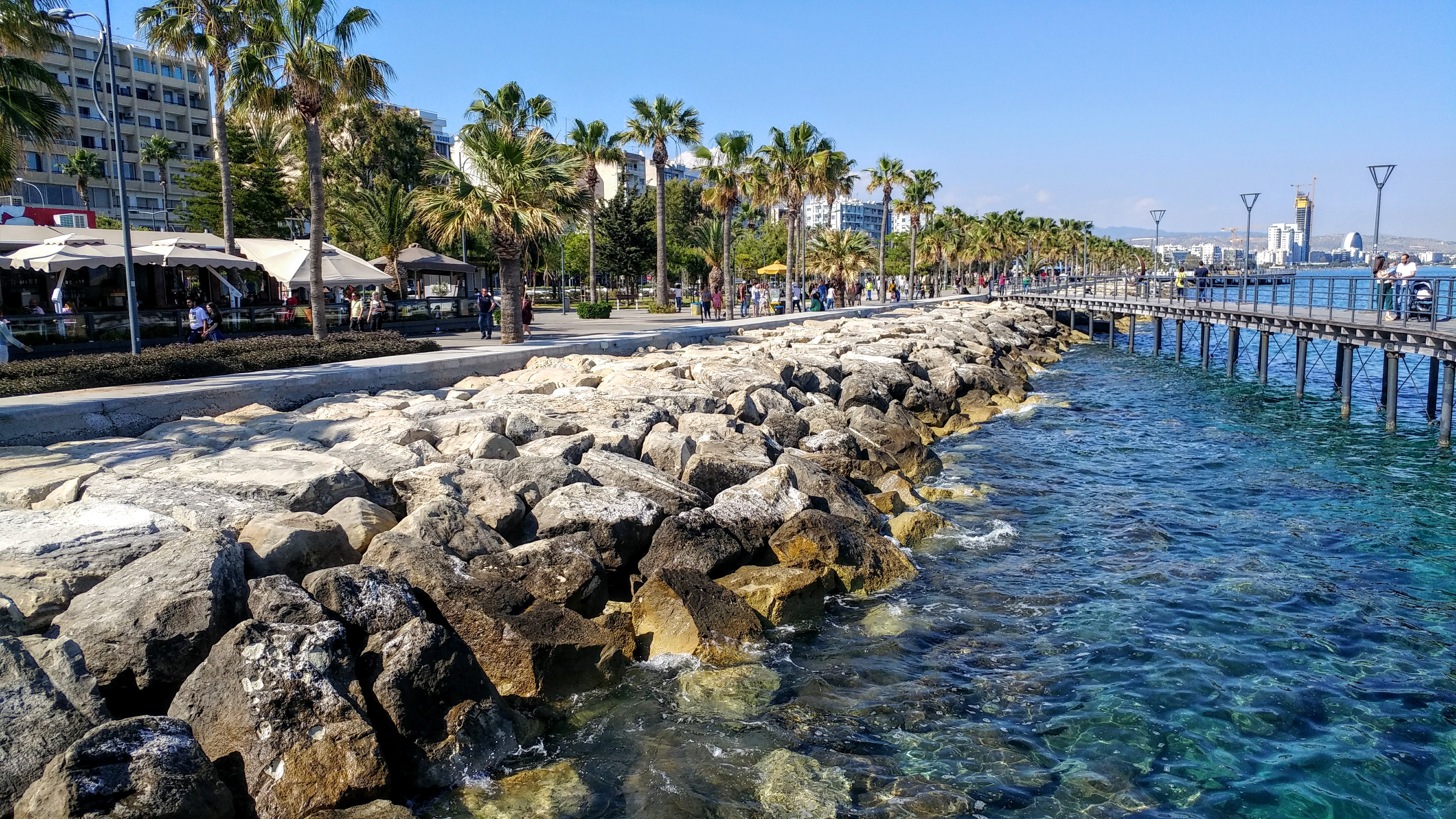
For scholars and history nerds, these places are important and aren’t normally on a tourists’ itinerary. Cyprus is known for its beaches, boardwalks and boating which we briefly explored. Though this isn’t my topic of expertise, it was really cool to experience it with someone who has a passion for Aphrodite scholarship, like mine for Isis!
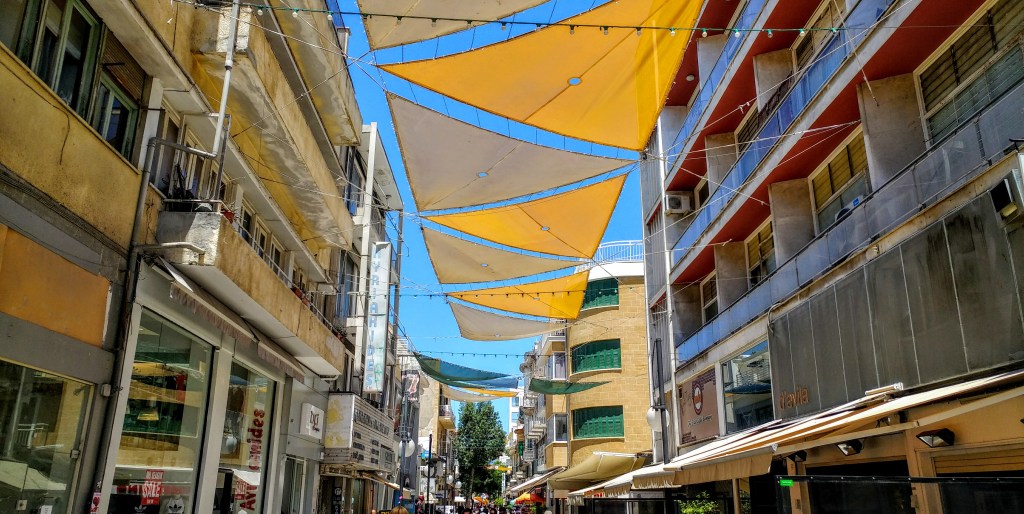
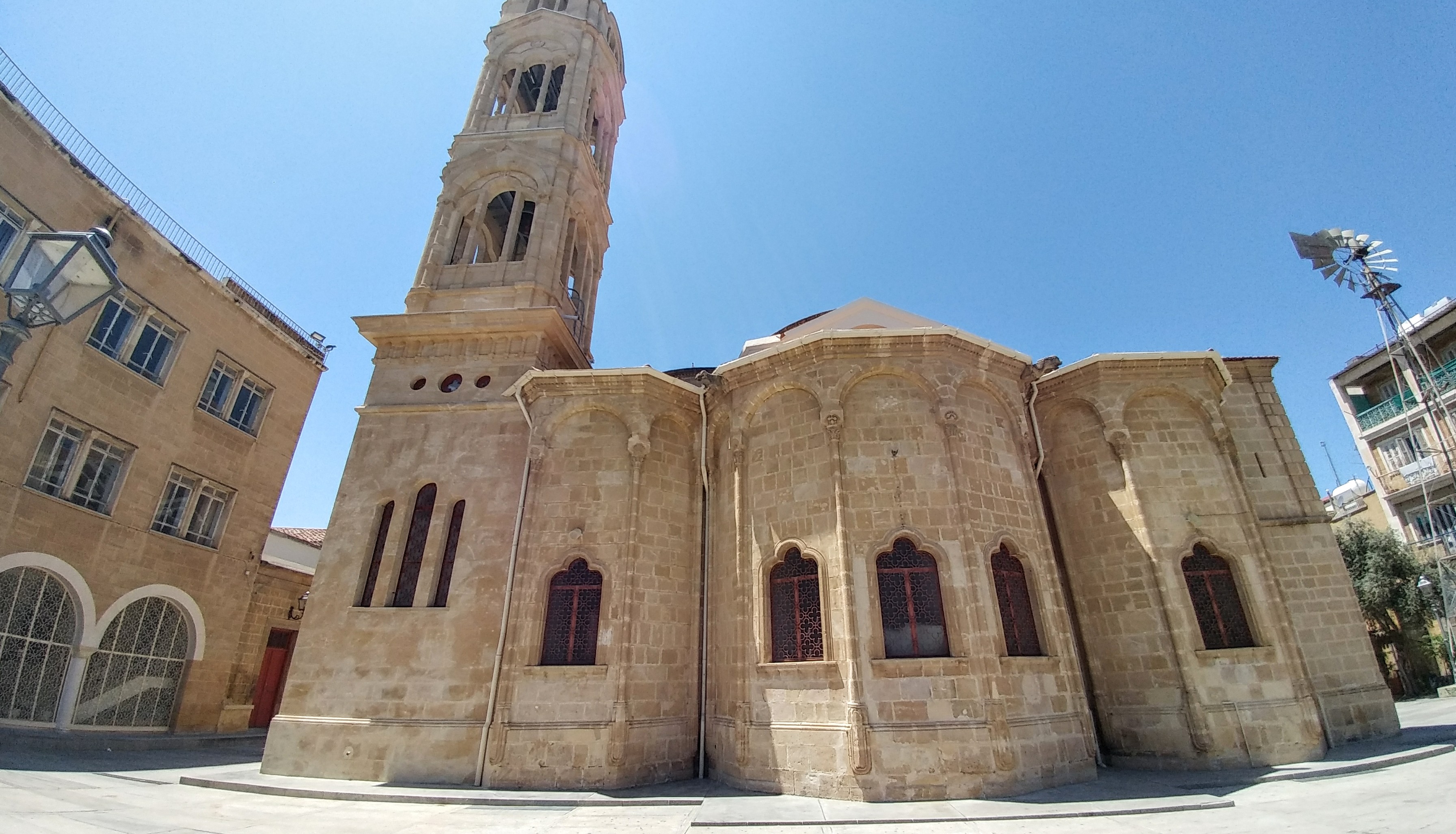
Downtown Nicosia
With Google taking on a merry-go-round of routes through the hills and ostrich farms, we eventually arrived at Nicosia to visit the archaeological museum. It had a substantial collection of beautiful things
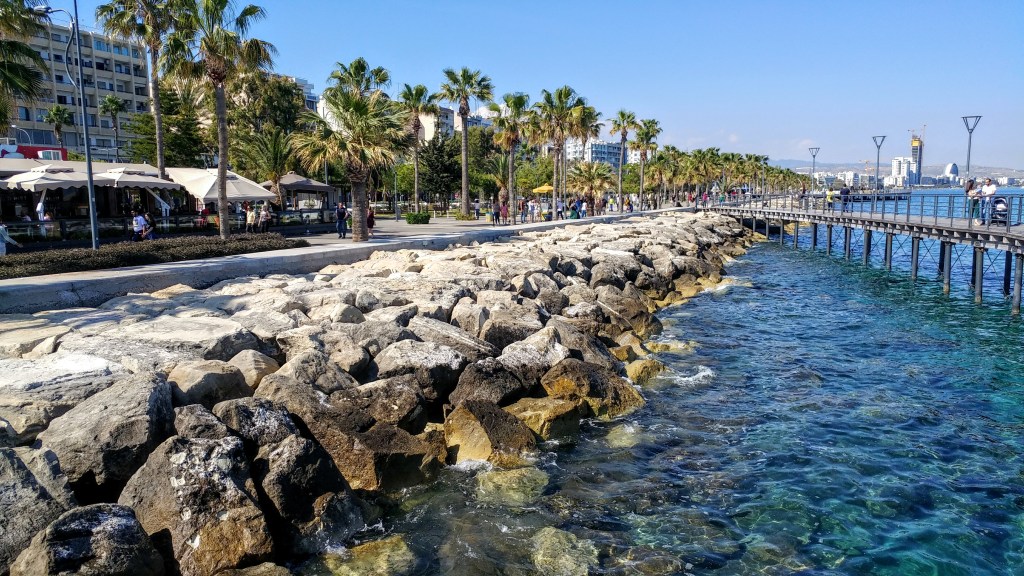
With the archaeological site of Salamis inconveniently closed, we checked out a few other interesting locations in Cyprus! A brief walk along the promenade along the sunny boardwalk in Limassol.
Limassol
What surprised me about Paphos is that it was like a tiny hot British town plunked in the middle of the Mediterranean. Walking around, the signs were in English and I didn’t hear an ounce of Greek being spoken. The archaeological site was worth a wander, but if I was looking for Greek culture and a trip away from the UK, it was eerily like being back in Britain.
Neopaphos & the Tombs of the Kings
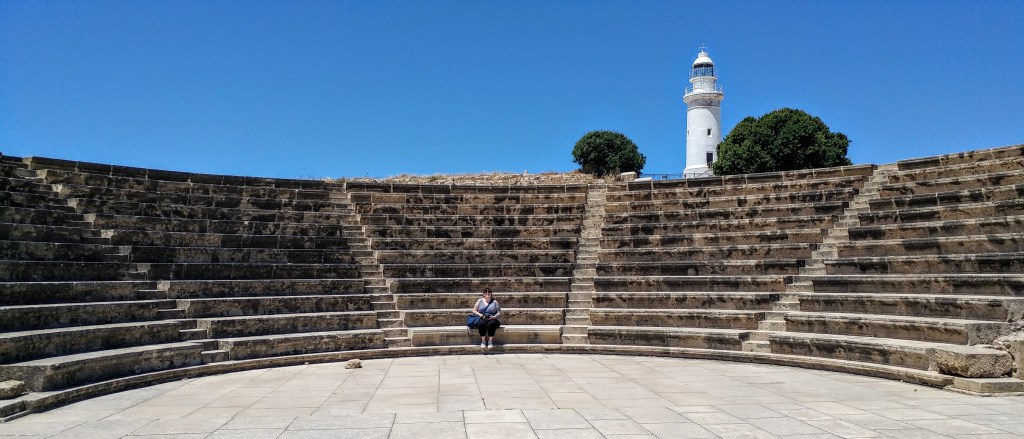
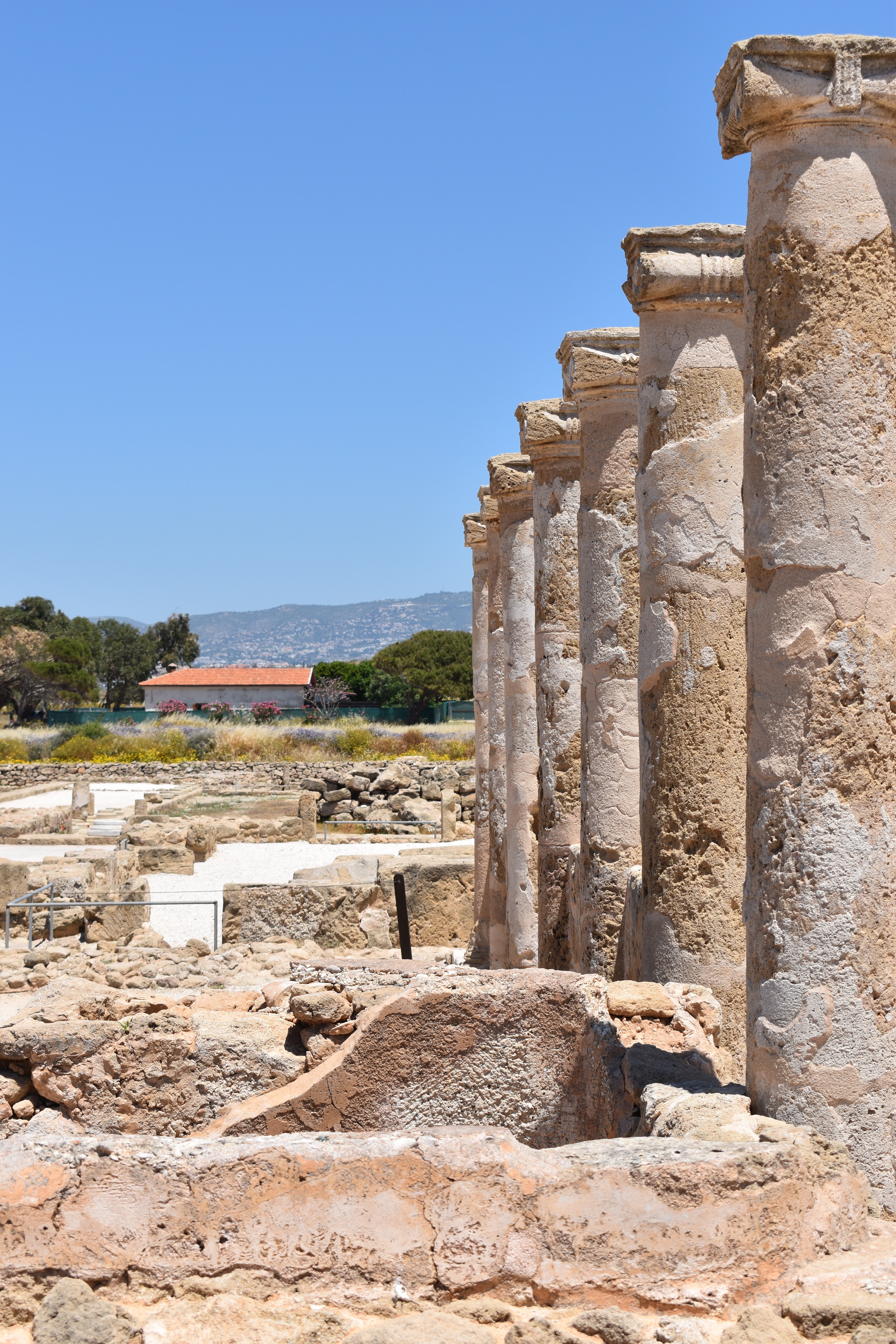
The Odeon of Neopaphos next to the Temple of Asclepius
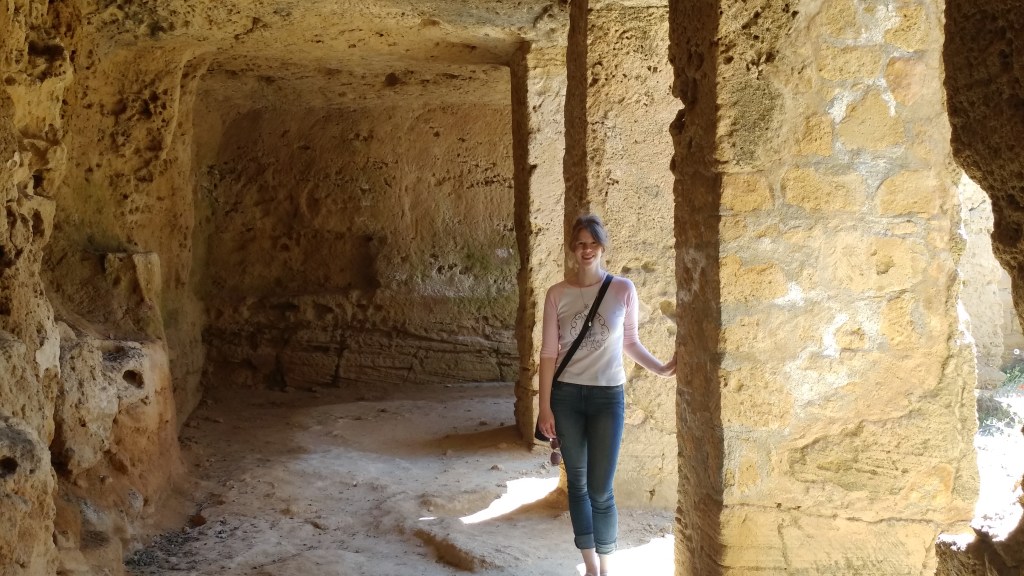
A rock-cut monumental funerary complex in the ‘Tombs of the Kings’
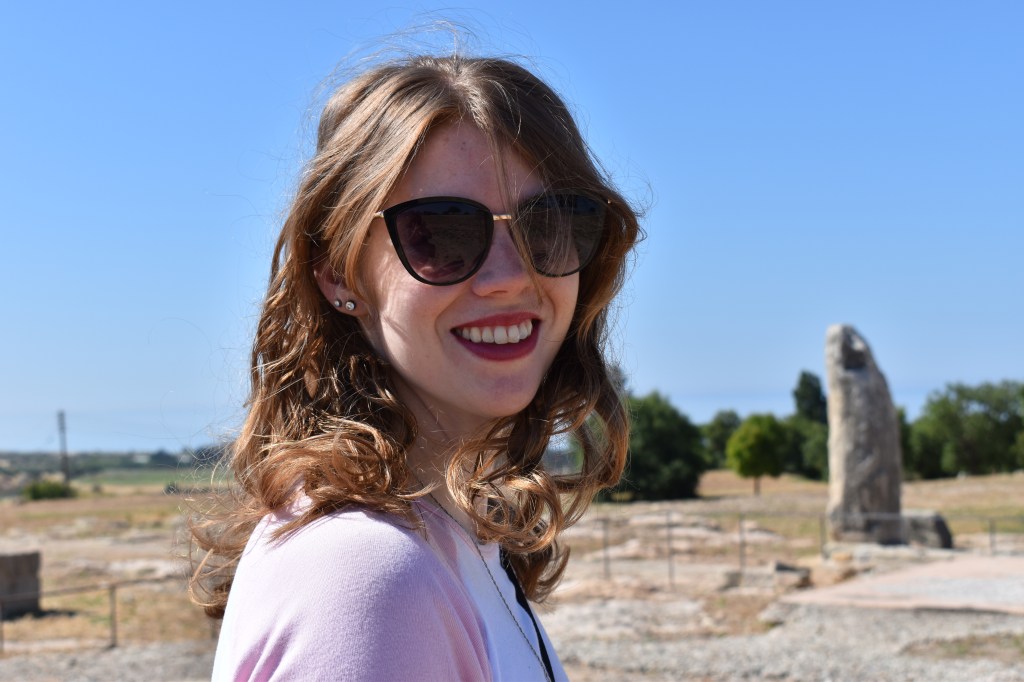
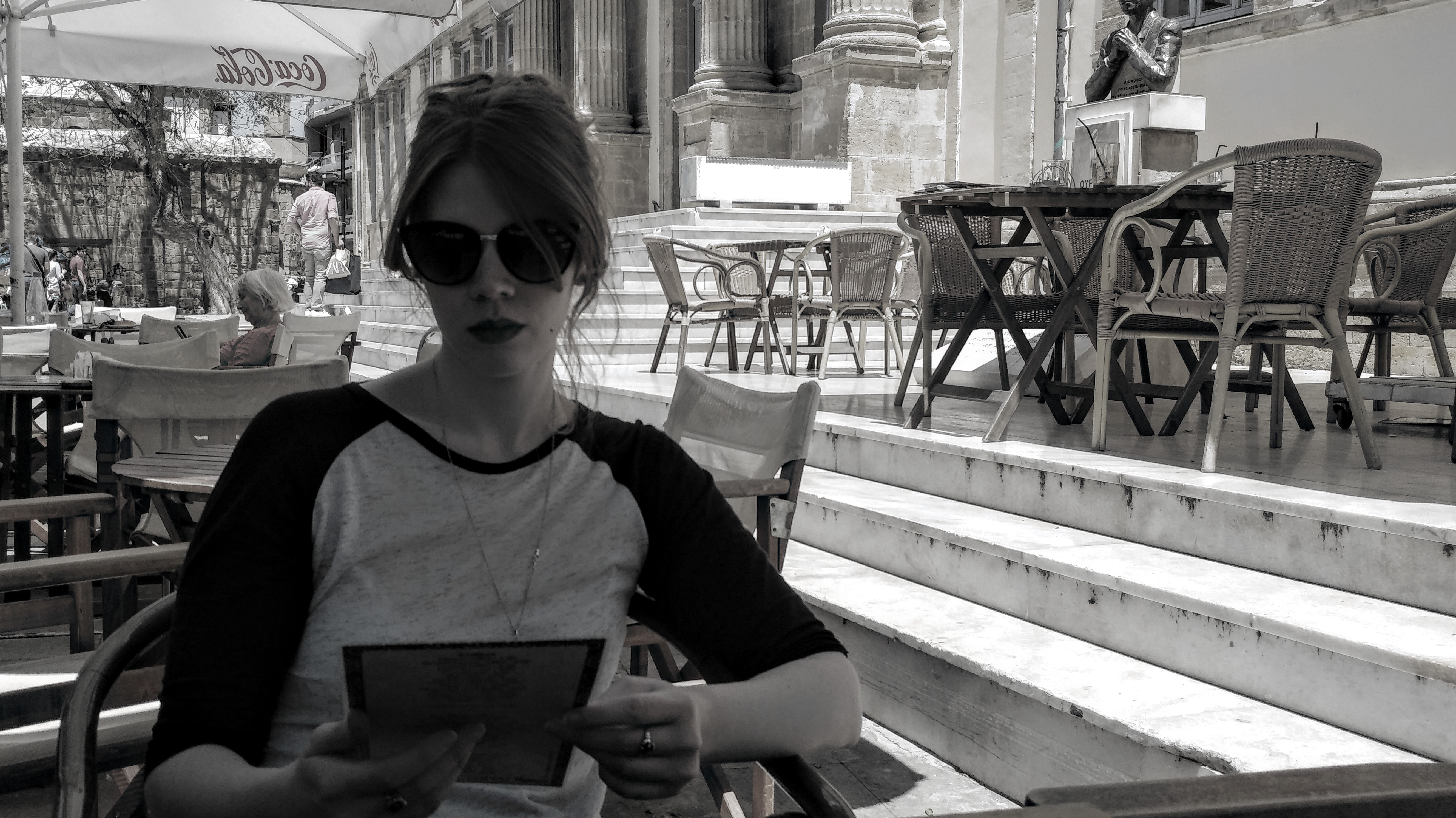
My fearless tomb-exploring colleague
Some unexpected surprises along the way included the rental car with no working headlights and the incredible discovery of a late-night delivery of the best souvlaki and Greek salad of my life. With a lot of terrain covered over a weekend, there is still a lot left to explore there and worthy of a solid return trip.
The close of a new decade is an inevitably reflective time. The last time the decade turned, I was in my twenties finishing my undergraduate degrees in Vancouver. It feels like a memoir’s worth of writing could barely sum up the last ten years, so I will stick to just one year. 2019 was possibly the most had some of the biggest highs and lows I have gone through in my academic and personal life. Perhaps it is fitting then that at the end of this decade, it was time to go through another life-changing gauntlet of challenges and opportunities.
Travel and Fieldwork
It was a big year for fieldwork. Luckily, that is my reason-d’être for travel. I discovered a few years ago that travelling with a question in your mind makes the whole experience richer and satisfying when you can answer those questions. When I started researching Isis and the Egyptian cults, it became quite consuming and fortunately for me, dispersed throughout most of the Roman Empire. This has been a blessing in most cases, and this year, with one of my dearest friends, we were able to combine forces and research topics to do fieldwork together across much of Greece.
Germany! Mainz and Frankfurt
The Temple of Isis foundations, Mainz.
In January, I popped over to Germany for a weekend to go check out the temple of Isis in Mainz. This site was excavated during the building of a shopping mall, which sits on top of it. A shared temple with Magna Mater, this city had some really great archaeological museums and things to explore. I used to travel alone a lot more, and scooting off for a few days on my own was a lot of fun.
Padua
My recent post about Padua highlighted some of the things that made it a delicious visit to one of my favourite countries, but for me, one really lovely part of the trip was getting to spend time around the kitchen table with the family of a dear friend. I miss that part of family life a lot as an ex-pat. I love spending time with the families of friends, feeling the warmth of their love and bonds of family, even doing normal things like grocery shopping and having a cup of tea.
Greece and Cyprus
Nafplio and Mykonos
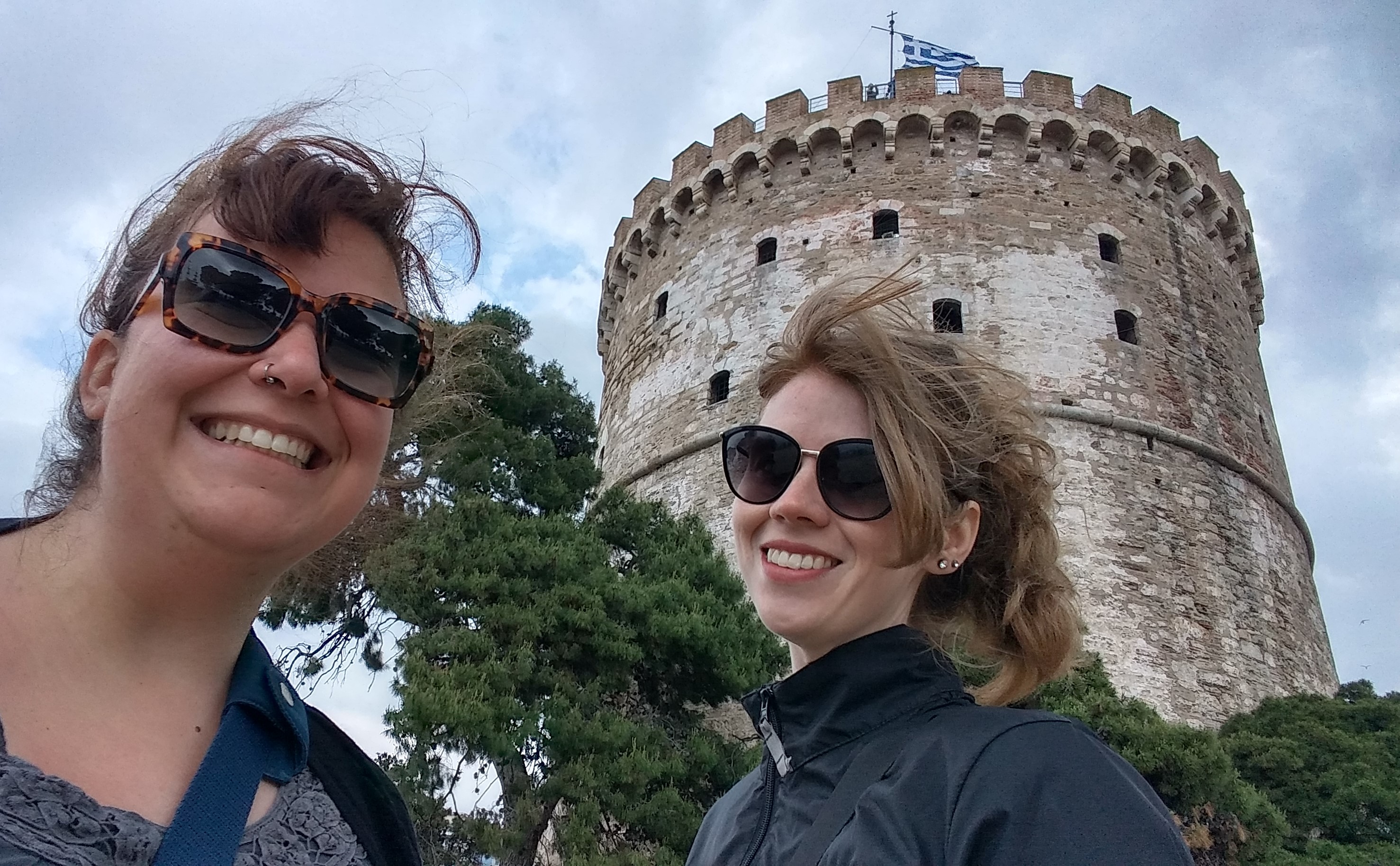
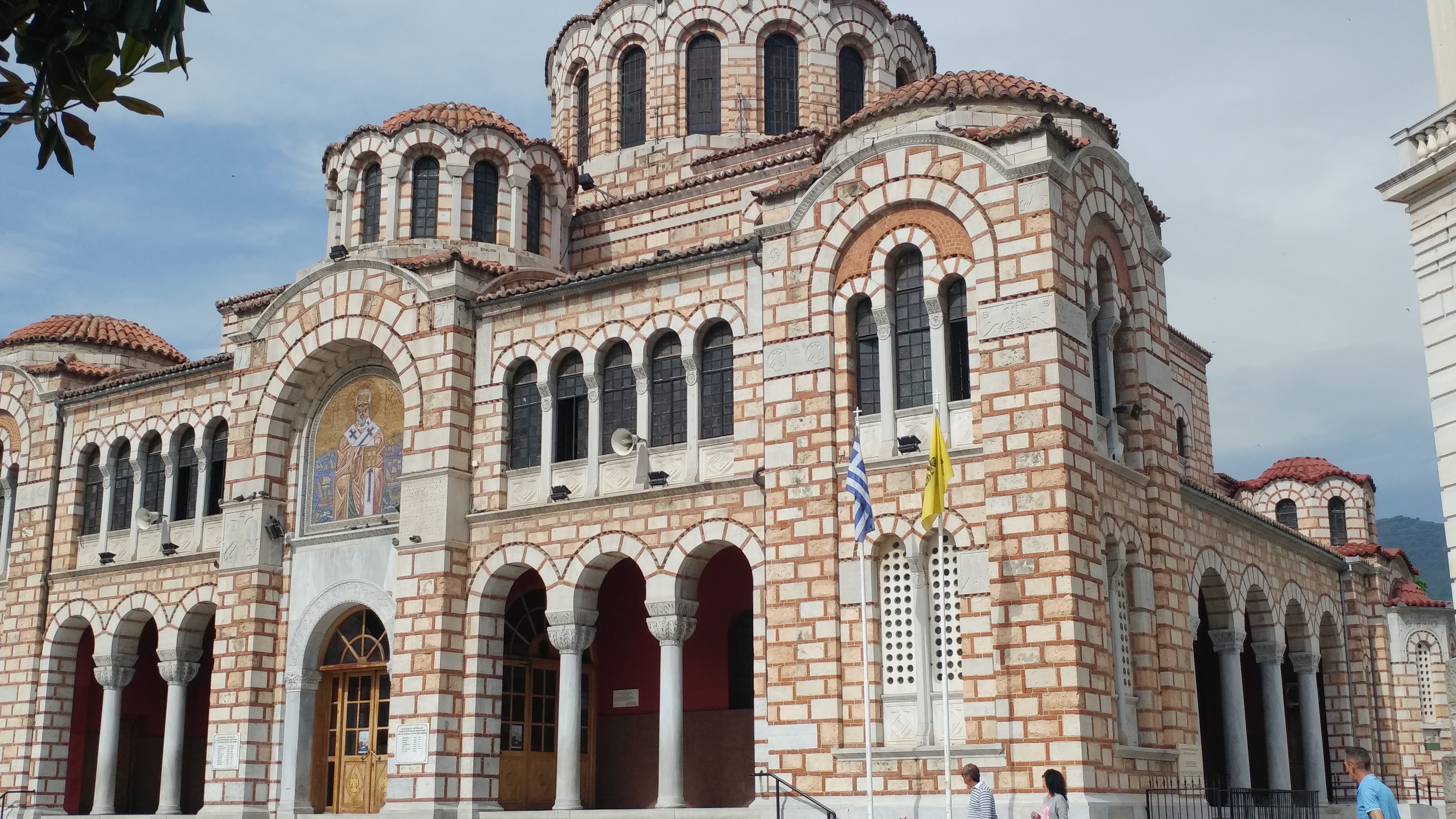
Travelling together for a few weeks was a blast and we covered a lot of ground. Laying down groundwork for a future co-publication, hopefully, we learned a lot about each other’s research and where it intersects! Greece is a country that formed mythical impressions in our minds from studying these places over so many years, and getting the opportunity to drive to many sites here together was a dream come true.
LIMASSOL, CYPRUS
MYKONOS
THESSALONIKE
VERGINA
AMPHIPOLIS
VOLOS
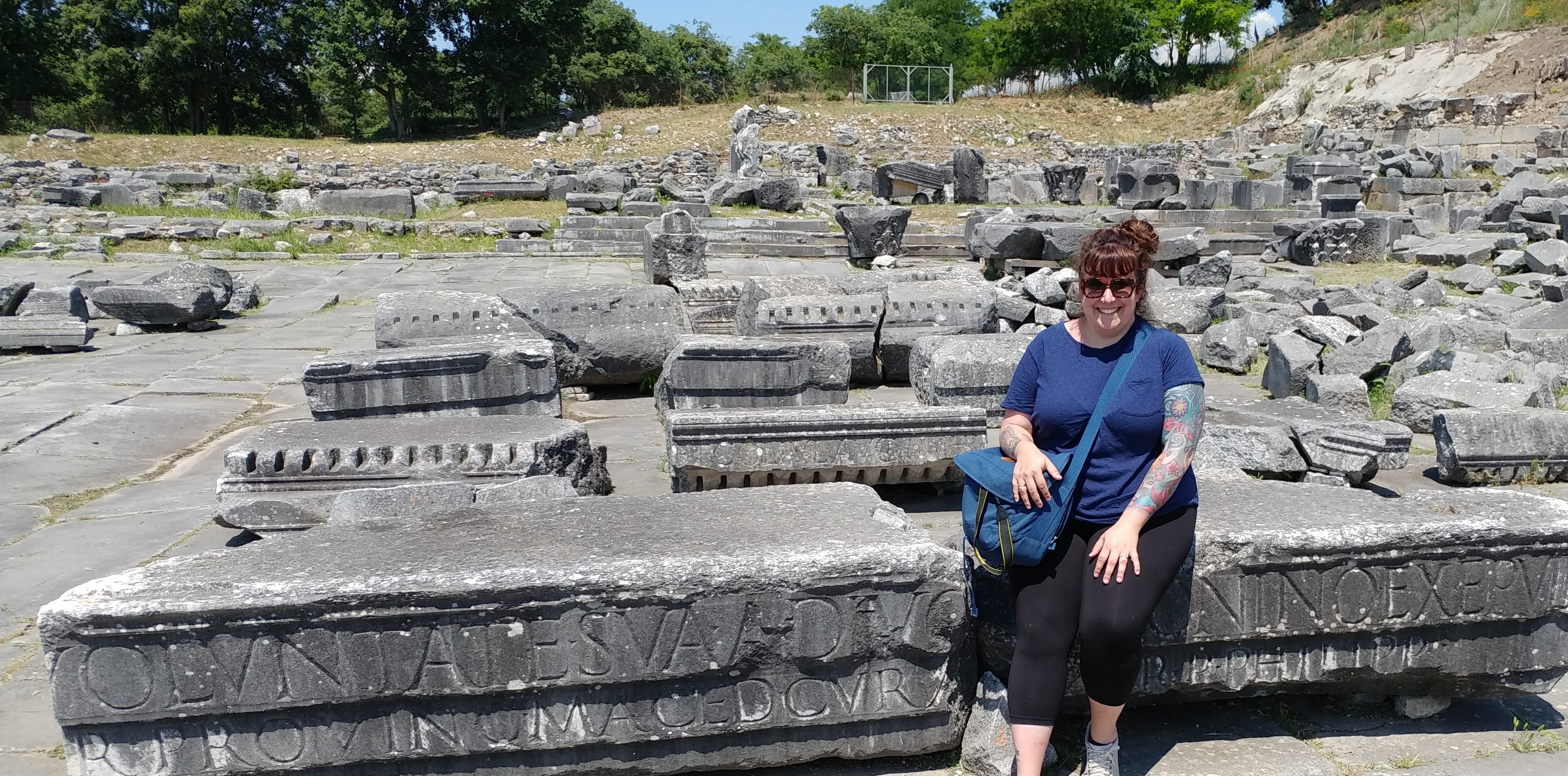
PHILIPPI
EPIDAURUS
CORINTH
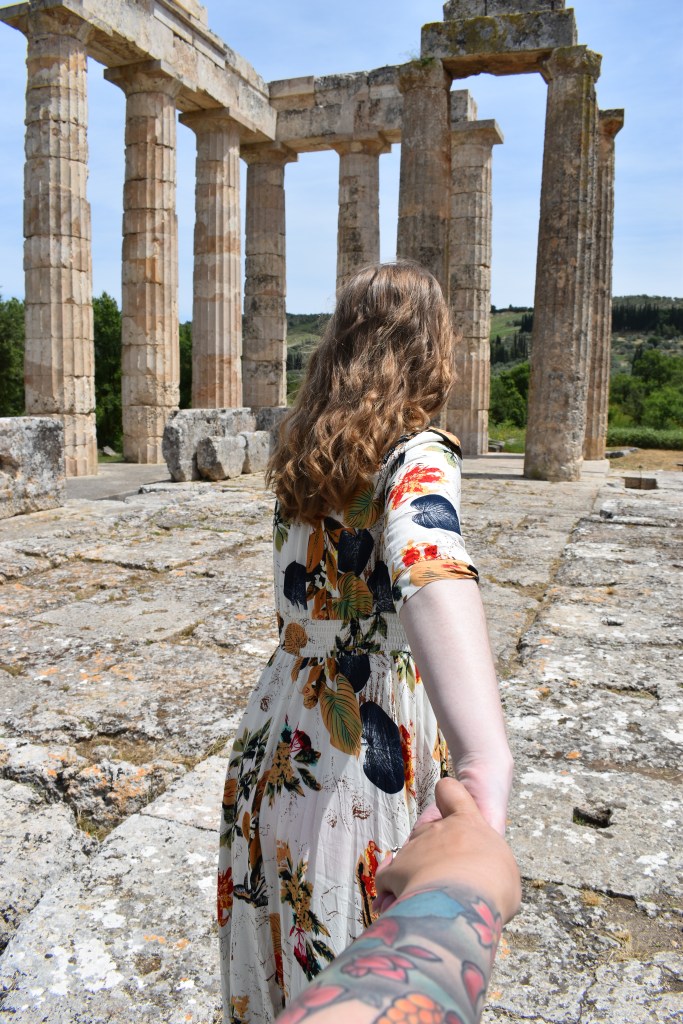
NEMEA
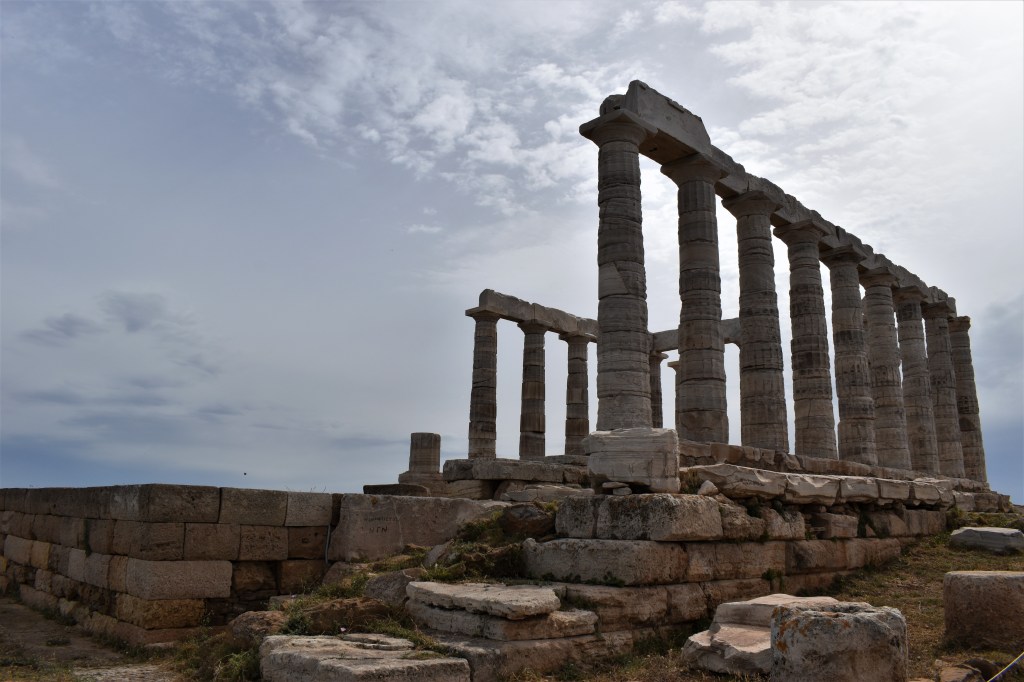
SOUNION
PELLA
ATHENS
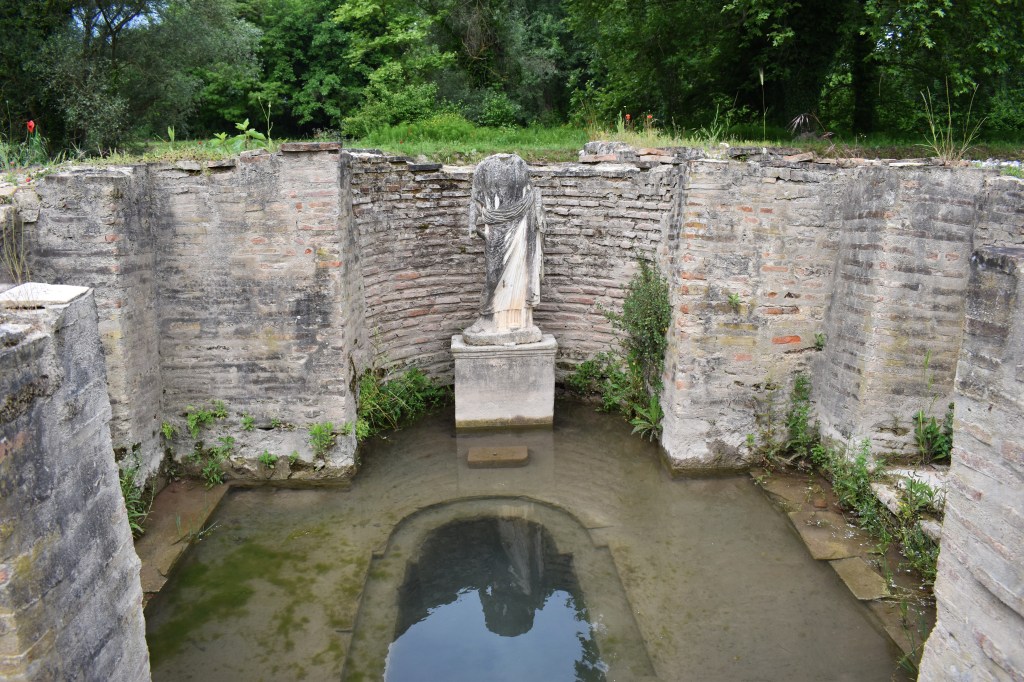
DION
KENCHRAEI
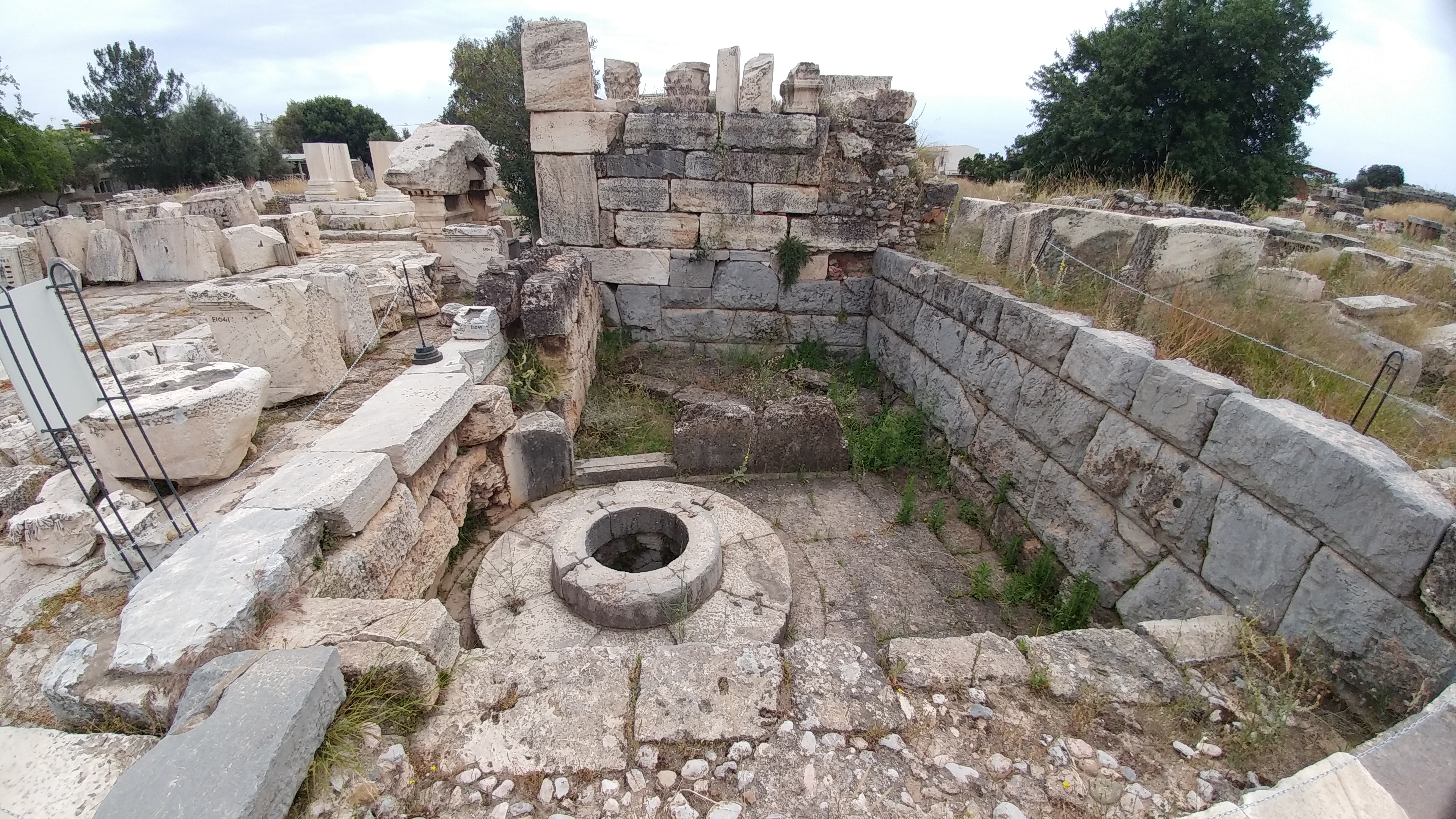
ELEUSIS
With some careful planning and Jedi-level budgeting, Briana and I crushed it: Nicosia, Paphos, Palaepafos, Limassol, Mykonos, Delos, Thessalonike, Philippi, Amphipolis, Vergina, Dion, Volos, Nemea, Mycenae, Corinth, Athens, Epidaurus, Pella, Marathon, Nafplio, Sounion and Eleusis!
With so many beautiful locations, and fascinating material culture, I will definitely be posting some cool snaps and historical tidbits about these places in 2020.
Italy: Roadtripping and the Aeclanum Excavation
Some highlights from adventures in Italy, 2019
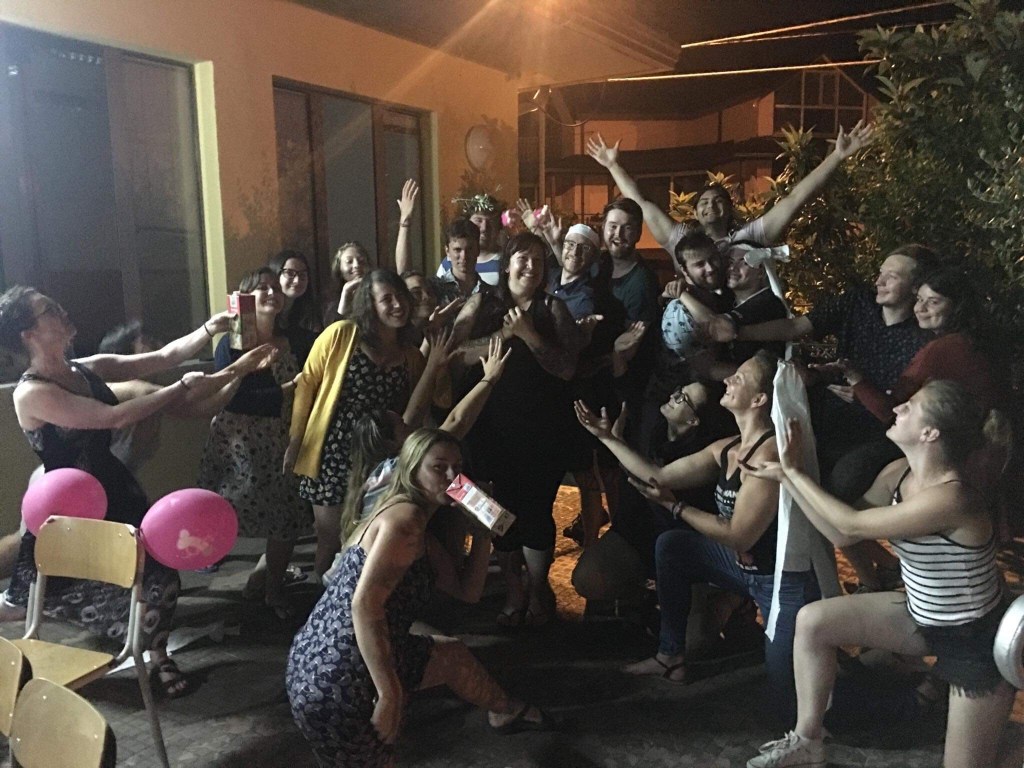
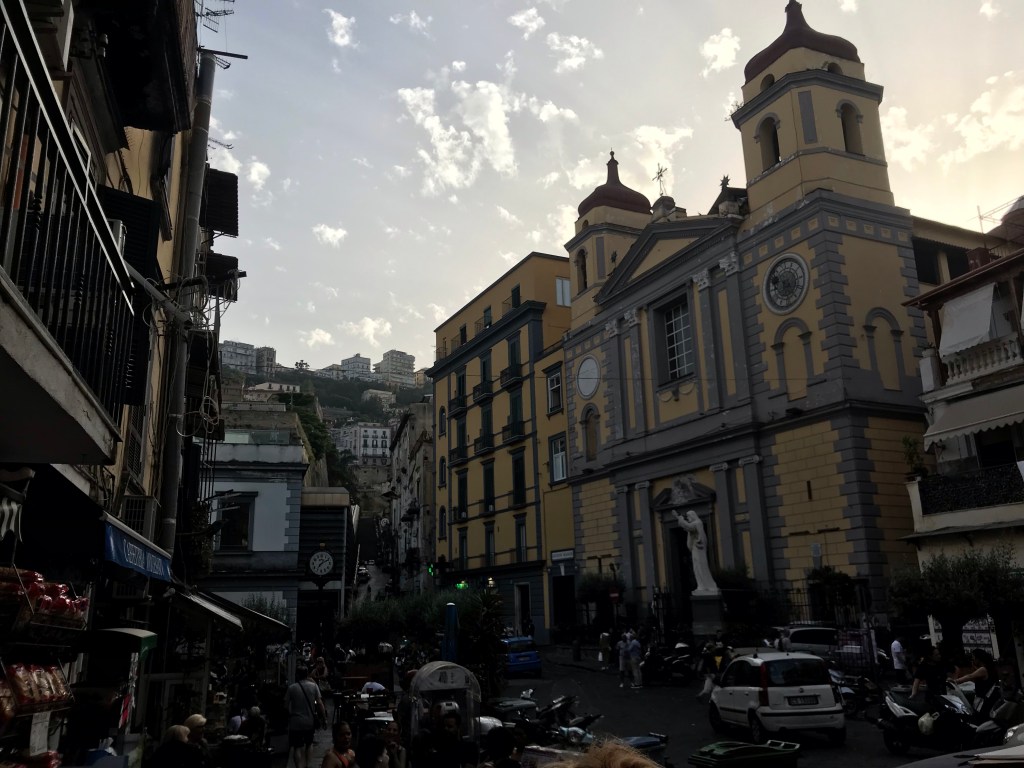
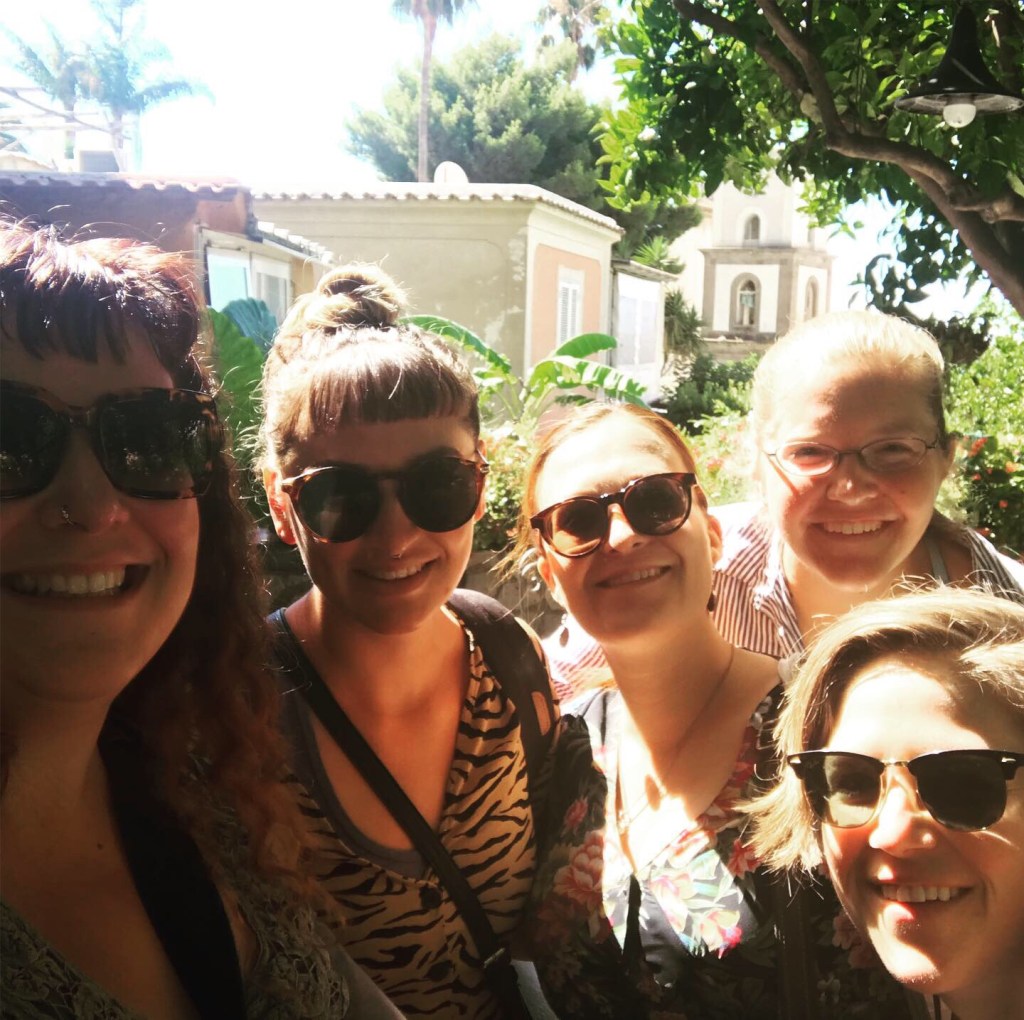
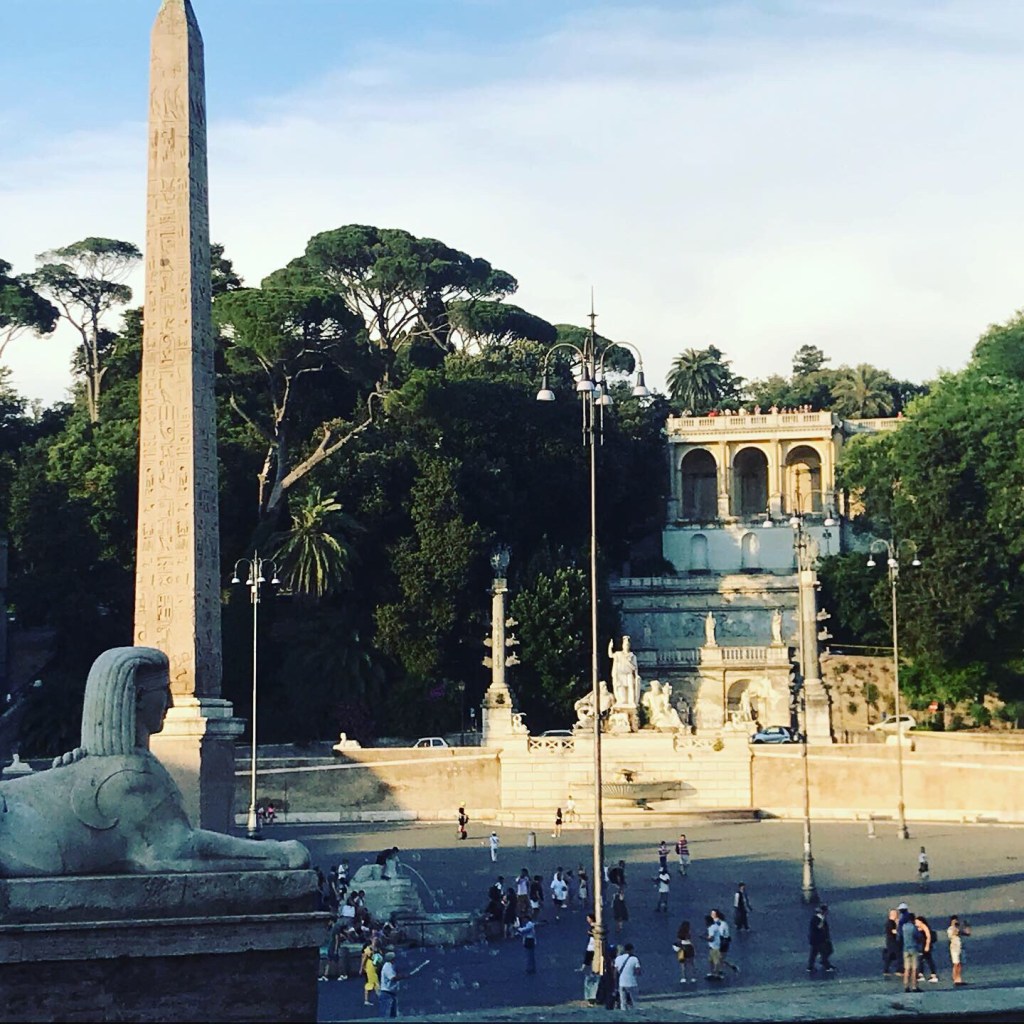
For the first time since I started going to Italy to try and learn new skills (excavating or public archaeology), I had the good fortune of jointly renting a car with several friends for the duration of our time there. Liberating and exhilarating would be the best summary of that experience. We were able to finally see some of the surrounding areas of Passo di Mirabella, which are incredibly beautiful. I am so grateful for the time I was able to spend with these ladies trying incredible foods, splashing around in creeks, going to ruins and museums and feeling a bit like a kid again!
POLIGNANO A MARE
ROMAN ROAD UNDER A BRIDGE
GROTTE DI CASTELLANA
BARI
BEST STAGETTE EVER
ROADTRIPPING
BAY OF NAPLES
BARI
POSITANO
ROME
WEEKEND IN ROME
POLIGNANO A MARE
POSITANO!
Launching a graphic novella in Italy!
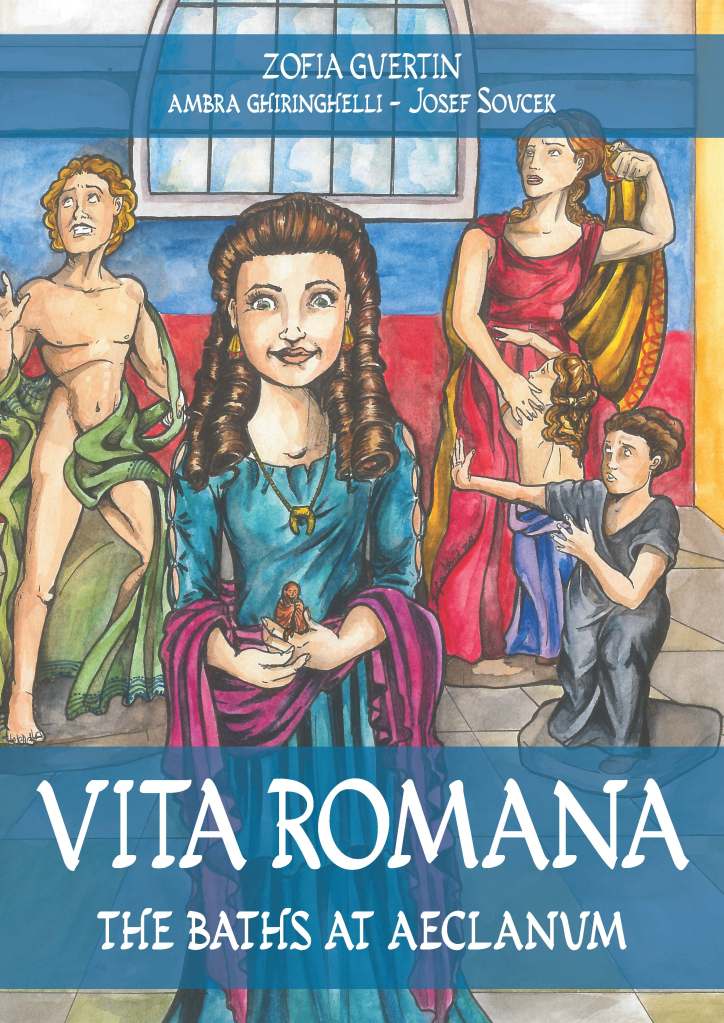
Vita Romana: at the baths of a Aeclanum was launched this summer in Passo di Mirabella. It was a labour of love that I am super proud of. Completing a project like this was exciting, and working with Ambra Ghiringhelli and Josef Souček- two creative and talented scholars- was so rewarding! With Vita Romana we learned a lot of things about a collaborative creative process, and it would be really cool to work on other stories about Roman daily life!
Professional? Me?
For the first year in my life, making art was a significant component of my earnings. I still make silly fun things ( #ImSorryChris ) for myself, but between small commissions, selling posters, paintings in Mariachi, and my public archaeology work this was my most successful year as an artist!
Our west coast wedding
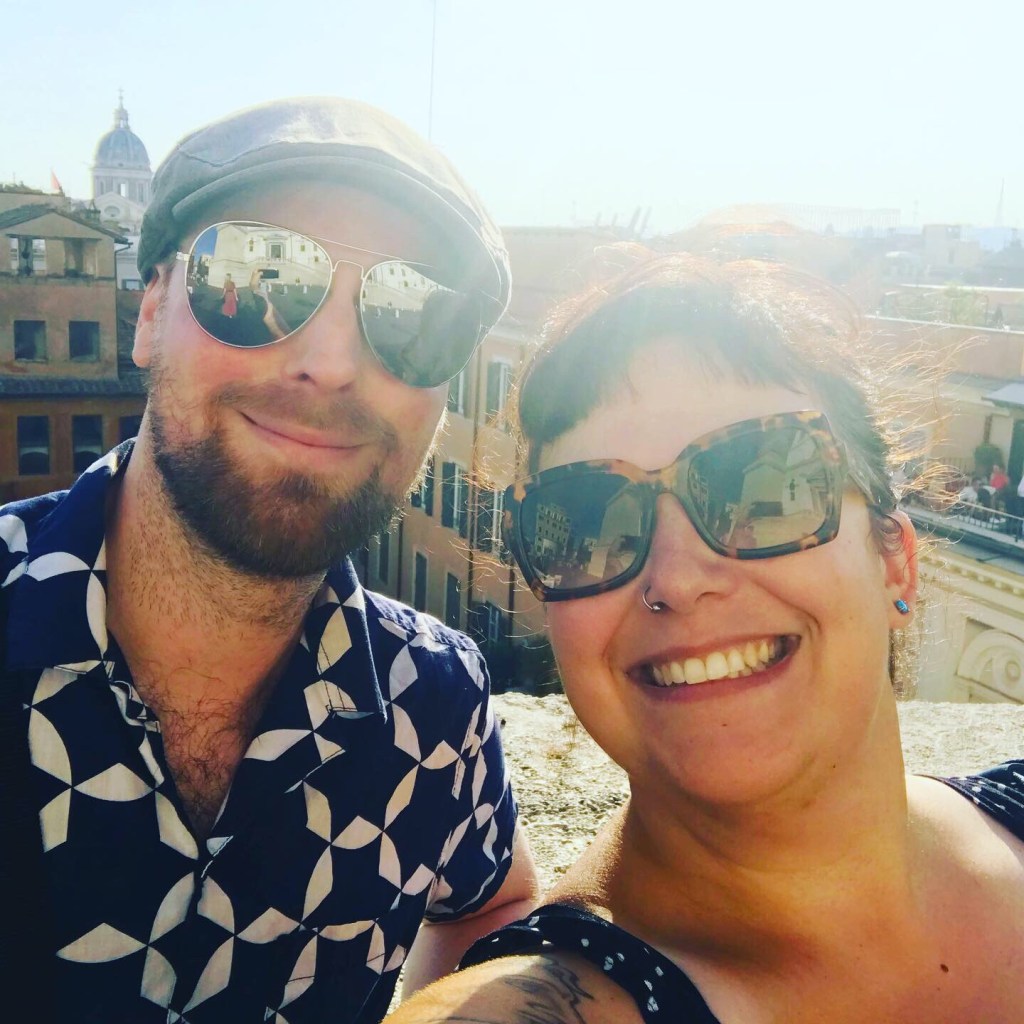
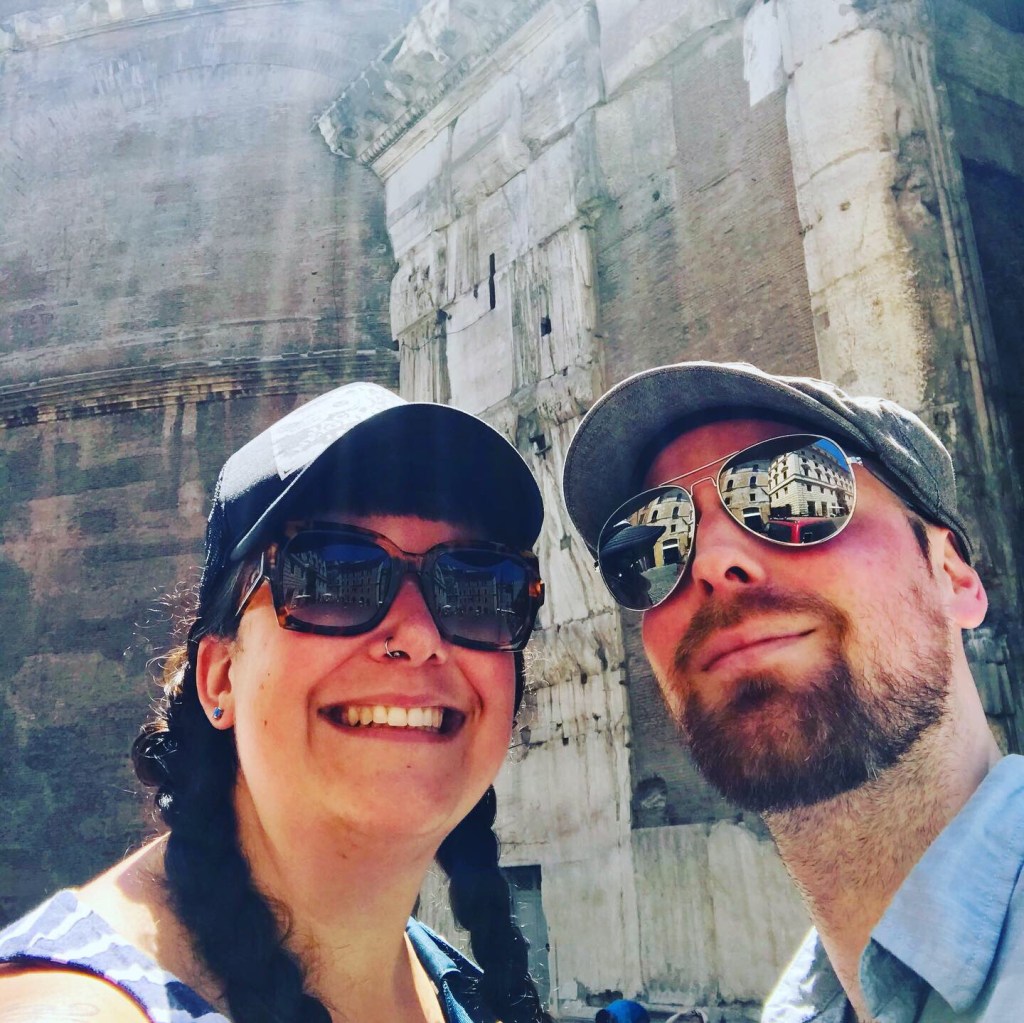
One fateful day in the summer of 2017 I proposed to my husband, over a beer in front of the Pantheon in Rome. After a week on holiday of trying to find the perfect moment and location, everything went wrong. Comically wrong. After a cringe-worthy number of failed attempts, the end result was after a week of nearly asking Chris to marry me, I just went for it with a spontaneous and slightly rambling proposal.
2017 Engagement & 2019 Return to the Pantheon!
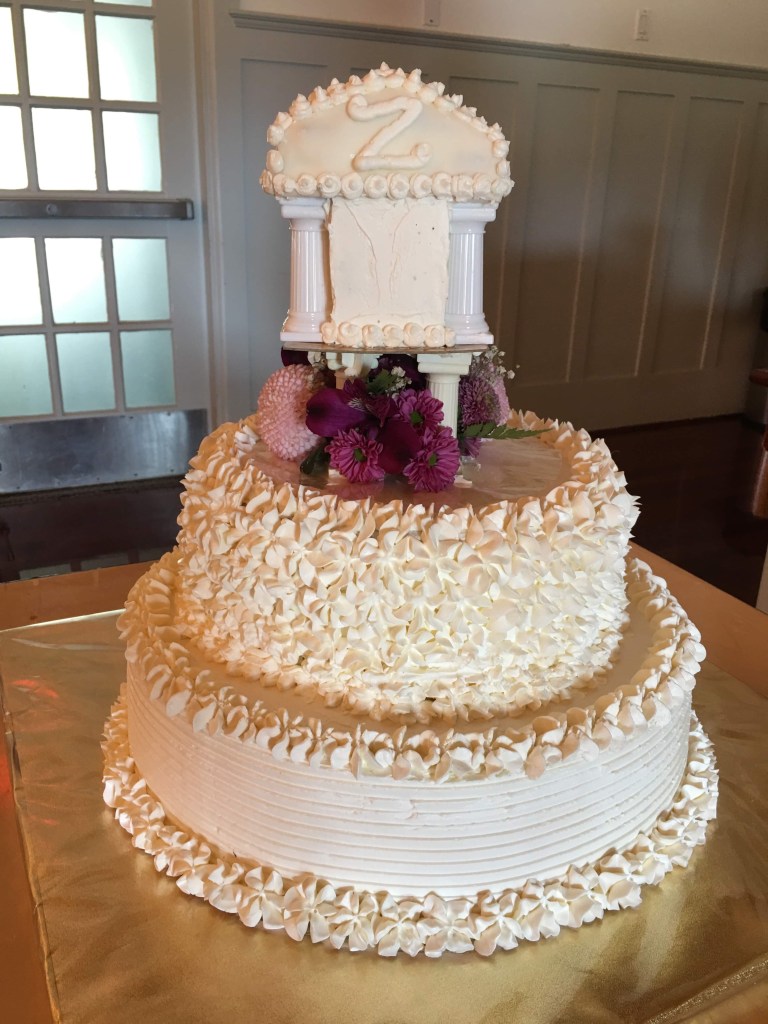
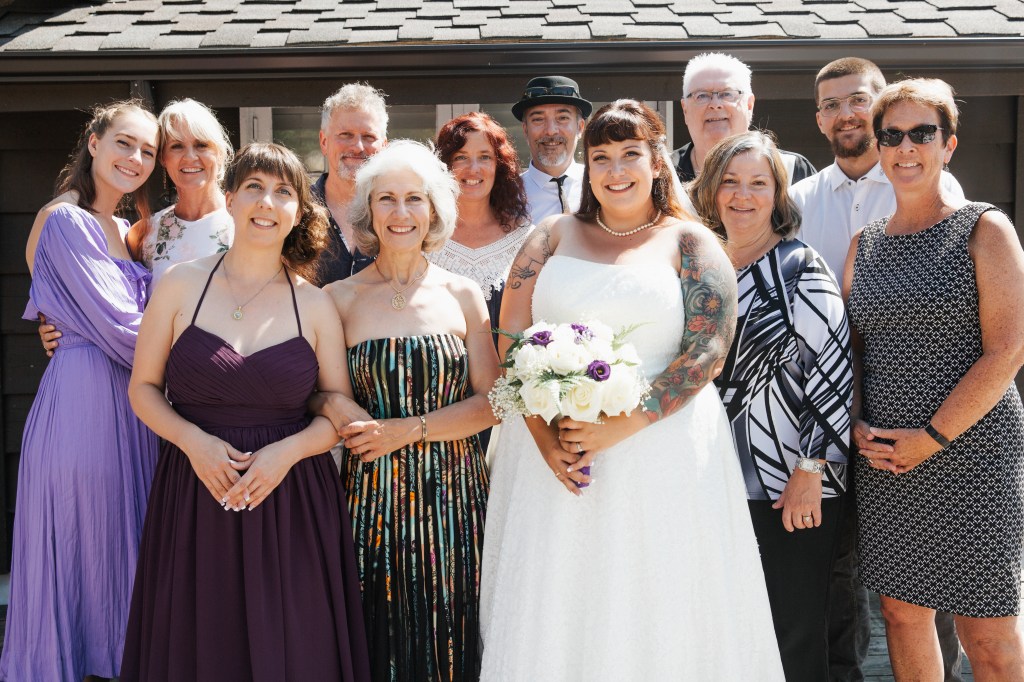
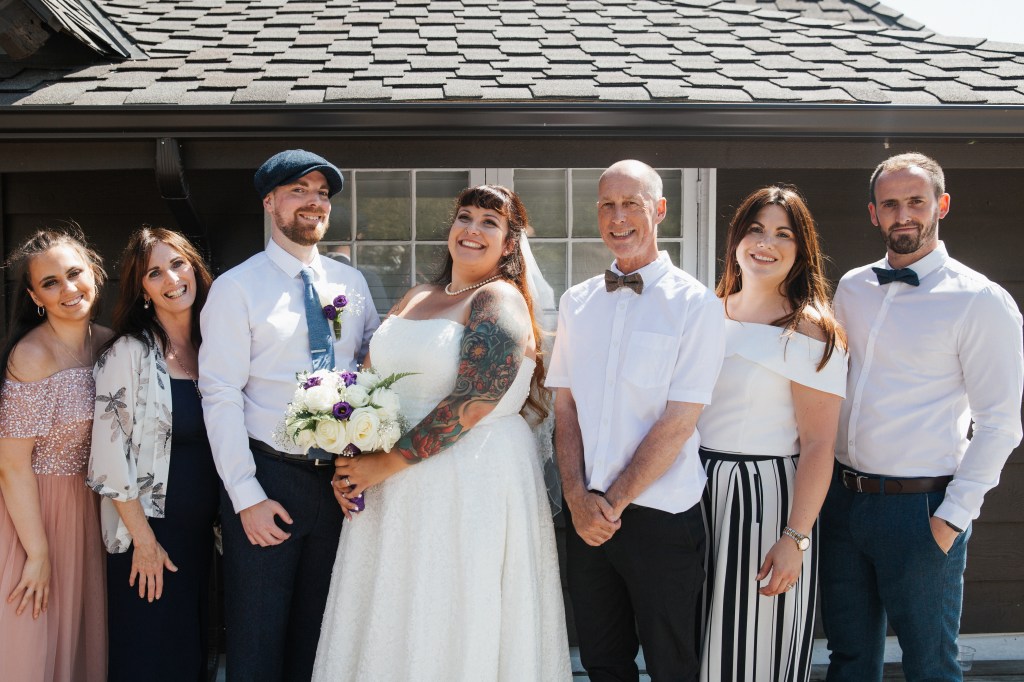
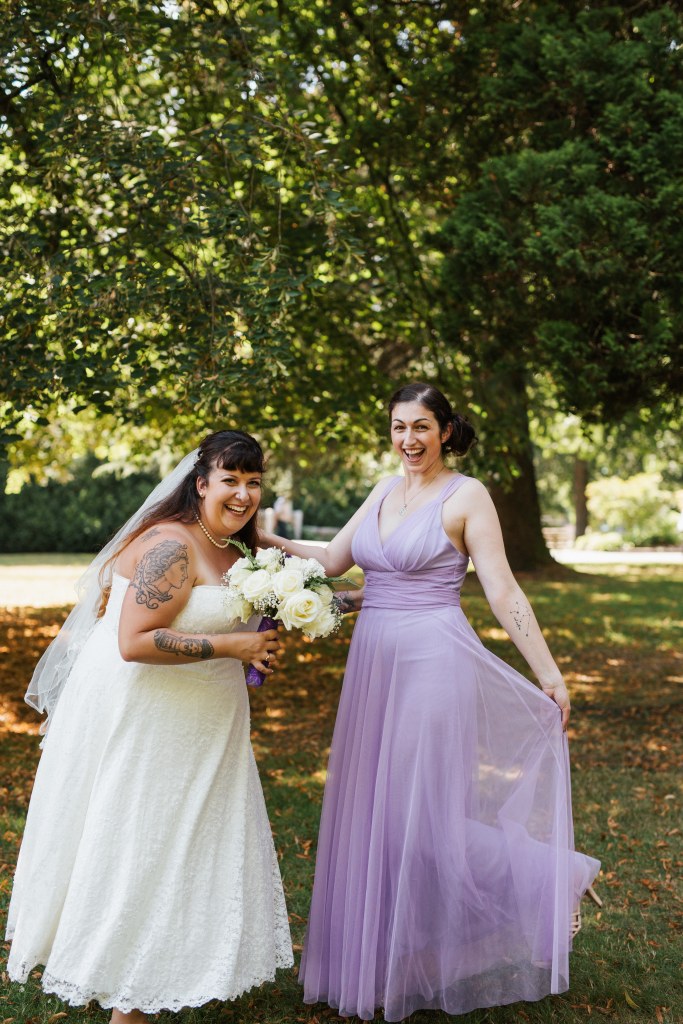
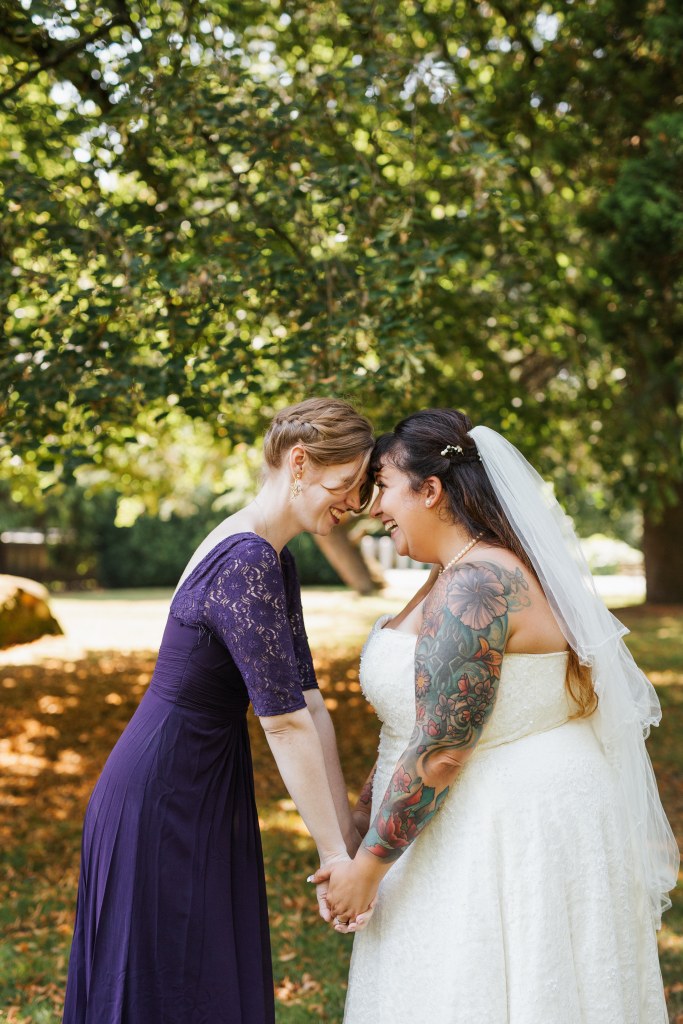
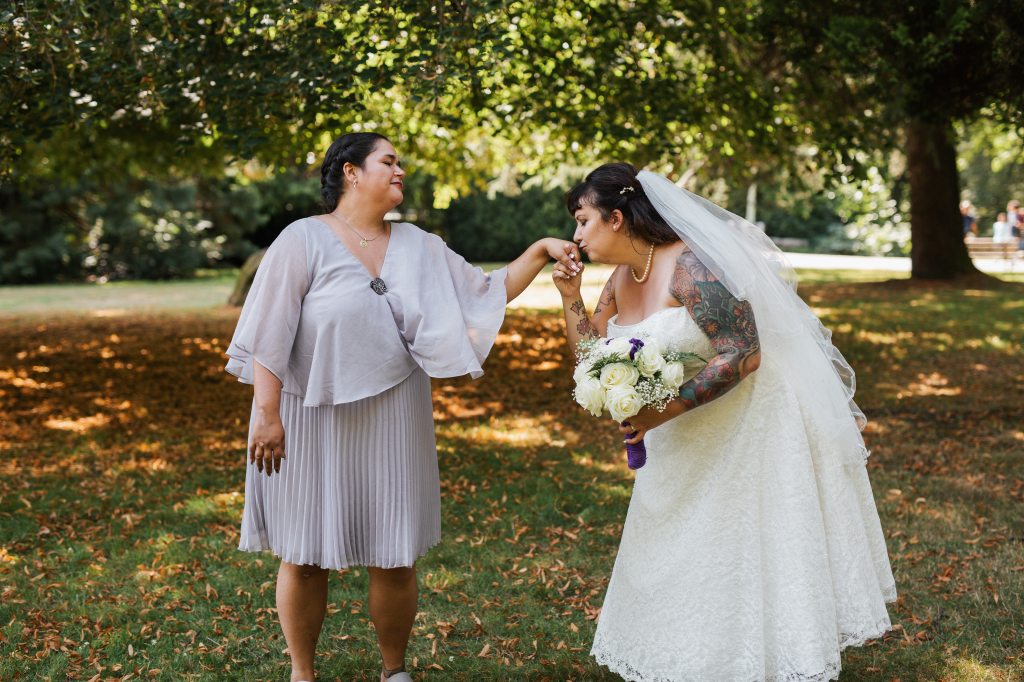
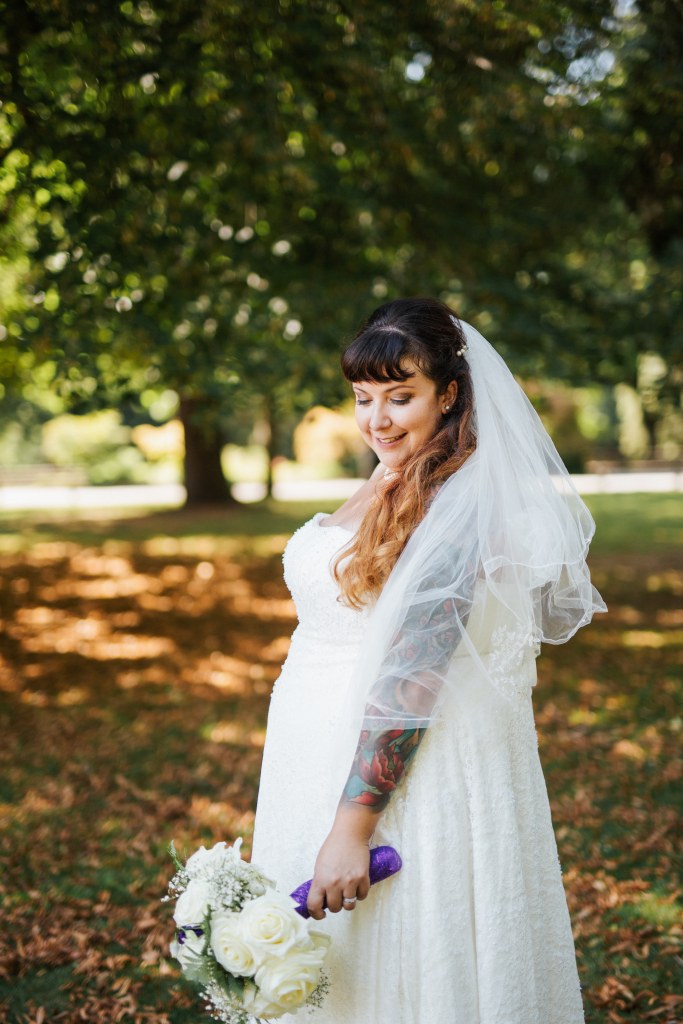
Two years later we had our big day in Vancouver, surrounded by friends and family in a gorgeous location, we tied the knot. As a testament to how ridiculous I am and how accommodating my husband is, I insisted on sneaking in all sorts of archaeology and classics-themed elements into the wedding.
We were touched and grateful to have family members and friends from all over the world who joined us for the wedding. My new family, from the UK, got to explore the province I love so much.
With hot and sunny weather August weather, the guests were subjected to volcanic heat during the ceremony! It was a truly happy day, and absolutely impossible without the support of my mom, sisters (Alex and Anaise), father and my tribe of women warriors, mothers and friends. It felt like all these hearts and minds got me to where I am today, pursuing the things that I am most passionate about, married to a wonderful, brilliant man who enriches my life while I chase my dreams.
Following the wedding, there was no rest for the wicked with escape rooms to solve, babies to cuddle and some wee excursions to spend some time with my family. In a exciting opportunity to come to the Sunshine Coast by a private sea plane! We were over the moon to be invited to this beautiful area and hang with my super lovely aunts and uncles. Spending time with friends and loved ones this summer was so restorative and the best part of the whole time in Canada.
VANCOUVER BREWPUBS
VANCOUVER
FRANKFURT
EDINBURGH WEDDING RECEPTION
EDINBURGH WEDDING RECEPTION
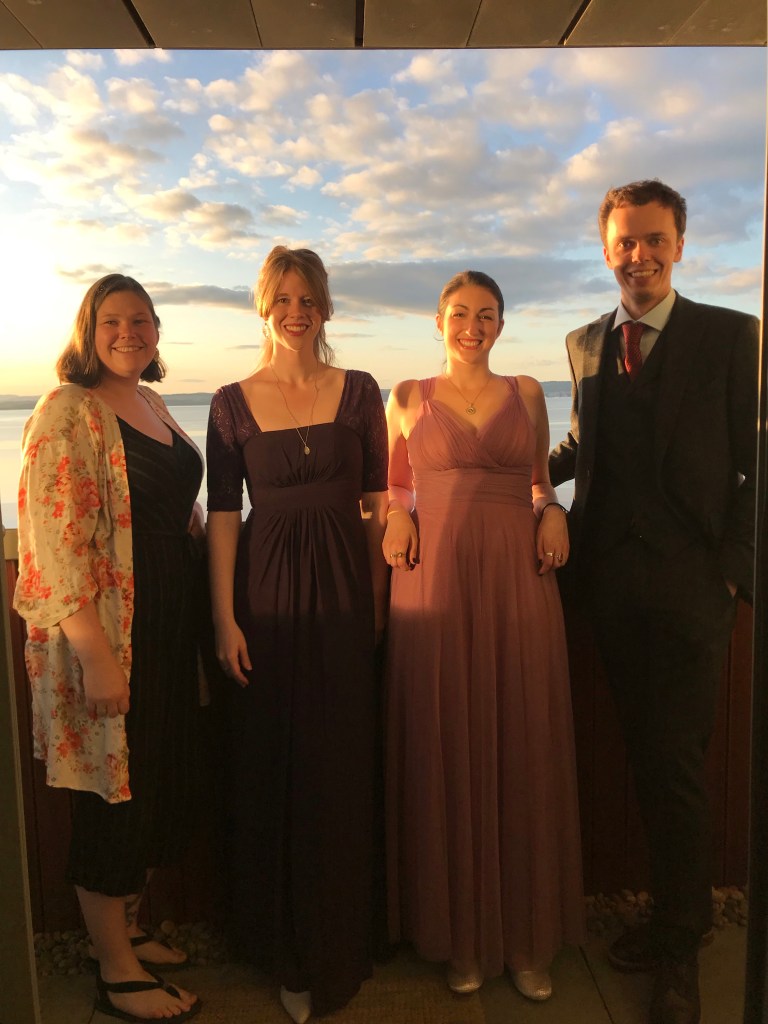
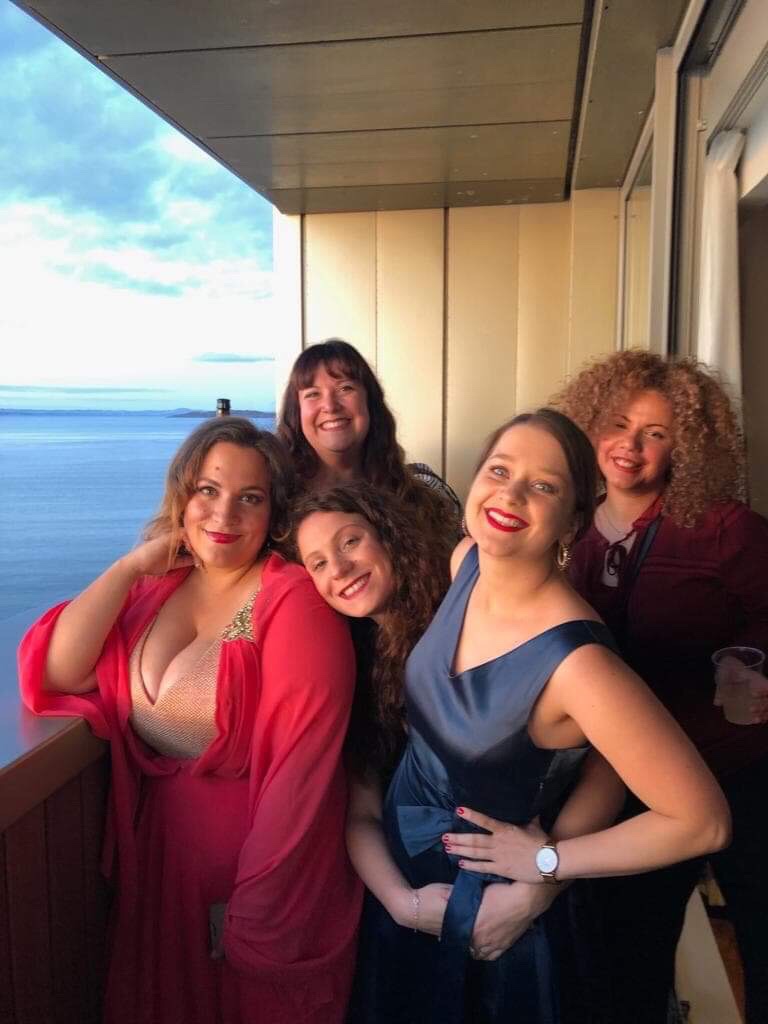
Upon our triumphant return to the United Kingdom, we had the ultimate penthouse wedding reception with our incredible community of friends, coleagues and family. It was marvellous.
Manchester & Liverpool
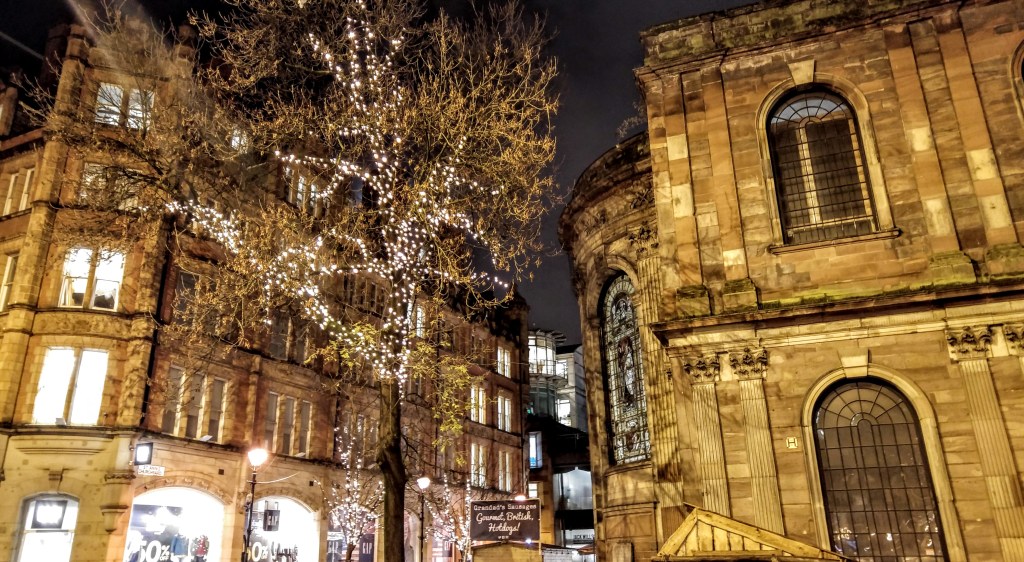
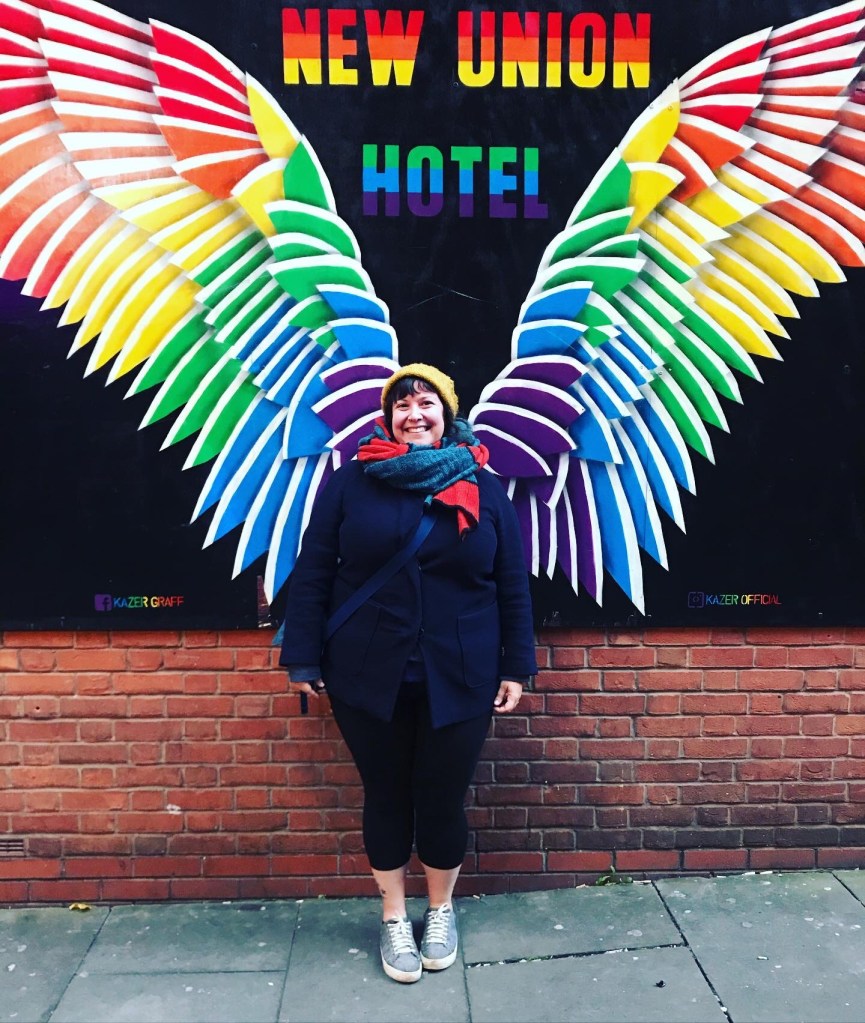
Drawing this year to a close, we decided that connecting with some of our friends who made their way up to celebrate at our reception would be the best way to spend some free time (lol, free time) this winter. We had a magic weekend in Manchester with some beloved friends and colleagues I met in 2013 during our Masters! Manchester is unarguably one of the coolest cities in the UK. It’s got the architectural edge and multi-culturalism that reminds me of Vancouver. With a quick afternoon trip to Liverpool to do some research, we got to cross that city off the list as well. It is always such a pleasure spending time with our pals in Manchester.
Belgium
As a little treat for ourselves, Chris and I wanted to spend a week in Belgium. Having visited about two years ago to the day, we were stoked to stay with our lovely friends and colleagues in Leuven. The talented Dr Close (Hellenistic History Instagram) and her lovely partner Stijn.
New Year, Who Dis?
It’s hard to believe all of these things happened within the last 12 months alongside school, work, project work at Aeclanum and so on. Like a last grasp at the hectic-life that used to signal to me that I was working hard enough, if I was too busy to blink, surely it meant I was working as hard as possible. Working hard, but perhaps, not working smart. This year was a kind of awakening. For many years I believed I had some sort of super-human ability to multi-task and problem-solve, whatever else was going on in my life, I could get it done. Whatever ‘it’ was. I would just sleep less, or socialize less, or work during other work…the mind boggles how all this made sense. What I discovered, rather late, was that this balancing act wasn’t balanced at all. It was a very typical high-achiever’s cocktail for burnout. Even projects and activities that gave me great pleasure, if they were not my thesis, then it had to go. Coinciding with moving house, this fall was all about starting anew and positively.
This year I am trying something new and sustainable: in life, in art and school, I will pare everything down to a focused and balanced year ahead.
In fair Padua, where we lay our scene…My Shakespeare may be a bit dusty, but that is definitely maybe how that goes, right? There were certainly enough ‘Juliette windows’ to make you think you might be stepping into a Shakespearean play!
Until recently, Padua was an elusive northern Italian city in the Veneto on my list of places to visit, but I’d never quite made it up there. With very limited experience in northern Italy, I planned to surprise my husband for his birthday with a weekend in Padua. We packed our bags and hopped a flight with a friend and colleague, Dr Lucia Michielin, to stay a few days in her hometown and experience the city, the mountains, and her family’s gastronomic traditions.
Bacchiglione River
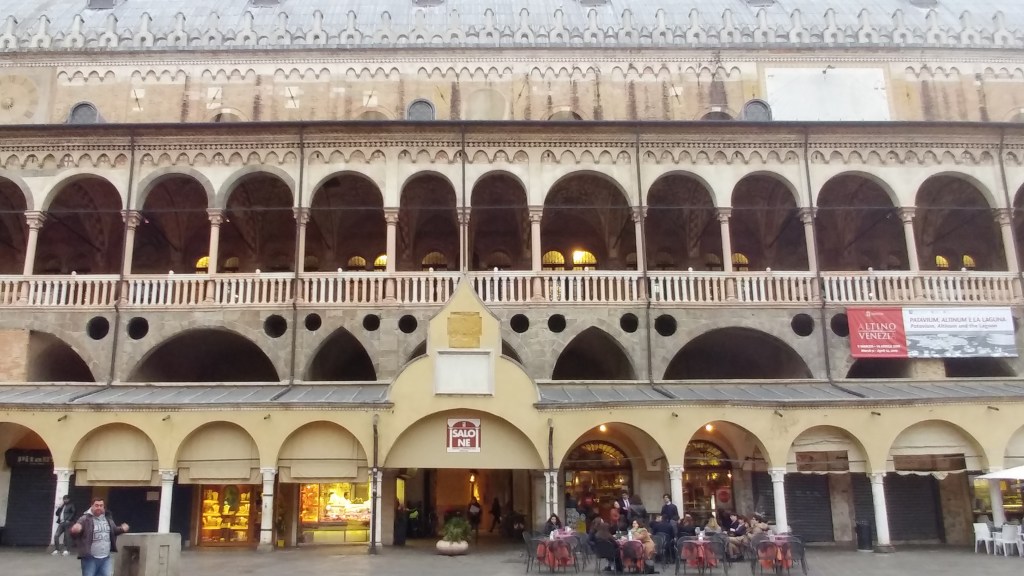
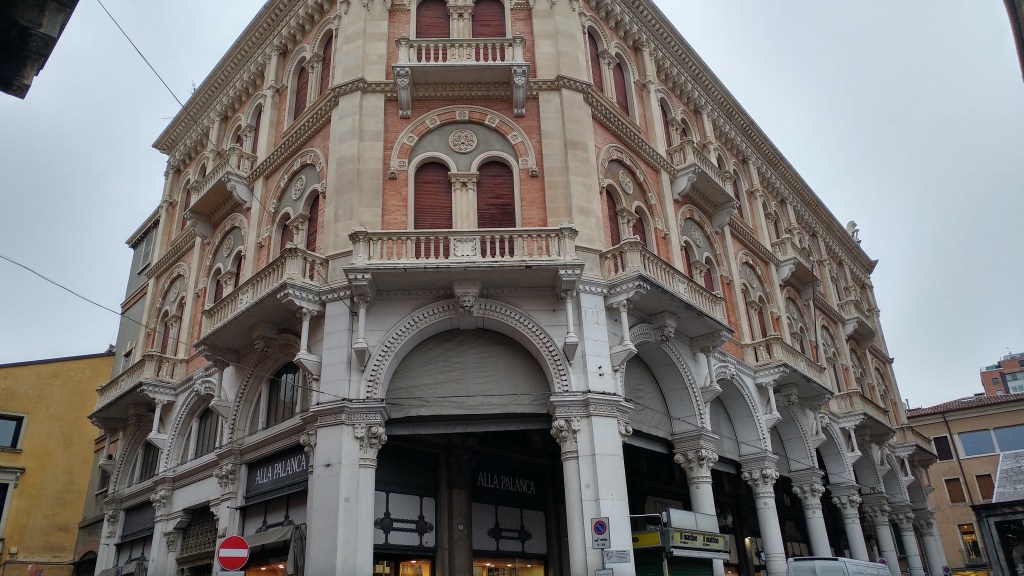
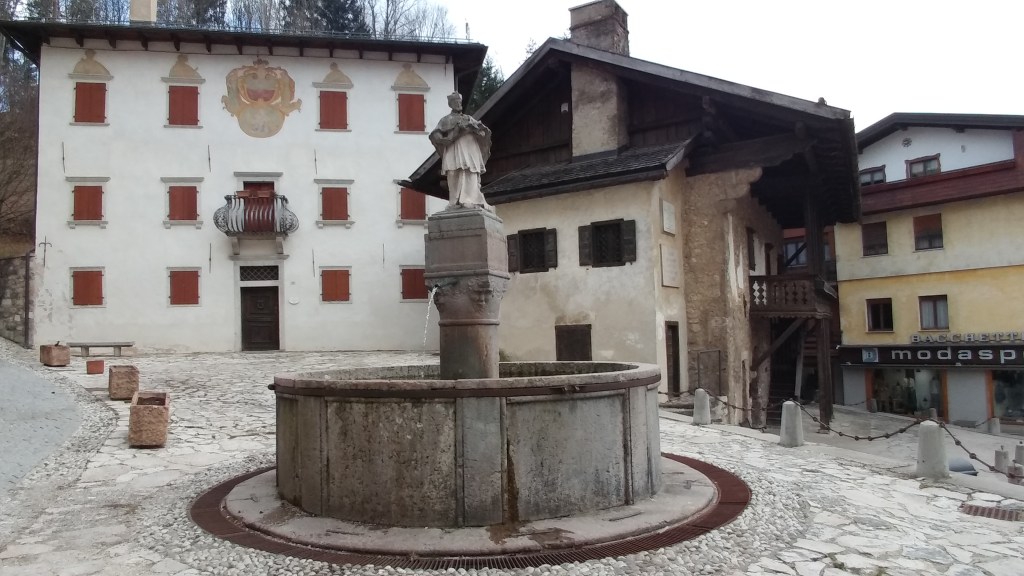
Padua is radiant, serving you sunshine with arcaded walkways and boutique shops for days. The history of Padua is etched into the very walls of the shopping areas! Markers of older commercial activities, as pointed out by our knowledgeable local hostess, created in a few different shapes to suit several types of common products to make sure no one was getting ripped off.
Measurements for breads and presumably meats, carved into the old stone walls.
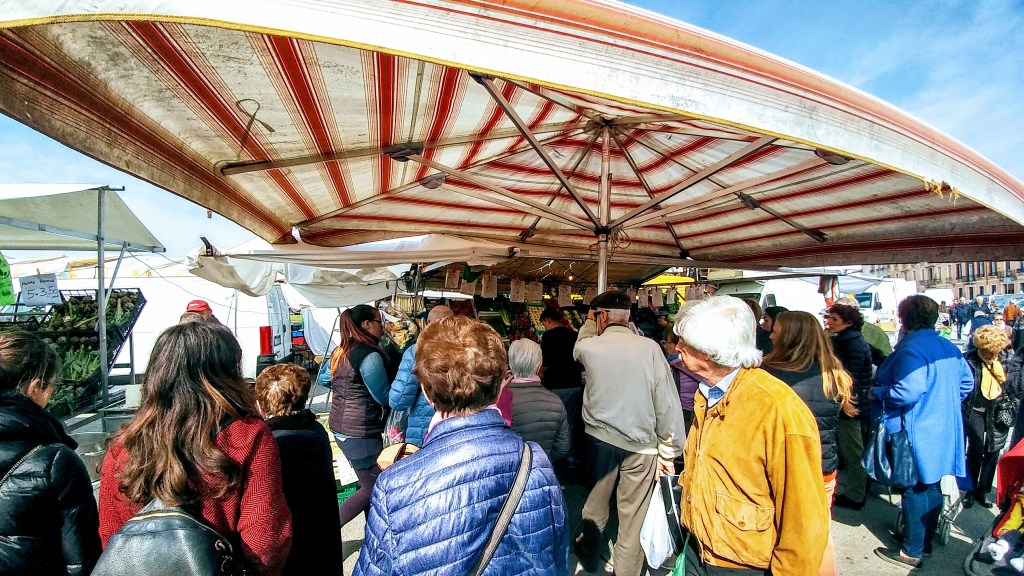
Piazza delle Erbe was a bustling residential area in pre-Roman era, then with intensification of urbanization, this area took the form of the piazza it is now by the 10th century CE. Within Piazza delle Erbe, the market is elegant and layered from the outside, and on the inside there are all sorts of traditional food items sold. The butcher and cheese mongers were mouth-watering.
Roman & Early Renaissance Padua
The archaeology museum of Padua had some Roman finds that I hadn’t come across before: a stargate- I mean, “well”! Obviously, we took silly pictures inside it.
Remains of an amphitheater are found in the city center near the Scrovegni Chapel and the Eremitani Museum of archaeology and art. Well worth a visit, though there was nothing pertinent to my research there, the banter is always fun when walking around an archaeology museum with a colleague.
Coming to Padua, we were most excited about visiting the Scrovegni Chapel with the famous fresco paintings by Giotto. Having studied this chapel in art school, I was really keen to see it in real life. Painted by Giotto and his workshop over the course of nearly two years, the chapel was consecrated in 1305.
The pictures don’t do it justice; the blues are electric and packed with detail. The vibrancy and realism for this period innovative, well in advance of when we would typically expect this type of work in the Renaissance. Giotto preceded them by 200 years!
From a heritage management perspective, the way they regulated tourism and its impact was clever. Taking small groups in at a time, allowing the temperature to acclimatize through a series of waiting rooms, visitors can explore but also preserve a fragile painted environment. It was a real privilege to see this chapel, and their conservation programme will keep it vibrant for years to come.
Some quick sketches from the trusty Moleskin
A drive to the mountains
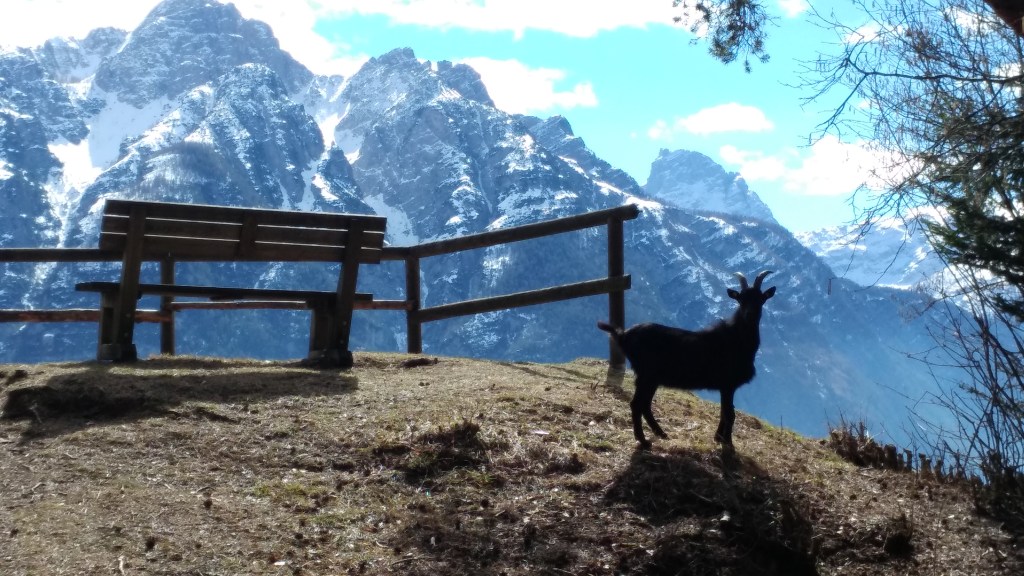
One of the spectacular views from the mountain trail.
Calazo di Cadore
After a day in town wandering and feasting, our hosts took us on a drive to their familial mountain home. The drive up was full of twists and turns, and the crisp air with gorgeous views was lit!
These gorgeous old buildings lined the road up to the family house above the quiet center of town.
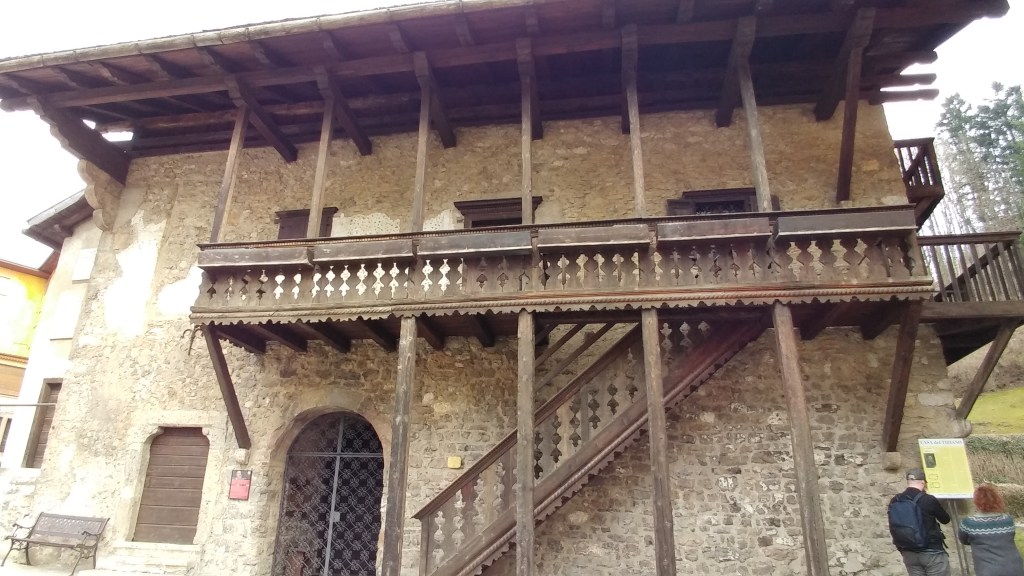
Scooting around Lago di Centro Cadore along the narrow walls of the dam I clutched at my pearls, it was beautiful and harrowing. I was grateful to not be the driver on this occasion! Whilst sauntering around the quiet and picturesque town center, we passed by the home of the famous painter Titian. Famous for the use of electric blues in paintings, extending the colour to subjects beyond the decoration of the Virgin Mary’s robes, one got the sense of how much this stunning blue was part and parcel of experiencing this area. The sky, the mountains and lakes were all so vibrant.
The house of Titian and an enviable balcony. Our horny visitor 🙂
Within this packed daytrip, we saw gorgeous mountains, walked around a park and had a gorgeous rustic little sammich with tasty local meats! I could spend a season tucked away in one of these historic cabin homes enjoying the view. As a girl from British Columbia, the mountains are always calling me, and these mountains did not disappoint.
Padua Foodies
Wandering around the market area, I instantly regretted that I only brought carry-on luggage.
Within a 72-hour period, we sampled a significant array of incredible culinary delights. It seemed impolite to take photos at the dinner table, but I can assure you, each meal was like a delightful sampling of many dishes.
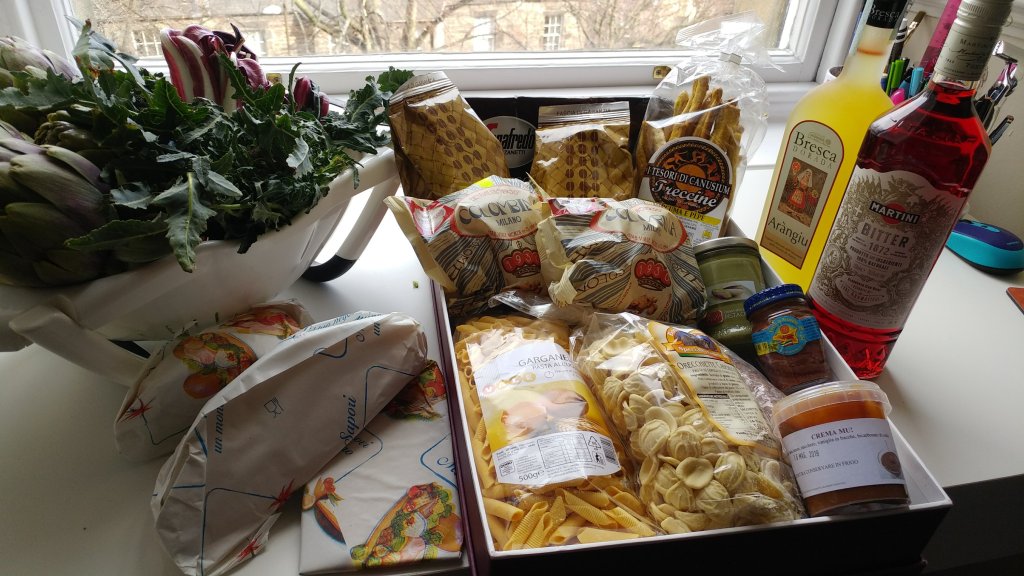
In my attempt to broaden my horizons in the kitchen and decrease general consumerism, I’ve taken to buying foodstuffs as culinary souvenirs. I am excitedly trying my hand at these dishes, and slowly learning about the ethos of Italian cooking. While I will NEVER give up my afternoon cappuccino no matter how many taboos that crosses, I am willing to abide by SOME culinary rules when the results are delicious.
The market had clothing, household goods and lots of gorgeous fruits and vegetables!
Our generous hosts took me to local farmer’s market, butchers and grocers showing me which ingredients to use to try and replicate the dishes they cooked. It was the most magnificent bounty I have ever seen; the blessings of Fortuna were upon us. The greens, artichokes, creme caramel, fresh cheeses and meats were probably the best souvenirs I have ever brought home.
Coming from Canada, I was mind-blown that we could bring back so many incredible fresh staples on a quick flight. Fresh ricotta in checked luggage? Yes please.
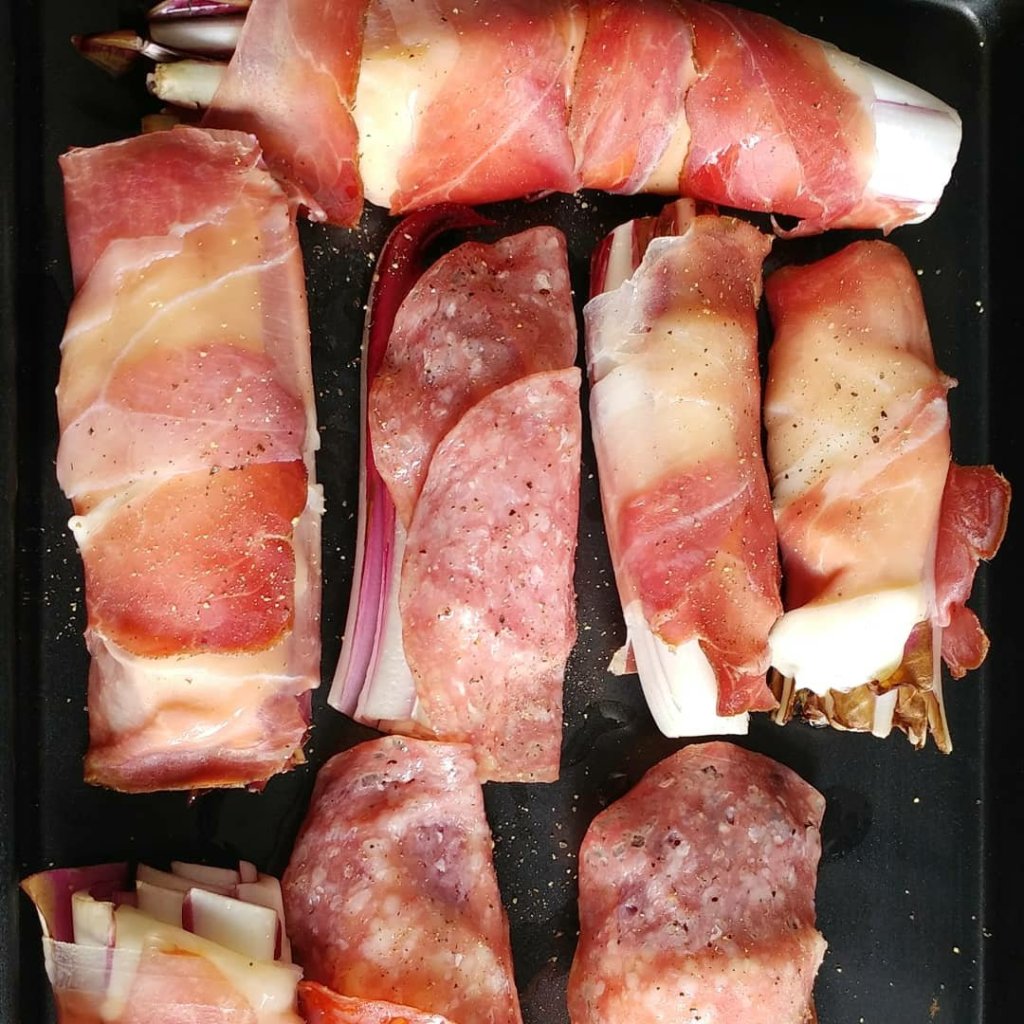
Once we were back in Edinburgh, I wanted to try my hand at a wee dish that our lovely hosts made one evening. Parma ham wrapped radicchio and local soft cheese.
The flavours of the fresh produce were fantastic, and being a heathen, I even played with other types of meat to wrap the radicchio and cheese.
The results were delicious.
Many of our trips take us to locations where we have friends and colleagues, which offers such a rich and interesting way of experiencing a place. Spending a weekend with the Michielin family made me fall in love with Padua and get a little more culinary confidence!
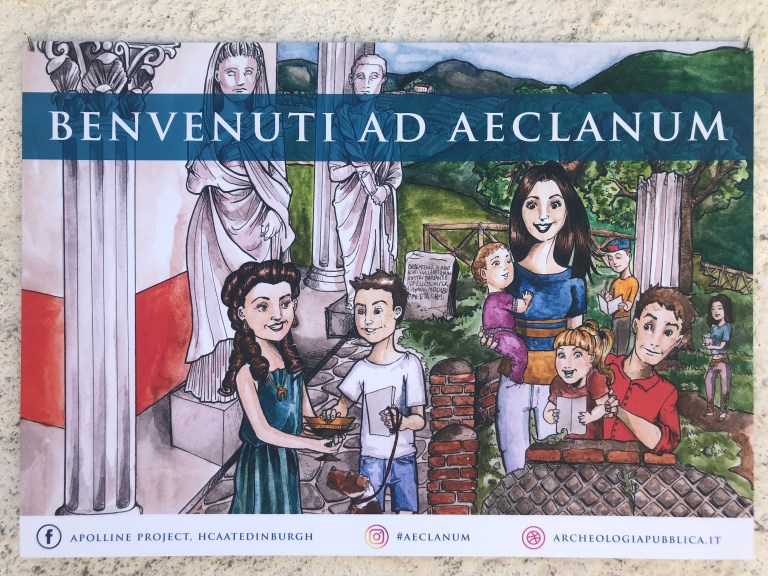
The last 12 months have been eventful, with a lot of life changing things on the horizon to be excited about. In a few short days, I will be heading off for a third (more lengthy) season in the Roman town of Aeclanum, (near modern Mirabella Eclano, Italy). The last year was incredibly formative for me, as I was privileged enough to work on developing materials with the site directors of Aeclanum from the University of Edinburgh and the Apolline Project for public outreach for the Open Day, as well as ongoing learning materials for children to engage with archaeology in schools.The opportunities to share this work are blooming into new areas for me professionally with a lot of creative directions to pursue.
Pronnoi excavation site, 2008. Photo by Cait Pilon.
My first dig
Ten years ago, before I knew what I wanted to with my life, I applied for the opportunity to work on a three-month salvage excavation in Poros, Kefalonia. This excavation was organised in collaboration with Simon Fraser University and the Ephorate in Kefalonia. One family in Poros, the Metaxas family, made an incredible impact on my time there. They were strong advocates for this dig, working with the local government to see that the archaeological site was excavated before it was robbed or destroyed once it became apparent that there were tombs located there.
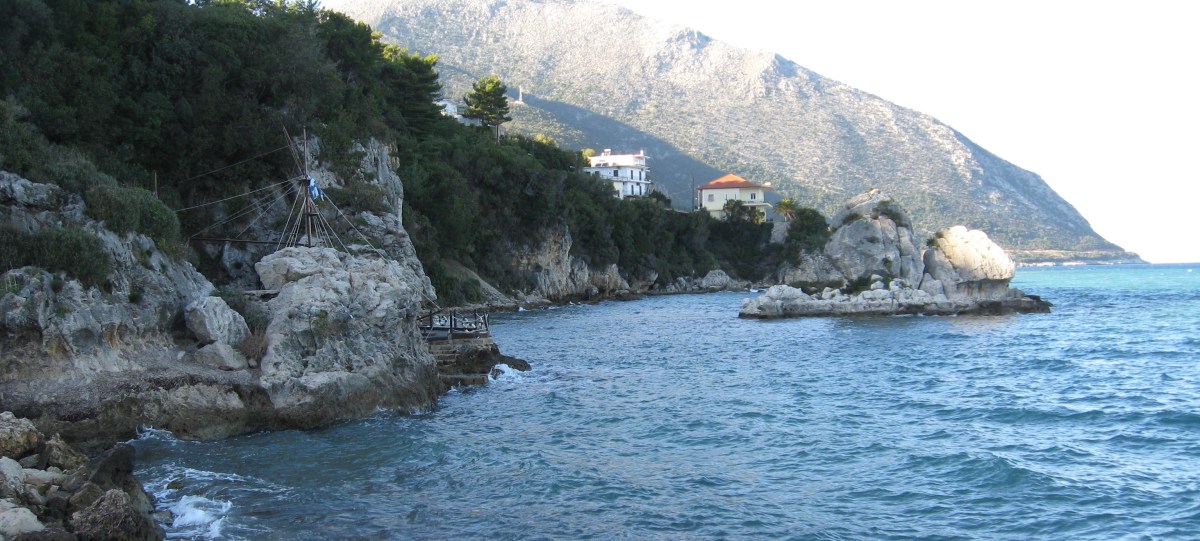
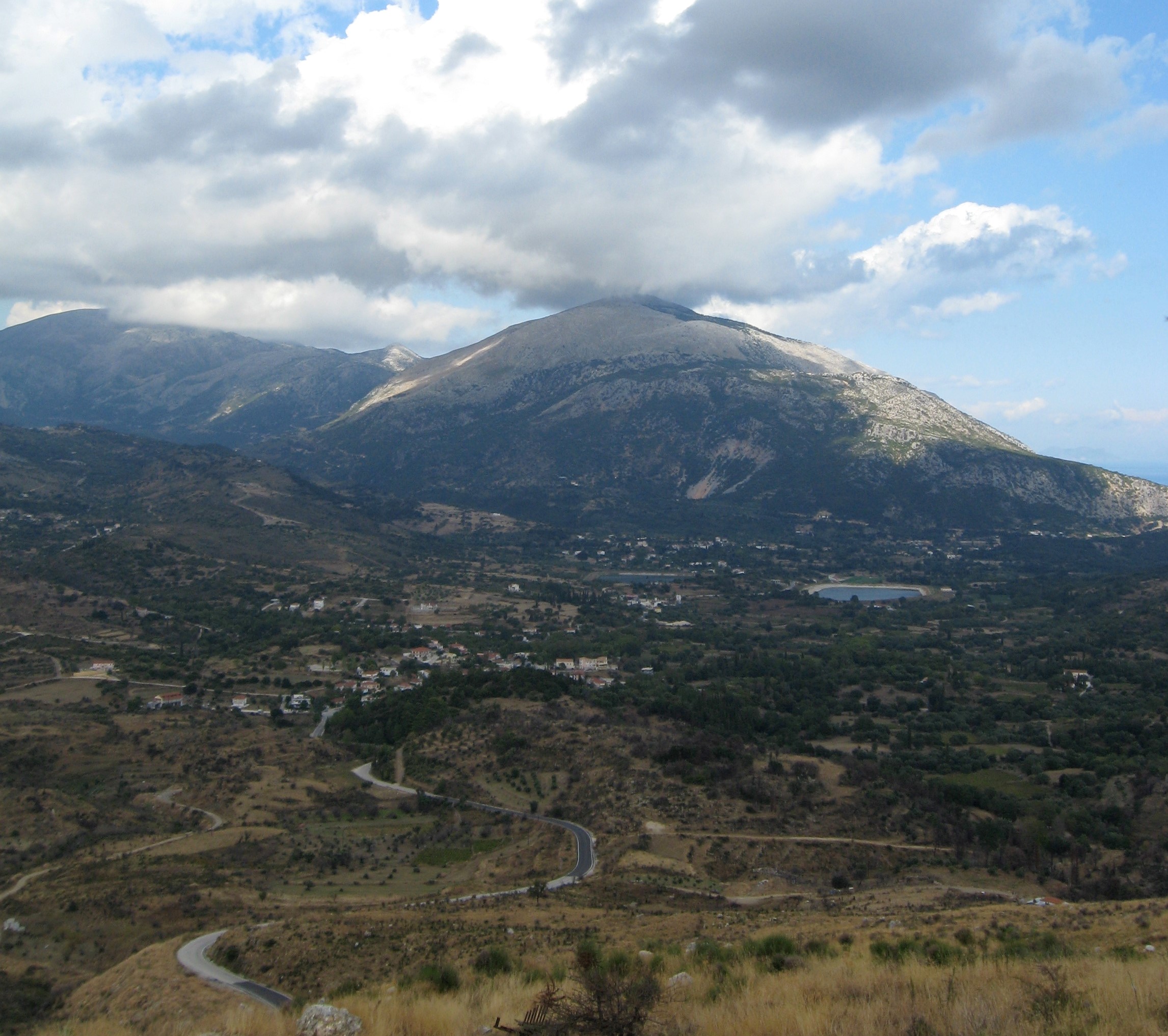
The view across the valley from the necropolis.
It was a project born out of a local passion with an aim to start documenting and publishing the rich history of the area, which had been under occasional excavation for decades with very little making it into the public record. By the time of our arrival, there was evidence of looting, so speed was of the essence and the local archaeologists worked with a ragtag bunch of undergrads to excavate and document the human remains and small finds.
The scientific processes are the same for a salvage dig as a normal one, but the elements that are the focus of the excavation tend to be revealed and in peril, so acting quickly and documenting as much as possible is the priority. Our team worked on the excavation during the day and in the evenings would have classroom time and readings, even the odd Greek lessons. Even on the rainy days where the schedule entailed 8 hours of pottery washing, it was still brilliant to be part of.
The antiquity of the necropolis was evidenced through artefacts which represented multi-period usage on the site for burials, an ancient garbage dump (large amounts of broken pottery and animal bones), and fluted columns and architectural blocks from some unidentified building structure.
Excavation in Pronnoi
The excavation work was productive for getting the half-exposed burials out in time before the winter rains began to set in, though occasionally, flash rainstorms would flood the side of the mountain with us on it. The pithoi were interesting tomb-types that were repurposed from containers for bulk storage of grains or other items to a burial container. Once the ceramic vessel was broken up, a body was interred in a flexed or crouched position, and grave goods were added. The vessel was placed around them with fill, but could be accessed again, if another body was to be added to the burial at a later date.
Grave Goods
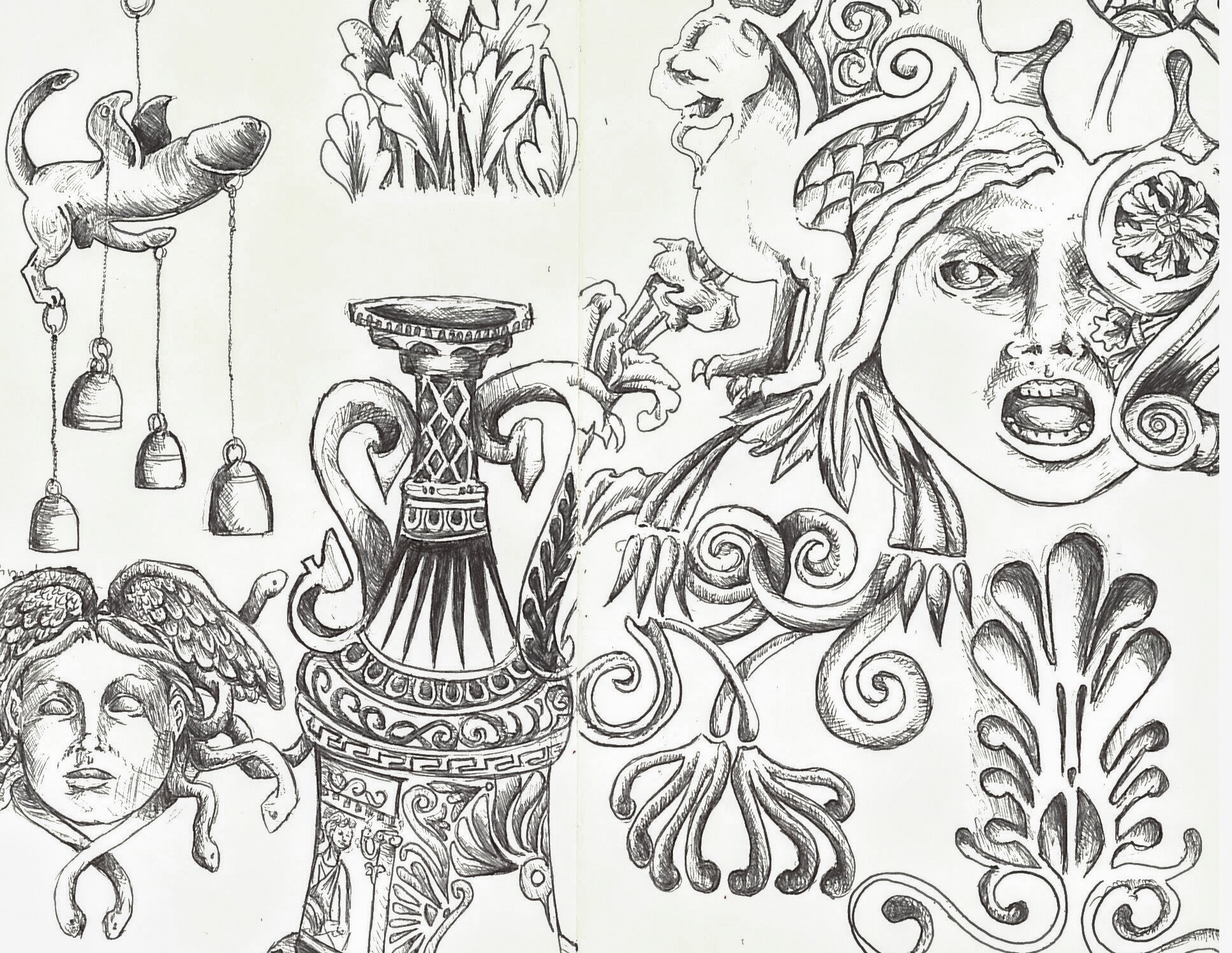
The status of the publication of the finds from the dig is unknown to me, so to avoid getting in trouble, I have made a few artistic renderings of some of the standout artefacts:
Gorgon head, amber.
Corinthian, silver coin.
Lyre player, pottery sherd.
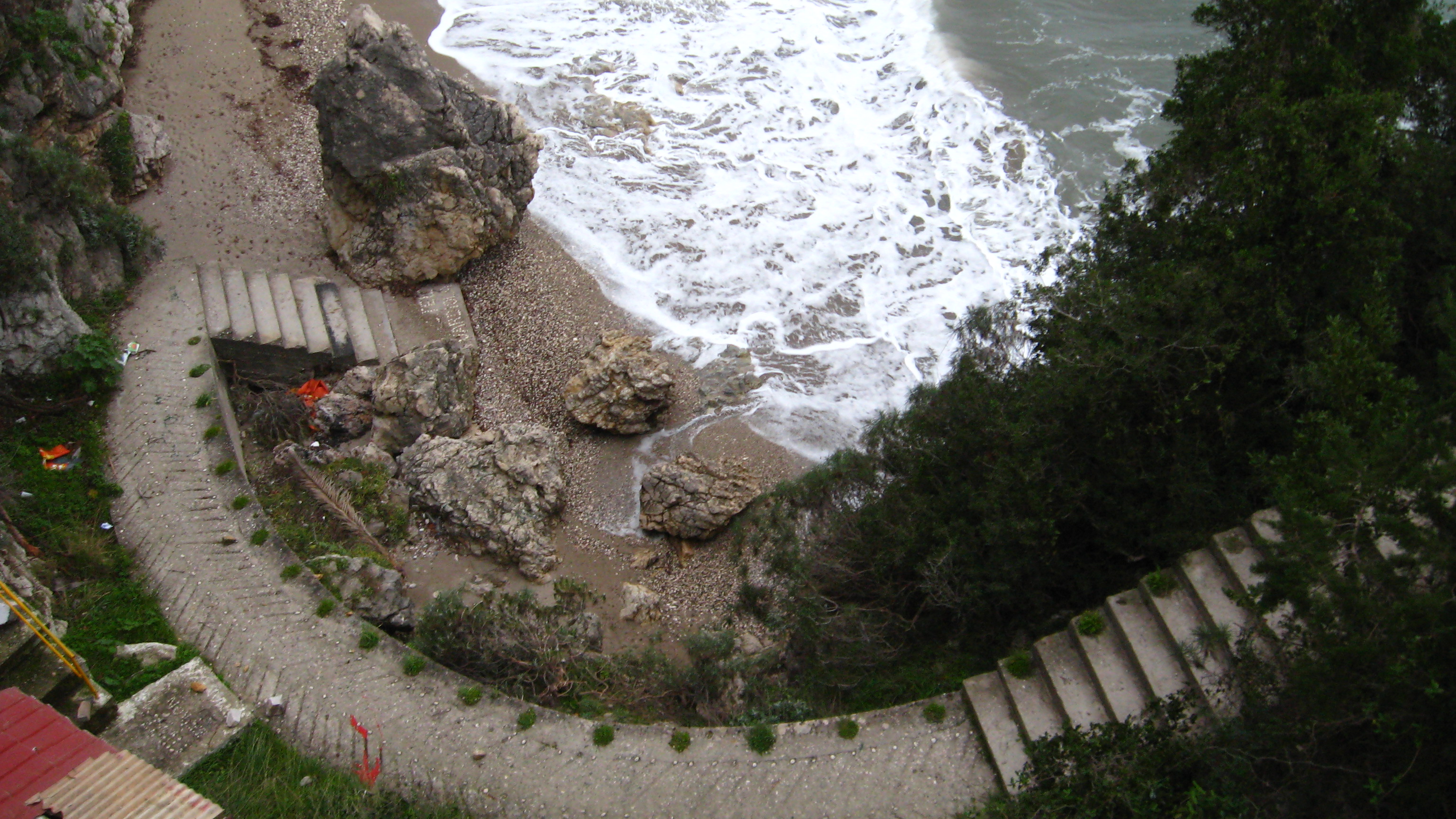
From atop the hill we excavated the necropolis, you could see across the valley with stunning views inland and out to the sea. Putting myself in someone’s sandals from 2,500 years ago and looking out across the same seas they did was a moving experience. Having studied Humanities texts and Art History prepared me in a large way for I was able to see how much more I need to understand before the study of Archaeology or Ancient History. Linking this site in my mind to the Homeric kings and events from the Iliad and Odyssey was only natural, since it was on our reading list, but the chronology of the material culture certainly aided the visualizing of the Bronze Age culture.
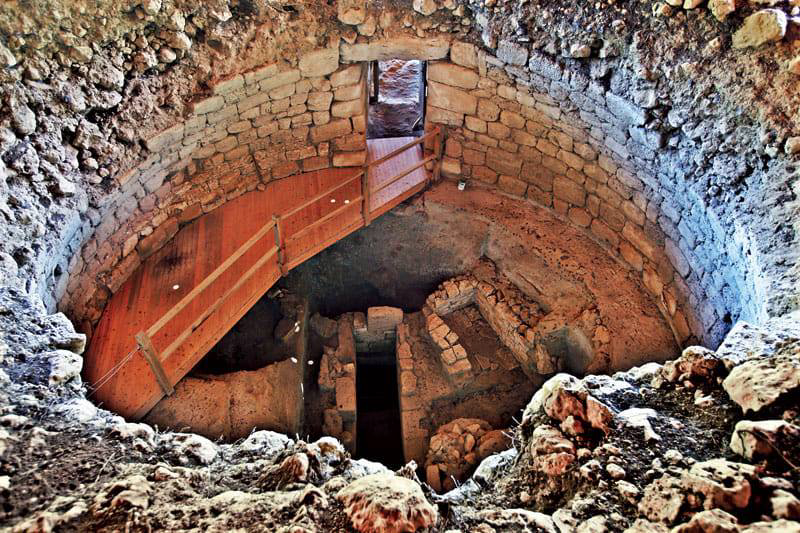
Searching for Bronze Age HeroesThe antiquity and long habitation of the region was visible in another area, Tzanata, 3 km east of Poros in the Eleios-Pronnoi municipal region, which had a preserved tholos tomb, or ‘beehive tomb’. This type of tomb has a dome-shaped chamber (like a beehive cut in half), an entrance passage (dromos) and a doorway (stomion) covered with 1-3 lintel blocks. These monumental structures would be buried underground, though accessible, as there could be multiple burials over long periods of time.
The nearby environs of Poros were home to a Bronze Age tholos tomb, which has been dated to around 1400 BCE. This tomb, excavated by Lazaros Kolonas in 1991, contained several sequential burials that could suggest a common lineage.
While significantly smaller than the most famous tholos tombs of Mycenae, it certainly showed comparable architectural features and represented elite participation in the monumental funerary building of the Bronze Age Mediterranean. Finds in the archaeological museum of Argostoli (temporarily closed) reveal golden grave goods from the Mycenaean cultural influence. Included in these finds were carved gemstones a seal that has been interpreted as ‘royal’ were discovered in the tomb. The proximity to Pylos, among other Bronze Age kingdoms of the area, provide parallels chronologically for local elites of Pronnoi having a similar kind of rule over the area by virtue of using similar funerary cultural practices. However, little is known of this site as the excavation reports remain (I believe) unpublished. If further work has been done on this site, it would open up a lot of interesting questions about the position of Kefalonia within Bronze Age trade and indeed, later into the Classical period.
Suffice it to say, my time spent in Poros, Kefalonia, was fundamental in shaping the direction of my studies and career plans. While I have not been back since 2008, the richness in history, the warmth of the community and beauty of the island is still deeply felt. I am making plans to return and investigate the current findings of the area and reunite with the incredible people who made it such a memorable experience for me.
“To be away from home and yet to feel oneself everywhere at home; to see the world, to be at the centre of the world, and yet to remain hidden from the world”
– Charles Baudelaire, The Painter of Modern Life and Other Essays”
Walls of Policastro Bussentino, Italy 2015
The concept of ‘the flâneur‘ is an old one that has recently entered my mind as my PhD research is starting to intersect conceptually with my artistic experiences within ancient city spaces. As someone who feels that you need to walk a city to really experience it, I also believe to really see a city, it helps to sketch it; not the whole thing, and not just its monuments, but small details and elements. The 19th century French symbol of the flâneur is relatable to me for that reason.
For the flâneur, one interacts within urban spaces through engagement (in painting or writing) and observation, but still remains apart- both a performer and spectator. The lesser-known ‘flâneuse’ is the female chronicler of urban life in the 19th century, figures like Virgina Woolf, as discussed in this article, are part of the underespresented presence of female urban explorers. As a modern female explorer of ancient urban spaces, creating a space to discuss, share and engage with these ideas and locations in the public sphere is important to me.
Additionally, this concept resonates for me, as an archaeology student and artist, because it embodies more than a spirit of adventure and making art, but also a spirit of understanding and trying to piece together the urban landscapes that have developed and disappeared over time.
Maratea and the statue of Cristo Redentore, 2015.
Since my first trip abroad, in 2002, the drive to sketch and take in everything that I could has formed an important part of appreciating a significantly bigger world than I knew. Sketches from my earlier books explored famous portraits and statues the likes of which I’d only ever seen in Art History courses.
This initial exposure provided me with access to masterpieces in galleries that were unlike the art I could see with any regularity in Canada. Sketching from paintings was a lot of fun and I felt so fortunate to see the images, but my first visit to archaeological sites in Greece and Italy really affected what I wanted to draw.
Sketches from Delphi: reliefs and helmets 2008
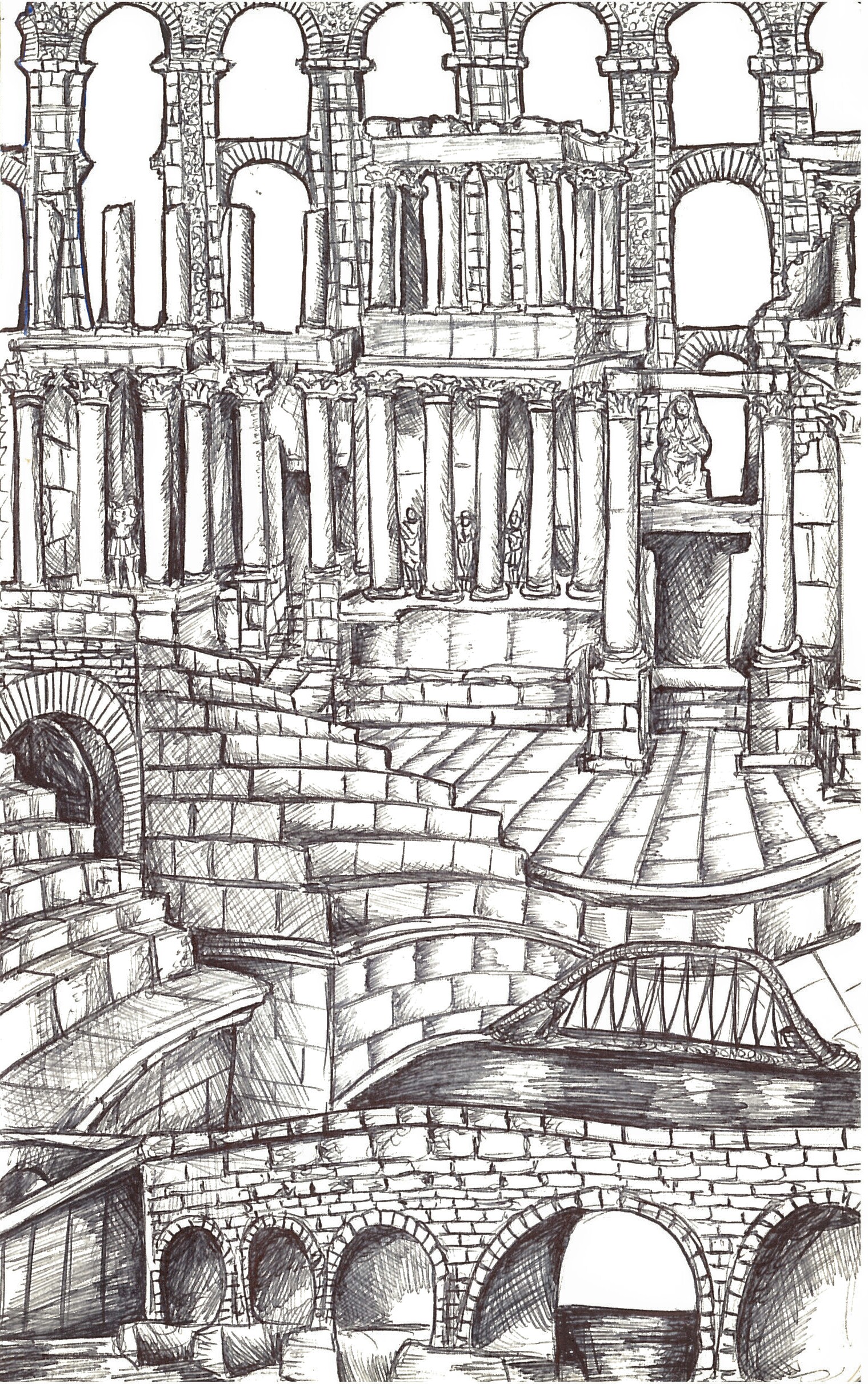
Visiting many sites in the Mediterranean over the last 10 years, I was able to sit and breathe in these ancient cities by focusing in on the shapes and forms of the stone, lines of sight, and views between one temple to the streets or the valleys below. My curiosity directed me to explore artifacts and material culture that were used to adorn Greek, Etruscan or Roman buildings and the individuals who navigated through them.
From Observer to Preformer
Lady of Elche, 4th century BC, Iberia
The most inspiring pieces of art in the world were at my fingertips (sketchbook and pen tip), but my shyness about drawing in front of strangers took a few years to overcome. Ironically, the simple act of drawing in public would lead to some of the most interesting encounters with fellow travellers, curious children and tour groups. I have found the quiet study of the place you are in, or artifacts in front of you, signals something unspoken to other people which is inviting.
Sir John Soane’s Museum 2015
Over time I developed my own sense of style. I could explore patterns and elements taken from brick designs, patterns of lace on Dutch merchant collars, hairstyles of Roman and Greek elite women, and not worry what the person hovering over my shoulder thought.
Much of what made this passion for drawing more appealing was the utility of having something free and enjoyable to do with the many hours you spend while traveling to get to the place you are going. Waiting to cross the sea on a ferry or idle at a train station on my way to a new city, provided me a good amount of time to reflect on my sketches.
This reflection began to take greater shape and purpose once I started to do postgraduate research. Having questions and a focus of study in my mind affects the way I approach the ancient city spaces around me. It focuses my vision, but also encourages me to think on the connections between the visual elements across the Mediterranean. You don’t need to travel all over the Mediterranean to realise there is a shared visual culture being used with an incredible exchange of ideas and styles at play, but it was helpful to visualize the scope.
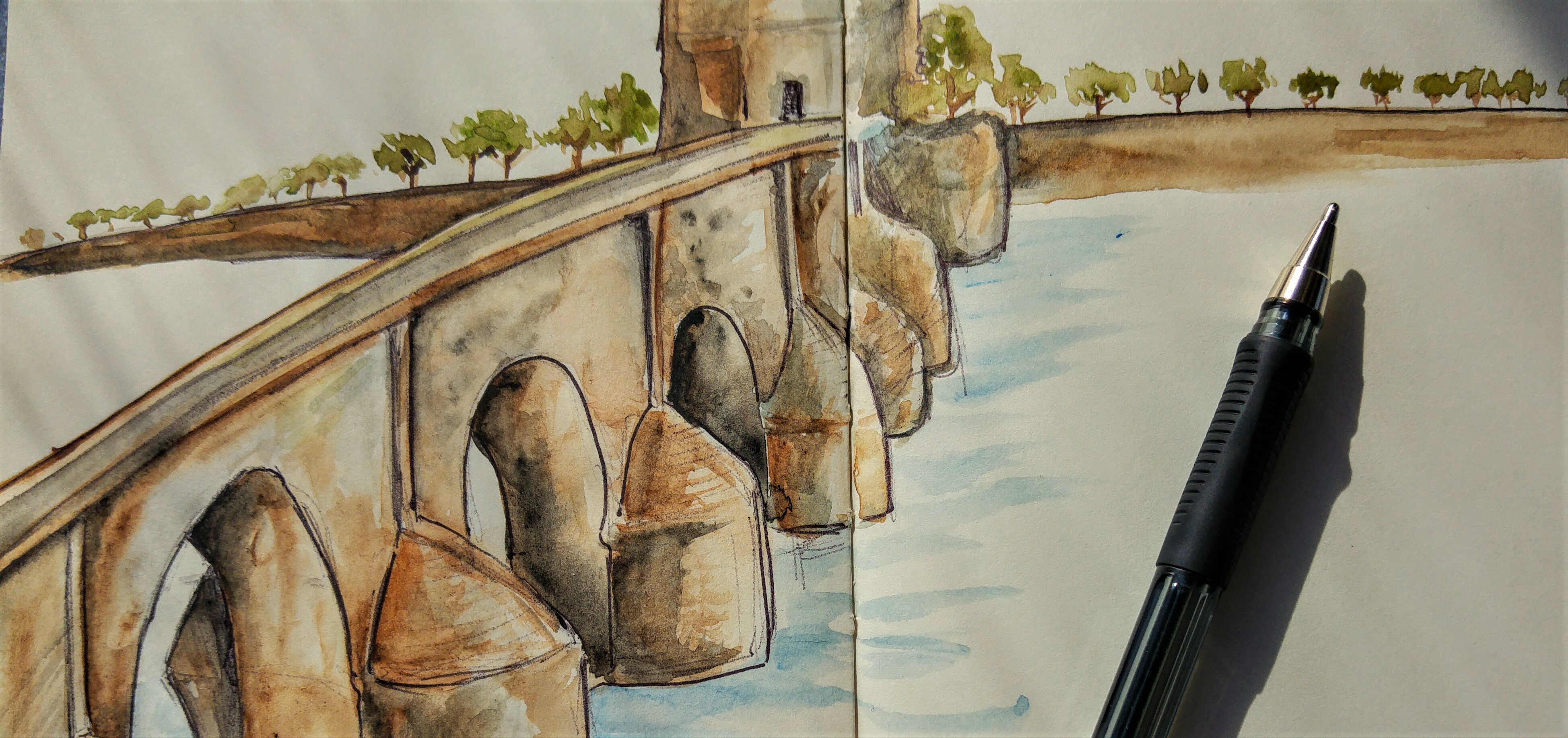
Roman Bridge, Cordoba 2018
It began to create a tapestry of experiences (passive and active) in my mind of ancient art and the interconnectedness of ancient communities that had risen and fallen many centuries ago. I remain inspired to learn more and document it in a way that is meaningful to me and hopefully others. By saving a small piece of my experiences in a sketch or painting, I am starting to develop ways in which these small illuminations of incredible places and artifacts can be used to share the benefits of the study of Archaeology and Ancient History.
“I divided the earth from the heaven. I showed the paths of the stars. I ordered the course of the sun and the moon”. (Kyme Aretalogy in honour of Isis)
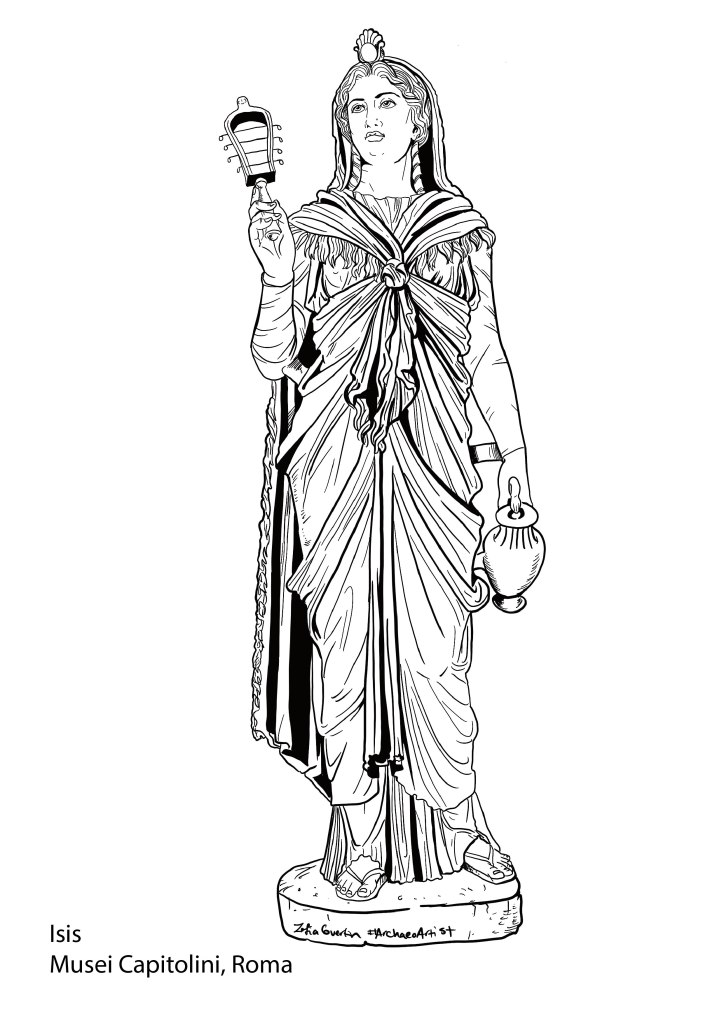
Since backpacking in Europe in 2001, I have been drawn to images and archaeological sites relating to Isis. There are some things that just strike the right chord for you. My first experience with Isis (in a Greco-Roman style) was at the Capitoline Museum in Rome.
Capitoline Isis, Rome (2014).
The statue fit my understanding of what classical sculpture was, and simultaneously had something a bit unusual. The features were so exquisitely carved, and the goddess’s accoutrements were unlike anything I had seen before. While visiting Pompeii during the same trip, I didn’t quite make the connection between the figure in the statue that I’d seen in Rome and the temple in which I had been standing.
During my undergraduate studies, I came across her again while reading Lucian’s ‘Metamorphosis (The Golden Ass)’. My attention was drawn to the way that Lucian described the power of this mysterious foreign goddess. What was so brash about Lucian’s novel was how much he subtly revealed, through winks and nods, about the mystery cult. He described esoteric celebrations, events and magical healing, all the while saying, ‘but it’s a secret, so I can’t really talk about it’. The story is familiar, in a Shakespearean kind of way, through all the hubris, metamorphoses, changes of fortune, and bawdy humour.
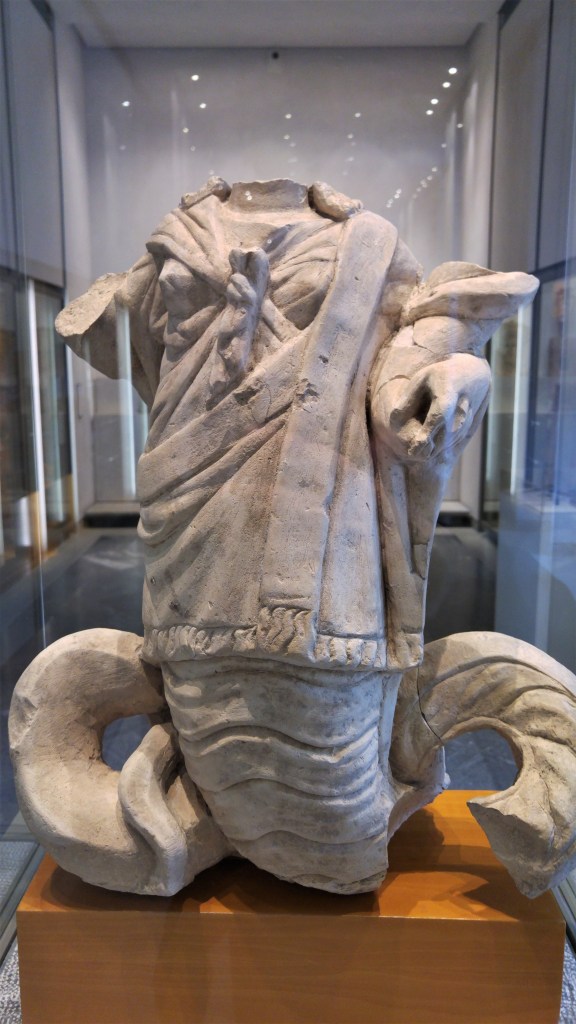
Isis-Thermoutis, Musee des Beaux Arts, Lyon (2017).
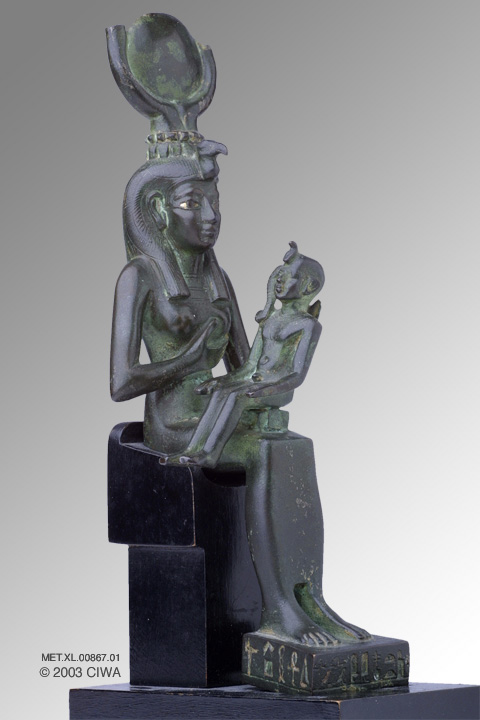
I was fascinated by this religious movement and how it functioned within the religiously pluralistic Roman society. Isis and her cult would ultimately provide some of the foundation of early Christian practices such as baptism, in addition to the depictions with Horus (the infant nursing on her lap is a dead ringer for the baby Jesus), presaging the metamorphosis into the Virgin Mary.
Isis (holding the snake) and Io (sitting atop the shoulders of the personified Nile) wall painting, Museo Nazionale Napoli (2014).
Jumping in with both feet, I was excited and wanted to understand more about this deity. However, my introduction to the topic began at a much later point in the history of the Cult of Isis; to understand the cult and its significance, I would need to go farther back and approach it more broadly.My Masters at the University of Edinburgh was spent exploring the Greek and Hellenistic routes of the cult, from multiple angles, to start filling in the picture (and creating many of my own pictures).
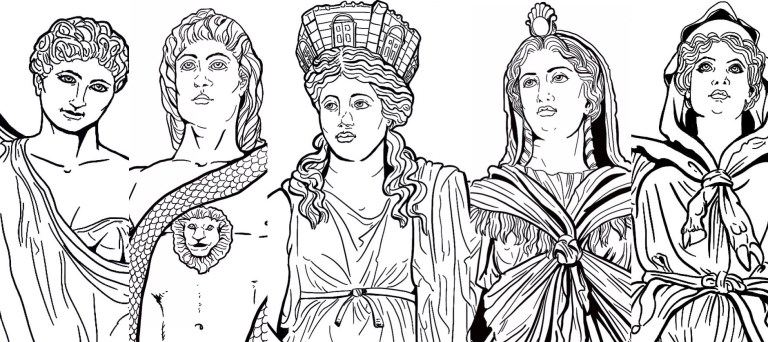
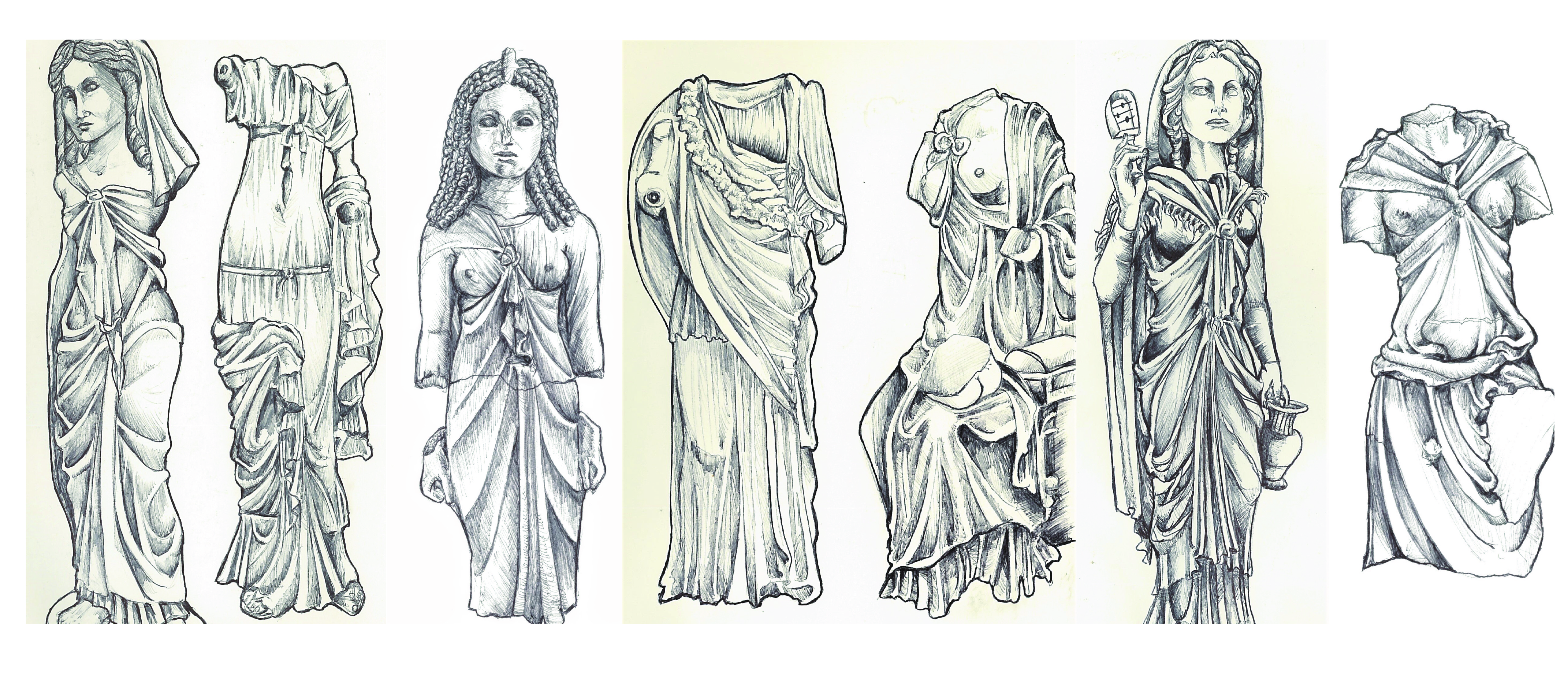
Some of my sketches of Isis statues over the last 4 years.
Isis’s power as a deity in Egypt rested in being the wife of Osiris and mother of Horus. She bridged the continuity of kingship from one king to his descendant. Her original function as the literal and symbolic role – as the throne and king-maker in Ancient Egypt – changes quite dramatically once the cult is exported into Greece and Italy.
Isis cradling Horus – from the MET archives.
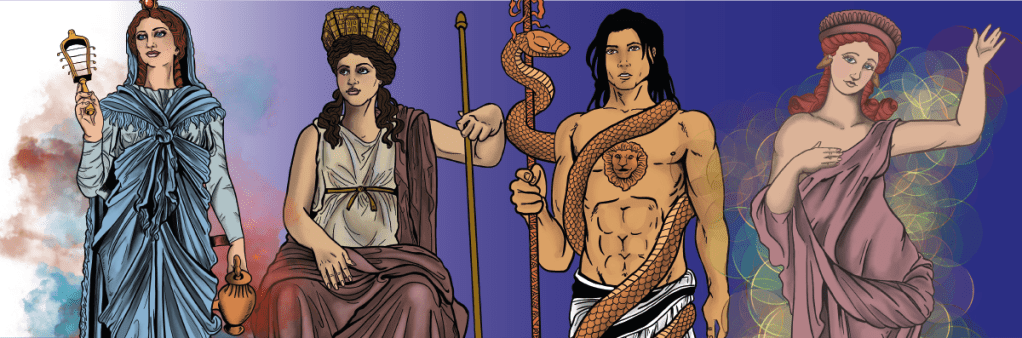
While the period of Isis worship in the pre-Hellenistic era (before 323 BCE) is interesting, what has captivated me more specifically is what happens with the cult in the Hellenistic-to-Roman period. Like a character from Sailor Moon, she gained many headdresses, wands, tools, and visual associations with other deities (Demeter, Aphrodite, Athena, Nike).
This is the period that I focused on during my MSc, researching the symbols and iconography over time, with an emphasis on the tiny figurines used in her worship. What I discovered was that her strength was in her flexibility. Her image could be adapted to all needs, wants and interests. She could be a local or international deity. She could be closely affiliated with a particular ruling dynasty, or one specific location.
Another investigation looked at the cult’s relationship with Athenian government in Delos, and some of the territorial quarrels that occurred between temples run by different factions on the island. The evidence of a push and pull scenario between Delos’ new overlords (the Athenians) and the previous residents, in the mid-second century BCE. Running cults was big business and politically useful to establishing ones career, and the Athenians had no interest in allowing an Alexandrian ‘Egyptian’ to maintain a monopoly on the worship of Isis in this economically powerful port.
While few temples of Isis remain in even remotely good shape, Pompeii possesses on of the most famous examples.
Temple of Isis and her #1 fan, Pompeii (2016).
Pompeii had one of the best-preserved temples (though most of the decorations were long since removed and put in museums). It was fascinating to see the spread of Egyptian-looking artefacts which tend to denote cult membership. The items that were recovered from Pompeii are varied and showed decorations and materials of incredibly high quality that were made for, and used by, the Temple of Isis.
Another leg of the journey in my first large research project involved a trip to Palestrina (ancient Praeneste), some 40 km east of Rome. Part of what I wanted to see was the Egyptian artefacts, which remain some of the most exquisite examples of mosaic work from ancient history.
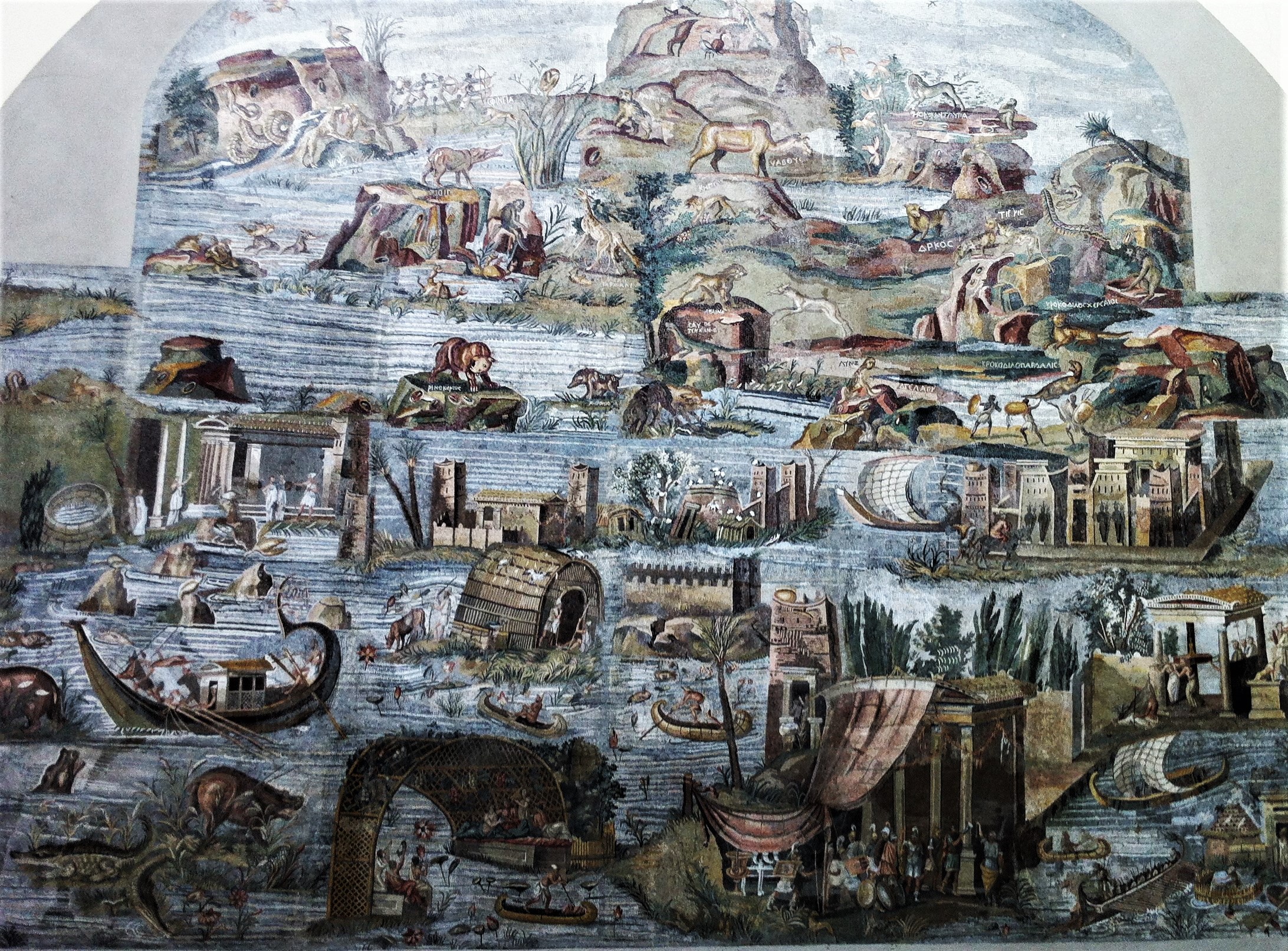
The Nile Mosaic of Palestrina, Italy (2014).
The Nile Mosaic of Palestrina was breath-taking in person and represented an interesting fusion of culture and appropriation of the Hellenistic Alexandrians and the native Egyptians. Although it is an uneven cultural balance, with the prioritising of the Macedonian elite over the native Egyptians.
It is a rare gem of the exquisite mosaic work that was part of art market in Italy, before the Rome dominated the Mediterranean. It highlighted aspects of Egyptian cult which would find its way into Italy, though altered for Italian tastes.
This September I will be stepping into the subject and delving deeper into urban design, Egyptian architecture and the art styles that appear in Roman cities. There are so many aspects and angles to investigate with this topic, and being able to work on a PhD toward this end is like a dream come true. There are still so many sites, statues, and sistrums to see in my journey into my studies of this Cult of Isis!
There is something breathtaking about the shores, mountains and harbours around Lesbos. Mithymna is a gem of a town, with all the fine features you hope for as a tourist destination, but a significant amount of history is embedded in every corner. As one of the largest Greek islands, and the nearest to Turkey, there is a remarkable amount of cultural fusion and warmth that shaped my experience of living in Mithymna (Μήθυμνα / Molyvos) for several months, some years ago.
Taking a libation at the Mithymna castle.
While being housed during the spring months in Mithymna, I explored the winding cobblestone streets, photographed dangling flowering plants and occasionally sampled the vibrant restaurant scene at the harbour.
Mithymna harbour
These elements, along with adorable roaming stray cats and dogs (some of whom we adopted), formed idyllic scenes that made it a beautiful and tranquil location to study some Byzantine History and Reception Studies (in effect, the study of modern interpretations of the ancient world) during my undergraduate degree.
A charming painting in the old schoolhouse where we took lessons.
What a draw for a historian!Like many ancient city centres, Mithymna has a foundation story whose characters possessed the very names of the location – in this case, Mithymna (daughter of a mythical son of the god Helios) who was married to the personification of Lesbos. Hard to prove, so I’ll take the Oxford Dictionary of the Classical World’s word for it.
Mithymna Castle
The history of Mithymna is actually the stuff of legends, literally. The Bronze Age warrior Achilles was said to have breached the fortifications of Mithymna due to the amorous machinations of King Peisidikis’s daughter.
View from Mithymna castle of Efthalou.
The city fell to the Achaeans, as the events of the Illiad take place not far away across the water (you can see Turkey from the shores of Mithymna).
Mithymna had been an important location in the Classical period as it was caught between the Athenians, their ally, and the Spartans throughout the Peloponnesian War (431 – 404 BCE). To and fro, the balance of power shifted from Athens to Sparta, and back again throughout the war; and smaller allied cities were caught in the fight, or served as proxies for the conflict. Mithymna and Mytilene had a solid rivalry throughout this conflict and beyond, which I will go into when I post about Mytilene. But for the time being, some dark business went down during this three decades long war, and Mithymna and Mytilene had some serious issues to work out afterwards.
Splendid isolation on the beach
Remaining significant throughout the Hellenistic period, Mithymna played politics as it was captured by Macedonian forces and Persians, with tyrants ousting and aligning themselves with the conflicting superpowers when they gained control of the island cities. With the division of Alexander’s brief empire by his successors, King Lysimachus and later Ptolemy would control the island. With the influence of the Ptolemaic ruler, my academic obsession, the cults of Isis and Sarapis were introduced and worshiped.
Which brings us neatly to the Roman period.
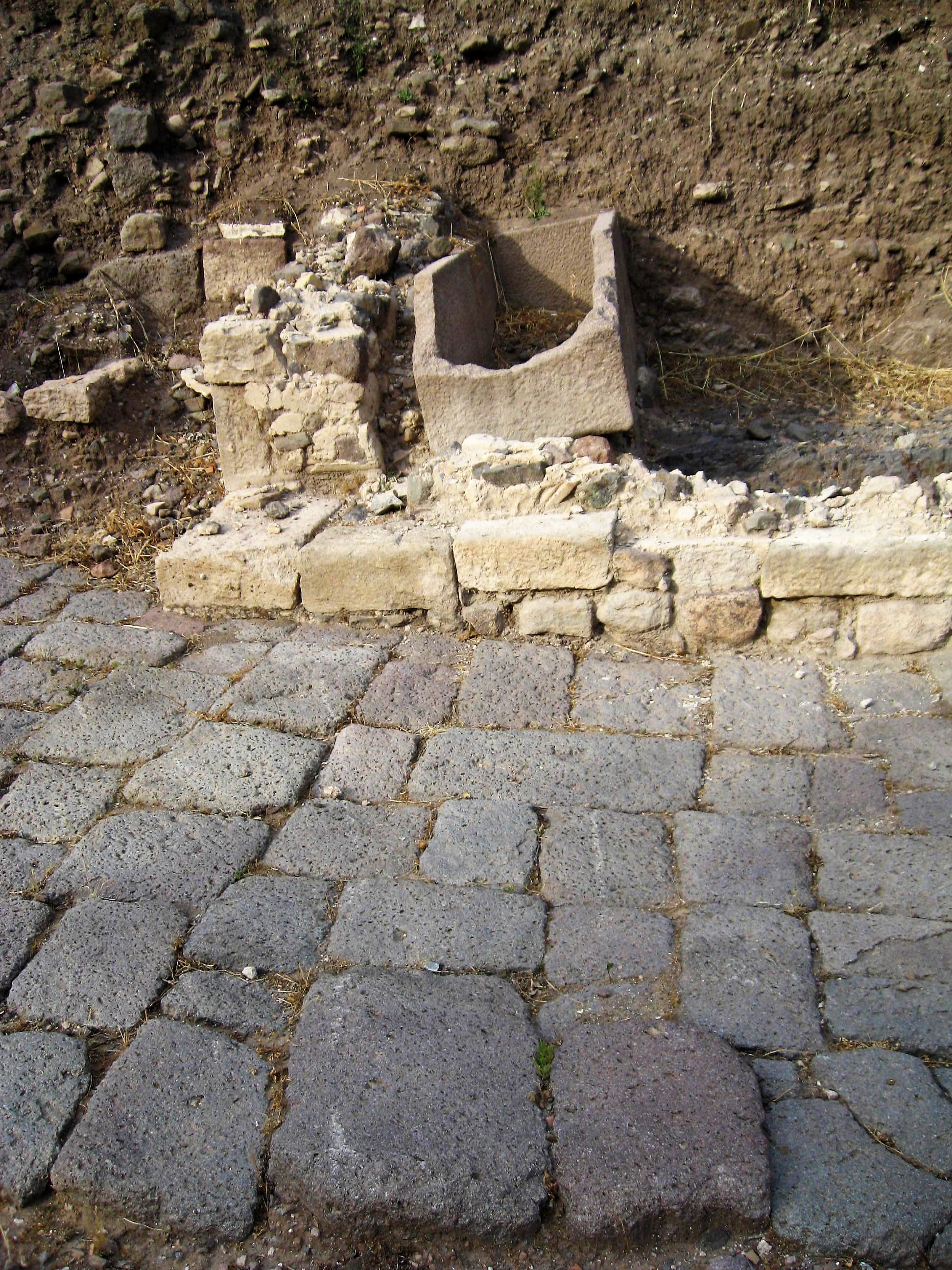
A bit of Roman road and tomb.
Sprinting through so much history, I can barely touch on how many fascinating moments in ancient history in which Mithymna has played a part, but one of the elements which leaves a physical trace, which I was thrilled to see, was the Roman archaeological remains dispersed throughout the city.The formal alliance between Rome and Mithymna was dated by an epigraphic source to 129 BCE. The Roman poets and writers spent many words to describe the quality and superiority of Mithymnian wines.
While staying in Mithymna, I was fortunate enough to meet a local archaeologist who gave us a small tour of the closed excavation.
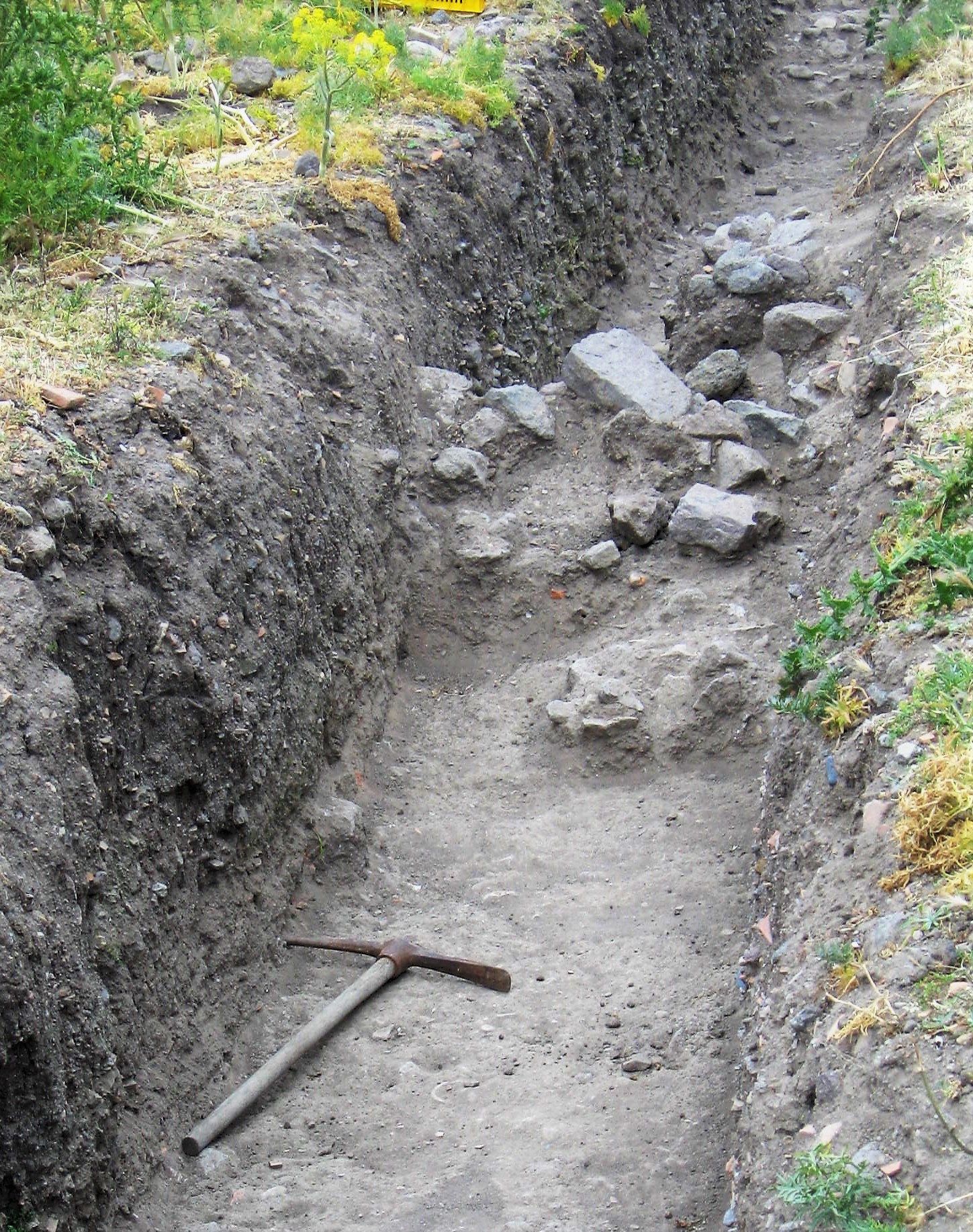
Finds from this trench were rich in pottery and sea shells.
At that point, they had a great deal of pottery and many interesting rubbish dumps from the Roman period. It appeared that they were producing pottery, and likely distributing the wines in vessels made at this centre.With the political upheaval in the 5th century AD of the western half of the Roman empire, Lesbos fell into the orbit of political authority from the Byzantine power-base of the eastern empire. This orientation affected the flavour and practices on the island as Christianity became the prevalent belief system and religious power throughout the empire. Thank you for reading my blog!
Whilst I was excavating in Policastro Bussentino, I decided to use my down-time productively and get to know the cities in southern Italy. The train routes were cheap and plentiful along the Tyrrhenian coastline, with beautiful views on this regional train ride from Napoli Centrale.
One such a day trip, I ventured from Naples on an ambitious outing to see some ancient cities of Magna Graecia. I say ambitious because by foot it is a very long walk from Baiae to Cumae along a winding hillside with no shoulder or footpath- all in all, a 15 mile walking day.
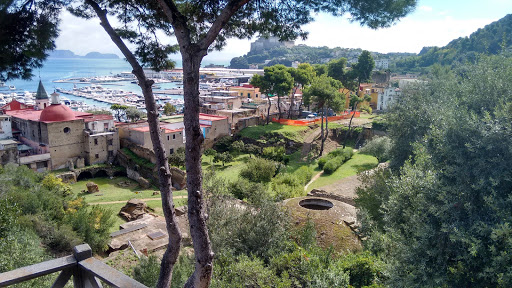
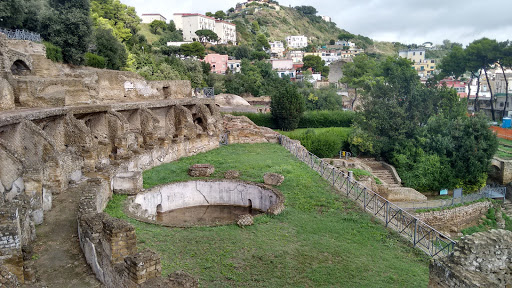
When I arrived at the ancient town of Baiae in Gulf of Puzzuoli, I had the unique experience of being in a spectacular archaeological site entirely alone.
It was a beautiful clear morning and I rocked up without having purchased a ticket (tickets you are supposed to buy at Cumae first then head over to Baiae, unbeknownst to me). Luckily, the park steward let me in for free and after I explained my disorientation!
The archaeological park was stunning, as you can see. The multi-story bath complex was built into the hillside, and standing atop the complex it is not hard to imagine why the super-rich of the Republican period into the Principate were drawn to this place. This area was rich in volcanic activity (Vesuvius is very close, of course) which the Roman architects and engineers were able to channel into sulphur springs – perfect for hot baths!
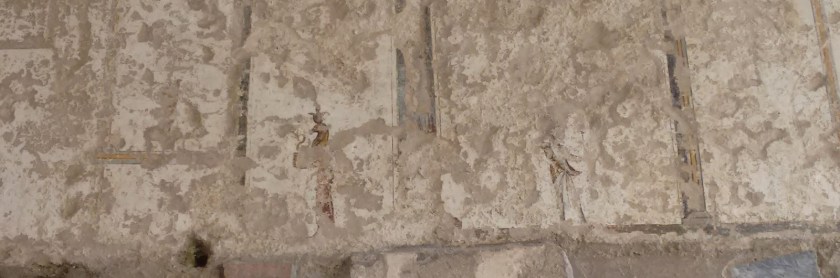
There seemed to be endless rooms, and many with mosaic floors still remaining in situ. The mosaics are, appropriately, water-themed with divinities and typical meander and wave patterns. Water and neglect have left them in the current state of disrepair they are in, but you can see evidence of the gorgeous technical ability.
A surprising amount of painted plaster was still visible as well, with typical decorative motifs and some strange ones. The frescoes date to two particular stylistic phases: the middle of the 1st century A.D., called the 3rd Pompeian style (notably because of the ‘Egyptianising’ features they possess. This stuff is my research jam, and I shall in due course dedicate many 1’s and 0’s of the internets to discuss it.Below I’ve tried to highlight the figures which have zoomorphic features and elements meant to evoke Egypt (costumes and symbols).
A later, 2nd century A.D. phase is also present, which could be viewed as slightly irregular and a bit shabbier in execution. This little green dragon below was part of that later design.
There were a few cisterns still, and one was even fully intact. The echo inside made singing sound like I was using a microphone. Yes, I sang a few Disney songs before giving my spot to the tourists who were waiting at this point, bemused, outside. Nothing like being in a archaeological sites for belting out tunes (Florence and the Machine). Amusingly, it wasn’t until a month later I learned the name of it was called the “Temple of the Echo“. While not a temple, the name was still pretty on point.
Top-view of the cistern”Temple of the Echo”
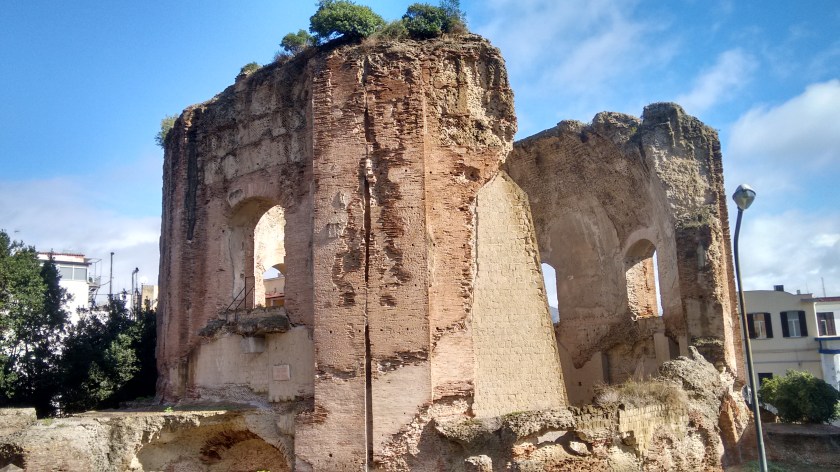
This was built during the reign of Hadrian, one of the greatest building emperors of the Roman Empire. The influx of funds in the 2nd century A.D. – which manifested earlier in the frescoes being added to – coincides with the building of this structure. Called a temple erroneously, it has been argued to be a pool, a further spectacular addition to the bathing complex. As I neared the bottom of the hillside, I could see a MASSIVE temple-looking structure, across the (modern) street, outside of the bath complex. I stood to sketch it for a while, and saw that it was a ‘Temple of Venus‘, which, given the history of this elite spa-town, would have made perfect sense.
Prolific in his building, this massive Hadrianic era building could have been a casino, pool, or possibly religious building- all suggestions I read at the site. The lingering naming of the building, ‘Temple of Venus’ betrays the varying perceptions of it that carried on over the last thousand years since it was in use.The political landscape in Rome during the late Republic into the Principate involved the elevation of the Julio-Claudians and funding to their parton deity- Venus. Julius Caesar had a villa in the area, and other notables like Pompey Magnus, Caligula and Septimus Severus all frequented the area.
Temple of Venus at Baiae
Augustus took over the entire complex (and much of the town), adding it to his sizeable imperial property. Controlling where the rich went to relax, socialise and play was pretty much Augustus’ raison d’etre during his early formation of how the empire would be run.
Anyone watching the Versailles (2015) series right now could imagine the same processes occurring in Rome under Octavian as was happening in the court of Louis XIV. Like the French nobles who were forced to adopt new practices and behaviours, Rome’s elite probably required some wrangling to stay in the lines as Augustus delineated them. Controlling spaces goes a long way towards controlling behaviours and shaping ideas.
Squinty little study of shapes at the Temple of Venus
The analogy of Versailles can be taken farther, as Baiae developed a reputation for moral bankruptcy, with salacious and scandalous behaviour taking place in the steamy rooms of this wellness retreat. One commentator on the depravity of Baiae’s baths and wellness centre was Seneca the Younger, describing it as a “vortex of luxury” and amusingly, “harbor of vice”. I suspect he may not have been on the guest list for the sexier parties.With Romans, physical wellness was linked with spiritual wellness. The presence of temples in a site like this would make a lot of sense
Not surprising then, that as time and memory faded the original meaning of these buildings more mundane structures, nestled along the coast, took on impressive religious connotations.
















































 The last 12 months have been eventful, with a lot of life changing things on the horizon to be excited about. In a few short days, I will be heading off for a third (more lengthy) season in the Roman town of Aeclanum, (near modern Mirabella Eclano, Italy). The last year was incredibly formative for me, as I was privileged enough to work on developing materials with the site directors of Aeclanum from the University of Edinburgh and the Apolline Project for public outreach for the Open Day, as well as ongoing learning materials for children to engage with archaeology in schools.The opportunities to share this work are blooming into new areas for me professionally with a lot of creative directions to pursue.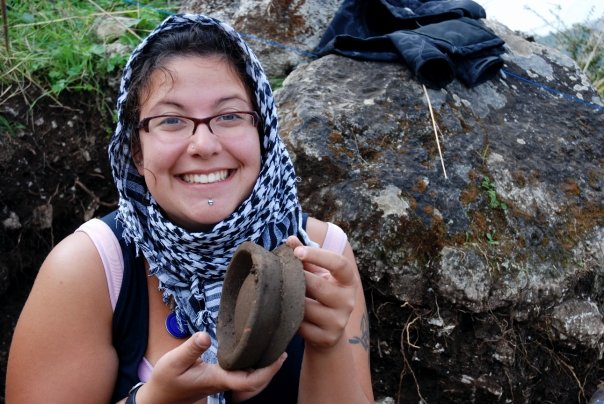

 The antiquity of the necropolis was evidenced through artefacts which represented multi-period usage on the site for burials, an ancient garbage dump (large amounts of broken pottery and animal bones), and fluted columns and architectural blocks from some unidentified building structure.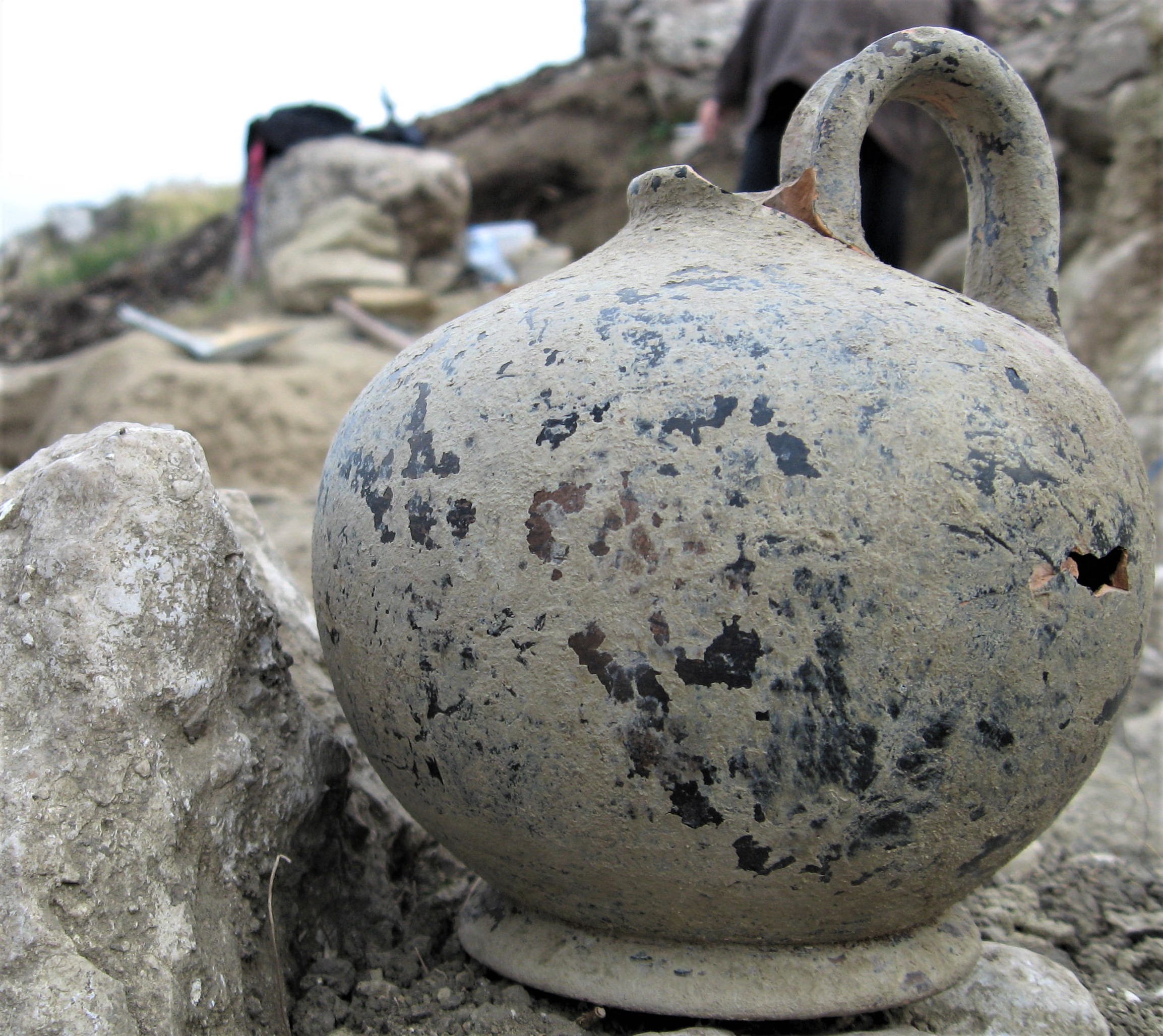
 The status of the publication of the finds from the dig is unknown to me, so to avoid getting in trouble, I have made a few artistic renderings of some of the standout artefacts:




 Suffice it to say, my time spent in Poros, Kefalonia, was fundamental in shaping the direction of my studies and career plans. While I have not been back since 2008, the richness in history, the warmth of the community and beauty of the island is still deeply felt. I am making plans to return and investigate the current findings of the area and reunite with the incredible people who made it such a memorable experience for me.



 “I divided the earth from the heaven. I showed the paths of the stars. I ordered the course of the sun and the moon”. (Kyme Aretalogy in honour of Isis)



 My Masters at the University of Edinburgh was spent exploring the Greek and Hellenistic routes of the cult, from multiple angles, to start filling in the picture (and creating many of my own pictures).


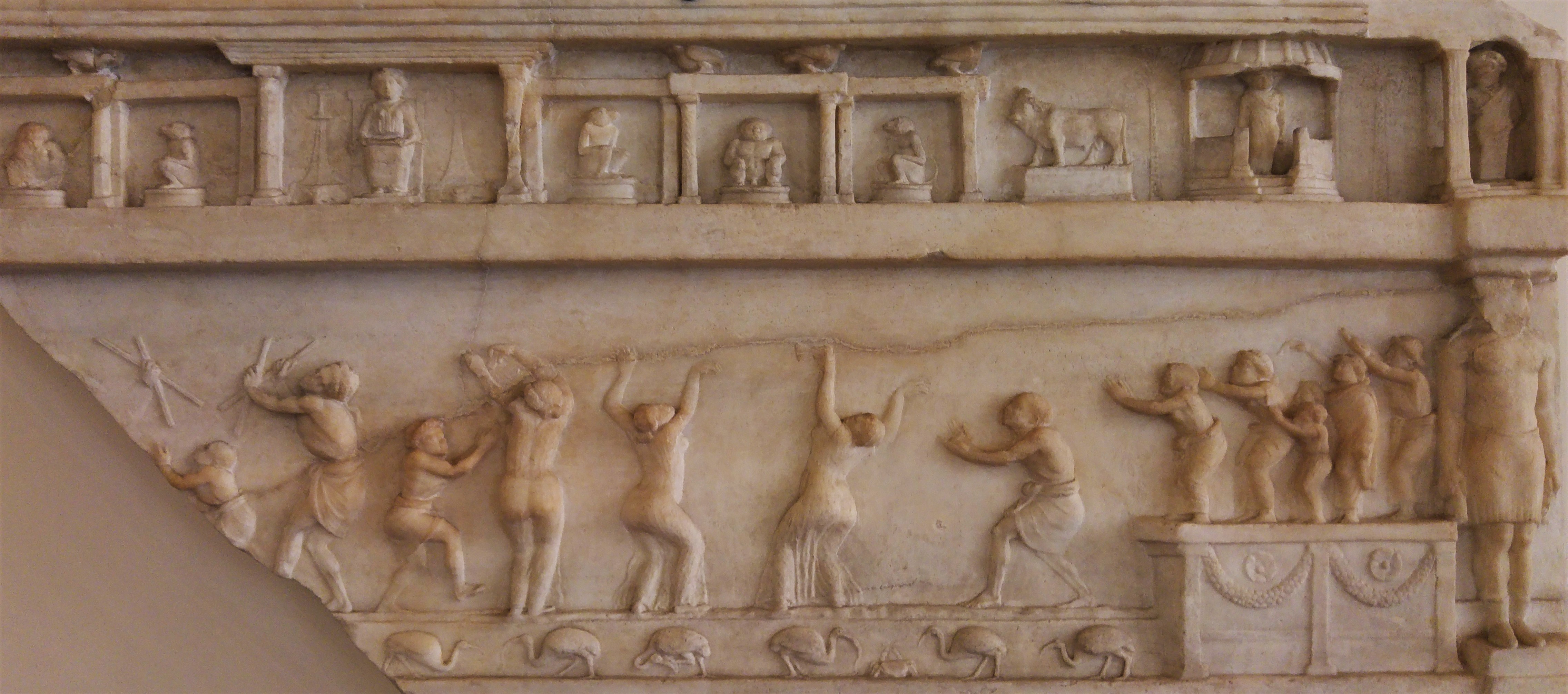
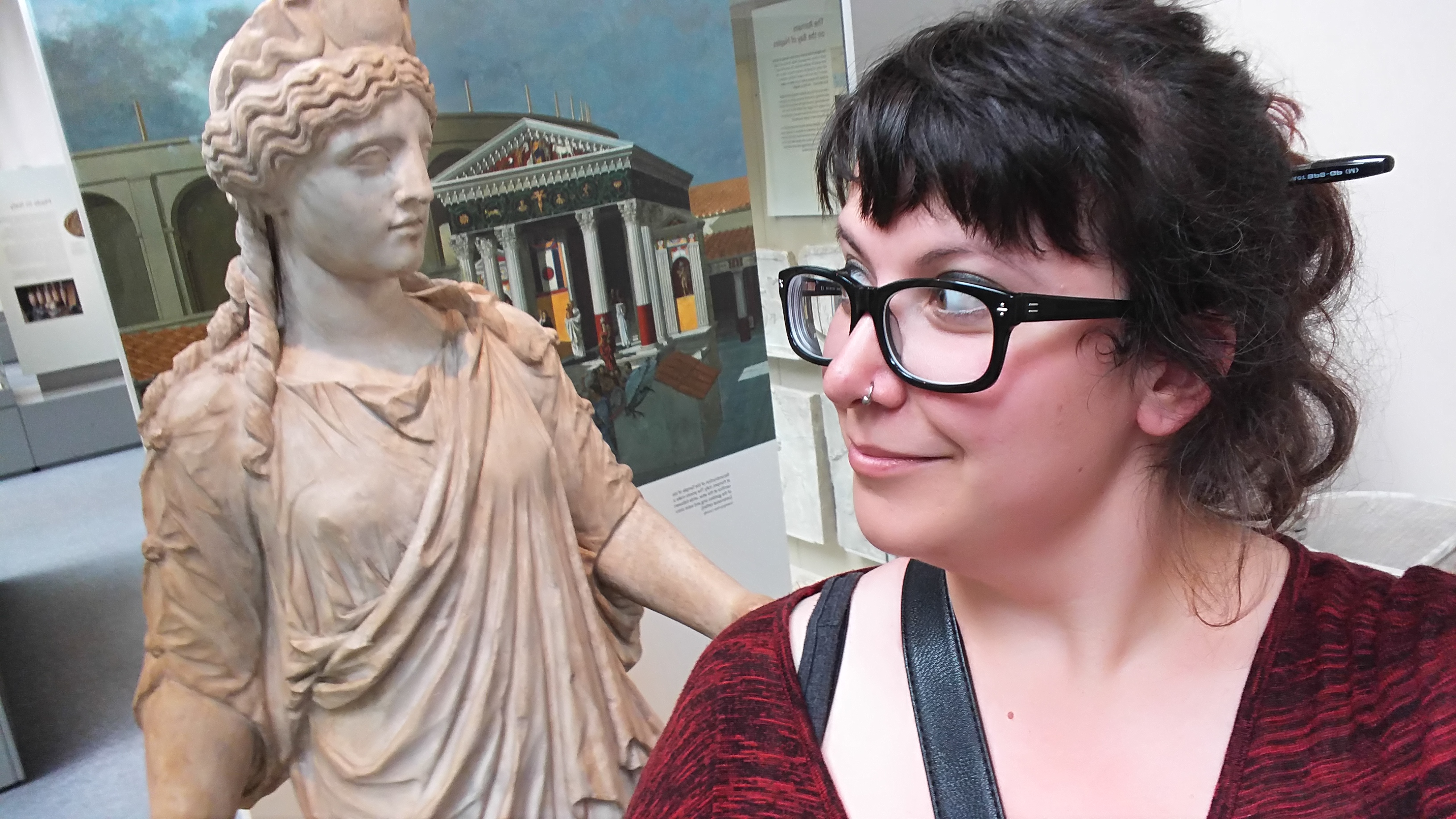 There are still so many sites, statues, and sistrums to see in my journey into my studies of this Cult of Isis!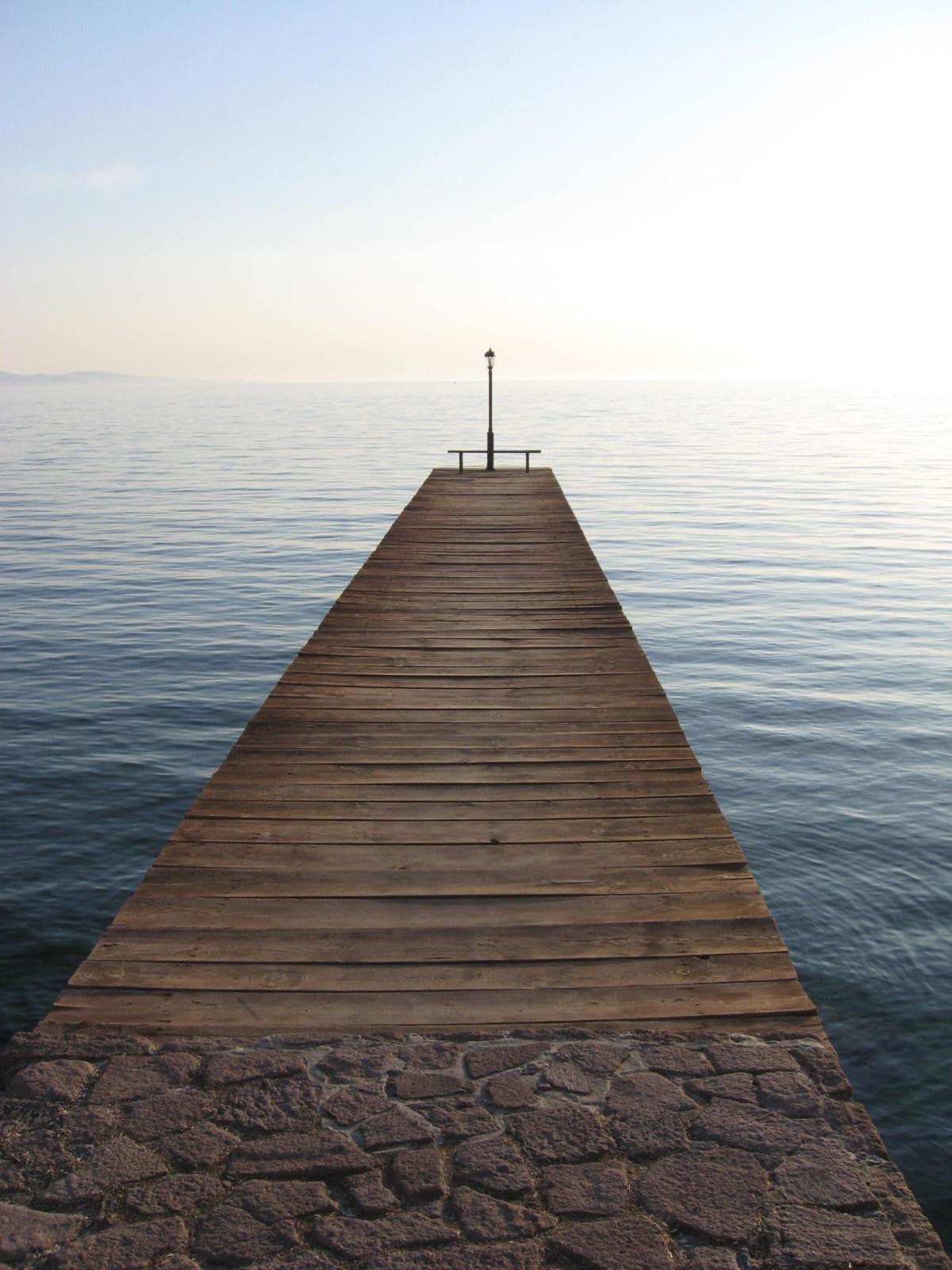

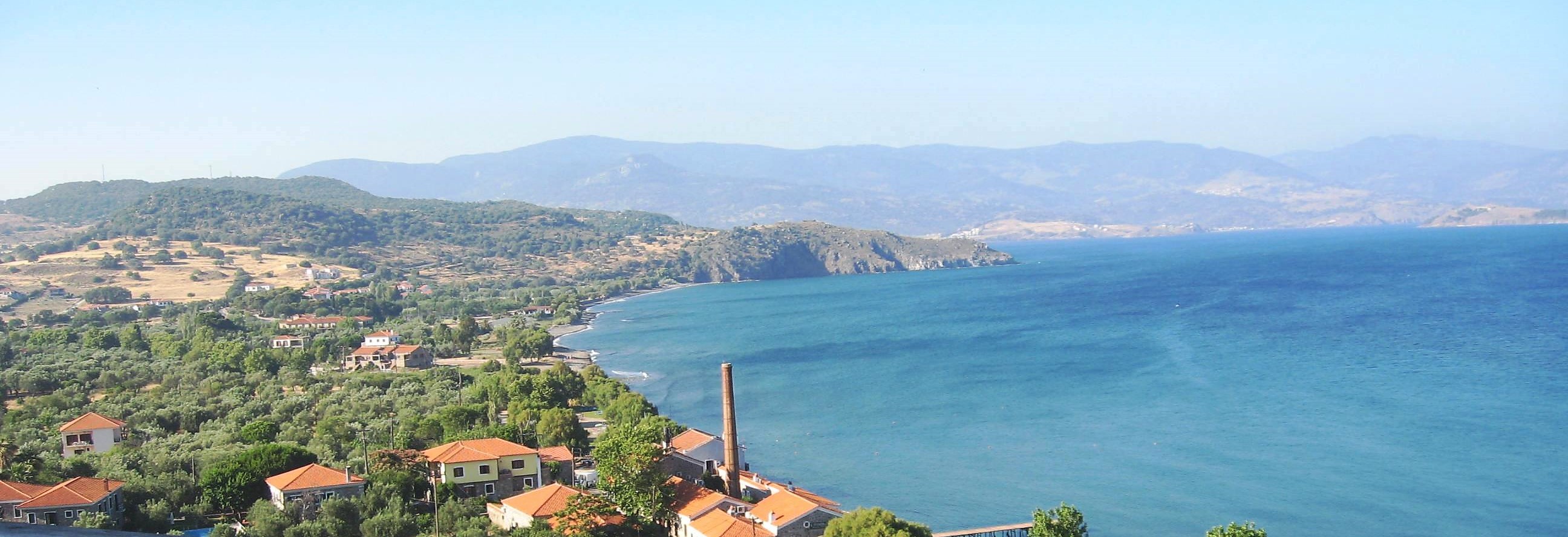 As one of the largest Greek islands, and the nearest to Turkey, there is a remarkable amount of cultural fusion and warmth that shaped my experience of living in Mithymna (Μήθυμνα / Molyvos) for several months, some years ago.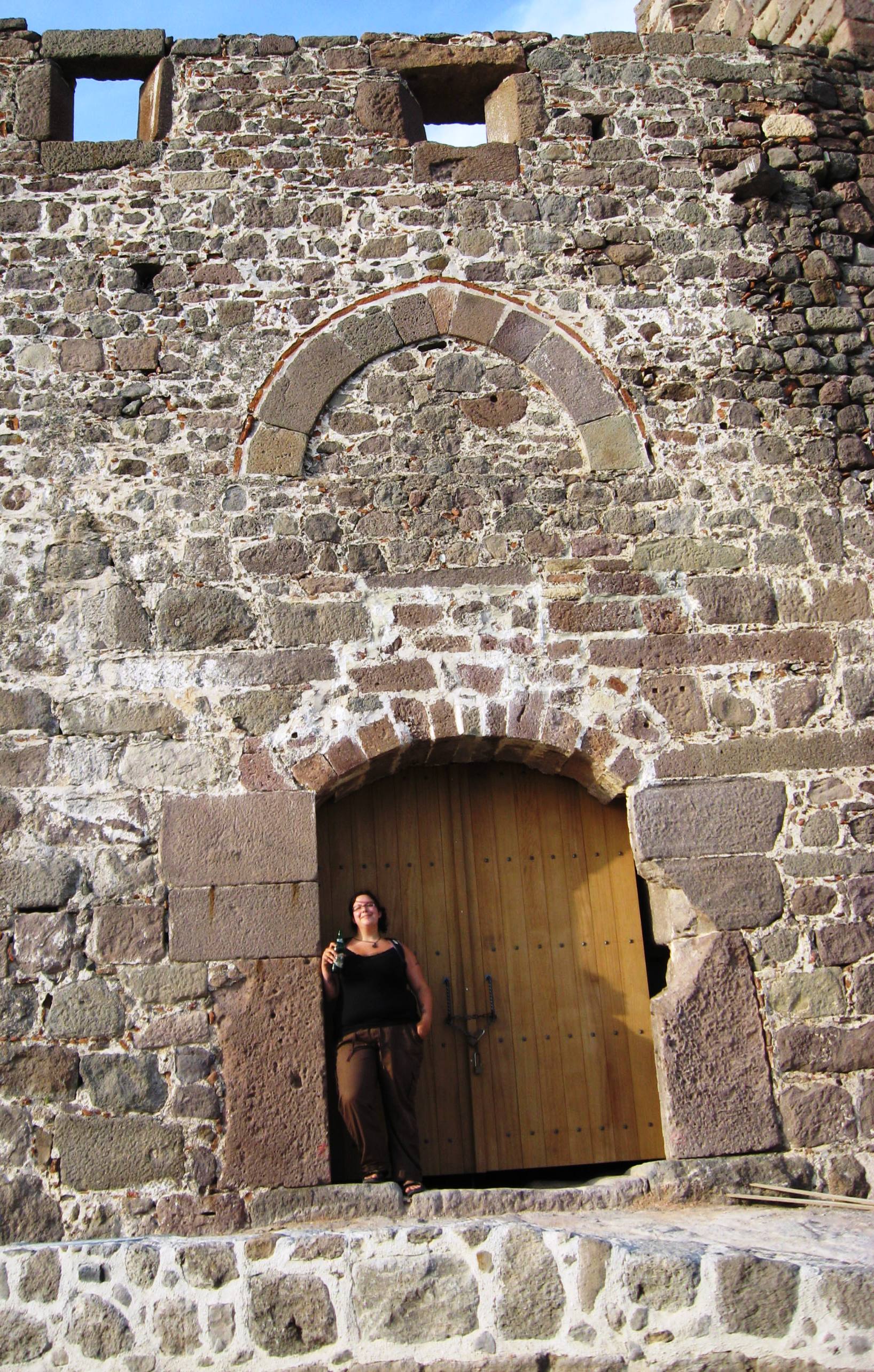


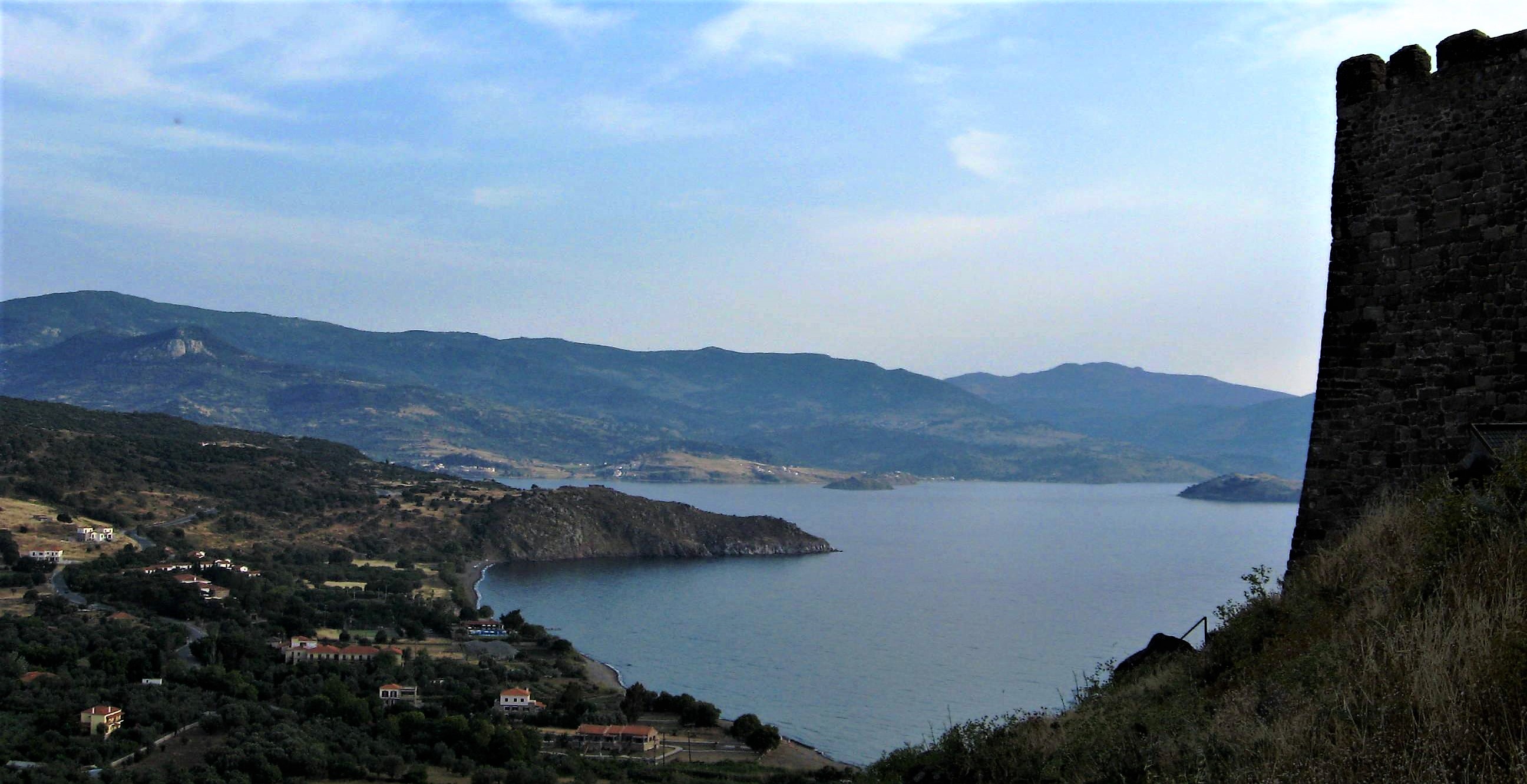 Like many ancient city centres, Mithymna has a foundation story whose characters possessed the very names of the location – in this case, Mithymna (daughter of a mythical son of the god Helios) who was married to the personification of Lesbos. Hard to prove, so I’ll take the Oxford Dictionary of the Classical World’s word for it.
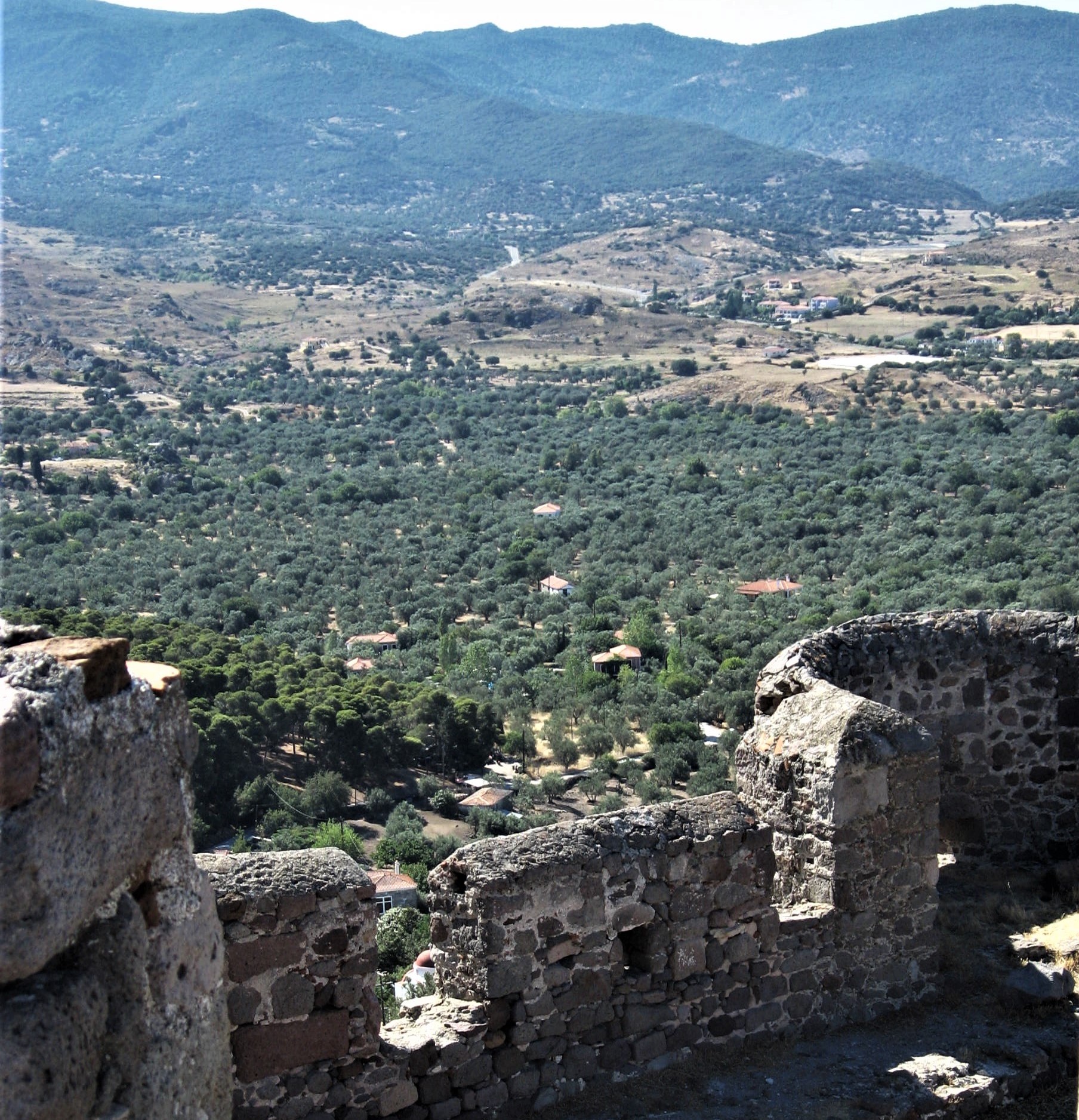
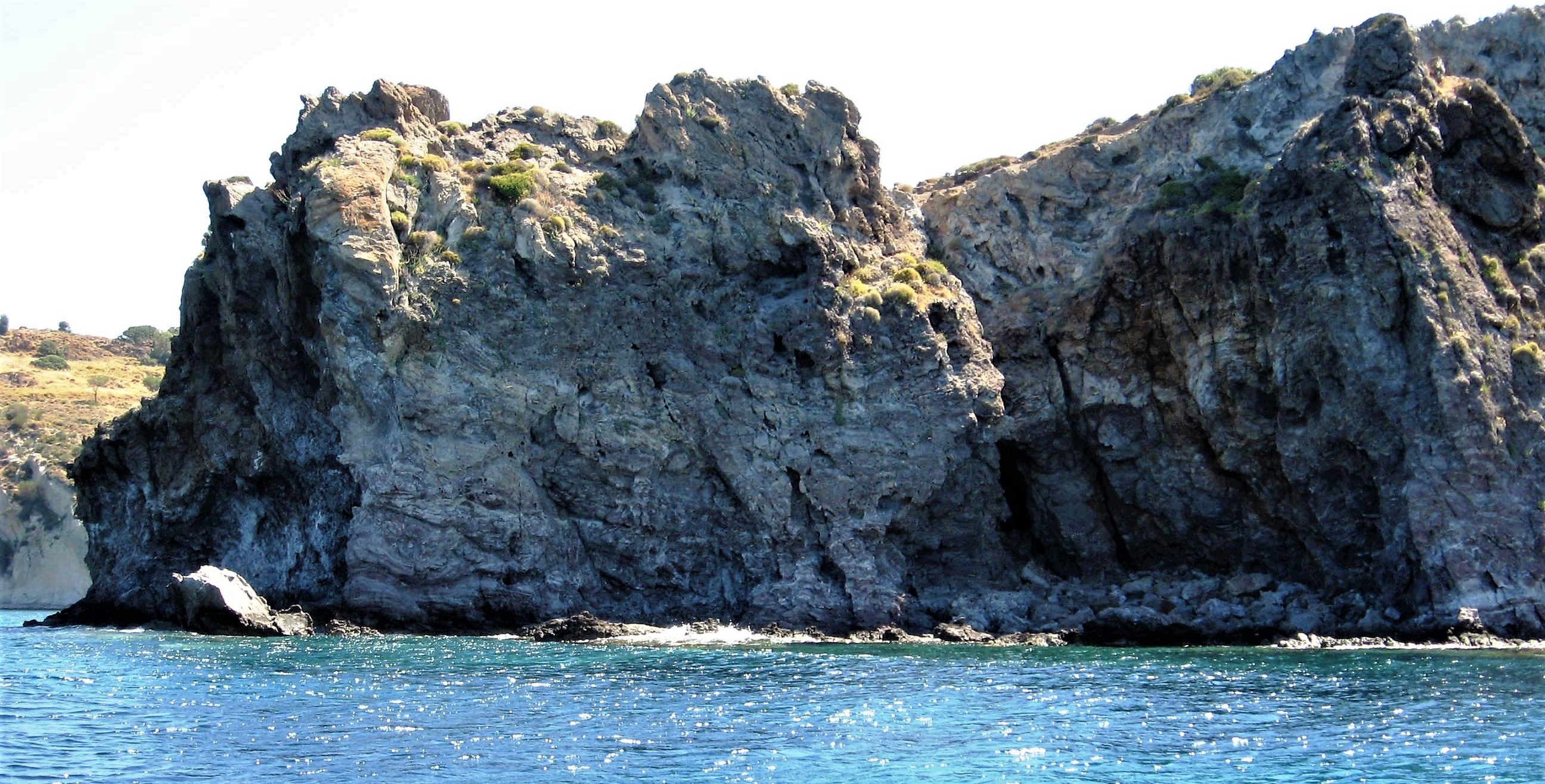 Mithymna and Mytilene had a solid rivalry throughout this conflict and beyond, which I will go into when I post about Mytilene. But for the time being, some dark business went down during this three decades long war, and Mithymna and Mytilene had some serious issues to work out afterwards.

 The formal alliance between Rome and Mithymna was dated by an epigraphic source to 129 BCE. The Roman poets and writers spent many words to describe the quality and superiority of Mithymnian wines.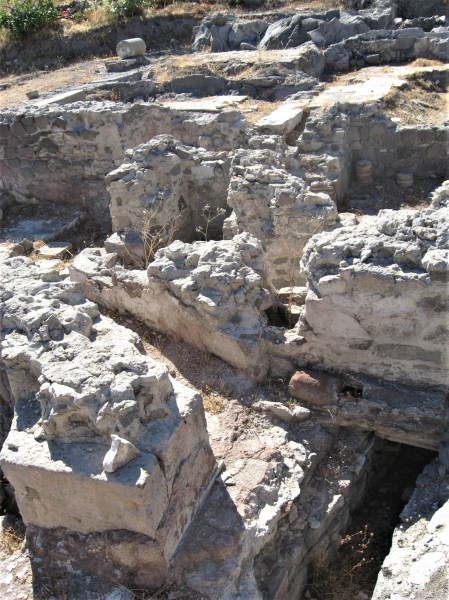

 With the political upheaval in the 5th century AD of the western half of the Roman empire, Lesbos fell into the orbit of political authority from the Byzantine power-base of the eastern empire. This orientation affected the flavour and practices on the island as Christianity became the prevalent belief system and religious power throughout the empire.
  Thank you for reading my blog!






 ArchaeoArtist
You must be logged in to post a comment.