When we think of ancient historians, names like Livy or Herodotus often come to mind. But Dionysius of Halicarnassus deserves a closer look. Around 30 BC, Dionysius was a Greek scholar who moved to Rome during the early days of the Empire. There, he produced Roman Antiquities, a sweeping history of Rome from its mythical beginnings up to the First Punic War. Though 15 titles of his work are known, 13 survived in one form or another; his work remains a crucial source for early Roman history, standing alongside Livy’s accounts.
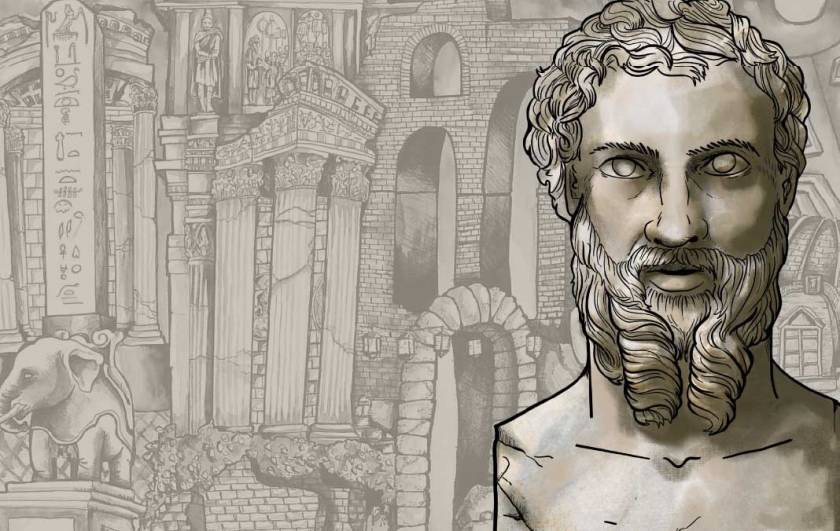
Dionysius of Halicarnassus and ruins of Rome by Zofia Guertin
Theatre of Pompey plan and Dionysius of Halicarnassus. Illustration by Zofia Guertin.
Dionysius wasn’t just a historian—he was also a master of rhetoric. His writings aimed to explain and justify Roman culture to a Greek audience, blending historical detail with rhetorical theory. In fact, he often used his history as a practical showcase of rhetorical principles. Beyond history, he wrote insightful critiques of famous Greek orators like Demosthenes and Isocrates, praising Roman writers for returning to classical Greek ideals over more ornate styles.
In this episode of Two Friends Talk History, Zofia welcomes Stefano Carlo Sala, a PhD candidate at the University of St Andrews, to discuss Dionysius of Halicarnassus—a key figure in Roman historiography.
They explore how Dionysius, a Greek historian in Augustan Rome, used monuments and myths to present early Rome as a fundamentally Greek city. Through comparisons with Livy and Polybius, Stefano unpacks Dionysius’ unique approach to storytelling, monumentality, and cultural identity.
Brick and Marble. Illustration by Zofia Guertin.
While Dionysius of Halicarnassus and Livy both wrote about the early history of Rome, their approaches reveal striking differences—especially in how they describe the city’s monuments. Dionysius, writing for a Greek-speaking audience unfamiliar with Rome’s layout, offers detailed observations about buildings still visible in his time, even noting which ones he personally visited. Livy, on the other hand, paints a broader picture centered around familiar Roman landmarks like the Forum and Capitol, assuming a Latin-speaking readership already acquainted with the city. Dionysius’s attention to architectural detail connects to his larger ideological project: presenting Rome as the heir to Classical Greece. This vision runs through his historical work, where he draws frequent parallels between early Roman and Classical Greek monuments, values, and myths. By doing so, Dionysius not only makes Roman history more accessible to Greek readers but also argues that Rome deserves a central place in the Greek cultural tradition. His comparisons—even when archaeologically inaccurate—serve a deeper symbolic purpose, showing Rome as both the continuation and the future of Greece’s classical legacy.
💡 Topics covered:
Dionysius’ blending of rhetoric and history
Why monuments mattered in shaping Rome’s past
Connections between Classical Greece and Archaic Rome
How historians under Augustus crafted Rome’s legacy
The political and cultural stakes of memory
Whether you’re into ancient history, architecture, or historical narratives, this episode offers a rich perspective on the ways history gets written—and rewritten.
Sources
Edlund, I. (1980). Livy and Dionysios of Halikarnassos as Roman archaeologists in Rivista di Archeologia vol.4, pp. 26-30. You can download for free: Here.
Wiater, N. (2011). The Ideology of Classicism: Language, History, and Identity in Dionysius of Halicarnassus. (Untersuchungen zur antiken Literatur und Geschichte; Vol. 105). de Gruyter.
Stefano’s Academia Page and Publications:
Carlo Sala, S. (2025). Law as a catalyst and remedy for civic violence in early Rome : two examples from Dionysius of Halicarnassus, in Cahiers des études anciennes [En ligne], LXII | 2025. URL:READ HERE ONLINE.
If you would like to follow Stefano, you can join him on LinkedIn: HERE or Academia.edu: HERE !
🔗 Support the show on Patreon at Patreon.com/Archaeoartist 📸 Follow on Instagram @TwoFriendsTalkHistory
What did it mean to be bought, sold, and sexually exploited in the ancient world? In this powerful episode of Two Friends Talk History, Zofia is joined by doctoral candidate Florence Felsheim to explore the hidden realities of sexual trafficking in ancient Greece and Rome. Drawing on literary texts, archaeological evidence, and cognitive science, Florence unpacks how systems of enslavement and exploitation operated in societies often romanticized in popular culture.
We examine the scale of the ancient slave trade, the gendered dimensions of exploitation, and how enslaved women were commodified—expected to provide not just labor, but sexual access. From Roman brothels to banquet halls, the episode reveals how normalized sexual violence was embedded in the fabric of ancient daily life.
As part of Sexual Violence Awareness Month, this conversation sheds light on uncomfortable histories, connecting past systems of abuse to present-day conversations on power, consent, and human dignity. Listener discretion is advised.
Human Trafficking in the Ancient World: A Forgotten Reality
When most people think of human trafficking, they imagine a modern crisis. However, the practice of exploiting people for labor, sex, and servitude dates back thousands of years. In the ancient world, trafficking was not only common—it was institutionalized and deeply woven into the fabric of many societies.
In ancient Mesopotamia, Egypt, Greece, and Rome, slavery was a cornerstone of the economy. Prisoners of war, kidnapped foreigners, and even impoverished citizens were often sold into slavery. Unlike modern trafficking, which is largely illegal and hidden, ancient systems openly supported human trade. Markets for slaves were publicly established and legal codes could regulate their trade and treatment.
Women and children were particularly vulnerable. Many were trafficked for domestic service, labor, alongside sexual exploitation. In ancient Greece, for instance, women were commonly sold into brothels or forced to work as concubines. Rome’s vast empire relied heavily on enslaved people, many of whom were captured from conquered territories and transported long distances.
Though the term “human trafficking” didn’t exist in antiquity, the mechanisms of coercion, transport, and exploitation mirror modern patterns. Individuals lost autonomy, families were torn apart, and countless lives were shaped by violence and subjugation.
Understanding the ancient roots of human trafficking challenges the myth that it’s a purely modern problem. Instead, it reveals a tragic continuity in human history: the persistent commodification of people. While laws and attitudes have evolved, the underlying injustice remains disturbingly familiar.
By studying trafficking in the ancient world, we can better understand the cultural, economic, and political forces that continue to allow it today. Acknowledging its history is a step toward dismantling it in the present.
Speaking Through Objects
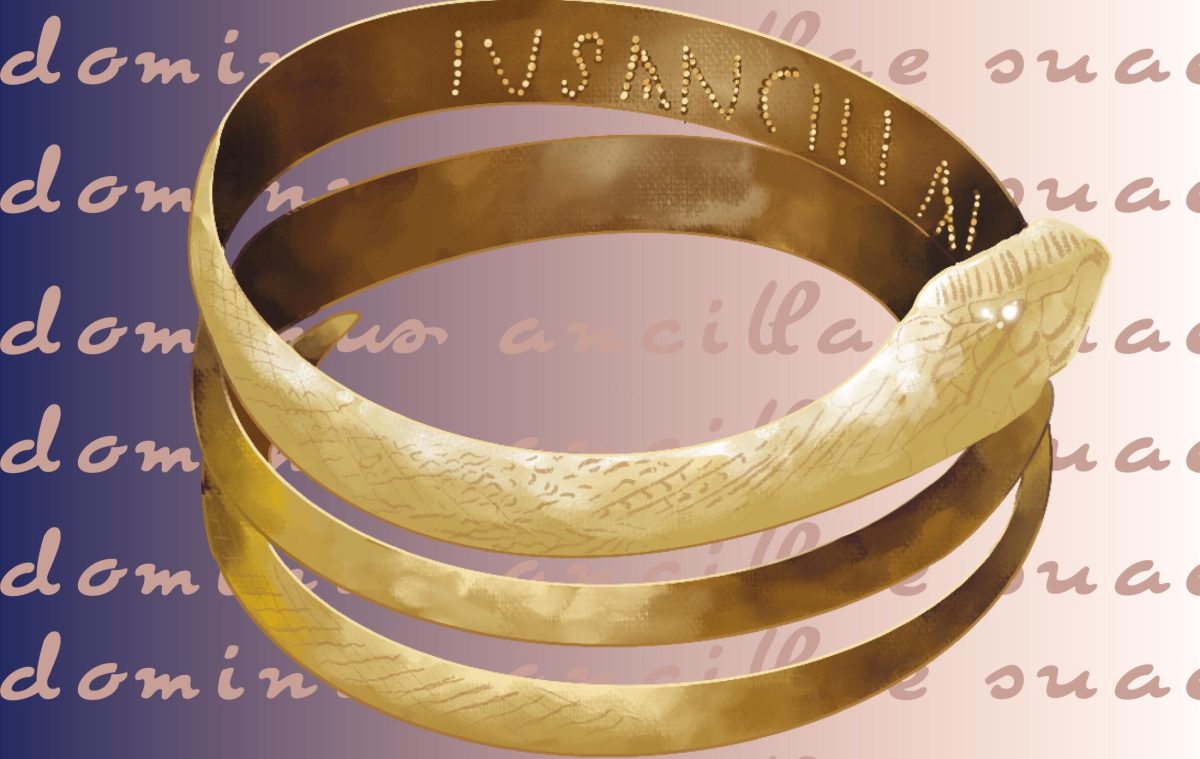
Moregine bracelet, illustrated by Zofia Guertin.
In 2000, archaeologists at Moregine, near Pompeii, uncovered a gold snake-shaped bracelet inscribed “dominus ancillae suae” (“the master to his very own slave girl”) on the body of a woman fleeing the eruption of Vesuvius. Found alongside other jewelry and coins, the bracelet, weighing about 500 grams, is crafted to coil three times around the arm. Its inscription has sparked debate: it may have been a gift to a domestic slave, a freedwoman, or a slave prostitute, or a metaphorical gift between lovers. The discovery highlights complex social dynamics and the harsh realities of slavery in ancient Roman society.
Resources
Levin-Richardson, Sarah. “Modern Tourists, Ancient Sexualities.” Pompeii in the Public Imagination from Its Rediscovery to Today. Oxford: Oxford University Press, 2011.
Keuls, Eva C. Reign of the Phallus : Sexual Politics in Ancient Athens. Berkeley, CA: University of California Press, 1994.
McClure, Laura. Phryne of Thespiae : Courtesan, Muse, and Myth. New York, NY: Oxford University Press, 2024.
Funke, Melissa. Phryne : a life in fragments. London : Bloomsbury Academic
🌍 Sexual Violence Support Resources
If you or someone you know needs support, here are trusted organizations offering help across the globe:
In the latest episode of Two Friends Talk History, Zofia and Dr Briana King return to our discussion into Classical Receptions. This time, we go into some of the heavier subject matter that we felt deserved its own episode. Returning guest, Dr. Briana King, joins me to unpack the dark and often overlooked threads of sexual violence in ancient history and its modern reinterpretations. We discuss ancient precedents for modern cinematic and television representations of sexual violence – made spectacle – in retellings of Roman narratives.
We’re diving deep into how classical reception shapes public perception—and why that matters. This is a heavy but essential conversation about power, misrepresentation, and the stories we choose to tell. 🏛️
📢 Trigger warning: this episode discusses sexual violence and may be distressing to some listeners. Please listen with care.
Classical Reception of Sexual Violence in Antiquity in Modern Visual Media with Briana King –
Two Friends Talk History
Dr King has argued through her doctoral research, and in her more recent publications, that these scenes can be interpreted as real reflections of actual events. And perhaps, these visualisations were part of shaping realities that they depicted in antiquity, as they appear to be doing now.
Due to copyright, I have drawn the images that we discussed in the episode, since those available for viewing on the Beazley archive are difficult to make out at times.
(Left) Athenian red-figure stamnos; c. 430 BCE; Two men lifting a hetaira between them; Polygnotos Painter; Musee du Louvre Cp274/Cp9682; Beazley 213398.
In our discussion, several sculptural pieces from the Roman period were discussed, as representative of the brutal or depraved aspects of Roman society. In 2000 the Museo Nazionale di Napoli opened the “Secret Cabinet”, a special room that had for over a hundred years kept items found in Pompeii that were deemed “pornographic” away from the average viewing public. That these items are still held in this space, though the doors have been opened, still suggests that this is how we ought to understand them, not unlike their first museum display context in the Portici Palace, in Naples.
Taken from their original contexts, their use as emblems of that can be understandable, but as with all analysis of antiquity, context is key. Items like Pan and the she-goat (found in 1752) were, like many erotic images from the Roman period, in garden or outdoor spaces within a Roman villa. Sexually explicit sculpture – sometimes violent, could be commonly found within Roman society, and was not locked away in secret viewing rooms – it was open access.
Pan and the she-goat were found in a garden, south of the pool in the Villa of the Papyri, in Herculaneum. The garden was filled with several sculptures that included erudite philosophers, animals, and gods.
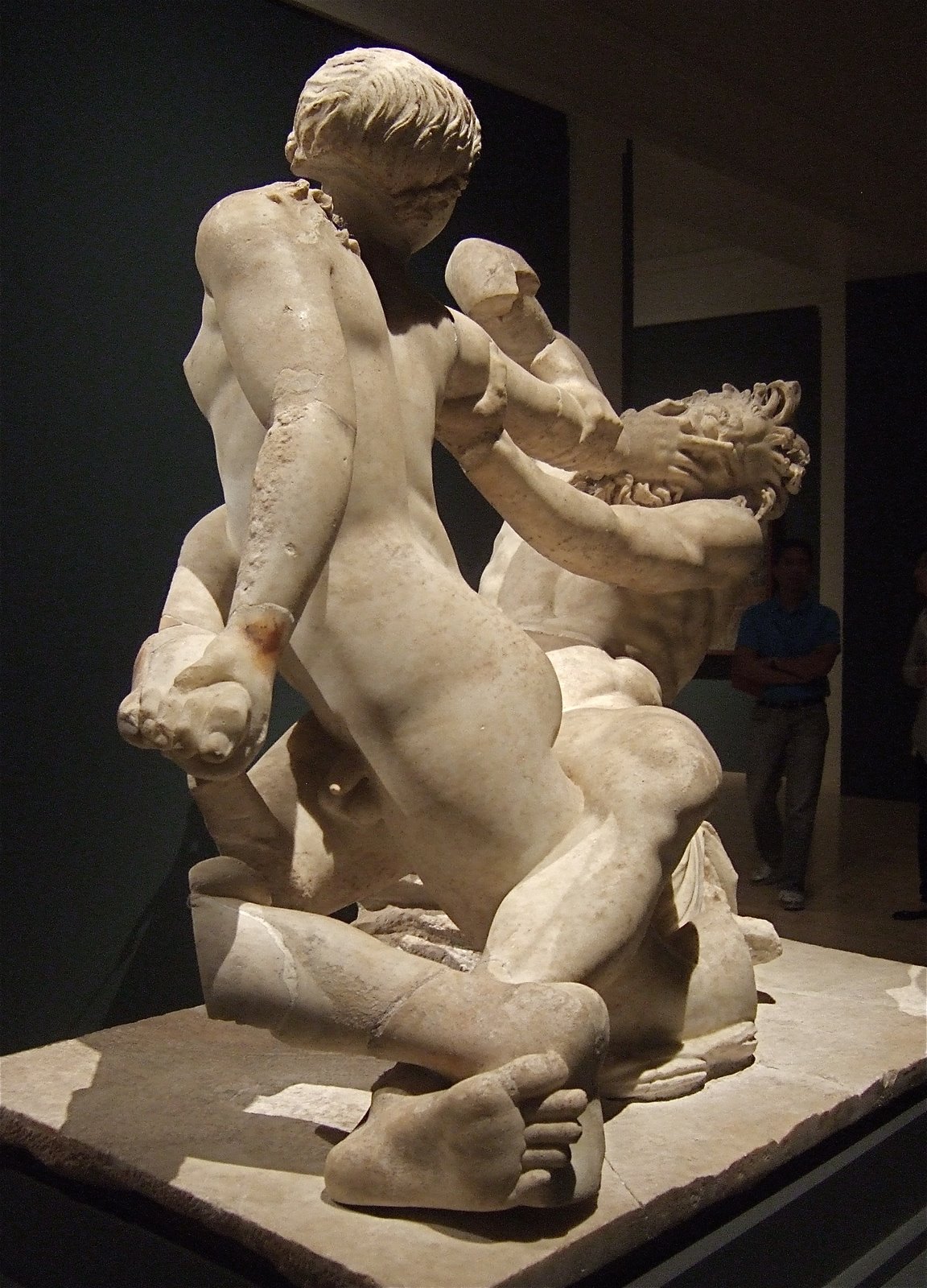
Another sculptural piece discussed in the episode was the Satyr and Hermaphrodite, a type so popular in antiquity that at least 30 replicas survive in marble, bronze, and frescoes. This image was so popular, the reproductions were found across the Roman Empire and likely derived from a Hellenistic model.
Left: Sculpture of Pan and she-goat, from the Herculaneum villa of the Papyri. National Archaeological Museum, Naples; Right: Hermaphroditus fighting off a Satyr from the Villa of Poppaea, Oplontis. Images from Wikimedia Commons.
This statue group would have likely been displayed in villa (Villa of Poppaea in Oplontis, Italy, and the villa at Chiragan in Gaul) or theatre (Daphne and Side) contexts, and likely among other statues that could be ‘read’ in addition to it. It was very much a public art Retzleff suggests that its interpretation could include:
“Dionysiac aspects, the reversal of norms, the objectification of the body, the sexual tryst, and the agon.”
Connotations of sexual violence and vulnerability are suggested by the hermaphrodite unclothed state, with her garments below the scene, and a rocky framing- indicating a possible outdoor bathing context.
Dr King also discusses the frescoes from a bathhouse in Pompeii that used erotic imagery above the locker/cubbies in the building’s changing rooms. These have been interpreted as humorous, meant to be read as an aide-mémoire, for where one left their garments. Similar images were found within a Pompeiian brothel, where the context suggests seductive enticements for clients, rather than a funny visual decoration.
Suburban bath locker frescoes, Pompeii. Left: a foursome; top right: a female and two males; bottom right: male performing cunnilingus.
🎙️ Two Friends Talk History continues to explore the uncomfortable but necessary intersections of ancient narratives and modern storytelling. In this episode, we invite you to listen with openness and care, to reflect on the legacies of representation, and to question how visualisations of sex and violence continue to echo through time.
📚 You can follow Dr Briana King’s work on Academia.edu. 🎧 Subscribe to the podcast via Buzzsprout or wherever you get your podcasts.
Until next time, — Zofia
To follow the spectacular Dr King’s academic work, check out her page on Academia.edu.
For sexual violence or violence against women, the National Domestic Abuse Helpline (0808 2000 247) run by Refuge and Women’s Aid provides 24/7 support and information.
Additional resources include Rape Crisis England & Wales which offers specialist support for women who have experienced sexual violence. Women’s Aid also offers a live chat service and email support
Visit the Rights of Women website on legal information sheets on a range of issues, including Forced Marriage and the law. Support for victims of ‘honour’-based violence and forced marriage.
Cohen, E. E. (2000). “Whoring under Contract: The Legal Context of Prostitution in Fourth-Century Athens.” In V Hunter and J. Edmondson, eds., Law and Social Status in Classical Athens. Oxford. 113-48.
Cohen, E. E. (2006).”Free and Unfree Sexual Work: An Economic Analysis of Athenian Prostitution.” In C. A. Faraone and L. A. McClure, eds., Prostitutes and Courtesans in the Ancient World. Madison. 95-124.
Cohen, E. E. (2014). “Sexual Abuse and Sexual Rights: Slaves’ Erotic Experience at Athens and Rome.” In T. K. Hubbard, ed., A Companion to Greek and Roman Sexualities. Malden, MA. 184-98.
Davidson, J. (1997). Courtesans and Fishcakes: The Consuming Passions of Classical Athens. London.
Gardner, J. (2009), Women in Roman Law and Society. London.
Glazebrook, A. (2017). “Gender and Slavery” in The Oxford Handbook of Greek and Roman Slaveries. Eds. Stephen Hodkinson, Marc Kleijwegt, and Kostas Vlassopoulos. Oxford University Press. Oxford Handbooks Online.
Glazebrook, A. (2016). “Prostitutes, Women, and Gender in Ancient Greece” in Women in Antiquity: Real Women across the Ancient World. Eds. Stephanie Lynn Budin and Jean Macintosh Turfa. Routledge Publishing. 703-13.
Glazebrook, A. (2011). Greek Prostitutes in the Ancient Mediterranean, 800 BCE to 200 CE. Madison WI: University of Wisconsin Press. (co-edited with M. M. Henry).
Keuls, E. C. (1993). The Reign of the Phallus: Sexual Politics in Ancient Athens. London: University of California Press Ltd.
McGinn, T. A. J. (1998). Prostitution, Sexuality, and the Law in Ancient Rome. Oxford.
McGinn, T. A. J. (2004). The Economy of Prostitution in the Roman World: A Study of Social History and the Brothel. Ann Arbor.
Moses, D. C. (1993), “Livy’s Lucretia and the Validity of Coerced Consent in Roman Law,” in Consent and Coercion to Sex and Marriage in Ancient and Medieval Societies. Dunbarton Oaks.
Retzleff, A. (2007). The Dresden Type Satyr-Hermaphrodite Group in Roman Theatres in the AJA, Vol. 111, No.3, July. Pp. 459-472.
Stewart, A. F. (1995). ‘Rape?’ In Reeder, E. D. (Ed.). Pandora: Women in Classical Greece. Princeton: Princeton University Press. 74-90.
In this episode of Two Friends Talk History, I interviewed Senior Lecturer in Classics at the University of St Andrews, and founder of the Visualising War and Peace Project, Dr Alice König. In this interview, I asked Alice about ideas of representing war in antiquity, and if a concept like a ‘peace movement’ was possible in a period of Roman Imperium. We discuss the absences in war narratives, and war’s impacts on women and children, and then turn our attention to the podcast series that Dr König and Dr Nicolas Wiater, launched in 2021, the Visualising War and Peace podcast. The Visualsing War and Peace podcast has over 60 episodes and seeks to present listeners with cross-disciplinary and cross-cultural perspectives on how war and peace were visualised in the past and how new narratives these established frameworks are seeking to disrupt the ways we talk about, teach and reproduce conflicts.
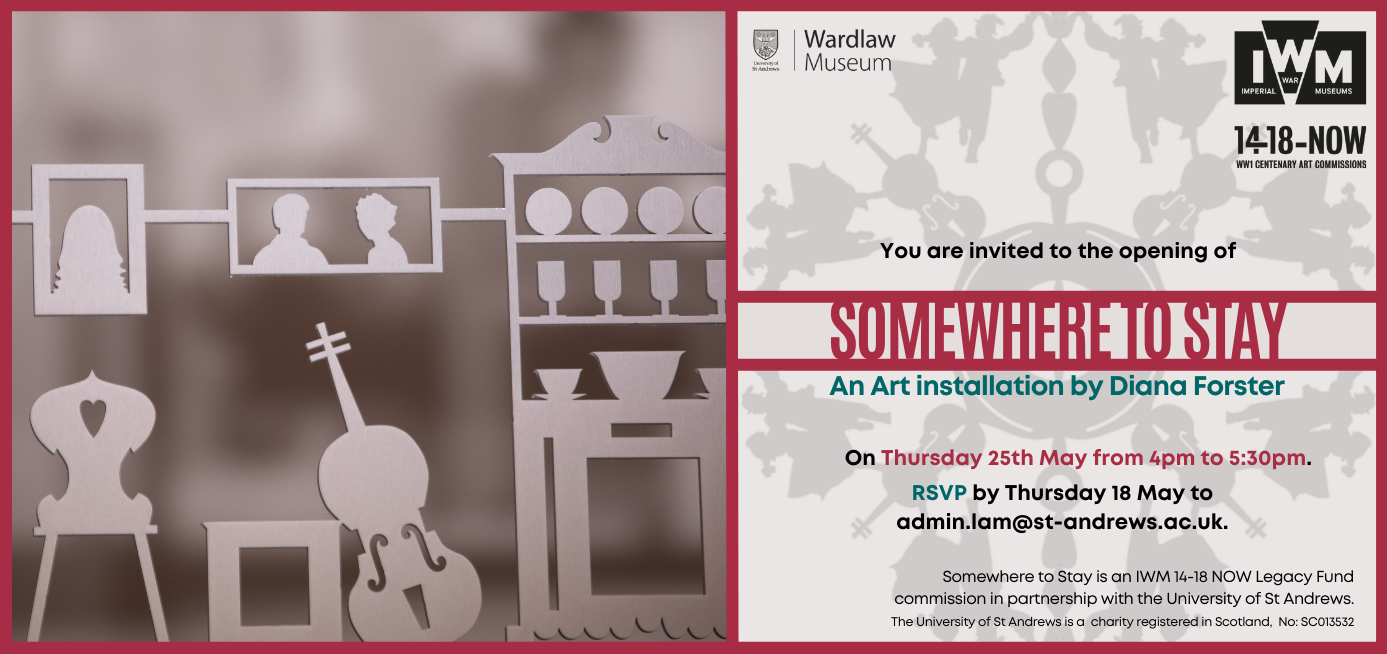
We also discuss the upcoming exhibition Alice has organised with the artist, Diana Forster, opening May 25th at the Wardlaw Museum in St Andrews, ‘Somewhere to Stay’. The exhibition focuses on the forced migration experienced by Diana’s mother, a young Polish woman, during WWII. To hear Diana’s episodes, you can listen to Art and War with Diana Forster or Visualising Forced Migration Through History.
We also discussed the upcoming exhibition collaboration with Hugh Kinsella Cunningham, titled ‘Picturing Peace in the Congo‘. If you would like to learn more, the exhibition is linked here.
You can get in touch with Dr Konig at the University of St Andrews and her work on the Visualising War and Peace project here. Alice is also on Twitter @KonigAlice or @VisualisingWar. You can also follow the project on Facebook and Instagram, and there is an excellent blog series that you can follow through the project website.
For links to show topics: On the appropriation of Classics topics/symbols etc by alt-right groups, helpful scholarship can be read here on Pharos’ website: https://pharos.vassarspaces.net/
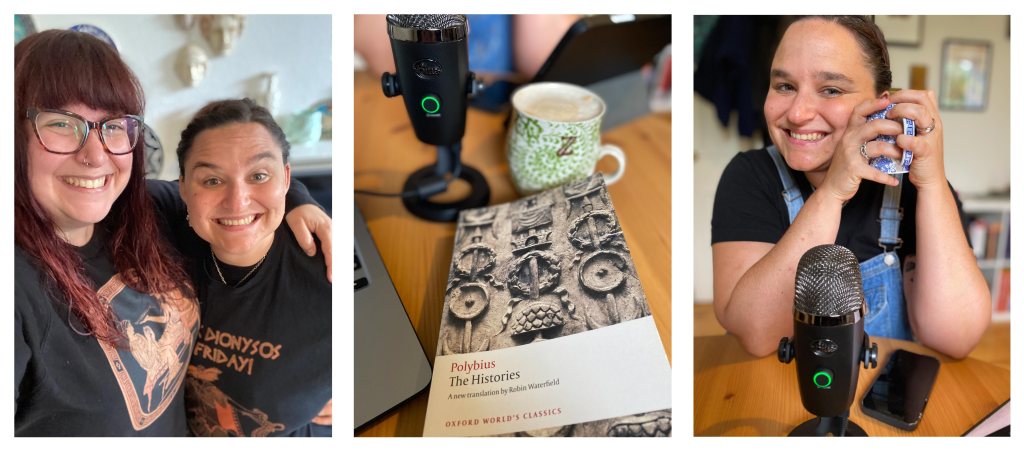
This week on Two Friends Talk History, Zofia interviews Dr Elke Close about Polybius, an Achaean statesman, teacher, and historian from the Hellenistic period. Polybius was active in Megalopolis at the tail end of the period of Greek independence following the wars of the Hellenistic kings and the rise of the Roman empire. His surviving text, Histories, has provided scholars with unparalleled evidence for the social and political changes that led to the changing balance of power in the Mediterranean in the second century BCE.
From the introduction of Polybius’ Histories, we are told of the weight and significance of his treatise for readers to understand the rise to power of Rome, while synthesising the events more broadly around the Mediterranean.
But all historians, one may say without exception, and in no half-hearted manner, but making this the beginning and end of their labour, have impressed on us that the soundest education and training for political actions is the study of History.
His aims are outlined, and through his unique position as Achaean statesman and hostage in Rome, Polybius had intimate access as a teacher and client to one of the most powerful Roman families, the Cornelii Scipiones. Due to his proximity to power and usefulness, Polybius rode shotgun on several watershed moments of the Republic.
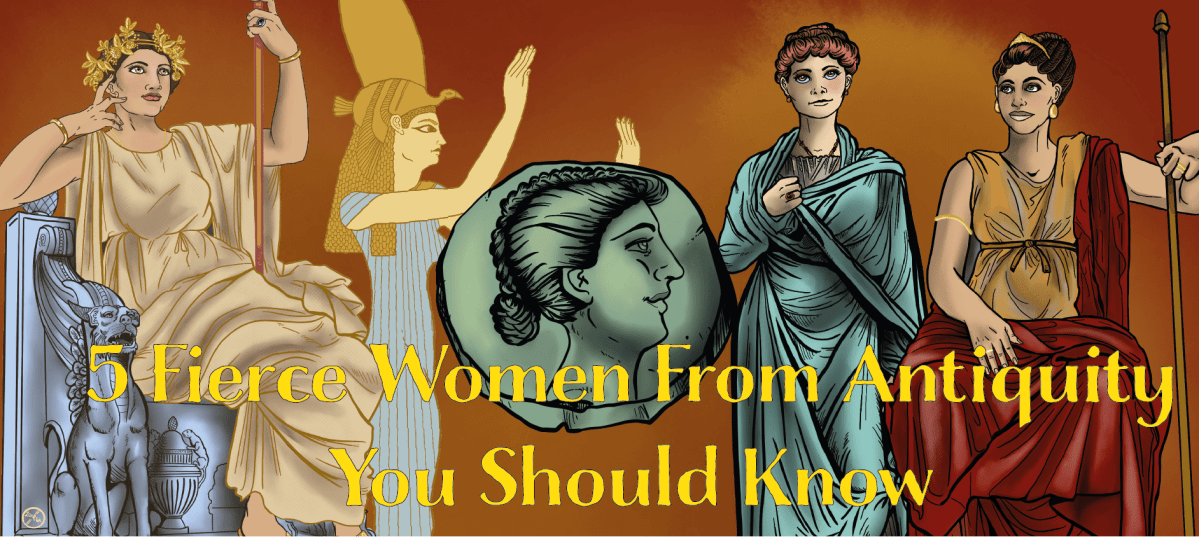
To celebrate International Women’s Day, I’d like to talk about five powerful, clever and resilient female leaders in antiquity: Apama, Cleopatra II, Fulvia, Regilla and Zenobia.
When looking at women in the ancient world, it’s important to recognise they had significant hurdles to exercising power in public spaces. It was generally oriented from the perspective, as Sarah Pomeroy writes, that “the private preceded the public: when public roles existed, they developed from family relationships.” So strategic marriages, powerful parents and acting as regent for future rulers offered elite women many opportunities to exercise more authority than any other women in society at many points throughout history. By acknowledging that their pathways to power lay through their bonds to family relationships is not to say they lacked agency or diminish their accomplishments, but simply to contextualise the perspective through which power flowed. The five fierce females I’ve picked took power for themselves by hook or crook and were forces to be reckoned with, facing the triumphs and tragedies they were dealt.
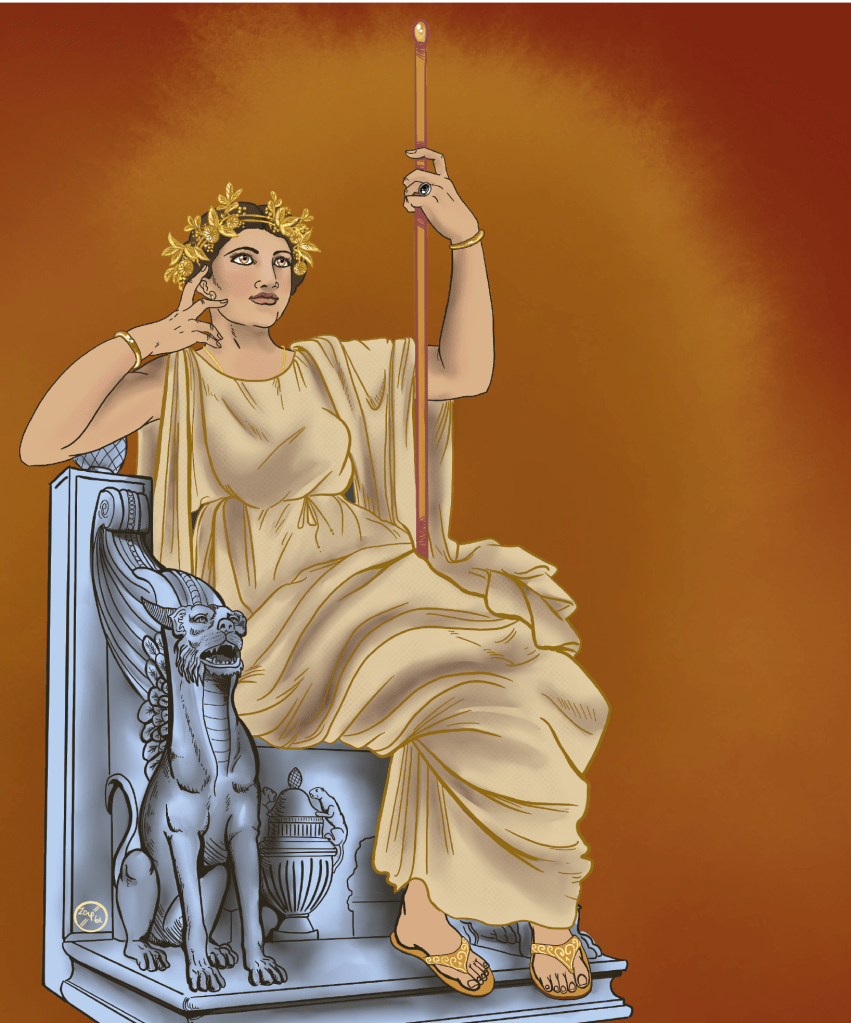
1. Apama, the first Queen of the Seleucid Empire (4th century BCE)
Apama of Sogdiana, first queen of the Seleucid dynasty. Art by Z.Guertin.
Though there is not much written about Apama, I include her first on my list because she came into power from a politically disadvantageous position and ended up having three cities named after her and was key to the founding of the Seleucid dynasty of Asia Minor!
Apama was born into a high-ranking family in the Sogdian region of the Achaemenid Empire in the 4th century BCE. Apama’s father, Spitamenes, was a powerful military leader who successfully led armed resistance against Alexander the Great. Spitamenes was murdered in Bactria by local clans wishing to sue for peace with the Macedonian army. It is unknown what transpired following this – with the elite women of Spitamenes’ family or other Sogdian elites – but four years later, Apama was married to Alexander’s top-tier Companion, Seleucus, at the Great Wedding of Susa. This was a mass marriage between Iranian noblewomen and the higher status Macedonian military, orchestrated by Alexander.
It is impossible to know what the women thought of this, since their voices are entirely absent from the record, and they were effectively high-status captives being married to an enemy army to cement their new political reality. Perhaps the elite women of Sogdiana were kept in relative protection like the captive women of Persian King Darius’ household (Diod. 17.37.5-38, Curt. 3.12.15-26). Given the brutal circumstances of her father’s death, it’s unlikely this was a comfortable period of her life, however, she would climb to the highest position possible in the new empire that Alexander was carving into Asia Minor.
Apama was the only wife we know of from these unions who was not abandoned after Alexander the Great died in 323 BCE. It is very likely that she was a formidable person. Surviving and navigating the wars between the Macedonians in the Achaemenid territories, the wars of the Successors (Alexander’s Companions) and carving out an empire with her husband across the largest and most ethnically diverse of all the territories was surely no easy feat. Seleucus took control of the conquered eastern empire and managed to hold it through the twists and turns of alliances, marriages and wars in the 20 years that followed Alexander’s death in 323 BCE.
Her familial and cultural connections were likely assets to Seleucus holding this territory in the immediate aftermath of Alexander’s death. Apama spoke the languages and understood all the court customs. Over nearly 30 years Apama and Seleucus raised three children, who were part of dynastic marriages themselves, and continued the dynasty they founded. Apama disappeared from the record around the time Seleucus took another wife, Stratonice, a princess of the Antigonid dynasty of Macedonia. Romantics suggest that it was only after Apama’s death that Seleucus remarried again, and only for political gain. This is suggested since Seleucus allowed his son and heir to marry Stratonice when it became evident that they had a romance of their own.
2. Cleopatra II, Queen of Egypt (2nd century BCE)
Cleopatra III, Ptolemy VIII and Cleopatra II. Art by Zofia Guertin.
It is always tricky talking about the Ptolemies. They all shared similar names and were constantly fighting and making alliances with one another. Also, check out the episode ‘Dysfunctional Families‘ on Two Friends Talk History in series 1, if you’re curious to hear more. Of the Cleopatra’s in this dynasty, I think the famous though lesser-known Cleopatra II was a powerful queen who was dealt a difficult hand but gave as good as she got.
Cleopatra II was born (pre-145 BCE) into a period of war and instability, with two brothers who were frequently at odds with one another. This triad was a pretty dysfunctional, which I talked about in my podcast on their A+ level sibling rivalries. Early in the reign of Cleopatra, the Ptolemaic kingdom was involved in a series of ongoing wars with the Seleucid Empire, which at this point numbered six (170-168 BCE).
Cleopatra II was married first to her brother, the Ptolemy VI Philometor (mother-loving) in 175 BCE. They ruled well together and had several children, though they were essentially always at war with their younger brother, Ptolemy VIII Physcon (fatty). After the death of Philometor, Physcon to wrestle the throne from her which led to a civil war. While she had the stewardship of the kingdom, Cleopatra had been popular with the people, but their warring left her in a dangerous position. To protect her children from her first marriage she agreed to a political union and peace. They were married after 145 BCE and it was pretty rocky, with Game of Thrones levels of twists and turns.
Typically, writers characterise the breakdown of their marriage as some type of jealousy between mother and daughter. I would strongly disagree. After the birth of their son, and Ptolemy VIII’s legitimate heir, he began a relationship with his teenage daughter-in-law, Cleopatra III. Things spiralled into another civil war once Ptolemy also married his wife’s daughter in secret. Cleopatra II raised and army and tried to have her husband killed; Ptolemy VIII fled with his new bride and the children of his sister-wife. Like something out of a True Crime podcast, to punish his sister-wife he had his nephew and next in line for the throne murdered and sent to his estranged wife on her birthday. Obviously, Cleopatra II wasn’t going to take this lying down, and continued to rule from Egypt alone while her exiled husband and daughter ruled from Cyprus from 132 – 124 BCE. This tore the country apart and weakened the empire. Eventually, the three monarchs were forced into a reconciliation, and they reigned together until his death. All. Three. Together.
Cleopatra II had a pretty nightmarish existence by modern standards, but what is fascinating is that through her leadership and strength she gained enough support from the Egyptian people to have them side with her time and again against her brother and managed to rule alone for over a decade. It was very unusual for a queen to manoeuvre a king out of power and hold on to it.
3. Fulvia, The First Lady of Republican Populists (1st century BCE)
Bust of Fulvia (as Nike) right / Athena standing left, holding shield and spear; [Z]MERTOR[IGOS/FILWNIDOU] in two lines in left field. Art by Zofia Guertin.
This Roman matriarch was a total boss. Criticised for her ambition, publicity and cleverness, Fulvia loyally supported – some suggest manipulated – the statecraft of the Roman Republic. The sign of an interesting woman, Fulvia was maligned by Roman historians and writers as “having nothing womanly about her except her body” (Vell.Pat. 2.74.2). Fulvia was a wealthy and well-connected noblewoman and though constrained by the norms of her day, she was active in politics, commanded the loyalties of street gangs and armies in the Late Republic. Through her three marriages to several of the most powerful and popular Roman political leaders of the first century BCE, Fulvia even went to war against the future Augustus – her son in law! Fulvia is definitely one of my all-time favourites.
Fulvia’s rise to fame was established through her first two marriages to Publius Clodius Pulcher and Gaius Scribonius Curio. Both marriages were cut short by their violent deaths, Clodius by political murder and Curio through military action in Africa. It was her marriage to Clodius that cemented her in the A-list of elite Roman women; Clodius was a massively influential populist leader of the Populares faction (leader of the Plebians). He mobilised gangs and incited violence to suit his causes, seriously aggravating the conservative elite (Optimates) faction, which led to his murder. Fulvia, politically savvy from the start, used her position as the mourning wife of a famous man to show how devoted she was and how his name lived on through her. Every future connection she made drew on the persona she cultivated in the wake of Clodius’ death – that of the dutiful and noble wife. By the time of her third marriage, to Marcus Antonius, she was stratospherically powerful. According to Cassius Dio, Fulvia controlled the politics of Rome through her financial and personal influence on senators and the public.
In the wake of Caesar’s death and Octavian’s ascension into Roman politics, he and Marcus Antoinus and Lepidus formed a second Triumvirate. This alliance was cemented through his marriage to Fulvia’s daughter (Marcus Antonius’ stepdaughter), Claudia. This went south relatively soon after which relations between Octavian and Antonius soured by 41 BCE. Fulvia spoke to senators on behalf of her husband and then raised an army to defend her family’s interests while Marcus was abroad. She worked with Marcus’ brother Lucius to raise eight legions against Octavian to protect her husband’s interests where she felt he was being side-lined. This brought Fulvia and Octavian to war in 41 BCE, called the Perusine War.
Fulvia and Lucius Antonious’ army occupied Rome briefly, though eventually they were forced to take refuge in Perusia. Marcus appeared to be unaware of the conflict, accused in poetry, of all places, of being too busy with affairs in Cappadocia (with Glaphyra) to resolve his wife’s jealousy. The poem is racy but worth having a look (Martial 11.20). Things did not go Fulvia’s way and she had to flee to Greece, where, apparently, Marcus rebuked and abandoned her. Fulvia died soon after in exile in Greece, and the newly reconciled Octavian and Marcus blamed the whole thing on Fulvia. Her legacy lived on in the children she bore in each marriage, and in infamy, as she became the counterpoint to what a “good Roman wife” should be. Appian blames her weakness and jealousy as the cause of the war (B.Civ 5.3.19). From antiquity onwards, Fulvia has drawn the short straw when compared to Octavia (Octavian’s sister and Marcus’ next wife), however I think there is a lot to learn from Fulvia’s reach and impact on the politics of the time. Even though she was not technically allowed to participate, she left her mark and remains one of the few powerful women of the past we know a great deal about.
4. Regilla, Patroness in Greece 2nd century CE
Annia Regilla, drawn from a statue of her daughter. Art by Zofia Guertin.
Appia Annia Regilla was born in 125 CE into a wealthy family with significant influence as relatives of the Roman Empress Faustina the Elder, wife of Antoninus Pius. Regilla was 14 years old when she was married to the richest man in Greece, Herodes Atticus, who was 40 years her senior. This was a fairly typical age differential among the elite, whereas the lower classes typically married much closer in age. Herodes served under Hadrian as a prefect of the Province of Asia, then tutored Antoninus Pius’ adoptive sons, the future Marcus Aurelius and Lucius Verus.
When the couple resettled in Greece, Regilla was part of the upper echelon of Greek elites and welcomed into service as a priestess to Tyche and Demeter Chamyne (in Olympia). This priestess position allowed Regilla the unique honour of being the only woman present at the Olympic Games in 153 CE. From her own funds Regilla dedicated a monumental fountain (nymphaeum) in Olympia with a bull statue in her own name and decorated the fountain with statues of the Antonines and her own family. Herodes commissioned an aqueduct to channel water into this fountain.
Regilla commissioned many architectural works that highlighted her family (she had four children with Herodes) and their links to the ruling imperial family in Rome. It was not commonly the case that women would dedicate benefactions in their own names; more frequently these dedications would be in the names of their family or alongside a male relative. Regilla seemed to have her own interests in doing things for herself, acutely acting by her own agency to leave her mark. It’s fortunate she did. In 160 CE, while heavily pregnant, she was murdered by her husband or a member of his household. Her family brought suit against Herodes, as there was no doubt it was not an accident. Marcus Aurelius stepped in and prevented his former teacher’s prosecution and that was the end of it. The following year Herodes dedicated the spectacular Odeon of Athens in memory of his wife, in 161 CE, which still stands today at the foot of the Acropolis. Herodes spent the rest of his life building monuments, giving expensive gifts to religious organisations and inscribing surfaces with professions of his never-ending grief for the loss of his wife. To see photos of the buildings and decorations Herodes and Regilla sponsored, you can check out my post here on Herodes Atticus!
5. Zenobia, Queen of Palmyra
Zenobia of Palmyra. Art by Zofia Guertin.
Zenobia was the next in a line of scary eastern queens that shook the Romans in their sandals. Zenobia led a revolt against the Romans from Palmyra which spread into Egypt and Asia Minor and led to war.
Zenobia was married to the Palmyrene chieftain Septimius Odenathus, a client king of the Romans, who was subsequently murdered in 267 CE. Odenathus had kept the eastern Roman provinces together against the threat of the Sassanians, once he died, Zenobia continued this policy and remained loyal to Rome. This change in relationship status allowed her to be the sole ruler while acting as regent for her young son. Once in control of her own court and interests, Zenobia seems to have been a patroness of the arts and literature, creating a court of intellectuals and beacon of culture. Fluent in several languages, Zenobia learned Greek and was given a History of Alexandria by Callinicus. It is not hard to imagine that she was visualising herself as a new Cleopatra VII, since the Romans were certainly projecting that on to her at the time.
When the Roman Emperor Claudius Gothicus died in 270 CE, Zenobia took the opportunity to revolt against the Empire. Emperor Aurelian fought the armies of Zenobia at Antioch and Emesa, then put down her supporters’ rebellions in Egypt.
Aurelian defeated the queen and took her hostage back to Rome. Achieving one symbolic victory over a foreign eastern queen that was denied the Romans when, instead of capturing Cleopatra VII she took her own life in Alexandria, Aurelian paraded the captured queen in a triumph in 274 CE. If we are to believe the Historia Augusta, a problematic source document but cited none the less, the text also suggests that the queen was retired to an estate on the Tibur. Aurelian is said to have praised her intelligence, military acumen and beauty, praising her as a worthy adversary.
What About Other Women?
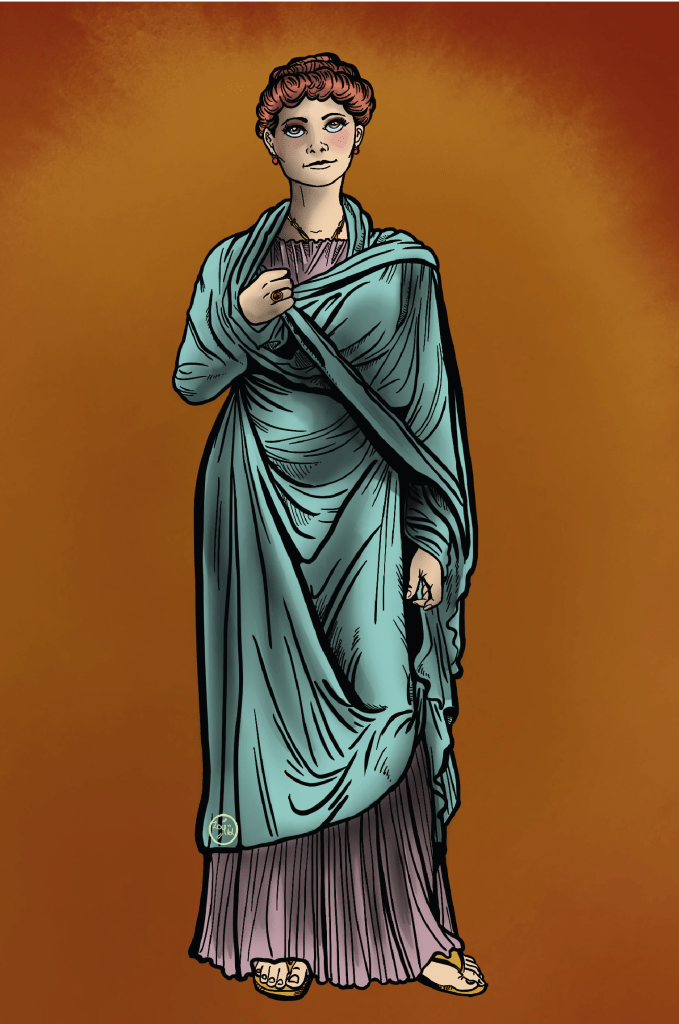
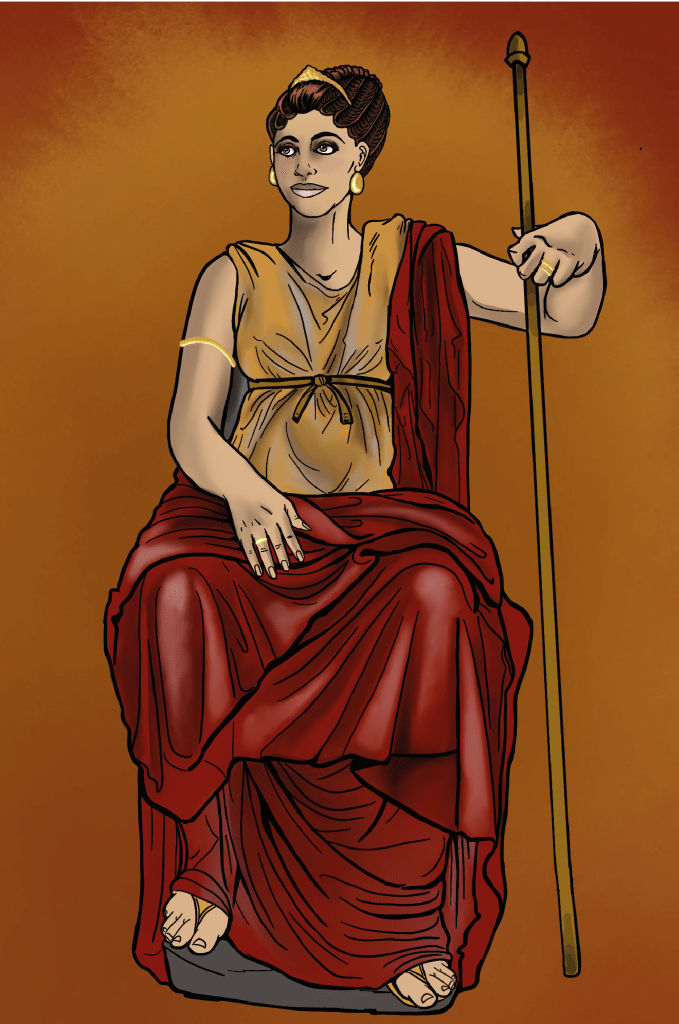
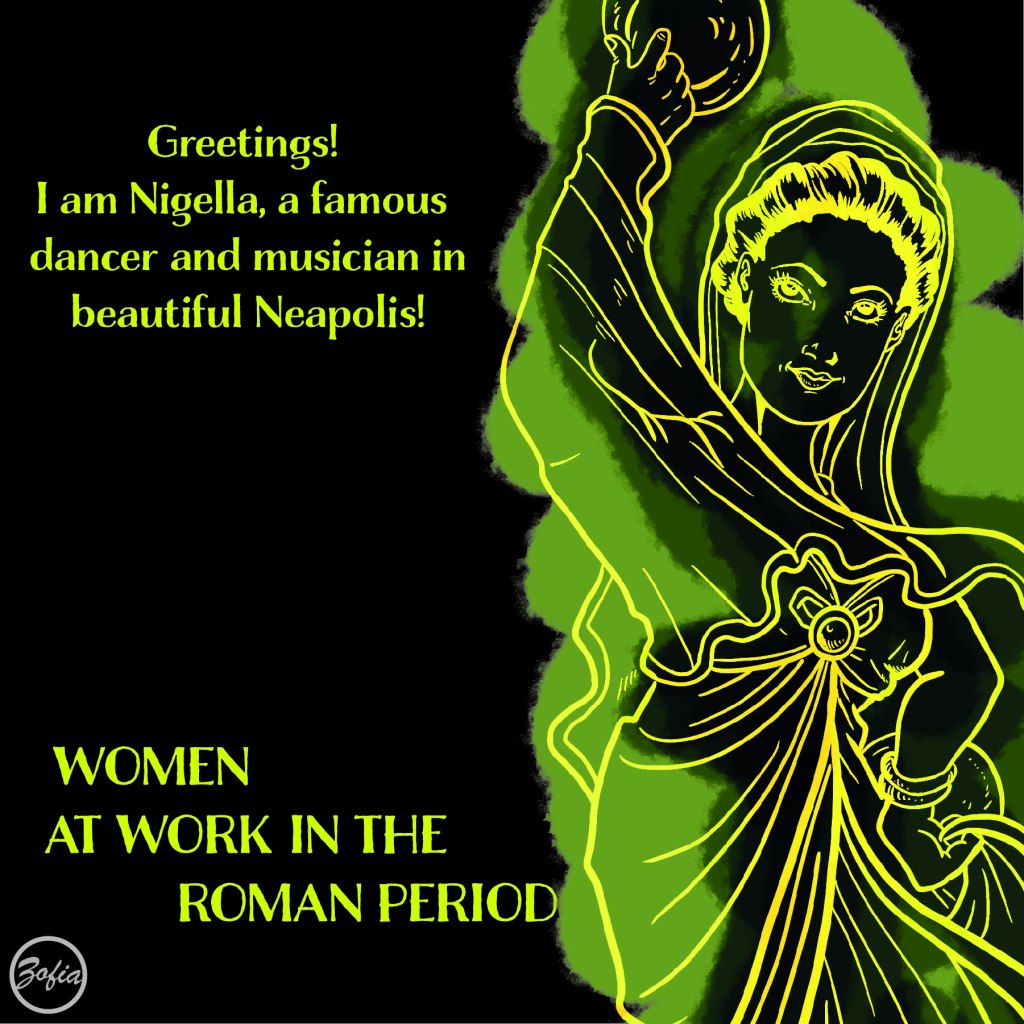
The daily lives of women in the Roman world are often characterised as within the home. For women of elite social status, that was in a large part accurate, though not the entire story. From wealthy households, low-income families or the enslaved, women in the Roman Empire were skilled in a broad array of professions which might surprise you.
As now, not everyone could be a homeowner or afford staff, fine objects or even decorations of any kind. Those who could afford a home (domus) would use it as part of how they communicated their status to the outside world. A well-off family might display portraits of ancestors (women and men) in the central hall of their domus, in the atrium. How a matriarch ran an elite home involved many staff and servants, and she might have had to do so alone for many years while her husband was away on campaigns, or in advantageous political posts. The matriarch would have been in charge of assets, correspondences, keeping clients connected to their patron and so on. The nuance of ‘a wife’s work’ in this context really extended into areas like accountant, personal administrator, event planner and social networker. The house staff might include cooks, laundresses, gardeners, pastry chefs, spinners and weavers, hairdressers, butchers, cleaners, waiting staff, artists and artisans – if they were having mosaics installed said atrium or maybe a fresco painted on the wall- and the list could go on. Many of these jobs could be performed by women, and this is only a small fraction of the types of employment if you were a freeperson. Enslaved women might do many of these jobs as well.
In antiquity as ever, having educated or skilled daughters was a means to greater financial stability for the family and into their own adulthood or marriage later on. If a woman came from a family in the trades, it stands to reason she would participate in some way within that trade, and thus her knowledge and expertise would increase her desirability as a partner. Pliny the Elder mentions female painters in The Natural History, who were paid and perceived favourably to their male counterparts. He lists several women whose fathers trained them in the arts: Timarete, daughter of Micon was renowned for her panel painting; Irene daughter of Cratinus (a painter), painted mythical characters and daily life scenes; Aristarete, daughter of Nearchus, painted the god Aesculapius. He notes Iaia of Cyzicus remained single but was a prolific painter of women’s portraits, whose talent and expedition were unmatched; Pliny says she was even paid more than well-known male painters whose works filled galleries (HN 35.40.83-87).
With these professional pathways for women in the ancient world in mind, I have created a series of colouring sheets with an activity related to the characters from Vita Romana! If you’d like to explore the different roles of women in the Roman period.
Milnor, K. (2011). ‘Women in Roman Society’. In The Oxford Handbook of Social Relations in the Roman World. The Oxford Handbook of Social Relations in the Roman World, 2011-02-01, Vol.1. Oxford University Press.
Pomeroy, S. (2009). The Murder of Regilla : A Case of Domestic Violence in Antiquity. Cambridge, MA: Harvard University Press.
Rowlandson, J. (1998). Women and society in Greek and Roman Egypt : A sourcebook. Cambridge: Cambridge University Press.
Whitehorne, J. (1994). Cleopatras /, London; New York: Routledge.
Tis the season when we celebrate community and the change of the year! How did the Romans celebrate the end of the year?
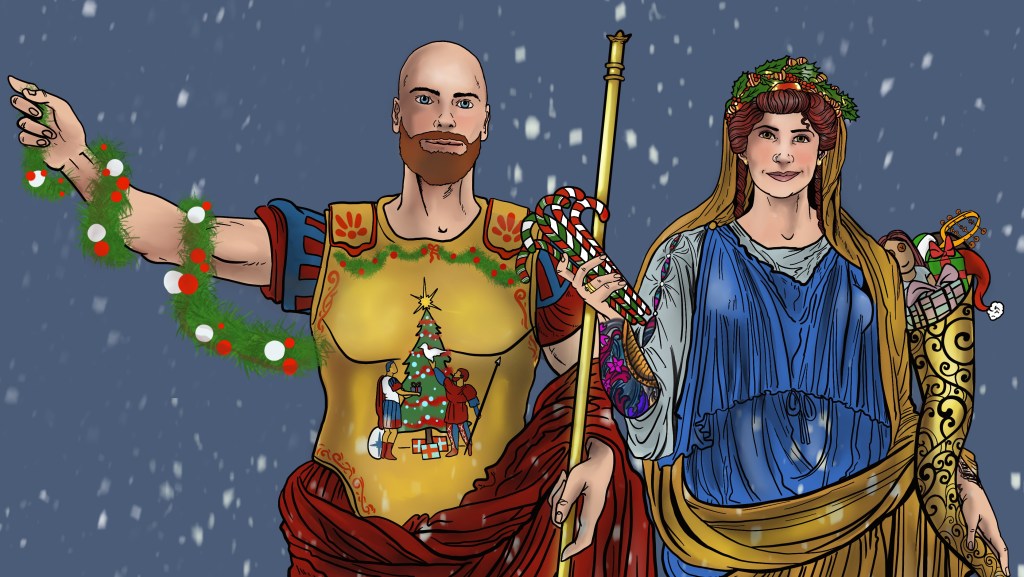
The Roman celebration of Saturnalia was held for several days in mid-December to celebrate the passing of seasons, with its roots in the worship of the agricultural god Saturn. Saturn was syncretised with the Greek Kronos as the Romans came to control Greece, becoming increasingly invested in their gods. Saturn is often depicted as an older bearded man holding a scythe, an acknowledgement of his agrarian roots. The temple of Saturn in Rome stood prominently in the forum and is evidenced to this day by eight impressive columns and a partial podium.
From the late Republican period (the last 1oo years or so BCE) the midwinter celebration officially grew from three days to five in the Principate (December 17th to December 23rd). These were just official trends as it’s generally believed that unofficially it was a week, a bit like now depending on your employment. For the Romans work, studies and legal actions came to a halt and people were ready to party!
In Lucian’s Saturnalia, he speaks with the voice of Saturn in dialogue with a priest, observing how the revelries in his name should take place among the Romans: gaming, dancing, song and drinking were all part of the celebration of Saturnalia; it also involved things familiar to us today like decorating homes with greenery and wearing bright and colourful clothing (synthesis), like ugly sweater parties! Lucian’s Saturn is a very reasonable god who lays out three “laws” for gifting, celebrating and banqueting, emphasising fairness in all measures and not being compelled to act or gift beyond your means.
The King of Saturnalia
A king of Saturnalia acted as the ‘Lord of Misrule’ (like Carnivale) in these celebrations. Elected as the mock king, the Saturnalicius princeps, this agent of acceptable chaos in the household would walk the line between being a cheeky chap and straight up humorously (presumably) insulting guests and members of the household. Bear in mind that Roman households could be somewhat larger than ours – the nuclear family at the centre could include grandparents, cousins, adopted family members, children from other marriages, guests and the enslaved household labourers. Many of the societal norms were relaxed and played with in the household, where during this period the enslaved could eat at the head of the table with those who owned them taking a lower status position. Women too could mingle with men (in some circumstances) a little more freely and could hang together and gamble.
The fun frivolity of Saturnalia drinking parties!
Gifts for Saturnalia
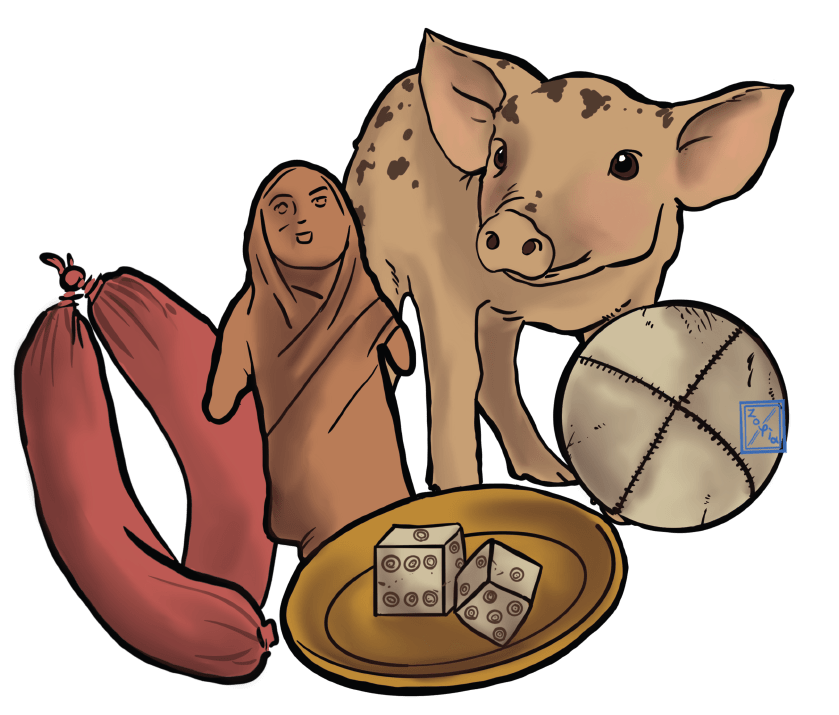
Gift-giving was an important part of Saturnalia. Gifts of high value were not necessarily what one would expect, generally the humour of lower cost gifts was appreciated- like trolling a friend with a joke gift. Catullus wrote of receiving epically bad poetry for a gift and it is fun to imagine the kind of hilarious insults he possibly wrote for friends for their gifts, like getting ‘read’ by Oscar Wild but smuttier. Saturnalia gifts could include: sausages, dried fruit, wine, piglets, wax candles (cerei), dolls, toys, books, statues, tools, exotic pets and more!
The live piglet is especially appealing !
The last day of Saturnalia
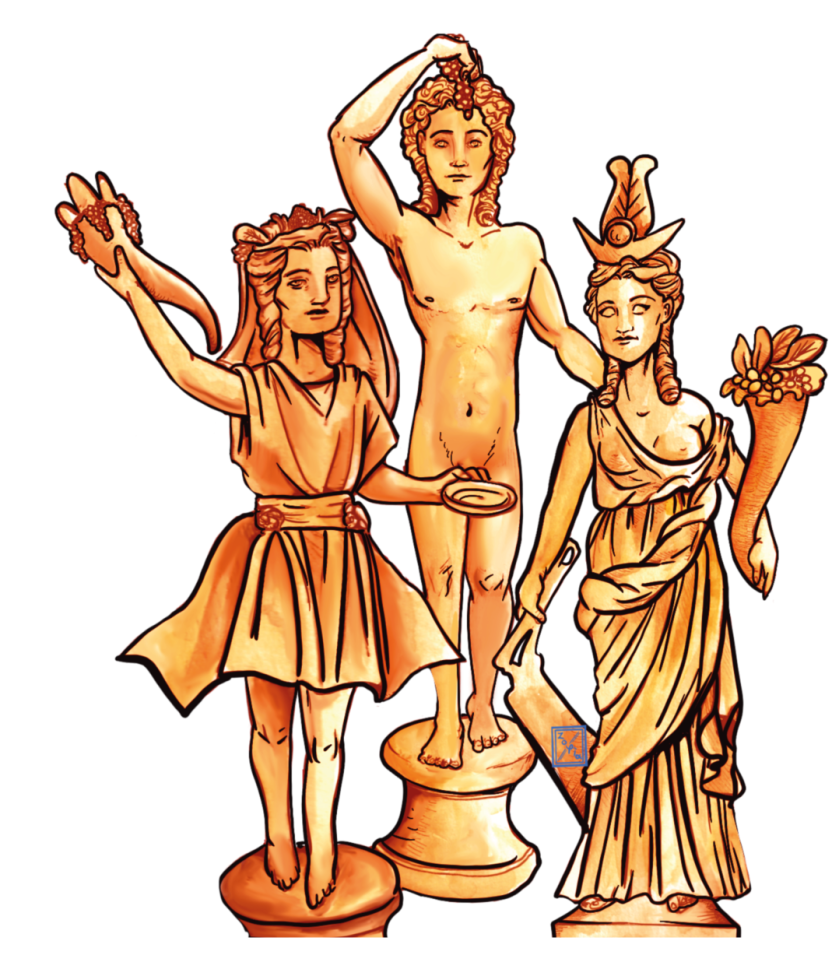
As all good things must come to an end, so too did the annual revels of the Romans. On the last day of Saturnalia one would give sigillaria – terracotta or wax figurines, shaped in the likeness of familiar deities, mythical figures or easily caricatured types (grotesques). The day itself was called ‘Sigillaria‘; the gift type and gift-giving influenced the day’s name. Much like Boxing Day which one theory suggests may have started (according to the OED) as the first weekday after Christmas when postmen, delivery workers and servants of various types would receive a Christmas box, in which was some type of gift or tip. Possibly due in part to the ways gods were part of the everyday lives of Romans, and worshipped in the home in small devotional figures – the Lares – as guardians of the home, it is not surprising that a popular gift would include their likenesses in inexpensive small gifts, conferring further good luck and protection. For the wealthy, these gifts could be made from costly materials like gold or silver. Given their popularity, someone who crafted and sold this merchandise was called a sigillarius. Vendors were quite busy at this time of year, setting up stalls like the Christmas markets we are familiar with today.
The Lares could be quite varied: a Lar holding a cornucopia from Axatiana, Dionysus and Isis Panthea (all goddess).
The Romans had many festivals throughout the year, and a few days after the wild revels of Saturnalia, they celebrated the sober and solemn Compitalia, another festival in which metaphoric beginnings and endings are associated with the end of the year. Named after compita (crossroads), the recently revelrous enslaved peoples would offer sacrifices on behalf of the households within the neighbourhoods they lived to the Lares of the crossroads. Perhaps it is fitting to have a week of revels which brought families and friends together be followed up with a more sober festival which celebrated the bonds of community. Saying goodbye to the year is always fraught with bittersweet reflections with this year being notable in that regard, as surely in many world-changing years before the communities celebrating these rites would join together to celebrate and pray for better times ahead.
Compitalia fresco from exterior wall of a building in Pompeii, 1st c. CE
Stay safe and thank you for reading!
Io, Saturnalia!
Xox Archaeoartist (Zofia) and Mr Archaeoartist (Chris).
“I divided the earth from the heaven. I showed the paths of the stars. I ordered the course of the sun and the moon”. (Kyme Aretalogy in honour of Isis)
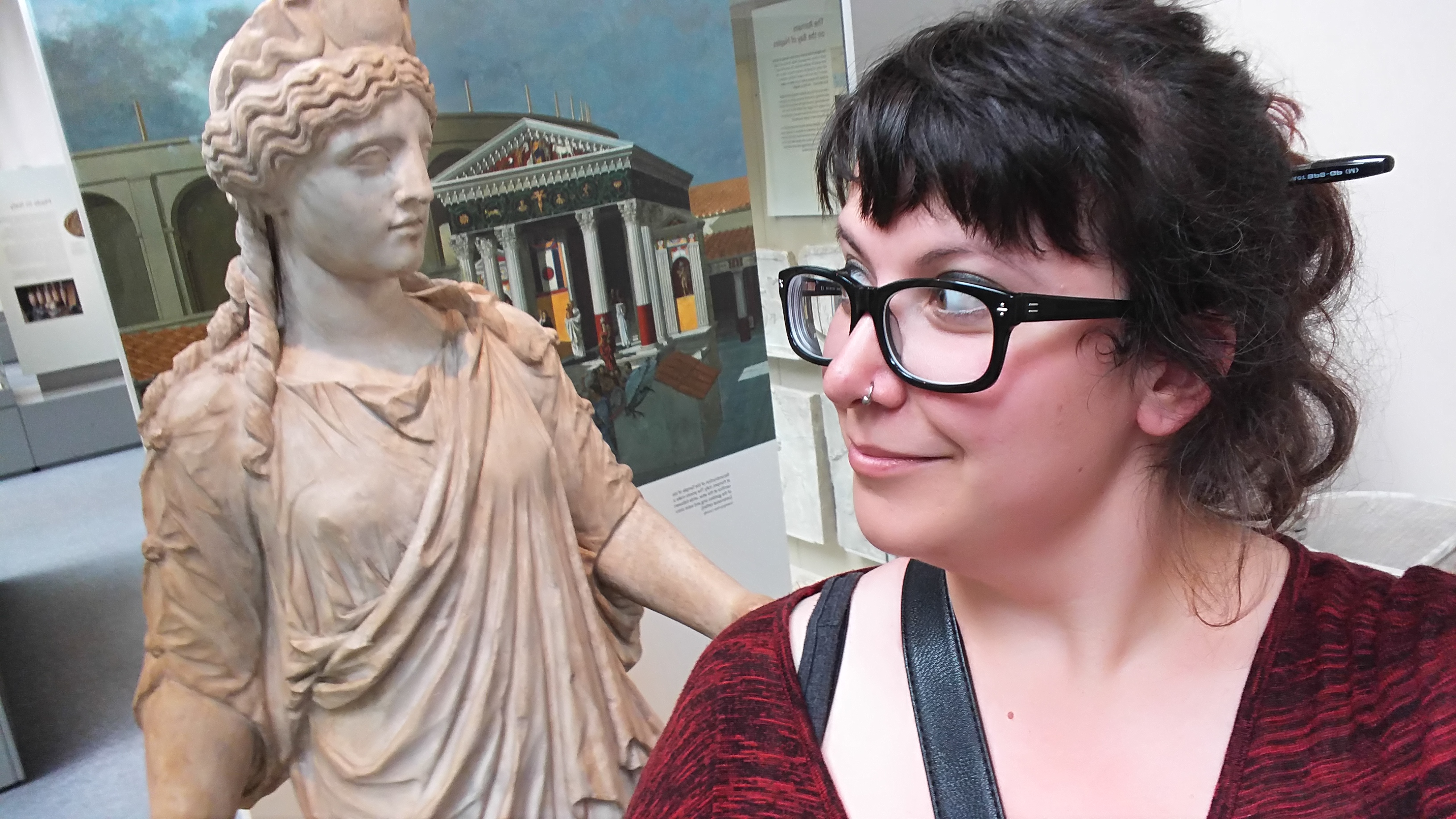
Since backpacking in Europe in 2001, I have been drawn to images and archaeological sites relating to Isis. There are some things that just strike the right chord for you. My first experience with Isis (in a Greco-Roman style) was at the Capitoline Museum in Rome.
Capitoline Isis, Rome (2014).
The statue fit my understanding of what classical sculpture was, and simultaneously had something a bit unusual. The features were so exquisitely carved, and the goddess’s accoutrements were unlike anything I had seen before. While visiting Pompeii during the same trip, I didn’t quite make the connection between the figure in the statue that I’d seen in Rome and the temple in which I had been standing.
During my undergraduate studies, I came across her again while reading Lucian’s ‘Metamorphosis (The Golden Ass)’. My attention was drawn to the way that Lucian described the power of this mysterious foreign goddess. What was so brash about Lucian’s novel was how much he subtly revealed, through winks and nods, about the mystery cult. He described esoteric celebrations, events and magical healing, all the while saying, ‘but it’s a secret, so I can’t really talk about it’. The story is familiar, in a Shakespearean kind of way, through all the hubris, metamorphoses, changes of fortune, and bawdy humour.
Isis-Thermoutis, Musee des Beaux Arts, Lyon (2017).
I was fascinated by this religious movement and how it functioned within the religiously pluralistic Roman society. Isis and her cult would ultimately provide some of the foundation of early Christian practices such as baptism, in addition to the depictions with Horus (the infant nursing on her lap is a dead ringer for the baby Jesus), presaging the metamorphosis into the Virgin Mary.
Isis (holding the snake) and Io (sitting atop the shoulders of the personified Nile) wall painting, Museo Nazionale Napoli (2014).
Jumping in with both feet, I was excited and wanted to understand more about this deity. However, my introduction to the topic began at a much later point in the history of the Cult of Isis; to understand the cult and its significance, I would need to go farther back and approach it more broadly.My Masters at the University of Edinburgh was spent exploring the Greek and Hellenistic routes of the cult, from multiple angles, to start filling in the picture (and creating many of my own pictures).
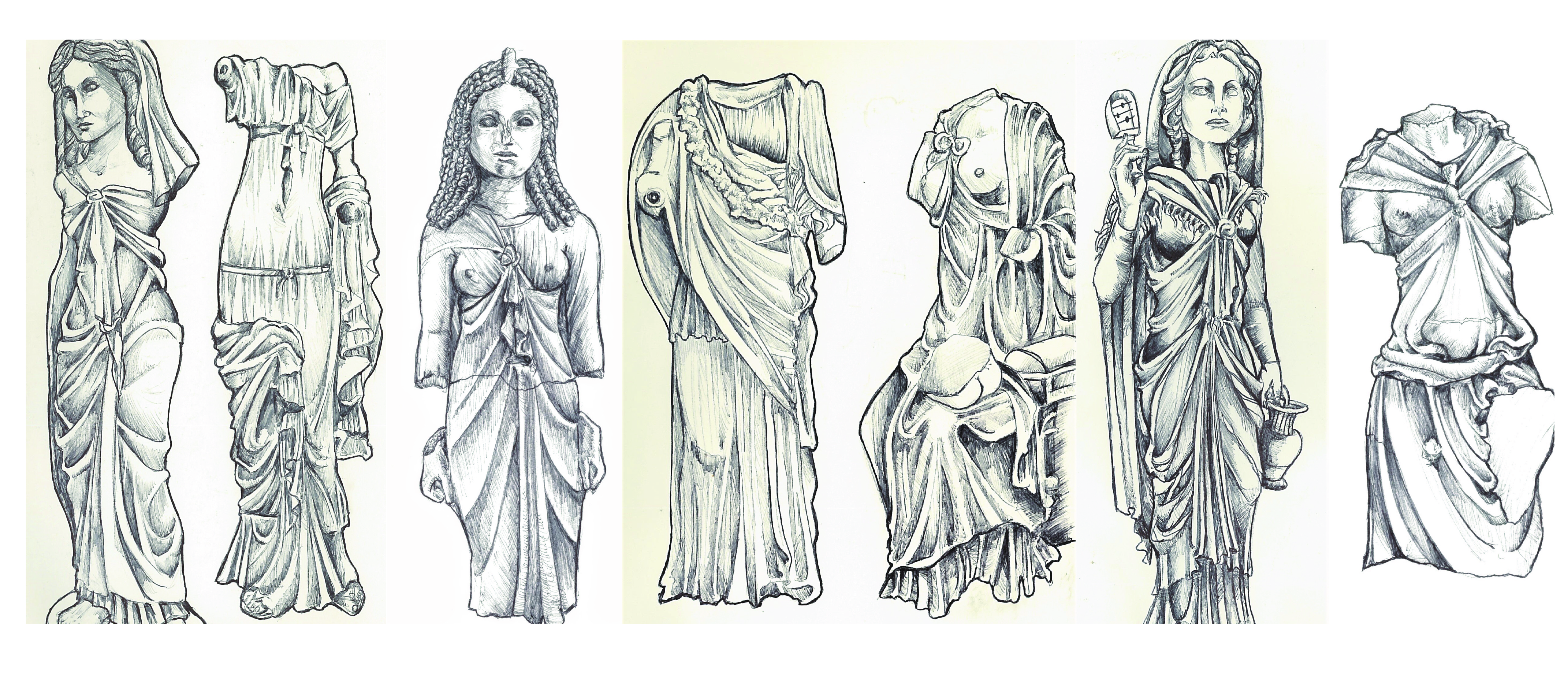
Some of my sketches of Isis statues over the last 4 years.
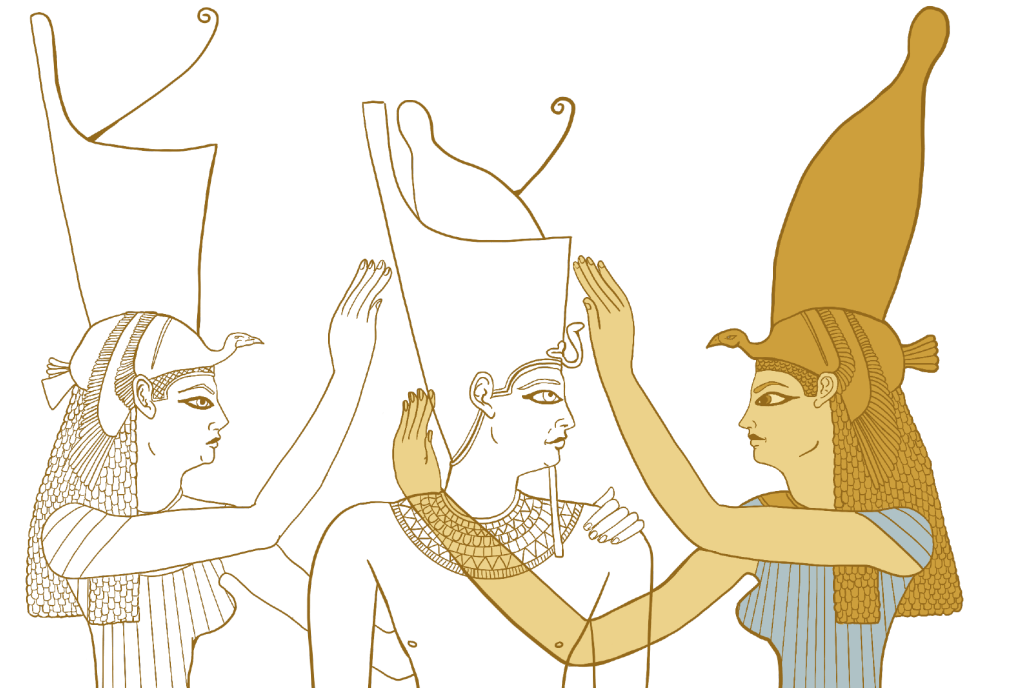
Isis’s power as a deity in Egypt rested in being the wife of Osiris and mother of Horus. She bridged the continuity of kingship from one king to his descendant. Her original function as the literal and symbolic role – as the throne and king-maker in Ancient Egypt – changes quite dramatically once the cult is exported into Greece and Italy.
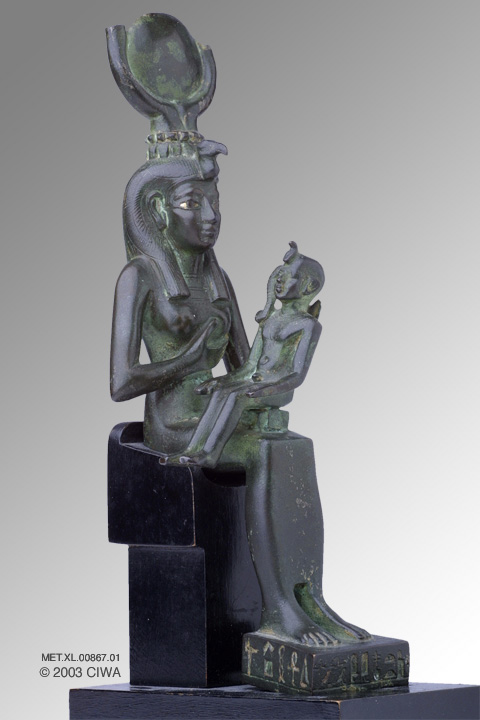
Isis cradling Horus – from the MET archives.
While the period of Isis worship in the pre-Hellenistic era (before 323 BCE) is interesting, what has captivated me more specifically is what happens with the cult in the Hellenistic-to-Roman period. Like a character from Sailor Moon, she gained many headdresses, wands, tools, and visual associations with other deities (Demeter, Aphrodite, Athena, Nike).
This is the period that I focused on during my MSc, researching the symbols and iconography over time, with an emphasis on the tiny figurines used in her worship. What I discovered was that her strength was in her flexibility. Her image could be adapted to all needs, wants and interests. She could be a local or international deity. She could be closely affiliated with a particular ruling dynasty, or one specific location.
Another investigation looked at the cult’s relationship with Athenian government in Delos, and some of the territorial quarrels that occurred between temples run by different factions on the island. The evidence of a push and pull scenario between Delos’ new overlords (the Athenians) and the previous residents, in the mid-second century BCE. Running cults was big business and politically useful to establishing ones career, and the Athenians had no interest in allowing an Alexandrian ‘Egyptian’ to maintain a monopoly on the worship of Isis in this economically powerful port.
While few temples of Isis remain in even remotely good shape, Pompeii possesses on of the most famous examples.
Temple of Isis and her #1 fan, Pompeii (2016).
Pompeii had one of the best-preserved temples (though most of the decorations were long since removed and put in museums). It was fascinating to see the spread of Egyptian-looking artefacts which tend to denote cult membership. The items that were recovered from Pompeii are varied and showed decorations and materials of incredibly high quality that were made for, and used by, the Temple of Isis.
Another leg of the journey in my first large research project involved a trip to Palestrina (ancient Praeneste), some 40 km east of Rome. Part of what I wanted to see was the Egyptian artefacts, which remain some of the most exquisite examples of mosaic work from ancient history.
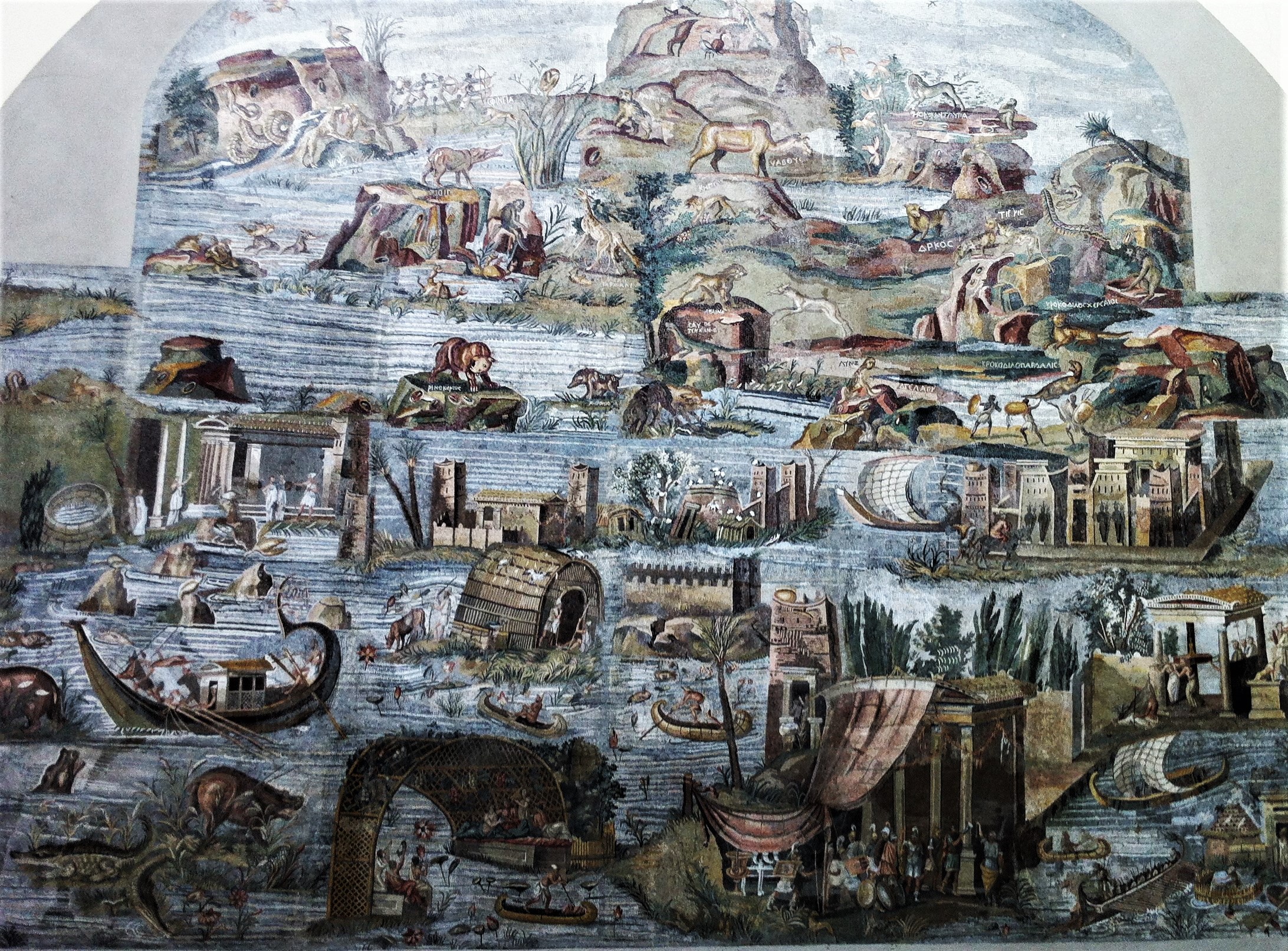
The Nile Mosaic of Palestrina, Italy (2014).
The Nile Mosaic of Palestrina was breath-taking in person and represented an interesting fusion of culture and appropriation of the Hellenistic Alexandrians and the native Egyptians. Although it is an uneven cultural balance, with the prioritising of the Macedonian elite over the native Egyptians.
It is a rare gem of the exquisite mosaic work that was part of art market in Italy, before the Rome dominated the Mediterranean. It highlighted aspects of Egyptian cult which would find its way into Italy, though altered for Italian tastes.
This September I will be stepping into the subject and delving deeper into urban design, Egyptian architecture and the art styles that appear in Roman cities. There are so many aspects and angles to investigate with this topic, and being able to work on a PhD toward this end is like a dream come true. There are still so many sites, statues, and sistrums to see in my journey into my studies of this Cult of Isis!
After the two-month excavation in Policastro Bussentino last year, I was keen to improve on the skills I had learned. I had discovered during that excavation that I was actually really interested in taking more of a leadership role, but was not yet sure how much I knew, or yet needed to learn, to do so. A fortunate meeting with my former teacher, Dr. Ben Russell from the University of Edinburgh, alerted me to a dig that would be happening in Aeclanum (modern Mirabella Eclano) for September 2016. The excavation is an ongoing joint-venture with the University of Edinburgh and the Apolline Project(http://www.apollineproject.org/) with co-director, Ferdinando De Simone.
Dr Moodie-Currie, Dr King, and Me (from left) surprisingly clean !
With this in mind, I had been anticipating an exciting few weeks with two of my brilliant friends, both currently undertaking PhDs at the University of Saint Andrews and Edinburgh University. Packing for the trip (both passports in tow!) is one of the best parts…slowly I am getting more and more efficient. With a few days spent adventuring and relaxing in Rome beforehand, we were all ready to get our hands dirty.
One of the most interesting parts of getting involved in a dig like this is that while the directors and supervisors were well-seasoned, the site itself was essentially starting in many areas with virgin soil. Previous excavations had been carried out several decades before (in a few areas), and more recently a commissioned archaeological dig had been done by a commercial unit. But a variety of reasons, the work being done in this season could be viewed as the ground work for the future of the site. That is an exciting prospect for anyone to be a part of, but I was especially keen since my understanding of how to supervise a trench was somewhat problematic. I was fairly sure there was a lot that I did not yet understand, but was keen to get in and learn.
Coming to train on this dig, I was pretty keen to support younger students and help them feel confident. One or two items tend to come up whilst excavating in field schools which I tried to be mindful of. Traveling alone for the first time and living in a large group can push peoples comfort boundaries (shocking, I know). So with experience traveling quite a lot in Italy, and the last six months of working for Italiarail (the American vendor for the train network in Italy, Trenitalia), we were able to give advice and help sort out peoples’ logistical issues fairly easily! All these things in mind, it was a grand opportunity and beautiful location.
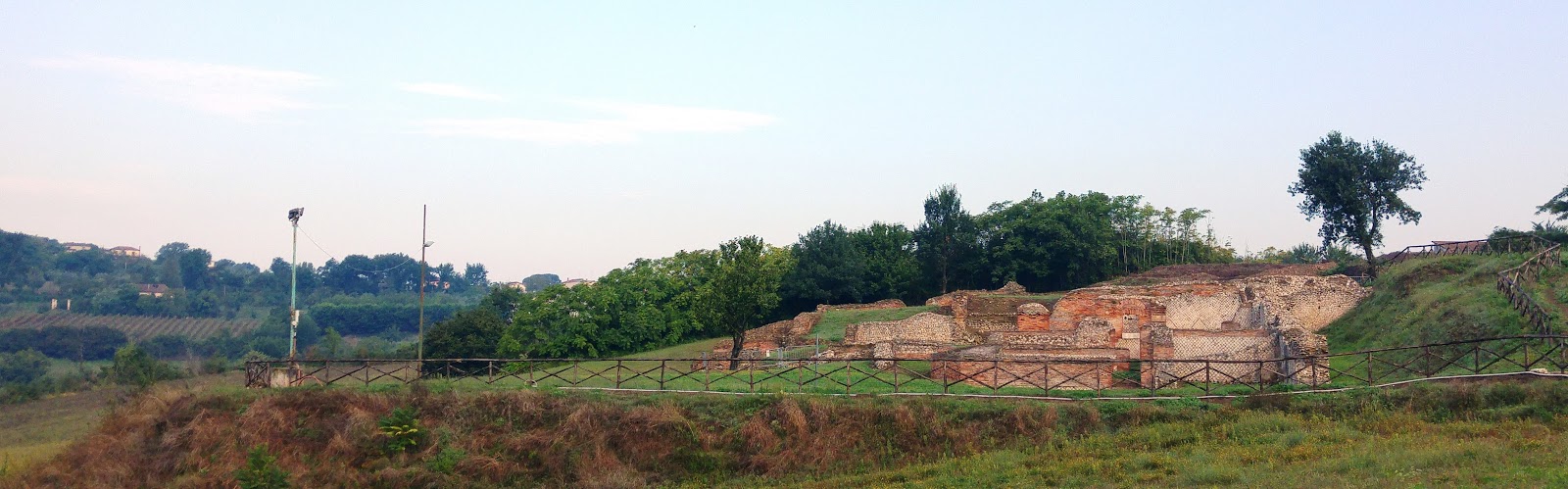
The Site Aeclanum is situated in modern Mirabella Eclano, Irpinia region of Campania (inland). Connected by the legendary Roman road-building, Aeclanum was situated in a central point along the Via Appia. During the Social Wars (around 89 BCE), Aeclanum had been sacked by Sulla’s forces. It was rebuilt, and seemingly flourished in the 2nd CE when it became the Colonia Aelia Augusta Aeclanum. There is evidence of many phases of rebuilding, additions and repairs/re-purposing until Aeclanum sort of disappears from history after 662 from the campaigns against the Lombards of Benevento.
The site itself was set within some idyllic green hills and edible vegetation was scattered throughout. Quite a few buildings were excavated and reconstructed already on the site, which drew tourists to this lovely town. Some building identifications are being reviewed, as new methodologies and interpretations were being applied to this site. There were number of specialists on-site to do digital mapping, ceramic analysis, and even drone photography (which took brilliant photos)! There were many types of dwellings, buildings and some roads visible. The scope of the site is not yet fully known, but there were many intriguing possibilities.
Our group was a mix of University students from all levels and people who came on this dig to get experience for a career shift as they sought to start a new direction in their lives, which is always commendable!
The energy and efforts of the students was amazing. Rain or shine, our team of Saggio Cinque was a hard-working group, and hilarious. My senior supervisor (who I tried to learn as much as possible from) brought very approachable and engaging teaching methods to the site which was a huge help.
Of course! The work is so beautiful on its’ own that it seems a completed decoration. Though I cannot do the architecture justice through simple quick pen sketches in my Moleskin, I do keep trying!
All in all, these were not box-ticking learning objectives, rather an attempt at trying to give a taste of the concrete outcomes they needed to start a career in archaeology. I may have only a few weeks as a junior supervision, but it was incredibly informative right away being on the other side of a field school.I can’t go in to much detail, or perhaps shouldn’t, as it is an evolving and ongoing project and season, so what I can say about what we encountered in Saggio Cinque (now famously under the hashtag #SaggioCinque) was the following.
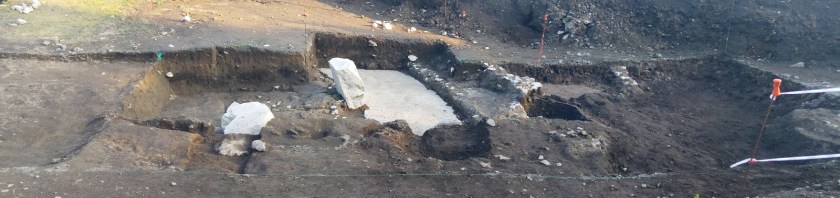
My previous dig experience in Greece included evidence of ancient and modern grave robbing. Working on a salvage dig was fast-paced and quite hush-hush about what we found, since the graves were near the surface and not hard to spot. Whereas, what was surprising in Aeclanum, was seeing the evidence of someone trying to remove the massive limestone slabs (unsuccessfully) and apparently giving up. Poaching finished building materials and re-purposing them for newer buildings was pretty standard practice in antiquity, but it was interesting to see evidence of a failed attempt.
Local politics and archaeology Whilst our archaeological field school lodged in Mirabella Eclano, there was a bit of a press furor going on around us. A sign was put up near the site, “Archaeologists in the Nursery, Moms in Revolt”, publicised a local misunderstanding about our accommodations. This strange bit of press, while seeming contentious, actually gave the opportunity for some interviews on site and publicised some of the exciting things we were doing.
Mirabella Eclano The town of Mirabella Eclano was full of affordable little restaurants and bars, beer festivals, and very pretty views. The people of Mirabella Eclano were always very kind and gracious. I had a lot of great conversations using a mixture of French/English/Italian with quite a few locals. There were some real gems of cafes and restaurants; my favourite cafe, Zucchero e Vaniglia, served some incredible pastries and perfect portable coffees- superior additions for a dig break. Our main port of call, however, was the cafe/bar at Hotel Aeclanum. Many drinks, chats and post-dig hangouts took place at this hotel bar.
If you are curious and would like to find out more or maybe get involved, please check out the Apolline Project Website: http://www.apollineproject.org
Whilst I was excavating in Policastro Bussentino, I decided to use my down-time productively and get to know the cities in southern Italy. The train routes were cheap and plentiful along the Tyrrhenian coastline, with beautiful views on this regional train ride from Napoli Centrale.
One such a day trip, I ventured from Naples on an ambitious outing to see some ancient cities of Magna Graecia. I say ambitious because by foot it is a very long walk from Baiae to Cumae along a winding hillside with no shoulder or footpath- all in all, a 15 mile walking day.
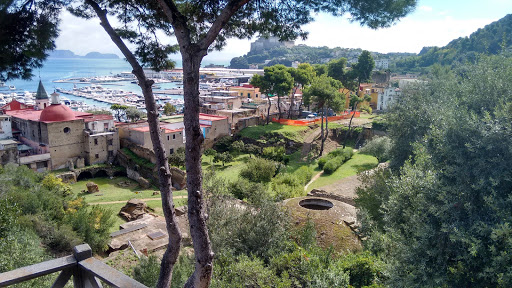
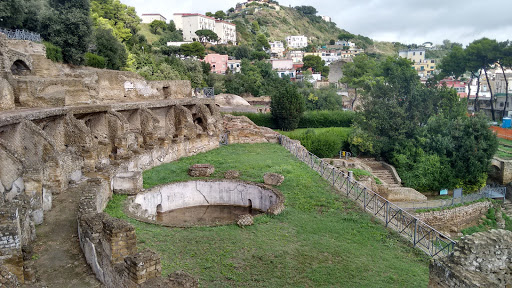
When I arrived at the ancient town of Baiae in Gulf of Puzzuoli, I had the unique experience of being in a spectacular archaeological site entirely alone.
It was a beautiful clear morning and I rocked up without having purchased a ticket (tickets you are supposed to buy at Cumae first then head over to Baiae, unbeknownst to me). Luckily, the park steward let me in for free and after I explained my disorientation!
The archaeological park was stunning, as you can see. The multi-story bath complex was built into the hillside, and standing atop the complex it is not hard to imagine why the super-rich of the Republican period into the Principate were drawn to this place. This area was rich in volcanic activity (Vesuvius is very close, of course) which the Roman architects and engineers were able to channel into sulphur springs – perfect for hot baths!
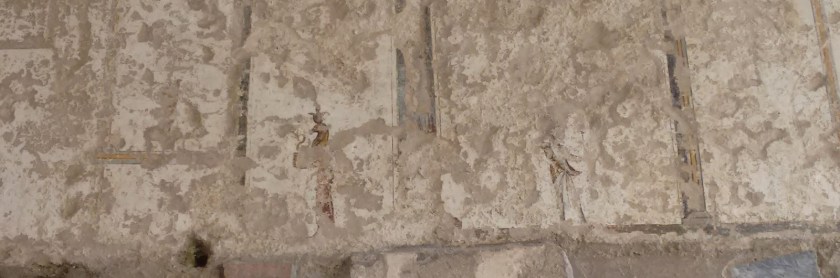
There seemed to be endless rooms, and many with mosaic floors still remaining in situ. The mosaics are, appropriately, water-themed with divinities and typical meander and wave patterns. Water and neglect have left them in the current state of disrepair they are in, but you can see evidence of the gorgeous technical ability.
A surprising amount of painted plaster was still visible as well, with typical decorative motifs and some strange ones. The frescoes date to two particular stylistic phases: the middle of the 1st century A.D., called the 3rd Pompeian style (notably because of the ‘Egyptianising’ features they possess. This stuff is my research jam, and I shall in due course dedicate many 1’s and 0’s of the internets to discuss it.Below I’ve tried to highlight the figures which have zoomorphic features and elements meant to evoke Egypt (costumes and symbols).
A later, 2nd century A.D. phase is also present, which could be viewed as slightly irregular and a bit shabbier in execution. This little green dragon below was part of that later design.
There were a few cisterns still, and one was even fully intact. The echo inside made singing sound like I was using a microphone. Yes, I sang a few Disney songs before giving my spot to the tourists who were waiting at this point, bemused, outside. Nothing like being in a archaeological sites for belting out tunes (Florence and the Machine). Amusingly, it wasn’t until a month later I learned the name of it was called the “Temple of the Echo“. While not a temple, the name was still pretty on point.
Top-view of the cistern”Temple of the Echo”
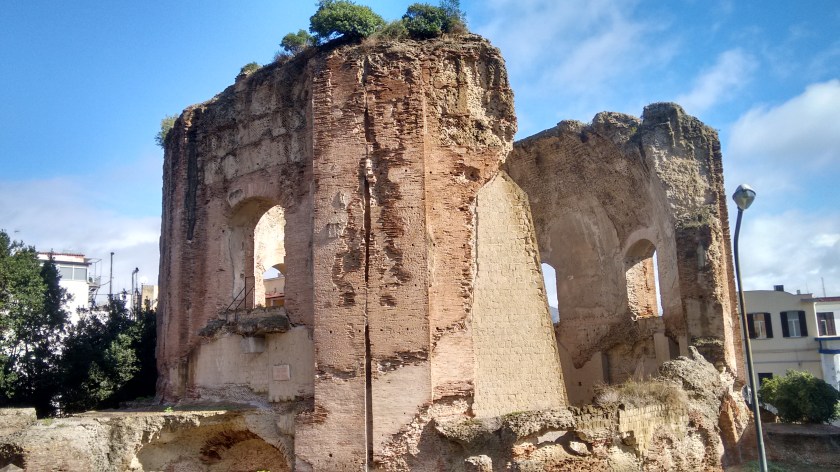
This was built during the reign of Hadrian, one of the greatest building emperors of the Roman Empire. The influx of funds in the 2nd century A.D. – which manifested earlier in the frescoes being added to – coincides with the building of this structure. Called a temple erroneously, it has been argued to be a pool, a further spectacular addition to the bathing complex. As I neared the bottom of the hillside, I could see a MASSIVE temple-looking structure, across the (modern) street, outside of the bath complex. I stood to sketch it for a while, and saw that it was a ‘Temple of Venus‘, which, given the history of this elite spa-town, would have made perfect sense.
Prolific in his building, this massive Hadrianic era building could have been a casino, pool, or possibly religious building- all suggestions I read at the site. The lingering naming of the building, ‘Temple of Venus’ betrays the varying perceptions of it that carried on over the last thousand years since it was in use.The political landscape in Rome during the late Republic into the Principate involved the elevation of the Julio-Claudians and funding to their parton deity- Venus. Julius Caesar had a villa in the area, and other notables like Pompey Magnus, Caligula and Septimus Severus all frequented the area.
Temple of Venus at Baiae
Augustus took over the entire complex (and much of the town), adding it to his sizeable imperial property. Controlling where the rich went to relax, socialise and play was pretty much Augustus’ raison d’etre during his early formation of how the empire would be run.
Anyone watching the Versailles (2015) series right now could imagine the same processes occurring in Rome under Octavian as was happening in the court of Louis XIV. Like the French nobles who were forced to adopt new practices and behaviours, Rome’s elite probably required some wrangling to stay in the lines as Augustus delineated them. Controlling spaces goes a long way towards controlling behaviours and shaping ideas.
Squinty little study of shapes at the Temple of Venus
The analogy of Versailles can be taken farther, as Baiae developed a reputation for moral bankruptcy, with salacious and scandalous behaviour taking place in the steamy rooms of this wellness retreat. One commentator on the depravity of Baiae’s baths and wellness centre was Seneca the Younger, describing it as a “vortex of luxury” and amusingly, “harbor of vice”. I suspect he may not have been on the guest list for the sexier parties.With Romans, physical wellness was linked with spiritual wellness. The presence of temples in a site like this would make a lot of sense
Not surprising then, that as time and memory faded the original meaning of these buildings more mundane structures, nestled along the coast, took on impressive religious connotations.
















 “I divided the earth from the heaven. I showed the paths of the stars. I ordered the course of the sun and the moon”. (Kyme Aretalogy in honour of Isis)



 My Masters at the University of Edinburgh was spent exploring the Greek and Hellenistic routes of the cult, from multiple angles, to start filling in the picture (and creating many of my own pictures).


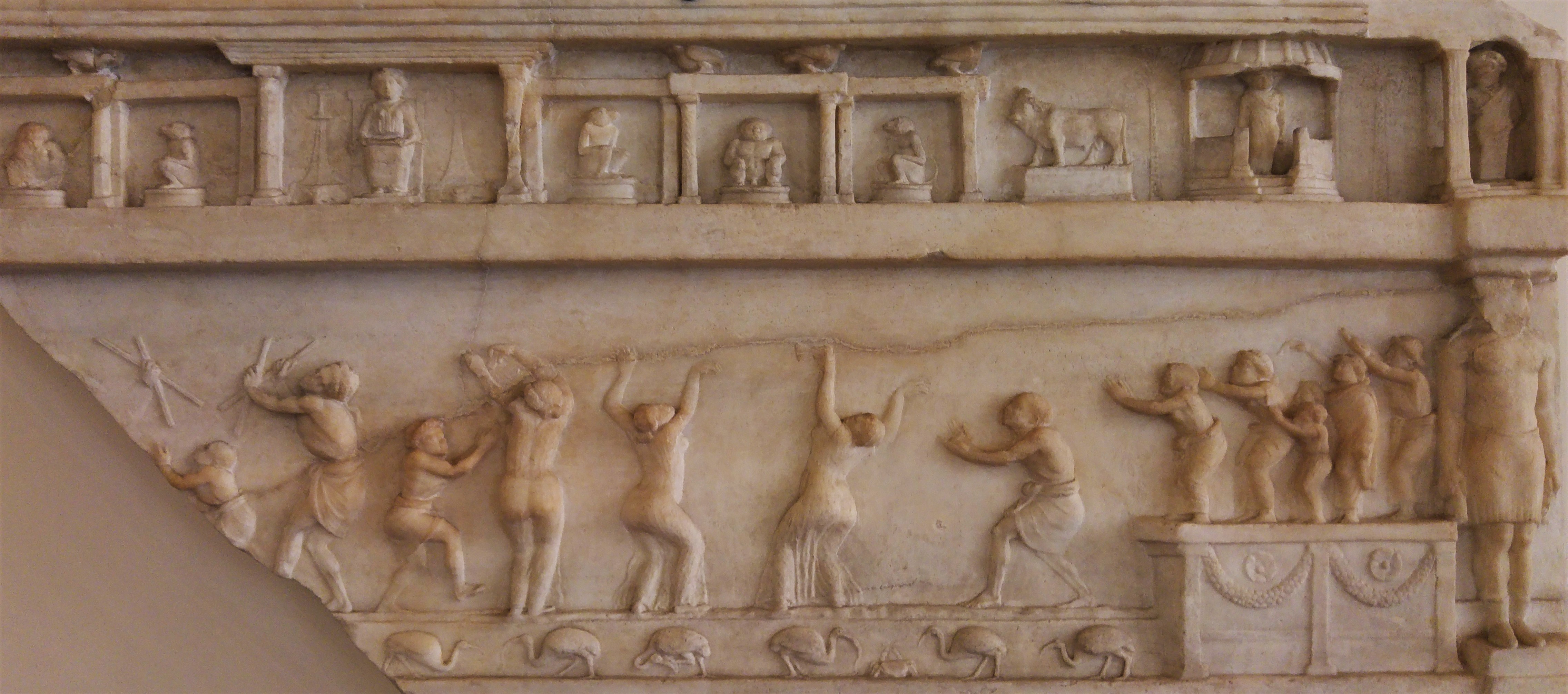
 There are still so many sites, statues, and sistrums to see in my journey into my studies of this Cult of Isis!













 ArchaeoArtist
You must be logged in to post a comment.