19. Manchester: trying on ‘self-care’ in 5 steps after a big submission

Deciding to listen to the good advice I was given at the onset of embarking on my PhD, I opted to follow the rule: once you’ve submitted something substantial, take a week and decompress.


The first few months of my PhD have been a whirlwind of new ideas, late nights and piles of reading. It had been three years since I’d written anything so formal, and the gap in between was noticeable. Like an unused muscle, my writing felt crampy and good for only one lap or two around the court. Though working old muscles can be exhausting, diving into the subject that you love is enjoyable and invigorating. After several years of wanting to spend my daylight hours working on something interesting and challenging, the last two months have sped by. With the completion of my first review submission, there was no shortage of things to work on and develop.20171113_172436Deciding to listen to the good advice I was given at the onset of embarking on my PhD, I opted to follow the rule: once you’ve submitted something substantial, take a week and decompress. That can mean many things of course. Understandably, long train rides and walking many miles might not be someone’s idea of decompression, but hey ho.20171127_1540061. Go Find Your Chill

Normally, I am the last person to take advice relating to self-care and relaxing (shudder), but I thought, ‘why not’? Four hours after submitting my work, I jumped on a train to Manchester to visit a couple of wonderful friends who I met during my MSc at Edinburgh. My wonderful hosts, both a current and future PhDs, welcomed and showed me their adopted city. Manchester was a beauty. With plenty of time to explore the downtown and no particular agenda, other than seeing what they love about it, I could relax and take it all in.


2. Take in a Bit of Culture

There is something restorative in going to art galleries, museums or creative performances. Even if you don’t necessarily like the art on display, just seeing what creative minds have been/are up to can take you outside of yourself for enough time to relax a bit. At least until the next “BREAKING NEWS” alert on your phone goes off.20171128_123042 When needing to feel some inspiration, or just wanting a quiet space to draw, museums and galleries tend to be my preferred space to do so. Popping into the Manchester Art Gallery allowed me the rare privilege to see one of my favourite paintings in the flesh – Charles Auguste Mengin’s ‘Sappho’ – which was breath-taking and significantly larger than I’d imagined.6The depth of the darkness in Sappho’s gown cannot be done justice with a digitized image, and the highlights looked iridescent in some spaces. Sappho, so often presented longingly and wistfully, is shown powerful, dark and mourning. Her angst and colour palette was a natural favourite for me in my high school goth years.20171127_1736273. Nightime Walks and Christmas Markets

Walking around at night when travelling alone isn’t always the safest choice, so when I have the opportunity for company, it is an excellent way to see another side of a city. As this was my first time in Manchester and it coincided with Christmas festivities, strolling around the streets at night was especially lovely. 20171127_172938While making me homesick, one of the perks of living in the United Kingdom is the on-point Christmas markets. The smells of meat, waffles and mulled wine were amazing. It required all the will-power I possessed not to buy adorable kitsch ceramics, and eat all the treats.20171127_173235-e1513174939446.jpgOnward through town we went, eventually settling into a pub near the university. Ample political debates, methodological discussions and general nerdiness ensued.

4. Treat Yo SelfAviemore 2013 (5)This might seem fairly obvious, but taking 30 minutes out of the day to have a leisurely coffee or popping into a print shop and finding Liam Gallagher greeting cards (nailed it, Manchester) is sometimes the treat you need to clear your head. It doesn’t have to be a big production, but leaving the to-go cup behind and just sitting in nice spaces with friends (or alone) is one of my favourite parts of a solo journey. Seldom do I plan a trip without packing as much as possible into the schedule, but trying it out this month was really rewarding and relaxing.

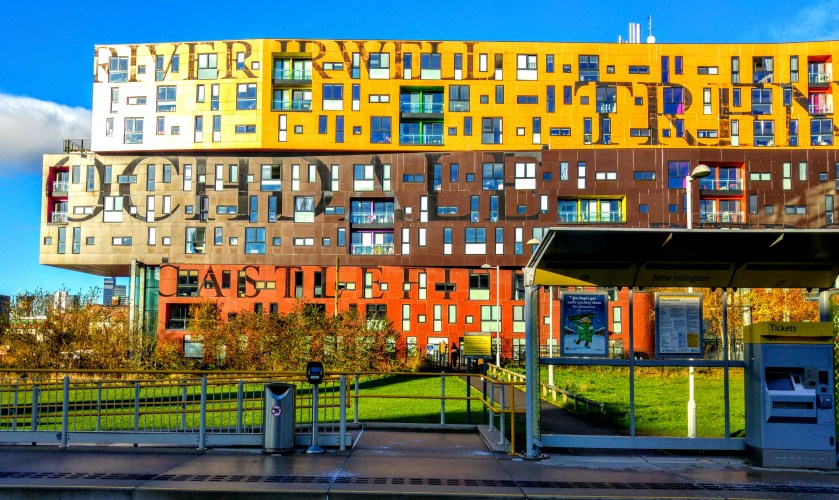
5. Reflecting 20171128_114301Taking stock and heading home, I was thoroughly impressed by the juxtaposition between new and old buildings in the city. There is a lot of effort to create dynamic visual landscapes, which living in the historic neighbourhoods of Edinburgh, I occasionally forget that skyscrapers, tower block flats and vivid colour are normal to see. Shaking off the last few weeks of 14+ hour work days, and stress that ate normal stress for breakfast, I definitely came back feeling more refreshed, and through that, optimistic. Though only a few days, it was a wonderful stop.20171203_130941_HDRNext stop: BRUSSELS! 48 hours later, my partner and I jumped on a plane and were en route to Eindhoven for a week


16. Studying the Regina Caeli: the journey so far into the cult of Isis.

Isis Bar“I divided the earth from the heaven. I showed the paths of the stars. I ordered the course of the sun and the moon”. (Kyme Aretalogy in honour of Isis)

Since backpacking in Europe in 2001, I have been drawn to images and archaeological sites relating to Isis. There are some things that just strike the right chord for you. My first experience with Isis (in a Greco-Roman style) was at the Capitoline Museum in Rome.

IMG_6957 (2)
Capitoline Isis, Rome (2014).

The statue fit my understanding of what classical sculpture was, and simultaneously had something a bit unusual. The features were so exquisitely carved, and the goddess’s accoutrements were unlike anything I had seen before. While visiting Pompeii during the same trip, I didn’t quite make the connection between the figure in the statue that I’d seen in Rome and the temple in which I had been standing.

During my undergraduate studies, I came across her again while reading Lucian’s ‘Metamorphosis (The Golden Ass)’. My attention was drawn to the way that Lucian described the power of this mysterious foreign goddess. What was so brash about Lucian’s novel was how much he subtly revealed, through winks and nods, about the mystery cult. He described esoteric celebrations, events and magical healing, all the while saying, ‘but it’s a secret, so I can’t really talk about it’. The story is familiar, in a Shakespearean kind of way, through all the hubris, metamorphoses, changes of fortune, and bawdy humour.

20170324_131121
Isis-Thermoutis, Musee des Beaux Arts, Lyon (2017).

I was fascinated by this religious movement and how it functioned within the religiously pluralistic Roman society. Isis and her cult would ultimately provide some of the foundation of early Christian practices such as baptism, in addition to the depictions with Horus (the infant nursing on her lap is a dead ringer for the baby Jesus), presaging the metamorphosis into the Virgin Mary.

zofia and greg eurotrippin p.2 458 (2)
Isis (holding the snake) and Io (sitting atop the shoulders of the personified Nile) wall painting, Museo Nazionale Napoli (2014).

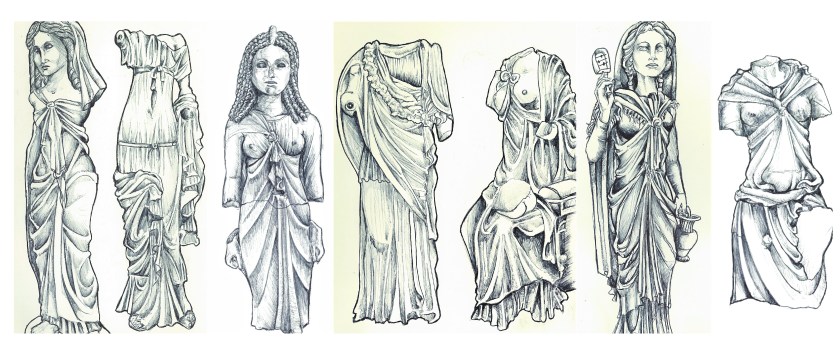
Jumping in with both feet, I was excited and wanted to understand more about this deity. However, my introduction to the topic began at a much later point in the history of the Cult of Isis; to understand the cult and its significance, I would need to go farther back and approach it more broadly.Scanned from a Xerox Multifunction Device002-1~2My Masters at the University of Edinburgh was spent exploring the Greek and Hellenistic routes of the cult, from multiple angles, to start filling in the picture (and creating many of my own pictures).

Isis Bar2
Some of my sketches of Isis statues over the last 4 years.

Isis’s power as a deity in Egypt rested in being the wife of Osiris and mother of Horus. She bridged the continuity of kingship from one king to his descendant. Her original function as the literal and symbolic role – as the throne and king-maker in Ancient Egypt – changes quite dramatically once the cult is exported into Greece and Italy.

QUEEN Isitnefret as Isis-Hathor MET.XL.00867.01-1304-1237 bce, EGYPT
Isis cradling Horus – from the MET archives.

While the period of Isis worship in the pre-Hellenistic era (before 323 BCE) is interesting, what has captivated me more specifically is what happens with the cult in the Hellenistic-to-Roman period. Like a character from Sailor Moon, she gained many headdresses, wands, tools, and visual associations with other deities (Demeter, Aphrodite, Athena, Nike).

This is the period that I focused on during my MSc, researching the symbols and iconography over time, with an emphasis on the tiny figurines used in her worship. What I discovered was that her strength was in her flexibility. Her image could be adapted to all needs, wants and interests. She could be a local or international deity. She could be closely affiliated with a particular ruling dynasty, or one specific location.

Another investigation looked at the cult’s relationship with Athenian government in Delos, and some of the territorial quarrels that occurred between temples run by different factions on the island. The evidence of a push and pull scenario between Delos’ new overlords (the Athenians) and the previous residents, in the mid-second century BCE. Running cults was big business and politically useful to establishing ones career, and the Athenians had no interest in allowing an Alexandrian ‘Egyptian’ to maintain a monopoly on the worship of Isis in this economically powerful port.

While few temples of Isis remain in even remotely good shape, Pompeii possesses on of the most famous examples.

20160911_121435 (2)
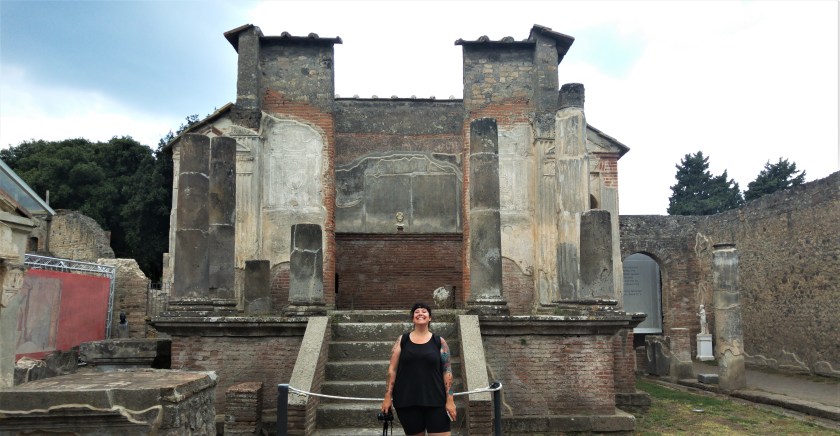
Temple of Isis and her #1 fan, Pompeii (2016).

Pompeii had one of the best-preserved temples (though most of the decorations were long since removed and put in museums). It was fascinating to see the spread of Egyptian-looking artefacts which tend to denote cult membership. The items that were recovered from Pompeii are varied and showed decorations and materials of incredibly high quality that were made for, and used by, the Temple of Isis.

Another leg of the journey in my first large research project involved a trip to Palestrina (ancient Praeneste), some 40 km east of Rome. Part of what I wanted to see was the Egyptian artefacts, which remain some of the most exquisite examples of mosaic work from ancient history.

2014-04-23 14.57.04
The Nile Mosaic of Palestrina, Italy (2014).

The Nile Mosaic of Palestrina was breath-taking in person and represented an interesting fusion of culture and appropriation of the Hellenistic Alexandrians and the native Egyptians. Although it is an uneven cultural balance, with the prioritising of the Macedonian elite over the native Egyptians.

It is a rare gem of the exquisite mosaic work that was part of art market in Italy, before the Rome dominated the Mediterranean. It highlighted aspects of Egyptian cult which would find its way into Italy, though altered for Italian tastes.

 So, what is next?

20160903_162123 (2)
Isiac procession relief, Palazzo Altemps, Rome (2014).

This September I will be stepping into the subject and delving deeper into urban design, Egyptian architecture and the art styles that appear in Roman cities. There are so many aspects and angles to investigate with this topic, and being able to work on a PhD toward this end is like a dream come true. 20160610_150009There are still so many sites, statues, and sistrums to see in my journey into my studies of this Cult of Isis!

Thank you for reading my blog!

A bientot!

Save

Save

15. Mithymna: the Fortress on the Hill

Picture 398
Roman ruins at the north end, facing Turkey.

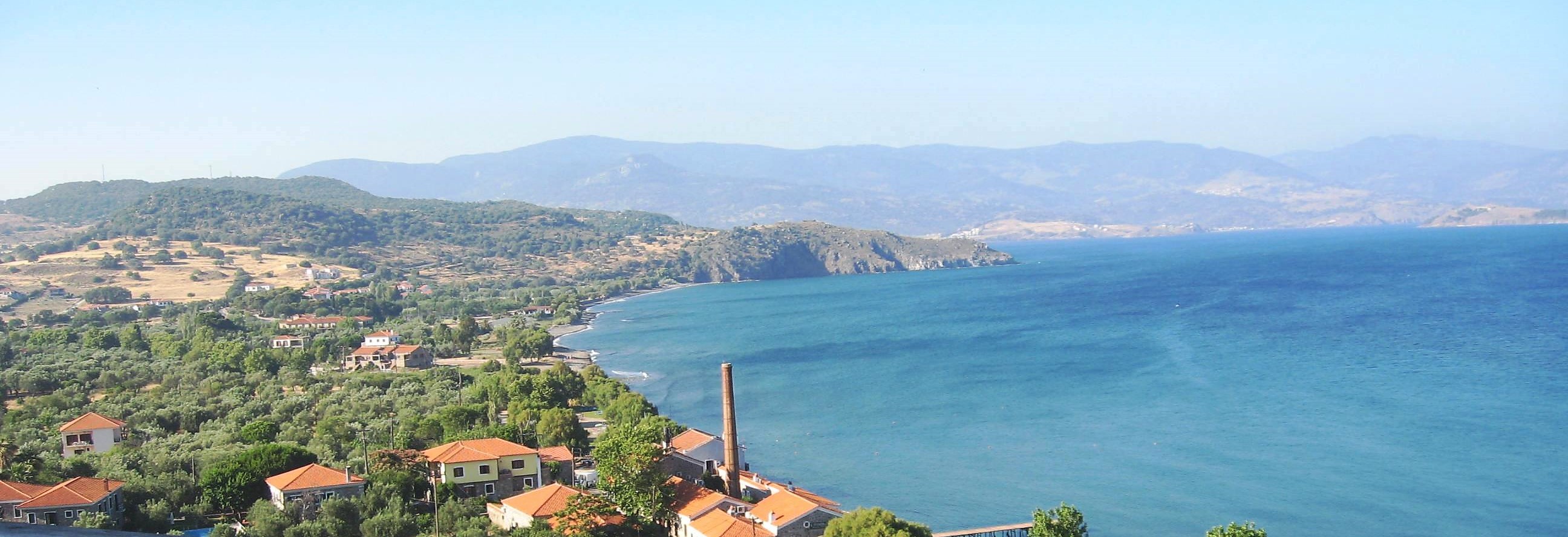
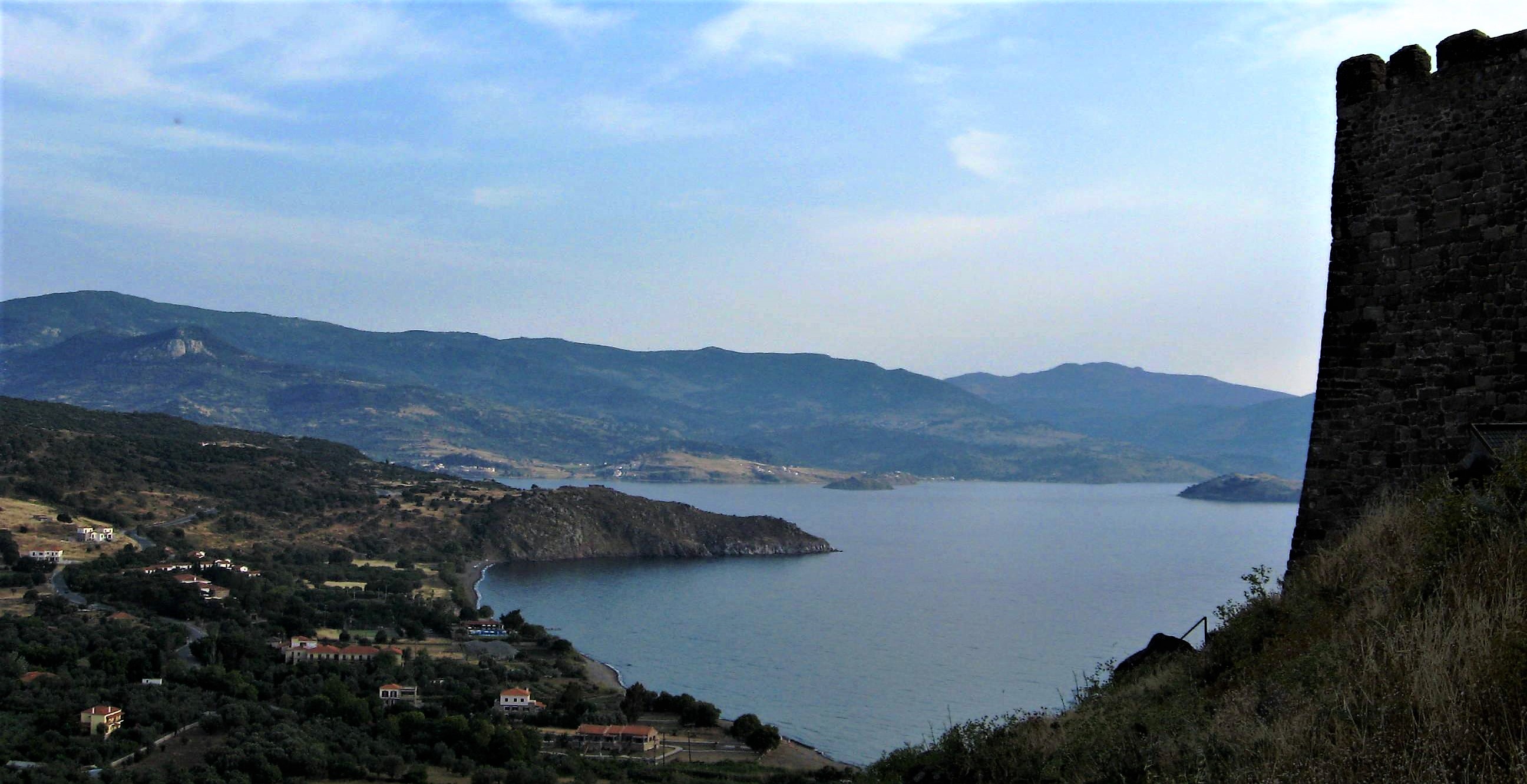
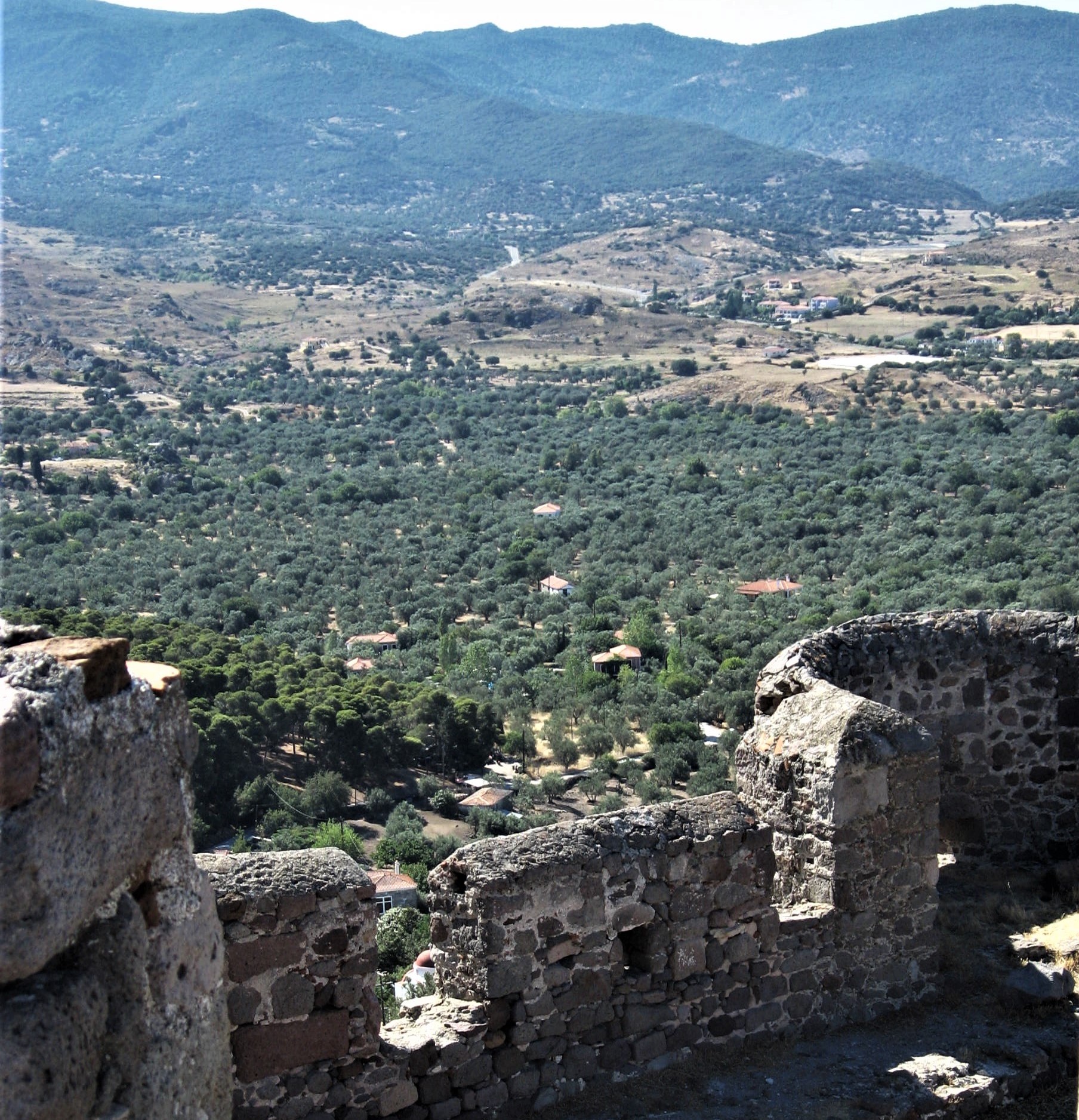
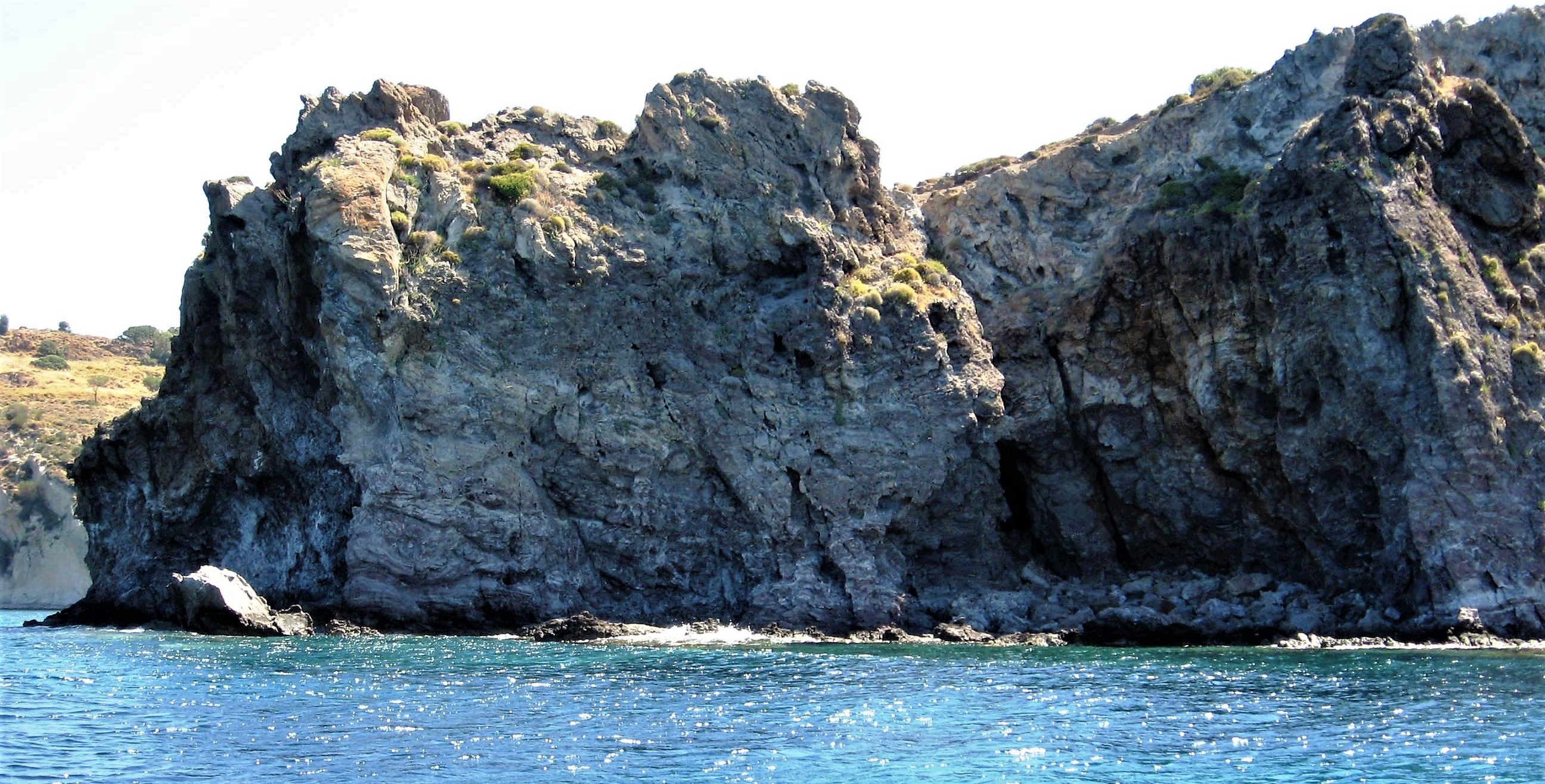
There is something breathtaking about the shores, mountains and harbours around Lesbos. Mithymna is a gem of a town, with all the fine features you hope for as a tourist destination, but a significant amount of history is embedded in every corner.  928 (2)As one of the largest Greek islands, and the nearest to Turkey, there is a remarkable amount of cultural fusion and warmth that shaped my experience of living in Mithymna (Μήθυμνα / Molyvos) for several months, some years ago.

Greece 591
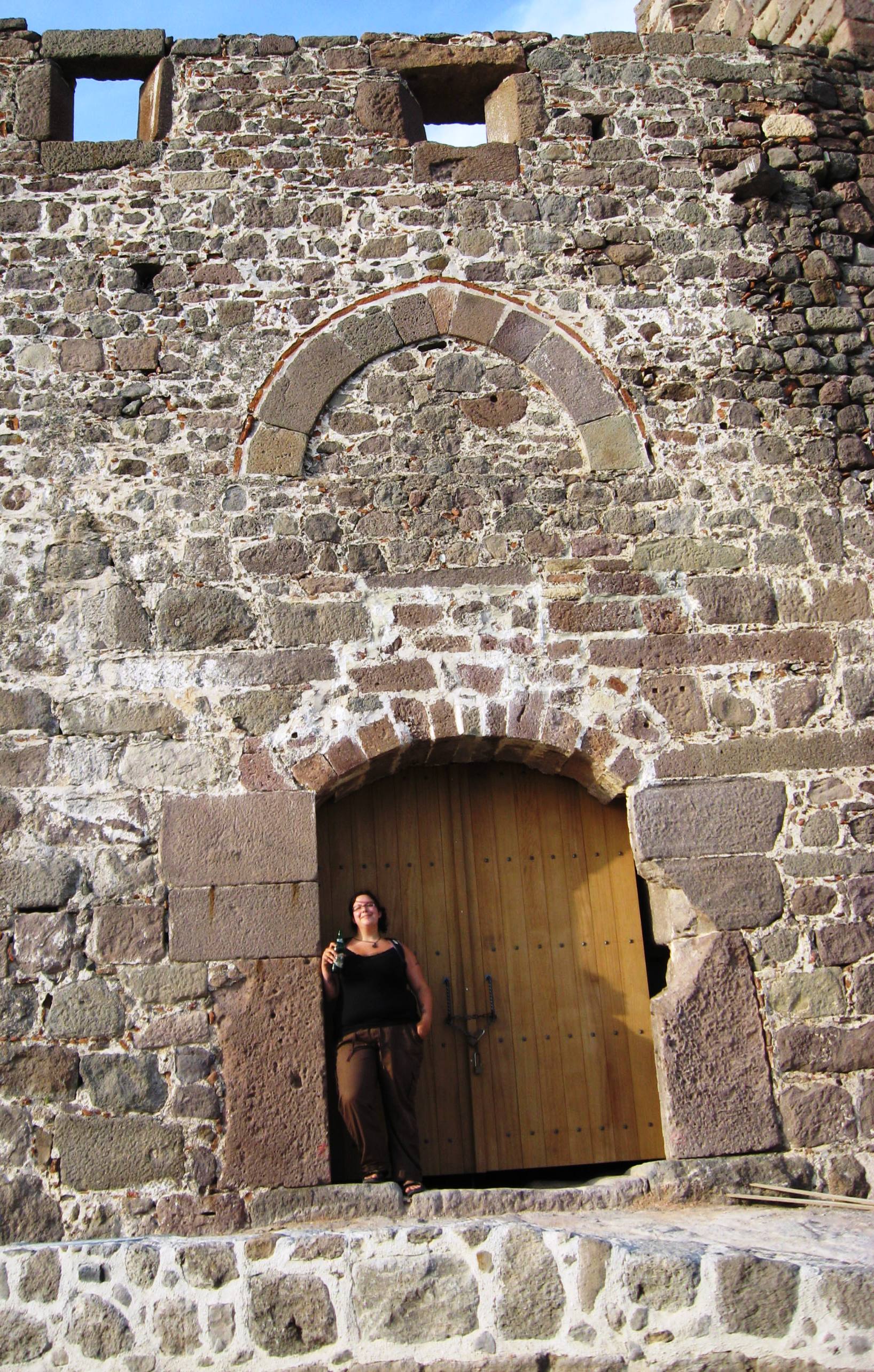
Taking a libation at the Mithymna castle.

While being housed during the spring months in Mithymna, I explored the winding cobblestone streets, photographed dangling flowering plants and occasionally sampled the vibrant restaurant scene at the harbour.

Greece 039
Mithymna harbour

These elements, along with adorable roaming stray cats and dogs (some of whom we adopted), formed idyllic scenes that made it a beautiful and tranquil location to study some Byzantine History and Reception Studies (in effect, the study of modern interpretations of the ancient world) during my undergraduate degree.

Greece 001
A charming painting in the old schoolhouse where we took lessons.

What a draw for a historian!Greece 608Like many ancient city centres, Mithymna has a foundation story whose characters possessed the very names of the location – in this case, Mithymna (daughter of a mythical son of the god Helios) who was married to the personification of Lesbos. Hard to prove, so I’ll take the Oxford Dictionary of the Classical World’s word for it.

Greece 594
Mithymna Castle

The history of Mithymna is actually the stuff of legends, literally. The Bronze Age warrior Achilles was said to have breached the fortifications of Mithymna due to the amorous machinations of King Peisidikis’s daughter.

castle
View from Mithymna castle of Efthalou.

The city fell to the Achaeans, as the events of the Illiad take place not far away across the water (you can see Turkey from the shores of Mithymna).

Mithymna had been an important location in the Classical period as it was caught  between the Athenians, their ally, and the Spartans throughout the Peloponnesian War (431 – 404 BCE). To and fro, the balance of power shifted from Athens to Sparta, and back again throughout the war; and smaller allied cities were caught in the fight, or served as proxies for the conflict. 957 (2)Mithymna and Mytilene had a solid rivalry throughout this conflict and beyond, which I will go into when I post about Mytilene. But for the time being, some dark business went down during this three decades long war, and Mithymna and Mytilene had some serious issues to work out afterwards.

Picture 1071
Splendid isolation on the beach

Remaining significant throughout the Hellenistic period, Mithymna played politics as it was captured by Macedonian forces and Persians, with tyrants ousting and aligning themselves with the conflicting superpowers when they gained control of the island cities. With the division of Alexander’s brief empire by his successors, King Lysimachus and later Ptolemy would control the island. With the influence of the Ptolemaic ruler, my academic obsession, the cults of Isis and Sarapis were introduced and worshiped.

Which brings us neatly to the Roman period.

Roman Tombs Molyvos 2
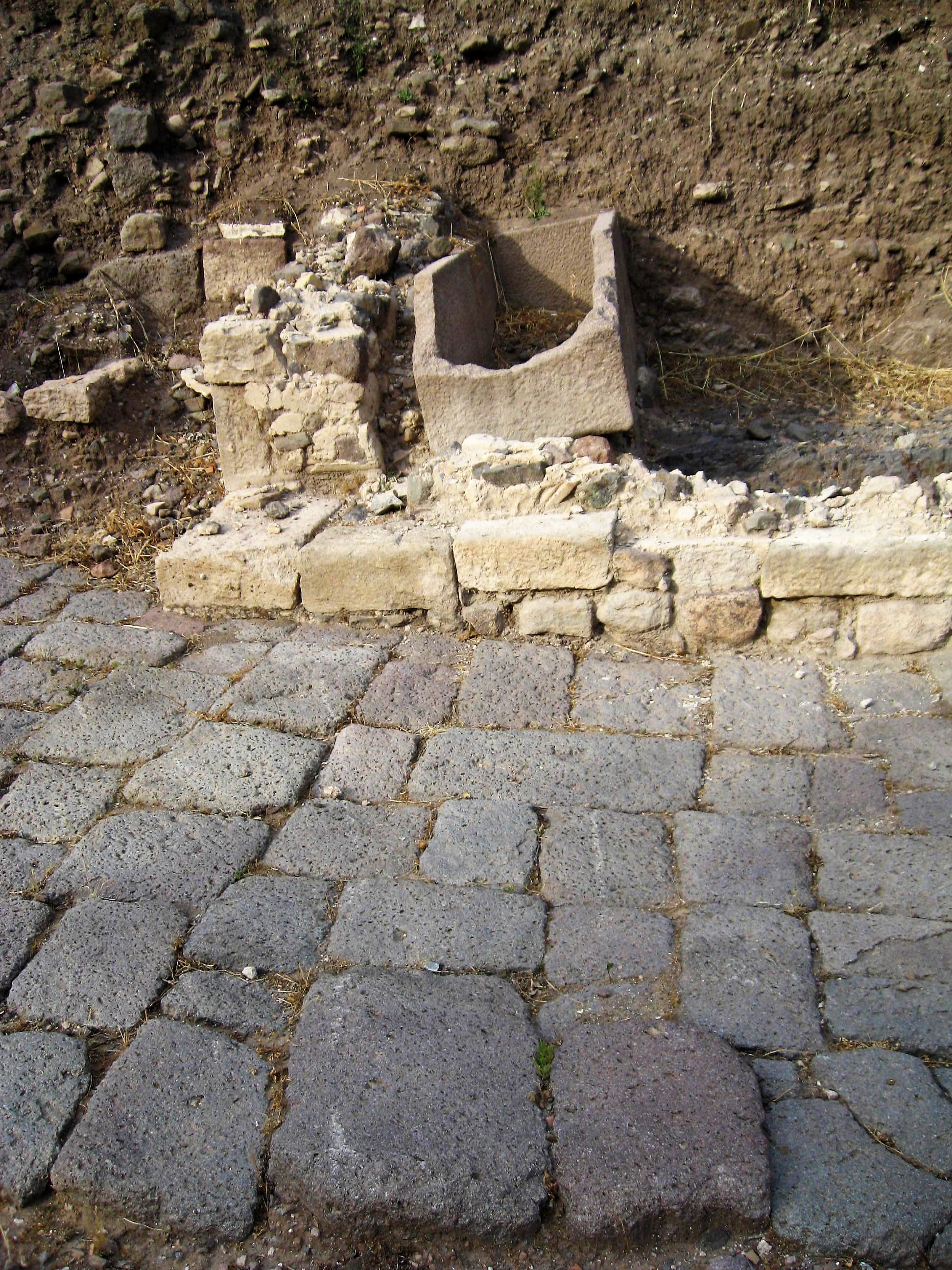
A bit of Roman road and tomb.

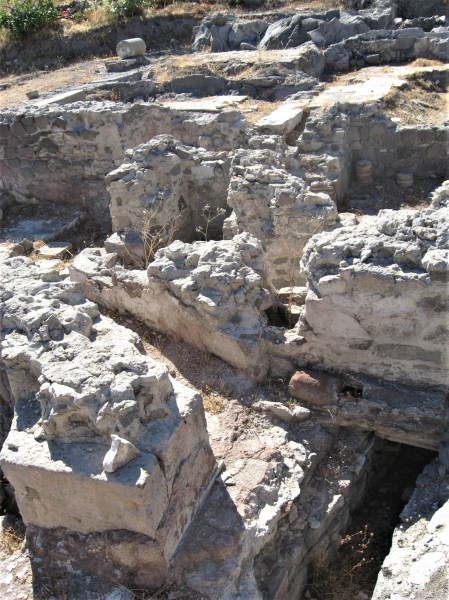
Sprinting through so much history, I can barely touch on how many fascinating moments in ancient history in which Mithymna has played a part, but one of the elements which leaves a physical trace, which I was thrilled to see, was the Roman archaeological remains dispersed throughout the city.Roman Tombs Molyvos 3The formal alliance between Rome and Mithymna was dated by an epigraphic source to 129 BCE. The Roman poets and writers spent many words to describe the quality and superiority of Mithymnian wines.

1051
Picture 610

While staying in Mithymna, I was fortunate enough to meet a local archaeologist who gave us a small tour of the closed excavation.

Picture 401
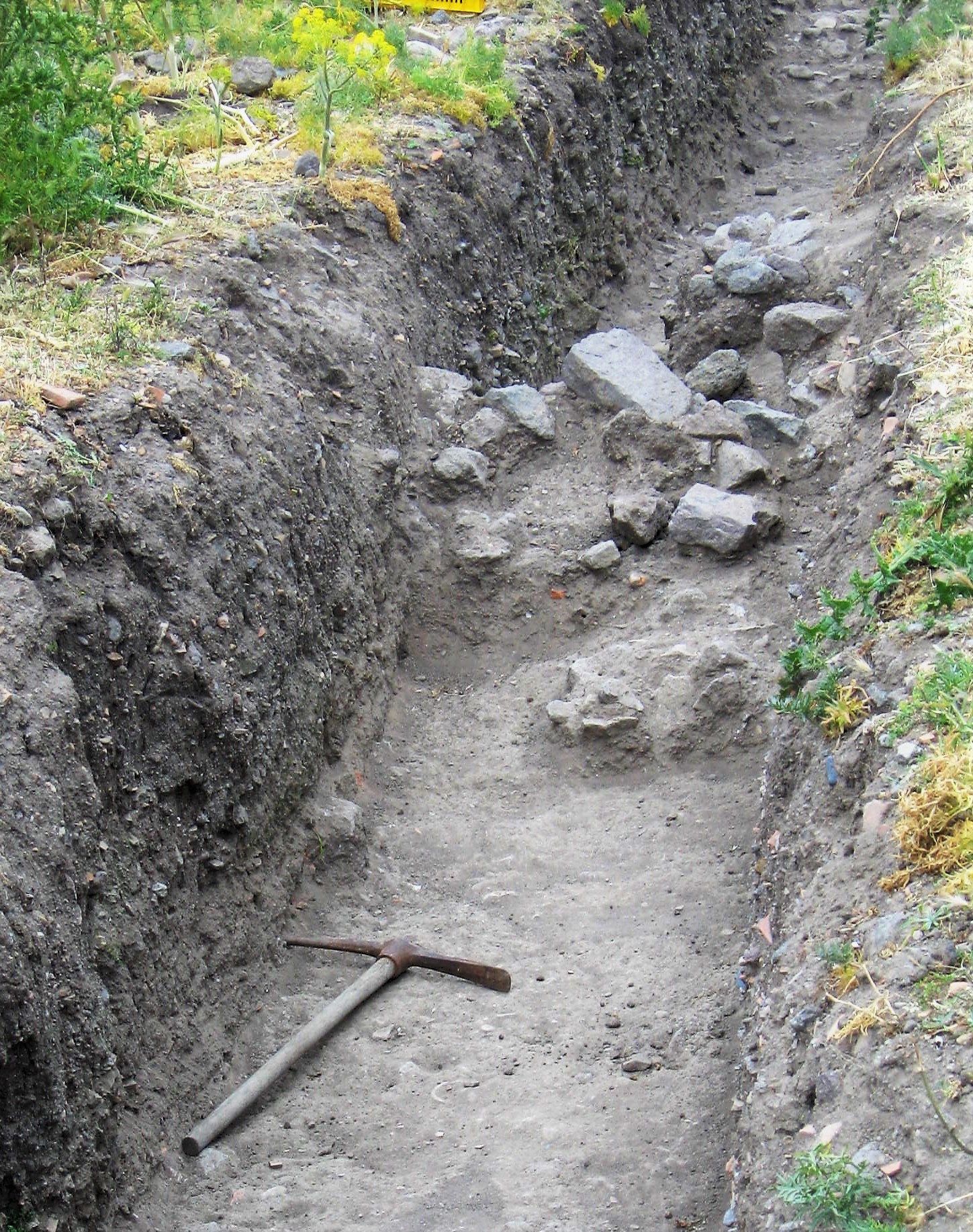
Finds from this trench were rich in pottery and sea shells.

At that point, they had a great deal of pottery and many interesting rubbish dumps from the Roman period. It appeared that they were producing pottery, and likely distributing the wines in vessels made at this centre.Roman Tombs MolyvosWith the political upheaval in the 5th century AD of the western half of the Roman empire, Lesbos fell into the orbit of political authority from the Byzantine power-base of the eastern empire. This orientation affected the flavour and practices on the island as Christianity became the prevalent belief system and religious power throughout the empire. Greece 012Thank you for reading my blog!

Save

Save

12. Baiae: the original Sin City

Whilst I was excavating in Policastro Bussentino, I decided to use my down-time productively and get to know the cities in southern Italy. The train routes were cheap and plentiful along the Tyrrhenian coastline, with beautiful views on this regional train ride from Napoli Centrale.

One such a day trip, I ventured from Naples on an ambitious outing to see some ancient cities of Magna Graecia. I say ambitious because by foot it is a very long walk from Baiae to Cumae along a winding hillside with no shoulder or footpath- all in all, a 15 mile walking day.

When I arrived at the ancient town of Baiae in Gulf of Puzzuoli, I had the unique experience of being in a spectacular archaeological site entirely alone.

It was a beautiful clear morning and I rocked up without having purchased a ticket (tickets you are supposed to buy at Cumae first then head over to Baiae, unbeknownst to me). Luckily, the park steward let me in for free and after I explained my disorientation!

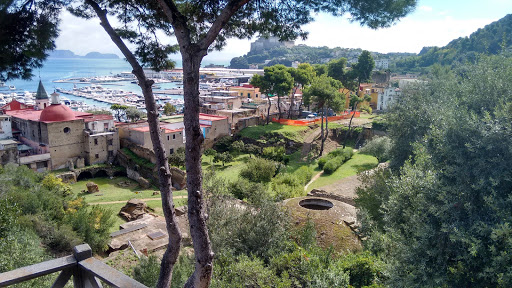
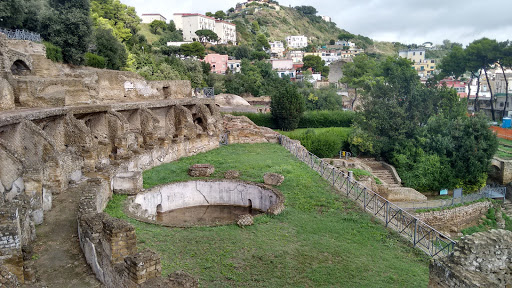
The archaeological park was stunning, as you can see. The multi-story bath complex was built into the hillside, and standing atop the complex it is not hard to imagine why the super-rich of the Republican period into the Principate were drawn to this place. This area was rich in volcanic activity (Vesuvius is very close, of course) which the Roman architects and engineers were able to channel into sulphur springs – perfect for hot baths!

There seemed to be endless rooms, and many with mosaic floors still remaining in situ. The mosaics are, appropriately, water-themed with divinities and typical meander and wave patterns. Water and neglect have left them in the current state of disrepair they are in, but you can see evidence of the gorgeous technical ability.

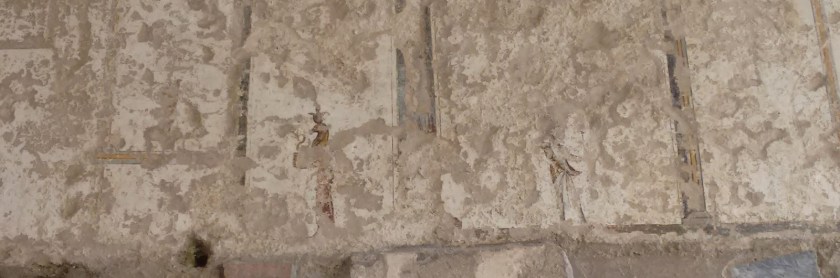
A surprising amount of painted plaster was still visible as well, with typical decorative motifs and some strange ones. The frescoes date to two particular stylistic phases: the middle of the 1st century A.D., called the 3rd Pompeian style (notably because of the ‘Egyptianising’ features they possess. This stuff is my research jam, and I shall in due course dedicate many 1’s and 0’s of the internets to discuss it.Below I’ve tried to highlight the figures which have zoomorphic features and elements meant to evoke Egypt (costumes and symbols).

A later, 2nd century A.D. phase is also present, which could be viewed as slightly irregular and a bit shabbier in execution. This little green dragon below was part of that later design. 

There were a few cisterns still, and one was even fully intact. The echo inside made singing sound like I was using a microphone. Yes, I sang a few Disney songs before giving my spot to the tourists who were waiting at this point, bemused, outside. Nothing like being in a archaeological sites for belting out tunes (Florence and the Machine). Amusingly, it wasn’t until a month later I learned the name of it was called the “Temple of the Echo“. While not a temple, the name was still pretty on point.

Top-view of the cistern”Temple of the Echo”

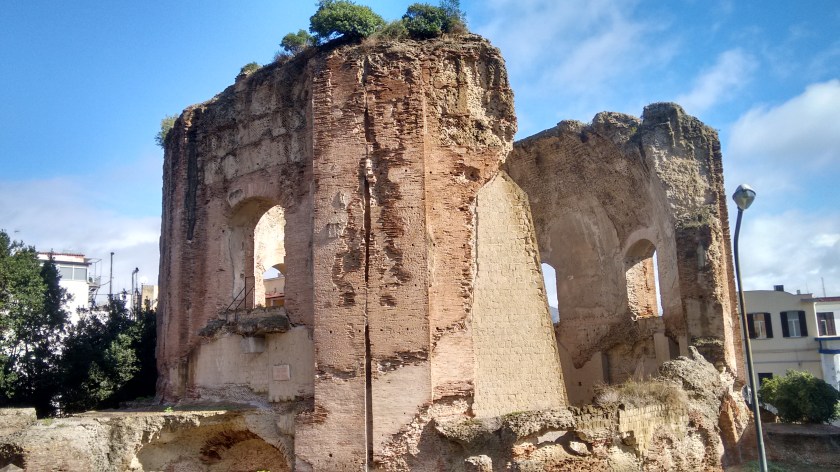
This was built during the reign of Hadrian, one of the greatest building emperors of the Roman Empire. The influx of funds in the 2nd century A.D. – which manifested earlier in the frescoes being added to – coincides with the building of this structure. Called a temple erroneously, it has been argued to be a pool, a further spectacular addition to the bathing complex. As I neared the bottom of the hillside, I could see a MASSIVE temple-looking structure, across the (modern) street, outside of the bath complex. I stood to sketch it for a while, and saw that it was a ‘Temple of Venus‘, which, given the history of this elite spa-town, would have made perfect sense.

Prolific in his building, this massive Hadrianic era building could have been a casino, pool, or possibly religious building- all suggestions I read at the site. The lingering naming of the building, ‘Temple of Venus’ betrays the varying perceptions of it that carried on over the last thousand years since it was in use.The political landscape in Rome during the late Republic into the Principate involved the elevation of the Julio-Claudians and funding to their parton deity- Venus. Julius Caesar had a villa in the area, and other notables like Pompey Magnus, Caligula and Septimus Severus all frequented the area.

Temple of Venus at Baiae

Augustus took over the entire complex (and much of the town), adding it to his sizeable imperial property. Controlling where the rich went to relax, socialise and play was pretty much Augustus’ raison d’etre during his early formation of how the empire would be run.

Anyone watching the Versailles (2015) series right now could imagine the same processes occurring in Rome under Octavian as was happening in the court of Louis XIV. Like the French nobles who were forced to adopt new practices and behaviours, Rome’s elite probably required some wrangling to stay in the lines as Augustus delineated them.  Controlling spaces goes a long way towards controlling behaviours and shaping ideas.

Squinty little study of shapes at the Temple of Venus

The analogy of Versailles can be taken farther, as Baiae developed a reputation  for moral bankruptcy, with salacious and scandalous behaviour taking place in the steamy rooms of this wellness retreat. One commentator on the depravity of Baiae’s baths and wellness centre was Seneca the Younger, describing it as a “vortex of luxury” and amusingly, “harbor of vice”. I suspect he may not have been on the guest list for the sexier parties.With Romans, physical wellness was linked with spiritual wellness. The presence of temples in a site like this would make a lot of sense

Not surprising then, that as time and memory faded the original meaning of these buildings more mundane structures, nestled along the coast, took on impressive religious connotations.

Thank you for checking out my blog!
Ciao !

11. Roman Glass

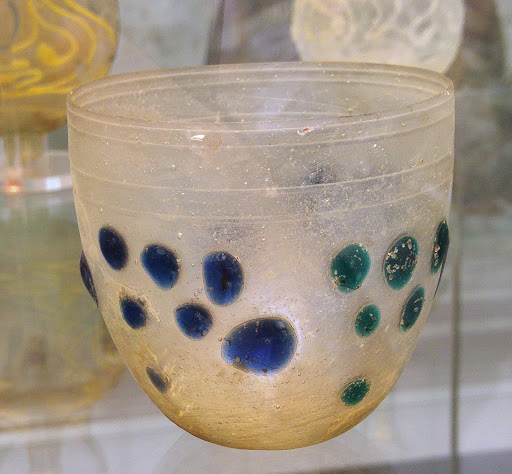
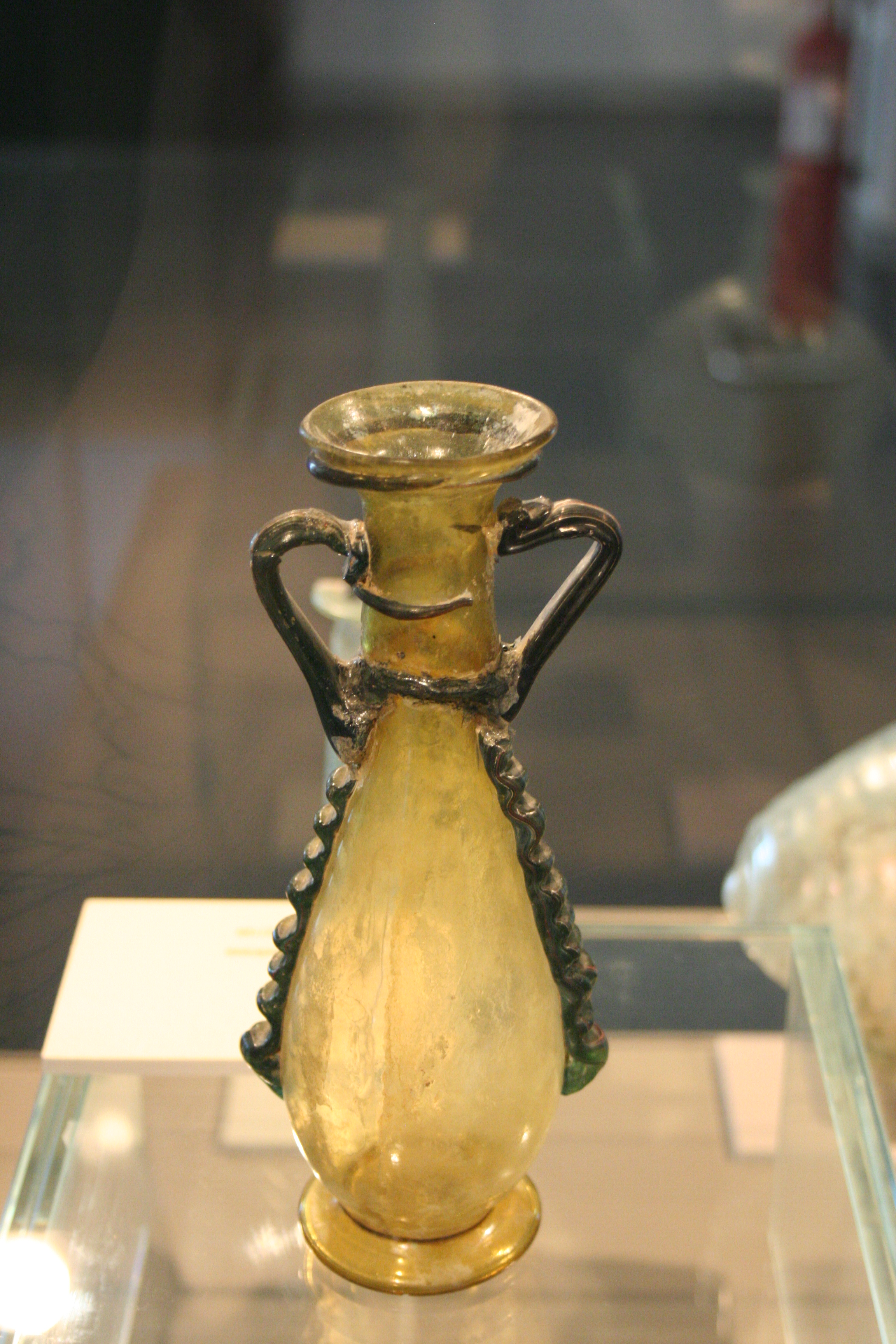
Roman glass collection at Three Hills Roman Heritage Museum – Melrose, Scotland 2016

Spending time in museums throughout Europe, you frequently see examples of ancient glass. When I started to look through my photos, I noticed that I am consistently drawn to the delicacy and incredible skill of glass objects. Egyptians, Greeks and Romans achieved incredible feats through their splendidly colourful, highly decorated and inventive glassware. As broadly as we might imagine using glass objects today, there were items for specific purposes (perfumes) or more banal uses (water). From the most utilitarian to the highest prestige item, the presence of Roman glassware is one of the most enduring, yet delicate, symbols of empire that remain.

The Portland Vase, British Museum. 1st century CE cameo glass, 2016.

Early glass production was an elite (read: desperately expensive) tradition from the Hellenistic period, inherited from the Egyptians, which involved densely coloured glass. The small faces below give you an indication of the opaque colors, often used in beads and small functional objects d’art.

Small glass theatre mask ornaments, Museum of Egyptology of Turin, 2016.

The consumption of glass items before the 1st century AD, would have been limited by cost and access to skilled artisans. The Romans incorporated previous techniques and over time made it’s production truly their own. Interestingly, however,  at this point there was still no Latin word associated with it.
Through changes to techniques of manufacturing glass, new styles and skills were developed in Italy.

Roman Vessel, British Museum, 2016.

The production of glass during the 1st century CE was so ubiquitous that the ‘Aqua’ and clear coloured glasses produced within the empire were priced into common consumption. Glass was no longer simply a decorative series of beads on elite necklaces, or thick-walled vessels of the Hellenistic period into the late 1st century,. With Roman inventiveness, soaring thin-walled vessels which used pigments and lines display the skill of the craftsmen to show pearl hues, and movement on the vessels’ surface.

The dexterity, grace and occasional silliness in the manufacture of Roman glass products is a overlooked aspect of the study of Roman material culture. Not ignored, but next to a beautiful statue or sword, a tiny perfume bottle might not seem that interesting.

Roman Perfume holder, Museo di Antichità Turin, 2016.

These small vials contained perfumes and precious oils, chalices for fine mixed wines, and other vessels for elite good. Sometimes I wonder if they were show-pieces or of a more personal nature perhaps?

Portrait on glass , Naples National Archaeology Museum, 2015.

The cost of the items would suggest they were probably kept on display, but it is hard to know. Serving items would imply a public-use, and thus on show, but perfume bottles for a woman’s toilet could have been a more private piece of consumption.

These gorgeous glasses were made of combinations of these elements pictured below, with added including colourants:1.Sand; 2.Potash; 3. Seaweed ash; 4.Lime; National Museum of Scotland.

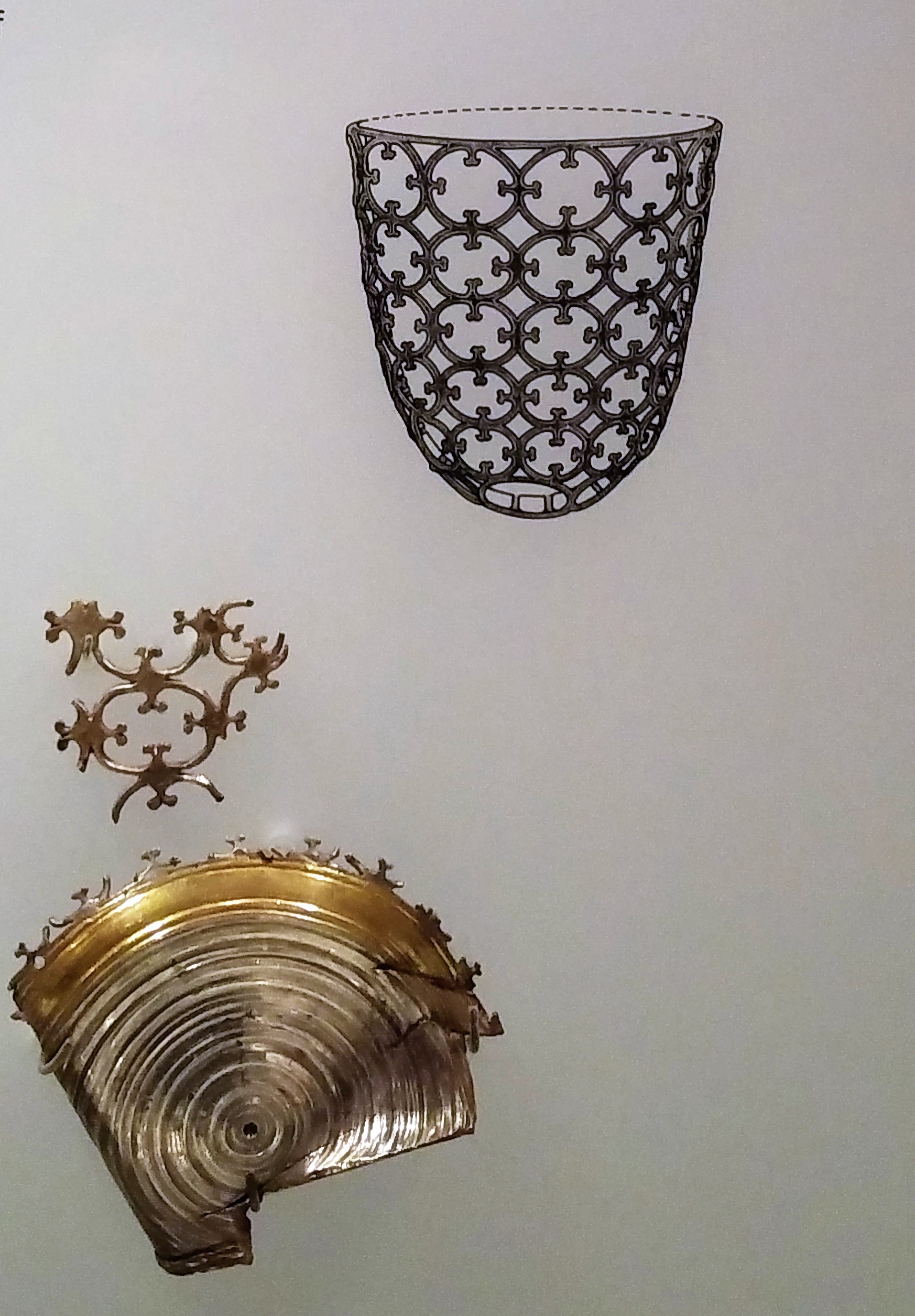
The Cage-Cup
On a recent visit to Milan in April, I had the incredible fortune to not only meet up a burgeoning academic in the fields of religion and slavery in the Ancient World, but also a local expert of Milan’s historic sites! Ambra Ghiringhelli, an PhD student with the University of Edinburgh, showed me some of the wonderful archaeological sites in Milan with fantastic local details. One such item she drew my attention to was the cage-cup of Milan.

Cage cup of Milan, Museo Archeologico Milano, 2016.

The striking combination of glass colours and types; geometrical patterns, in contrasting colours from the inner cup, sit on top with lettering. The skill required in putting together something like this would have been quite sophisticated. There are multiple techniques involved, which scholars are still not in total agreement on how this was precisely done.

Silver base cage cup in National Museum of Scotland, 2016.

The National Museum of Scotland, in Edinburgh, has its own example of a Roman cage cup found northern province of Britannia. The Edinburgh cup is made from metal but follows the same principles.
There are around 50 examples of cage-cups examples found so far, though the Milan cup is truly a wonder of antiquity.

Thank you for checking out my blog, and feel free leave questions or comments!

10.2 Athens Under Roman Rule

IMG_7464
Athens and Hadrian’s Relationship Status: It’s Complicated.

The special place Athens held in the minds of the Romans, due to their history and influence in the Mediterranean, was significant. But more broadly, it was the artistic, scientific and cultural accomplishments of the Hellenic people which the Romans were ravenous for.

Building designs, architectural elements, literary styles (poetry and playwriting) and painting techniques, were all introduced to Romans after several having enslaved and looted the Greek cities of Corinth and Epeiros. The goods were paraded in long processions into the city of Rome exposed many for the first time to the finer things Greek culture had to offer.

The legacy of this influx of Greek art into the Roman landscape and cultural sphere meant that those wealthy enough to possess these items were also possessed by them. The drive to collect, copy and emulate the high art of Greece was strong. As with art, literary and other cultural trends were brought in and filtered up the social hierarchy of Rome.

Picture 651
Equestrian statue


Picture 649
Farenese -style Herakles replica

As Rome took over politically and militarily, they brought in droves of Greeks into the capital city, though most initially were slaves. These slaves could be highly educated teachers, artisans, courtesans, writers and labourers. Fashionable aristocratic households increasingly required high-quality Greek tutors for their children, which would obviously influence the tastes of their students. Eventually, we end at a point where the Roman elite were importing tutors from Greece to educate their sons and daughters in the language, philosophical and rhetorical practices.

IMG_4261
Isis Pelagia – Museum of Egyptology Turin – 2016

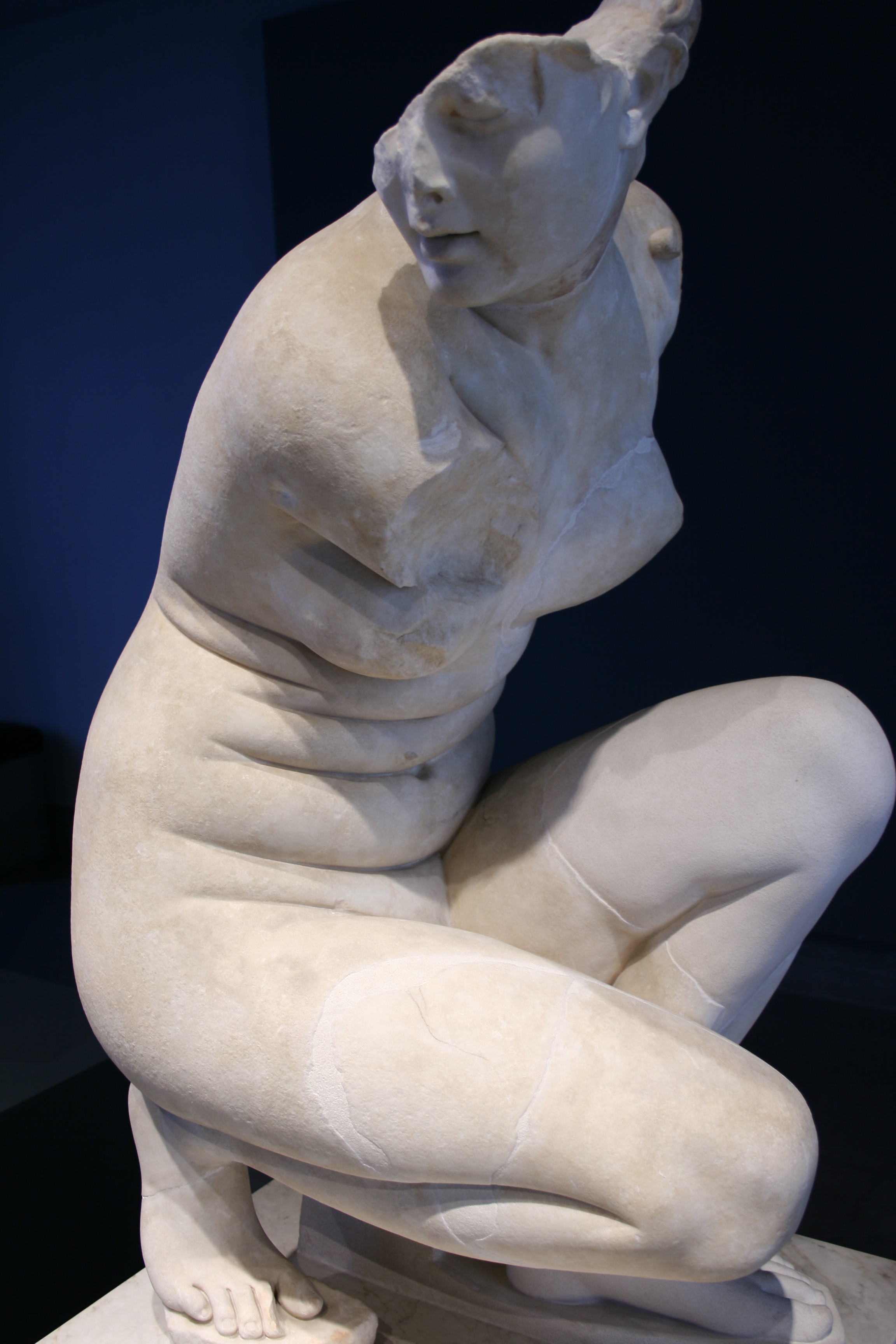
The impact of Roman tastes in art can be seen in the photos above and below. A topic unto itself, is the Roman art trade – something which I am very interested in! However, as an example of what it actually meant to have a powerful empire capture and integrate Greek art and ideas into their own is highlighted through these works. As Italian families grew wealthier through empire building, they could afford the purchase of fine works of Greek provenance, or an Italian-made replica. The above examples, cargo from shipwrecks, illustrate the ocasional hazard of transportation.

Even in their fractured states below, the Roman copies show an exquisite attention to detail and rendering of Greek styles. The costs for commissioning works such as these and their transport must have been a sizeable investment!
IMG_7174
Crouching Venus – Museo Nazionale Romano – 2015

As mentioned in the previous post, Greeks in Rome could achieve incredibly high status and impact the values and development of future emperors. One such student was the Emperor Hadrian. Educated in the literary traditions of Greece, with notable emphasis on the visual arts, Hadrian was exposed to an appreciation of Greek culture which resulted in exquisite building projects we can see today.

IMG_7184
A Roman copy of the Discuss Thrower (Discobolus)  – Museo Nazionale Romano 2015

The influence of the ‘Romance of Athens’ on Hadrian, can be seen in his politics and building programme. Hadrian instituted a Panhellenion, and made Athens the capital city of this assembly of the Greek city-states, under Roman rule. This assembly was perhaps an attempt to hearken back to the period of a unified Greece emblematic of the 5th century BCE, their classical heyday. For political expedience and cohesion this move makes sense, but there is also an element of romanticising or idealising the Classical period of Greece by Hadrian, the philhellene (lover of Greekness).

The emphasis of Roman investment into the architectural landscape of Greece had a political motivation behind it. The Romans were basically carrying on the policy of Hellenistic eugeritism.

Having control over powerful former empires and influential cities enriched Rome’s cultural and political capital. Affixing their brand, sometimes directly over-top of a pre-existing architectural and social spaces in this ancient city, allowed them to write themselves into the history of Greece – a history which no one could deny was impressive and marked the most important events in the collective consciousness, often blurring between myth and reality.

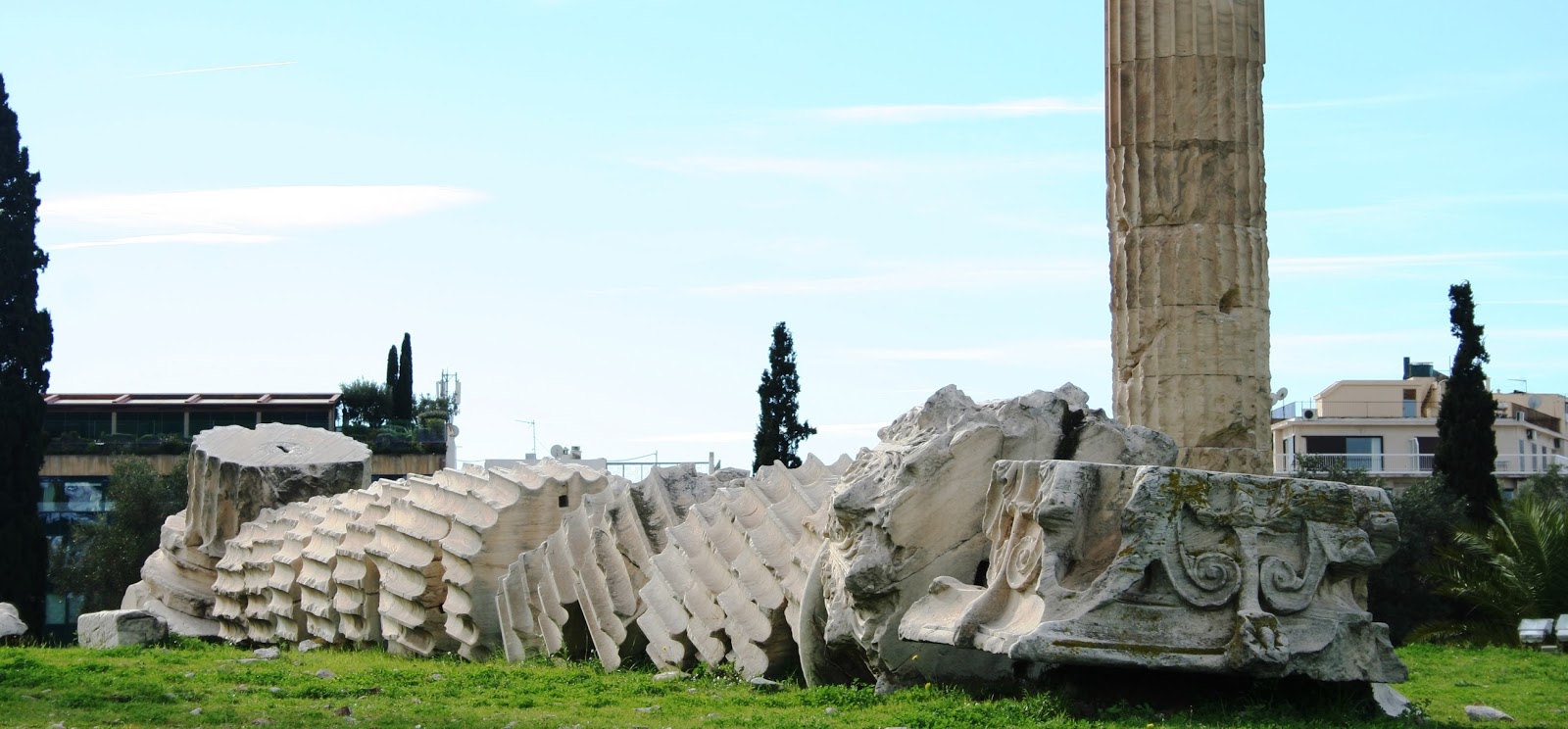
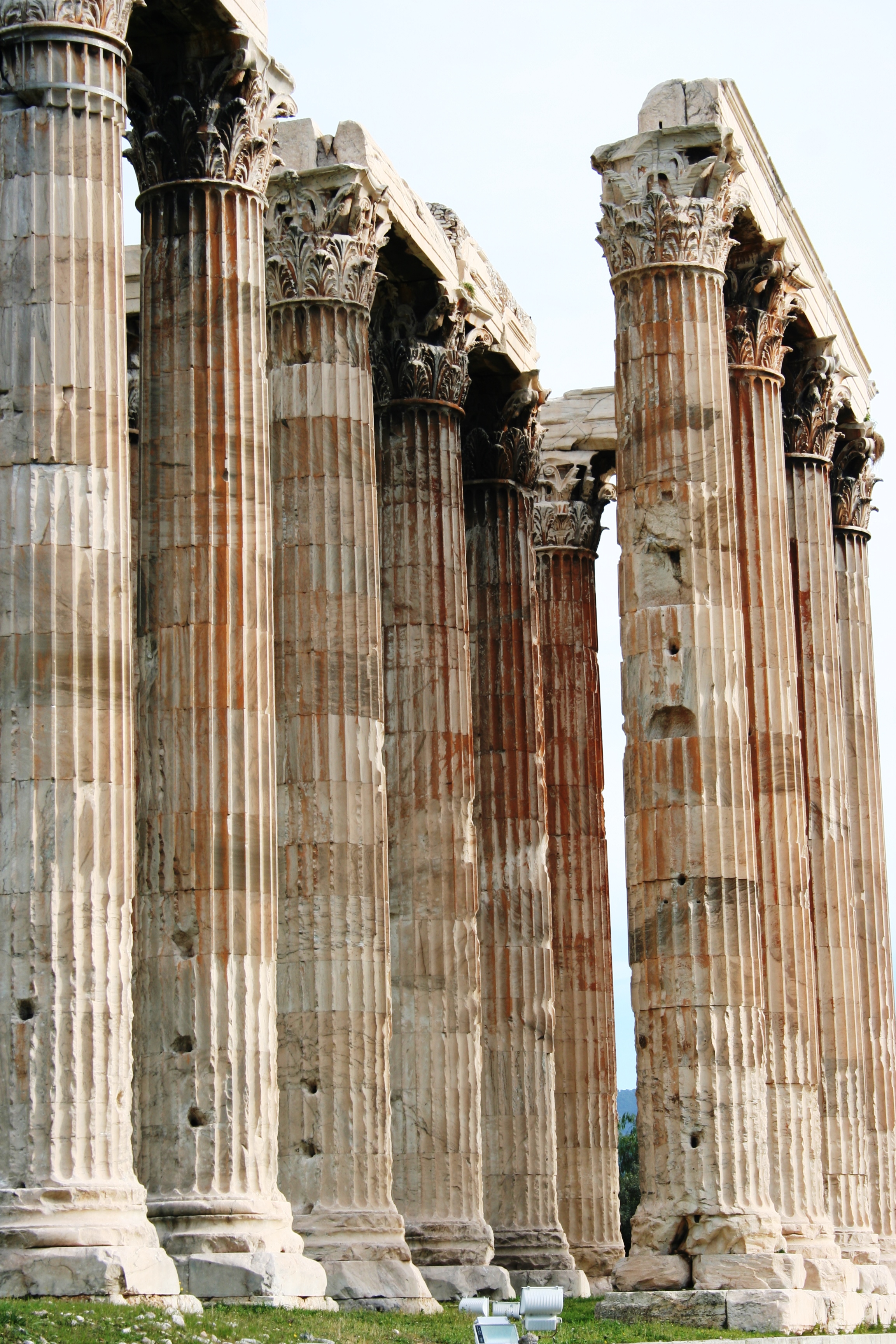
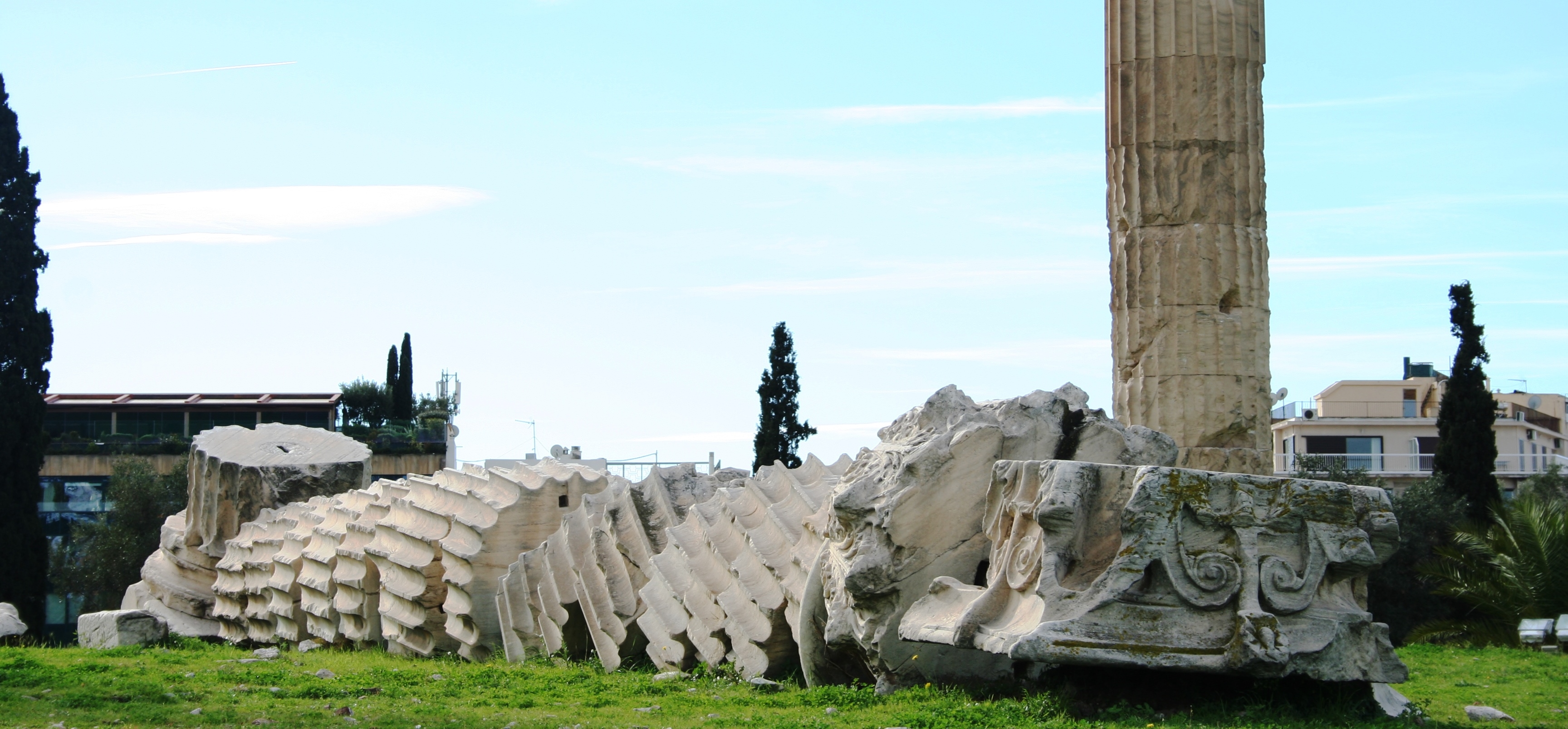
Temple of Olympian Zeus toppled column – 2016

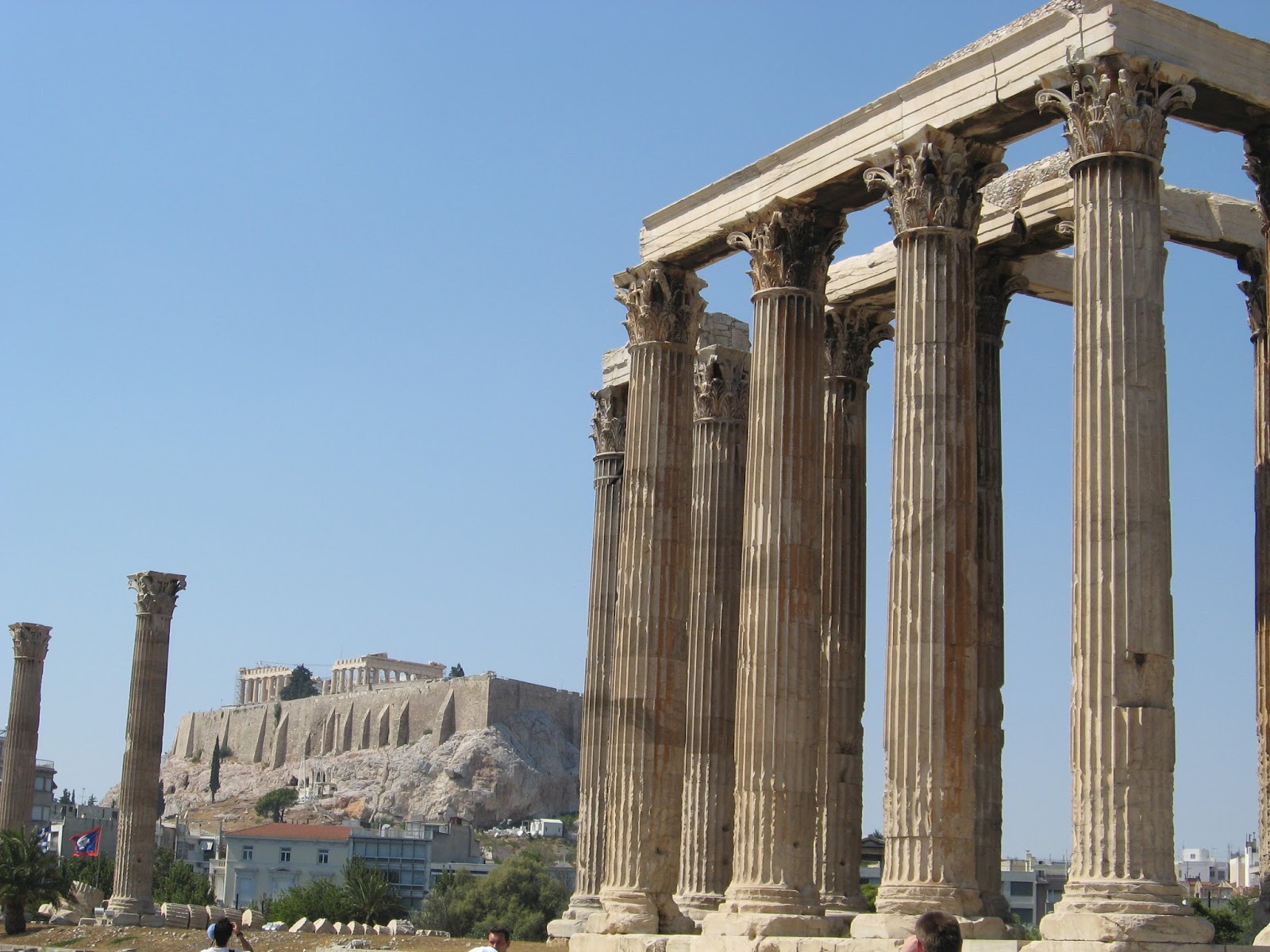
Temple of Olympian Zeus (the Olympieion)

I have been lucky enough to have a few encounters with this temple, and it never fails to impress. The massive and intricate Corinthian capitals and fluted columns are familiar examples of what people expect when they go to archaeological sites of the Mediterranean. However, these columns speak to the Roman habit of embeddingtheir brand on to the architectural landscape of Greece as it linked itself into the story of pre-democratic Athens.

Corinthian topped-columns -2016

The temple was built on the foundations of a pre-existing sacred outdoor sanctuary and temple to Zeus. The previous temple structure, built in around 520 BCE by the tyrant co-rulers of Athens, Hippias and Hipparchus, had commissioned a more monumental temple than had existed previously under their father, Peisistratus. They demolished their father’s temple, and set to the task of building a more magnificent temple.

However, their lofty building programme would remain unfinished. The young tyrants were ousted after a salacious and political scandal turned Athenian sentiment against them. In a series of ‘Telemondo’-esque unrequited love triangle developments, Hipparchus coveted Harmodius, who was already Aristogeiton’s lover. Insinuations and insults abounded on all sides, leading to the two lovers murdering Harmodius and later being killed themselves. Hippias was ultimately overthrown in a Spartan-supported coup, and made way for the democratic government in Athens to take shape.
IMG_3913
Temple of Olympian Zeus – 2016

Simply fascinating narrative, you may say. Well, this series of events and all of the moral meaning read into it over time influenced how closely linked the sacred space was with these shameful tyrants. Thucydides and Aristotle discuss these events, with the impression that such massive building projects are vainglorious and lead in turn to loss of fortune and hubris.

Hubris, which brings us to the next phase of the history of this temple – the Olympieion. Whilst Hadrian set to work in the 120s CE on rebuilding the supermassive temple to Olympian Zeus, which was completed and dedicated in 131 CE. Hadrian, who at times was believed to call himself ‘Olympian’ had an altar to himself installed here as well.

Leads on to wonder who precisely was being worshiped here?IMG_3902
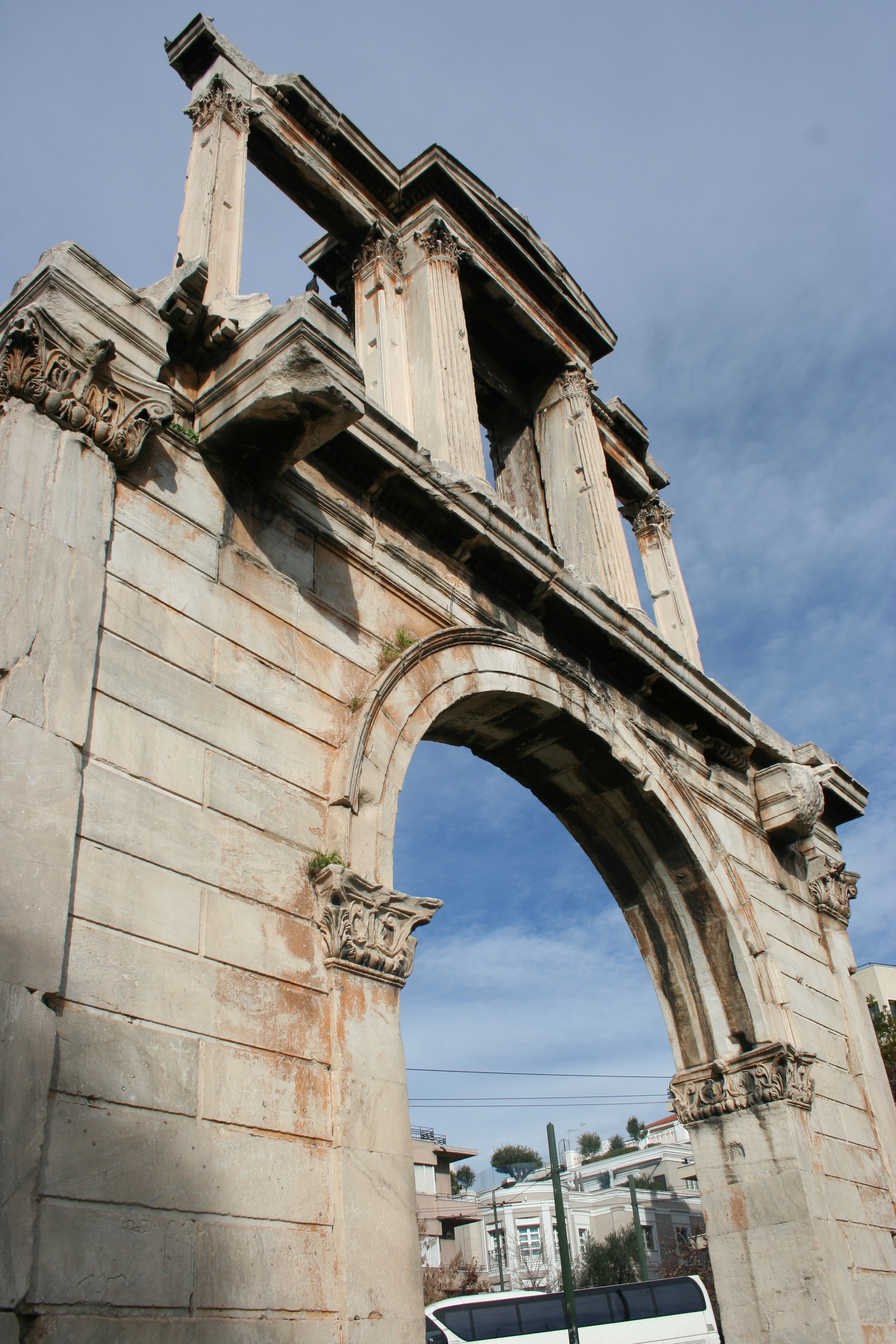
The Arch of Hadrian
This arch is not the triumphal sort you see in Rome, where the Emperor or senate would commission for the arch for an impressive military victory, but rather, this arch was an honorific from the Panhellenes or the Athenians themselves.IMG_3903Situated next to the Olympeion, the Arch of Hadrian has quite a few stylistically complex elements and details which are exemplary of Athenian architecture done in a Roman-style. Created from solid Pentelic marble,  Corinthian capitals atop pilasters among other features, are representative of architectural imagery in Roman wall painting. There were sculptures in the central niche, it has been suggested, which were of Hadrian and Theseus. This is not such an odd paring when you consider the inscriptions. IMG_3906 (2)
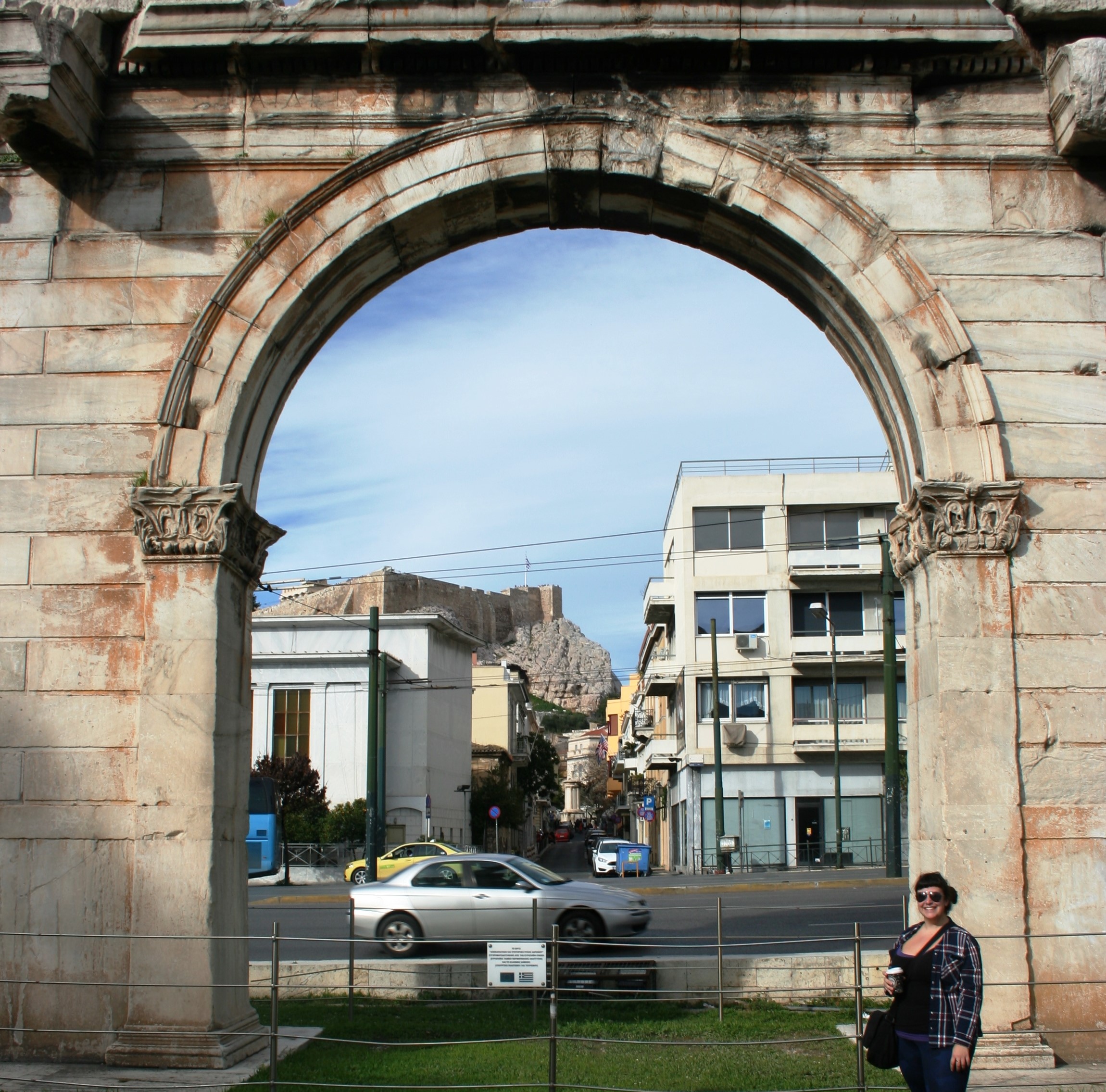
The inscription towards the Acropolis (below) states “This is Athens, the ancient city of Theseus”, who was part of the mythical founding. The other side facing the Olympeion reads, “This is the city of Hadrian, and not of Theseus”. These inscriptions denoted the physical and symbolic relationships of the Athenians; their glorious mythical past and their Roman present were delineated by this liminal space.
This, like other examples of eugeritism (benefaction), is how the reciprocal relationship worked. It was expected that they offer honours to Hadrian in this fashion, but that did not necessarily mean everyone was happy with the Romans having control in Greece.IMG_3668Hadrian’s Library
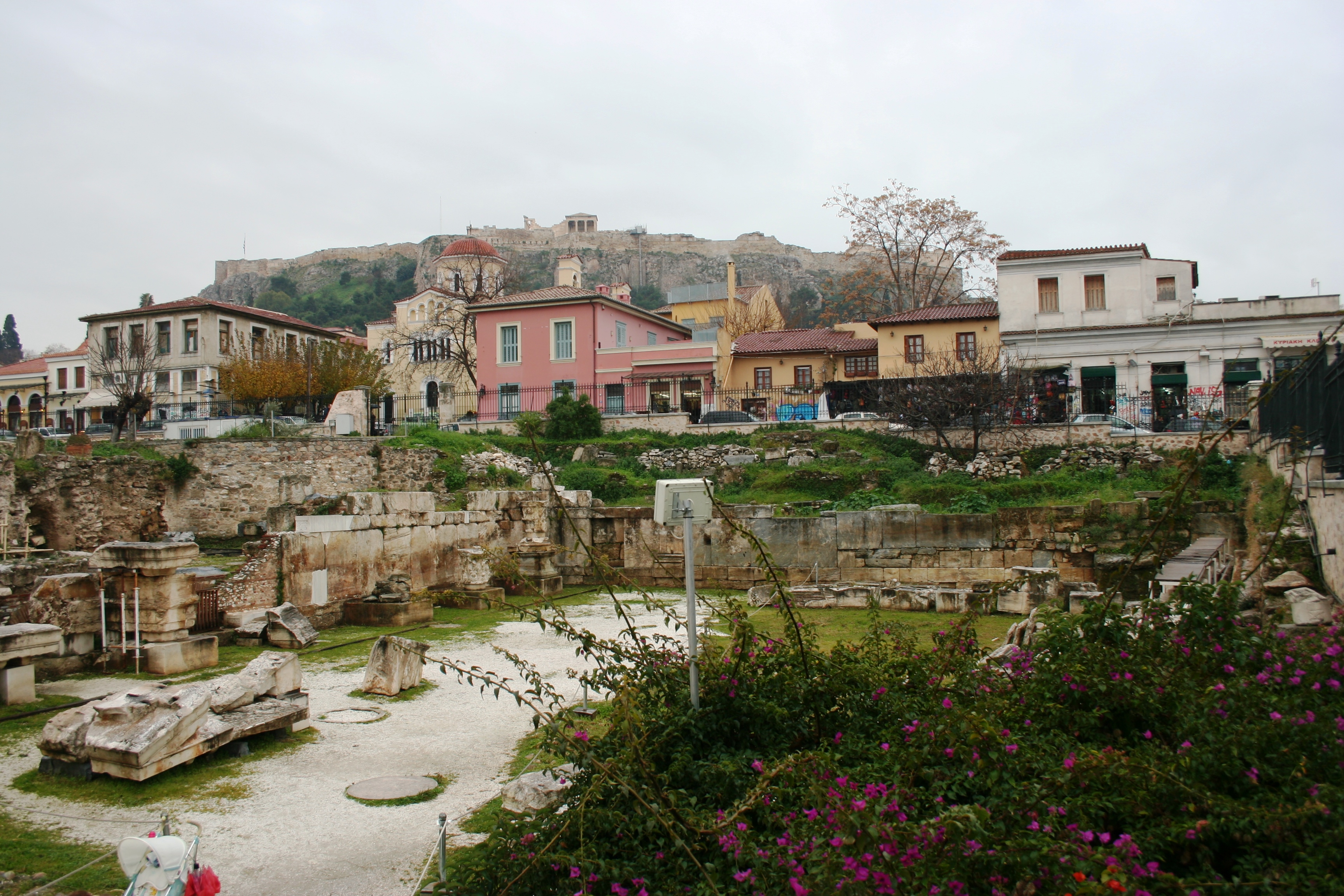
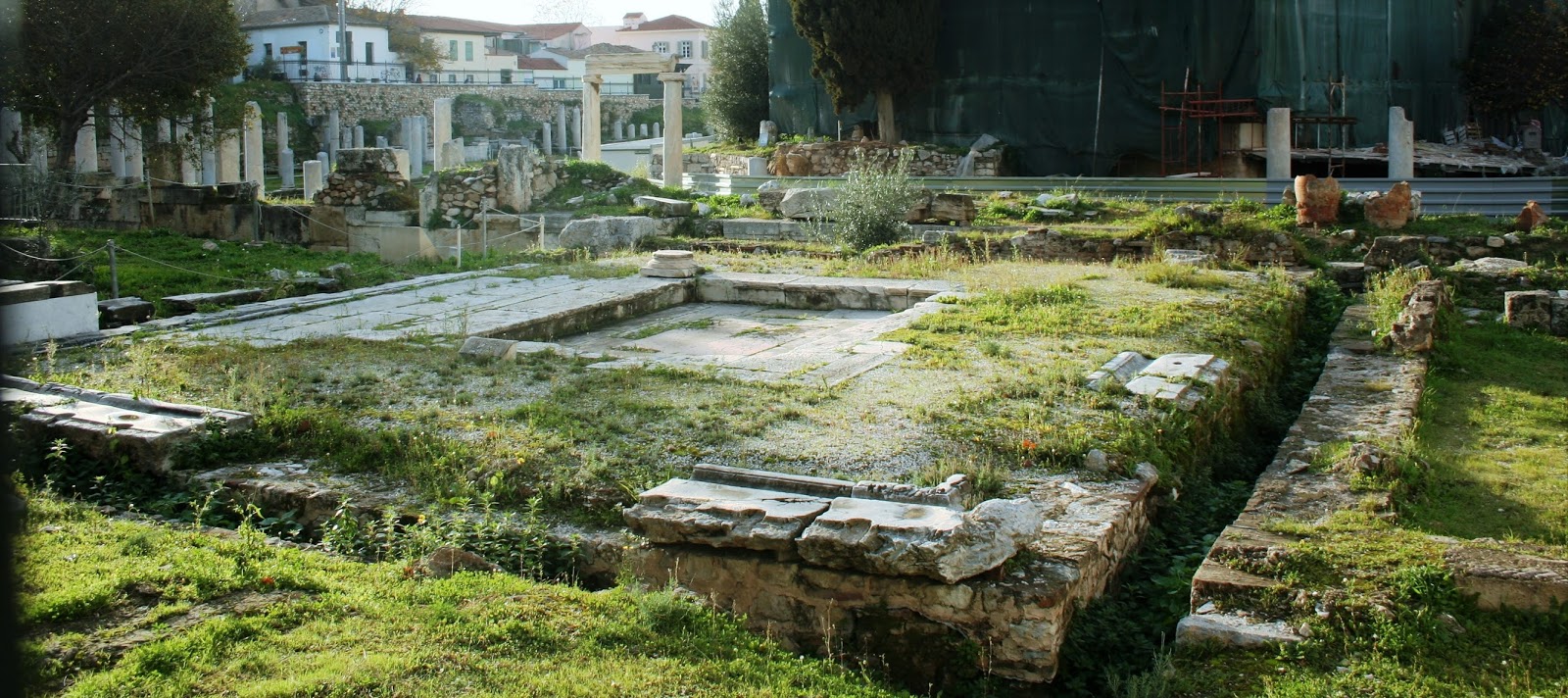
Situated in the Roman Agora, on the north-slope below the Acropolis, Hadrian’s library would have been a richly decorated and comfortable centre of intellectual pursuits. The great classics of Athenian theatre were housed in this, perhaps the greatest, of Hadrianic homages to the city that he loved so much.
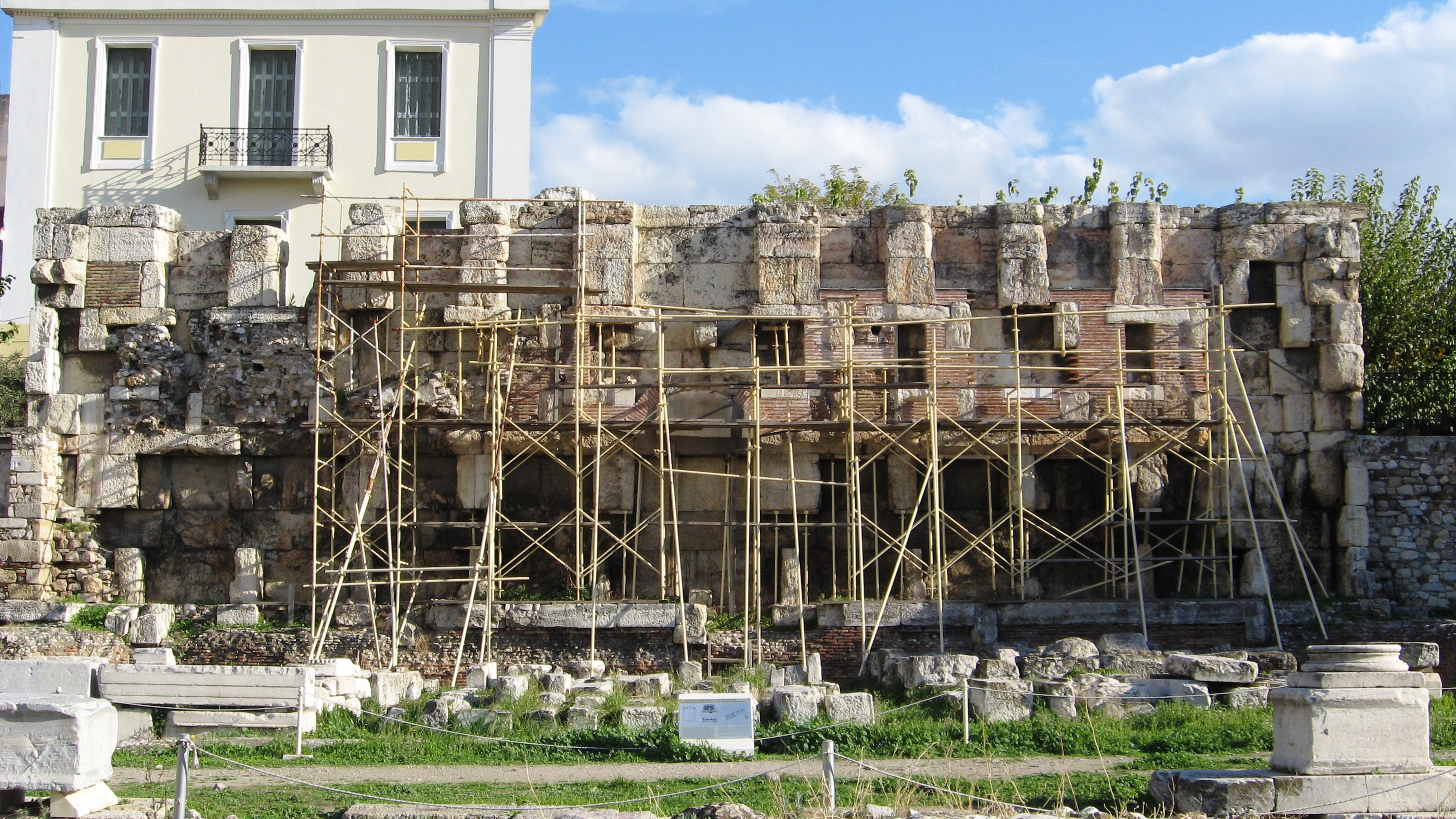
Digital camera pictures 602
Inner-east wall under reconstruction – 2008


Digital camera pictures 597
East-facing outwards – 2016


IMG_20160113_170647
West-facing outwards – 2008

The artistic elements that still remain betray Hadrian`s tendency to construct archaising monuments. A mixture of Pentelic marble, and Karystos marble and was comprised of many rooms – one of the most luxurious buildings in Athens. It may be hard to imagine given the images you see, but this ruin held gilded ceilings, painted walls, statues and a hundred columns of Phrygian marble according to the Pausanias.

Digital camera pictures 608
Library Complex – 2008
IMG_3733
Library Complex – 2016

The complex overall had decorative features and spaces for elite academic pursuits. Perhaps Hadrian wanted to re-invest in Athens, renew it as the cultural and intellectual capital of the Mediterranean, supplanting the position which Alexandria had held for centuries with its Great Library.

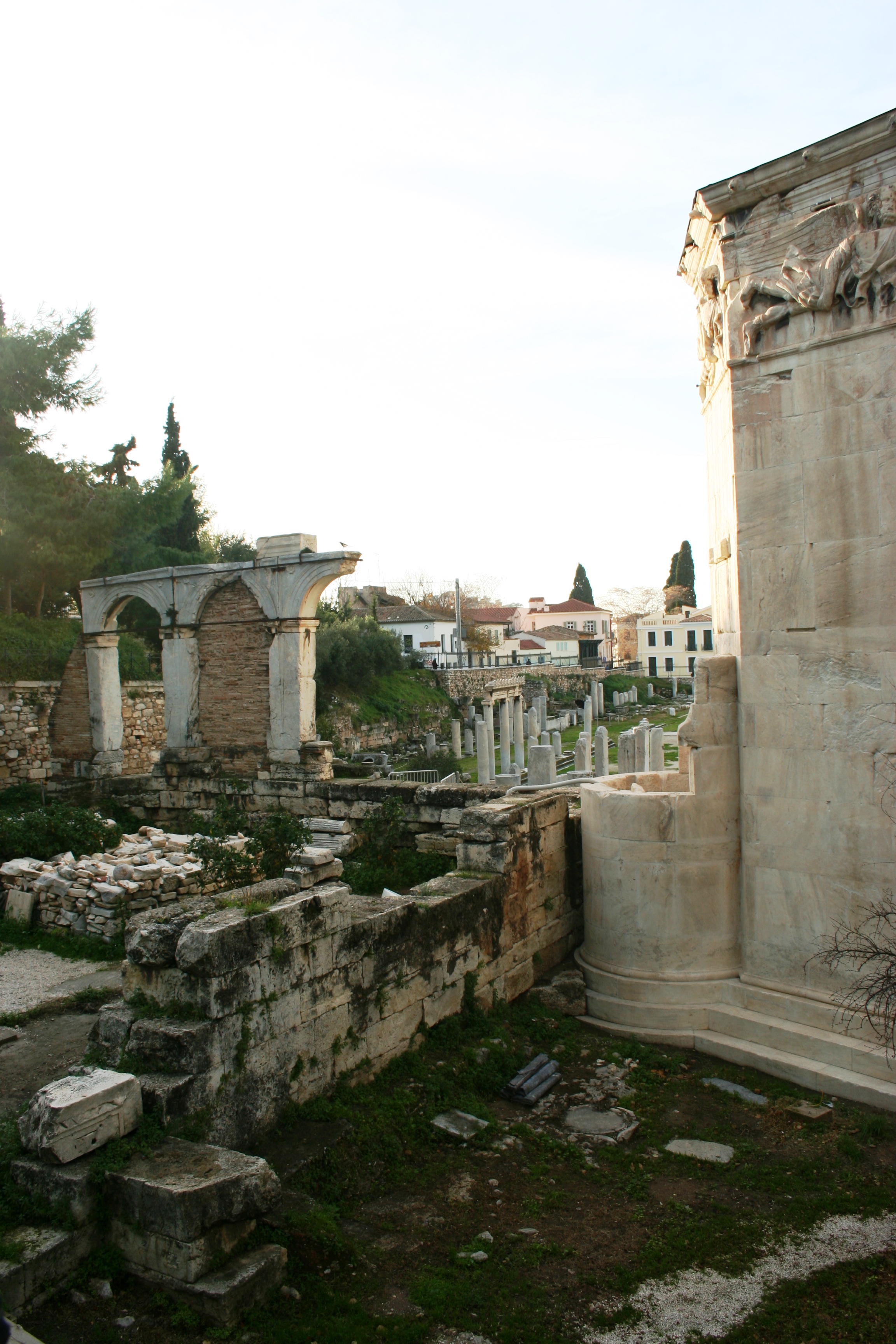
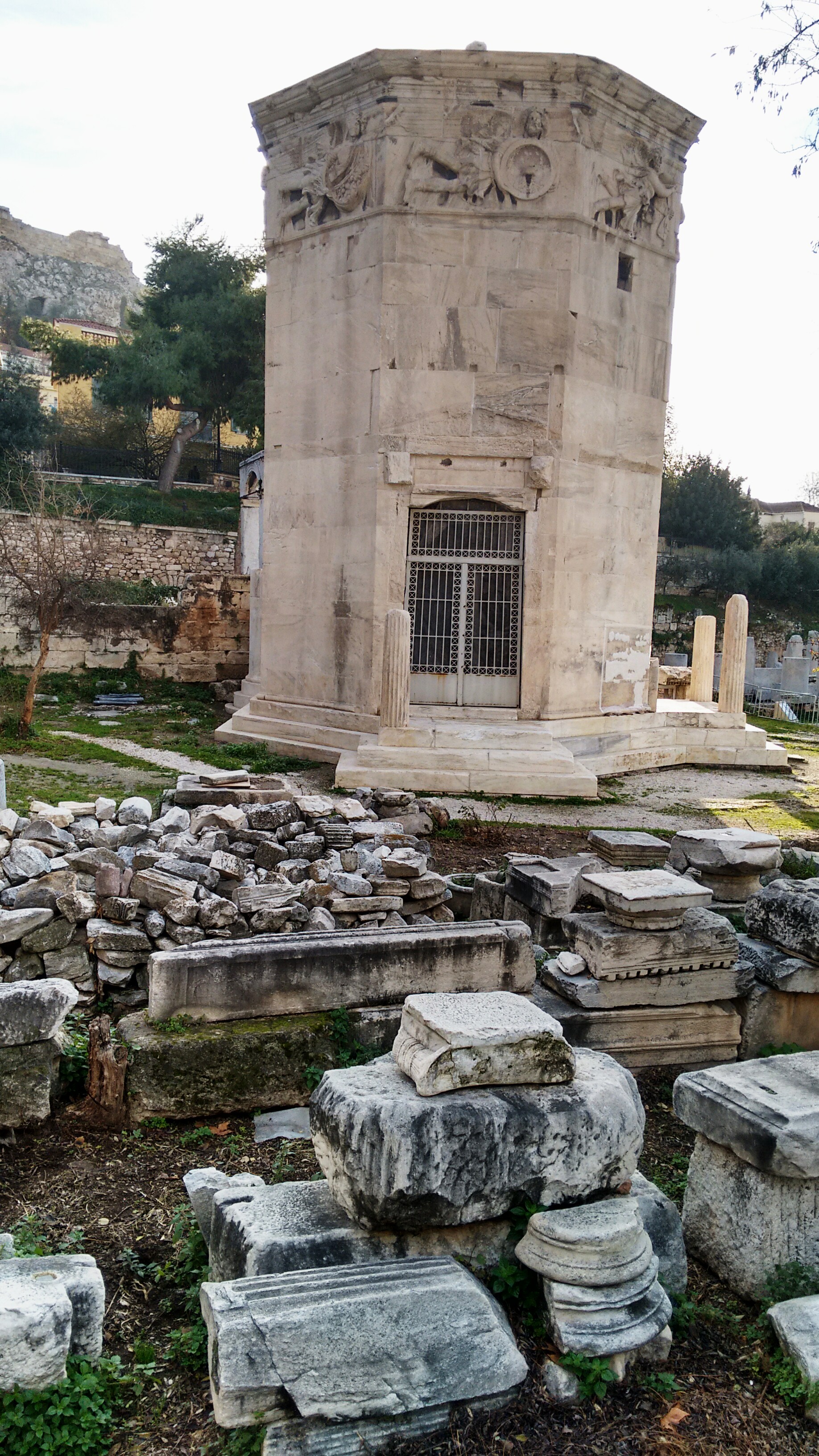
 Tower of the WindsIMG_3734One of the key buildings in the Roman Agora of Athens, which continues to impress tourists on the north side of the Acropolis, is the Tower of the Winds. As with the other buildings in Athens, it was built of that familiar Pentelic marble into a twelve-meter high clock tower. The building had just been restored with the scaffolding removed before I arrived, which was excellent timing to see a very ornate and beautiful ‘horologion’, or timepiece.
IMG_3735

The building we see today, as in all things, is not complete. In antiquity, it would have been topped with a bronze (possibly) weathervane of Triton that would tell a passerby the direction the wind was blowing. If this seems irrelevant to modern viewers, we should always try to take into account that every piece of technology available at the time was as good as could be hoped for. In the seafaring culture of the Hellenes (Greeks), any advantage or extra measures taken for the weather and time was a useful tool.

 The Doric GatewayPicture 025The Roman Agora shows another product of the Italic investment in the city of Athens. Marking the entrance to the west of the Agora, it bears a dedication to ‘Athena the Originator’, not unlike the other monuments in Athens. However, the Roman gifted through the generosity of Julius Caesar and his son, the Emperor Caesar Augustus.Digital camera pictures 609

Indulging me for a moment, let’s unpack that inscription. Augustus’ ascension followed Julius Caesar’s death, a surprise adoption, which ultimately led to Augustus’ years’ long civil war to wrestle control over the Roman Republic. As Augustus defeated his competitors, Mark Anthony and Cleopatra, and thousands of Italian dead from both sides of the conflict, he sought to rebuild and polish his image. Further discussion about the impact and persona of Emperor Augustus will follow, but for now, you can rightly imagine, feelings were mixed among the survivors of the war and the purges which followed. Families loyal to the losing side were eliminated and embraced dependent upon their willingness to acquiesce to Augustus.

Part of the importance of smoothing over relations rested in the image he tried to sell, was to gain legitimacy.


Thank you for checking out my post!
Feel free to leave comments, messages or questions.

Save

10.1 The Romans come to Greece

The Power of Rome in Athens

IMG_3913


It has often been my inclination when in Athens to sketch the monuments and buildings, whether the drawings came out a bit wonky or not. If you look at the archaeological landscape of Athens, much of what you see was commissioned by the Romans.  The Roman additions to the Athenian landscape have some incredibly beautiful examples of second century BCE imperial architecture, with emperors like Hadrian paying homage through benefaction to the heyday of Greek power.Picture 022The Antigonid’s took over leadership of Macedon and Greece following the end of Alexander the Great’s family line, and successfully wielded the same ideology to justify their control over the Greeks: ‘protectors of Greek freedom’, an iron fist in a velvet glove so to speak; they controlled Greece through benevolent subjugation. Through the general practice of eugaritism (benefaction for honours), the Greeks were given beautiful buildings, festivals, and money in return for obeisance to Macedonian authority. For their own part, the Greeks had spent the last few hundred years restlessly under the yoke of the Macedonians, who they considered barely civilized.Digital camera pictures 616
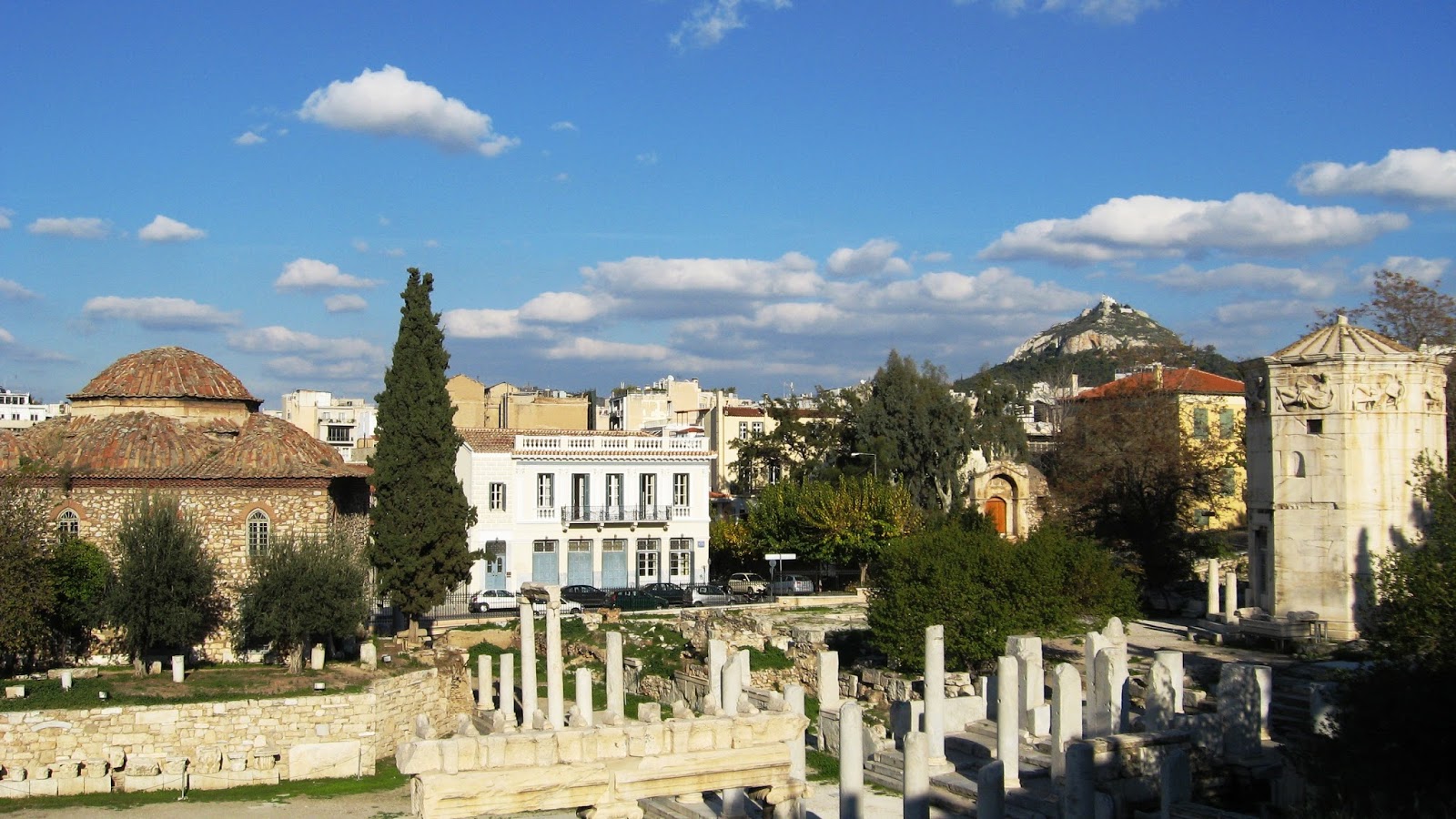
The Antigonid’s power waned as the burgeoning Roman Empire began to orbit around Greece. After generations of skirmishes, battles and dynastic struggles, their depleted resources and weakness allowed a small wedge to open up for the canny Italian republic.

Playing the powers of the Mediterranean against each other and their respective leagues, the Romans effectively weakened them and loosened the Antigonid kings’ grip on their territories. Over time, any political disagreements, wars and finances had to be presented to the Romans for approval and action. Rome’s role in Greece in this period is perhaps it is better understood as a macro-level of benefactor to the Hellenic people, but with massive and tangled strings attached.IMG_3918

The Greek city-states chafed under this control. A last play for self-determination led the Greek city-states to throw their weight behind the pretender to the partitioned Macedonian throne, Perseus of Macedon. After a series of wars, aptly called the Macedonian Wars, culminating in the defeat of the allied Greeks under Perseus in 146 BCE, Greek independence gave way to foreign rule officially, though they were still left to govern themselves nominally. Macedonian cities fared less well however as a result of the war, and were depopulated. IMG_20160113_143351

Officially annexing Macedonia and making it a Roman Province, the landscape of power was irrevocably changed in Greece forever. As in most political takeovers, the elites of the conquered peoples are not slow to see the turning tide, and are often installed in important political positions if they are complicit in securing a smooth(ish) submission. Wealthy Greeks could still wield power, as in the case with Herodes Atticus, but they answered to the Romans.Picture 853

While there is infinitely more to say about the transition of power between the Hellenistic period into the Roman, I will try not to throw it at you all at once. For the purposes of this blog, we can dip our toes into the mire when it suits, and hopefully the obfuscated picture of this complex period of history will form cohesive shapes.IMG_3715

This transition affected the Athenians positively and disastrously at times. Perhaps the Athenians’ position historically as cultural and imperial power over the Mediterranean awarded them a nod of respect from the Romans. Arguably however, not much had changed for the Greeks, as they were controlled again by foreign powers, except gone was the pretense that they were free.

Thank you for checking out my blog!

A bientot!

Save

9. The Odeon of Herodes Atticus

A Greek Benefactor and Murderer?

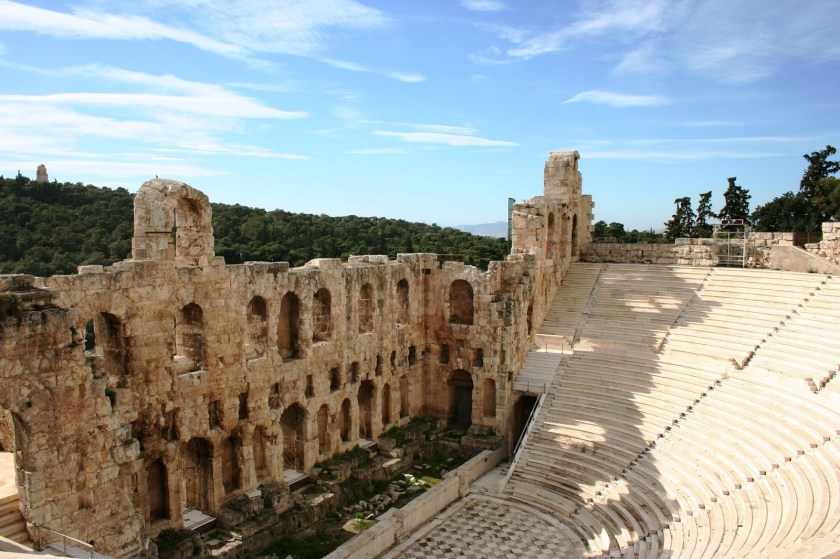
While out for a wander this January in Athens, I came across a placard next to the wonderfully restored Odeon of Herodes Atticus, pictured below. The placard mentioned that a second-century Athenian benefactor, Herodes Atticus, had built it in honour of his beloved wife Regilla. When I returned home, I looked into this monument of love, and the darkness I found changed the way I look at the glorious theatre on the south-west slope of the Acropolis forever.

Inside the Odeon of Herodes Atticus – 2016

Who were Herodes and Regilla?

Herodes was a prolific builder and powerful statesman of the 2nd century CE,

Herodes Atticus was of noble descent and of consular rank. Tracing his heritage to the half-sister of Cimon, a famous Athenian statesman, and of course to the hero, Theseus, and Zeus. He created quite the linage, much like the Hellenistic before, that situated himself on equal footing to the emperors he served.

Herodes’ close relationship with the Antonine emperors included serving Hadrian as a prefect in the Province of Asia, then Antoninus Pius as tutor to his sons, Marcus Aurelius and Lucius Verus. Herodes was so respected and trusted that he was given the wealthy and powerful relative of Empress Faustina the Elder, Regilla, as his bride. Clearly, Regilla’s family was very well connected, and gifted the union with an impressive dowry of lands and resources.

Appia Annia Regilla was born to the gens Annia (the Annia Regilli = “little kings”) branch of the family. Her father was a distinguished senator, her mother was an aristocrat, and her brother served as a consul in 160. The latter would be instrumental in the court case against Herodes, when he brought his brother in law to face the authorities for his sister’s death.

8. Hellenistic Athens: A Period of Growth and Benefaction

7c446-img_20160111_154012795_hdrWhat is the Hellenistic Period?

The Hellenistic period, for those unfamiliar with the term, is the period of time between the death of Alexander the Great in 323 BCE (pictured below) and the battle of Actium in 31 BCE. This is a complex and nuanced period of time, with a previously unseen exchange of ideas, peoples and goods between the kingdoms of the Mediterranean. Rather than write a grueling chapter, I will say a few things briefly for now, and jump into this period more as I go along.

8. Hellenistic Athens: A Period of Growth and Benefaction
Alexander the Great, Athens Archaeological Museum – 2008

Fundamental to understanding why there were kings, and other powerful men and women building monuments and civic buildings in Greece, specifically in Athens, is discussing how benefaction worked in the ancient world. Hellenistic kings sought to be perceived by their Greek subjects as benefactors of their cities, for which Greek citizens gave them honours. This reciprocal transaction of inscriptions and proclamations of honours for benefactions, or more symbolic rewards, established the legitimacy that the kings needed, and in turn continued the cultural autonomy of the Greek citizens.


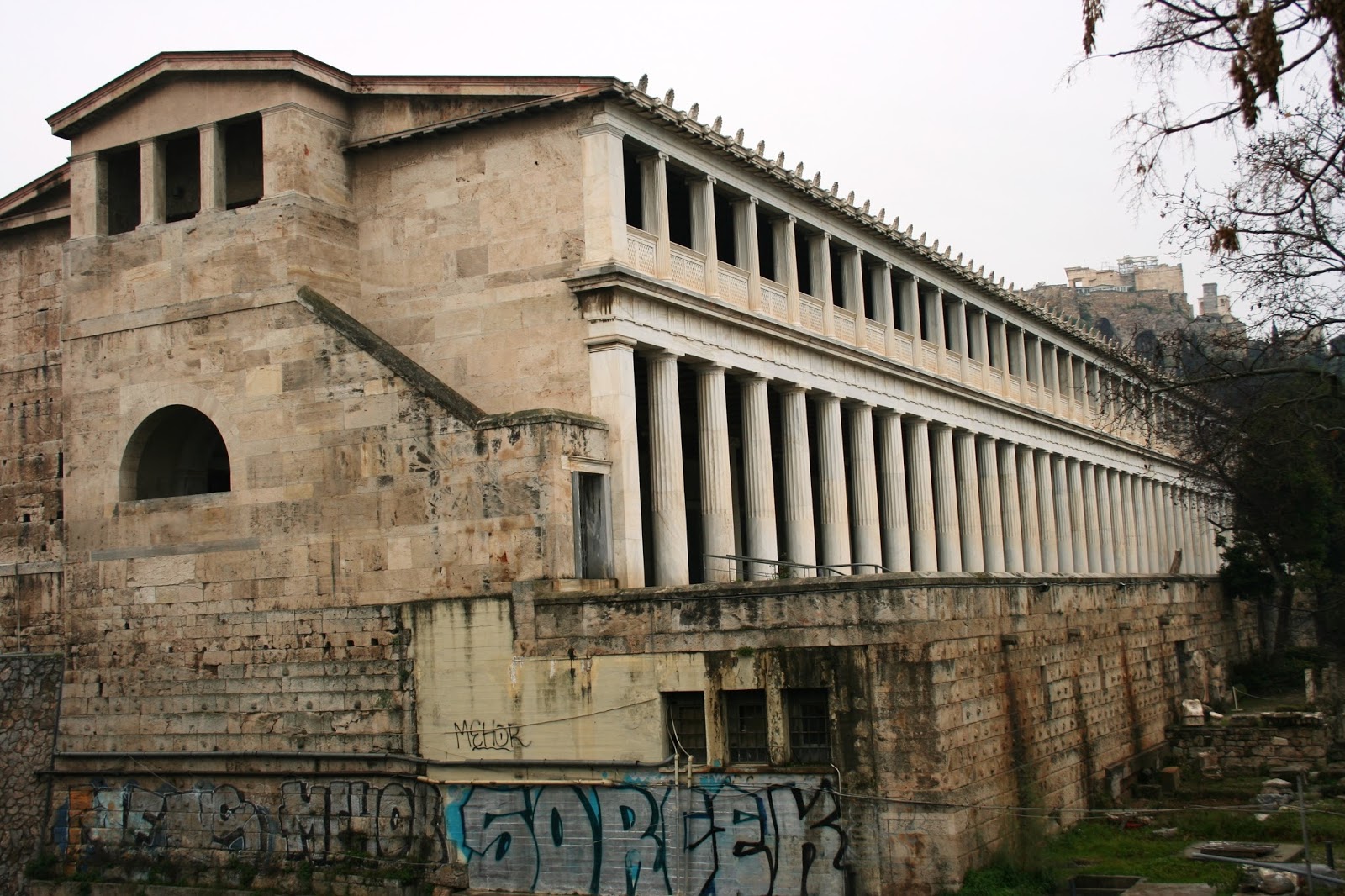
In tangible terms, this could take the form of a king, say Eumenes II of Pergamon, building a massive stoa (covered walkway/shopping arcade) for the leisure and enjoyment of Athenians. Eumenes II, in return, is possibly given an inscription and official proclamation that his patronage of Athens is appreciated, and they acknowledge him as a powerful ally and friend of the Greeks. Seems like an uneven exchange, does it not?

eb930-picture2b092
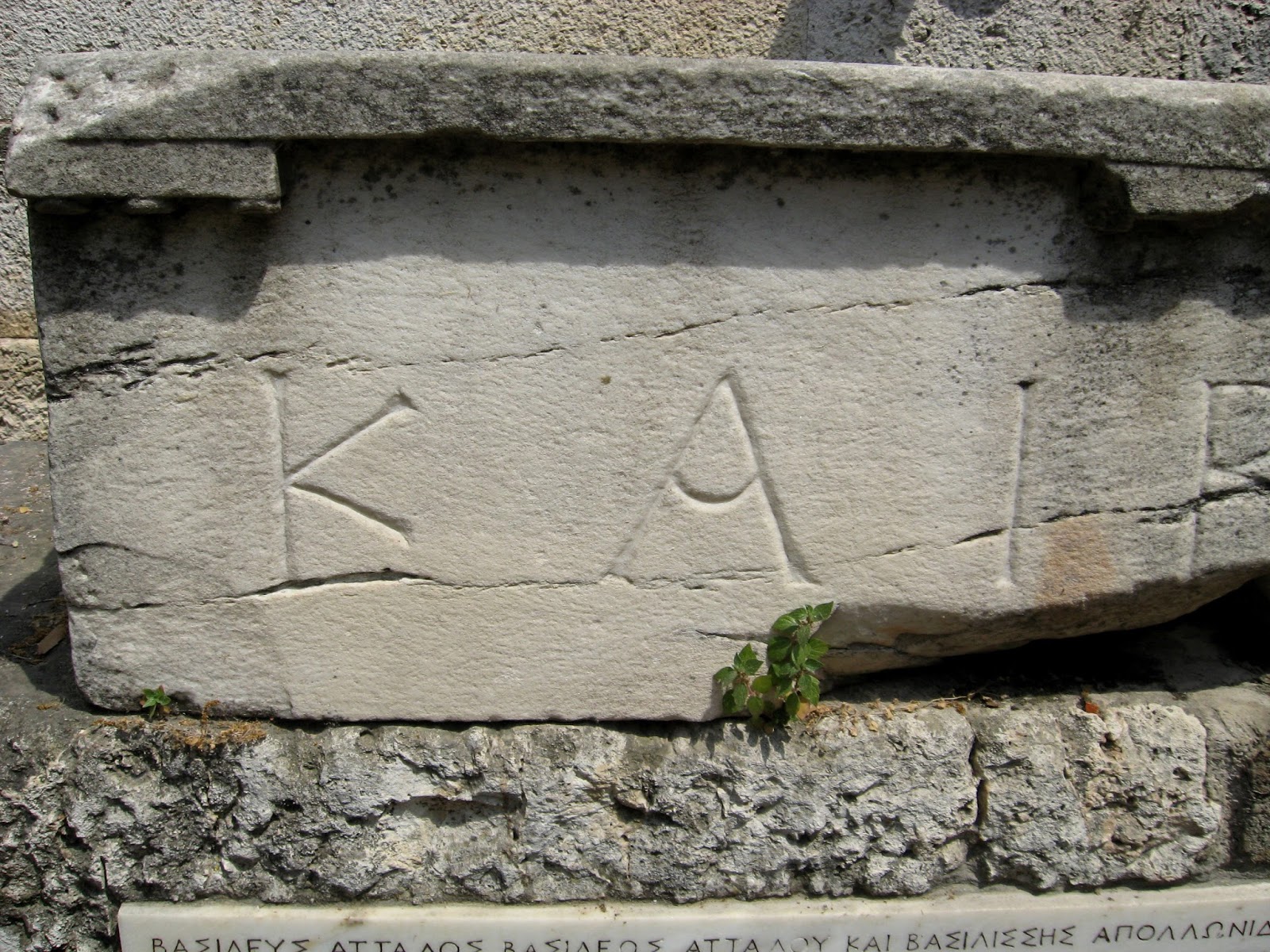
Close view of inscription from Athenian Agora – 2008

A defining feature of the period was the ongoing warfare and rivalry between the Hellenistic kings. Their kingdoms were composed of the partitioning of Alexander the Great’s spear-won territories. The problem that these generals of Alexander faced was that they were not princes or kings in their own right. Sure, they could claim a connection to the famous world conqueror and construct their reputation and dynasties, but there was nothing inherent in being a descendant of a Macedonian general that would necessarily dissuade the Greeks to revolt against them.


In fact, quite the opposite. The Greeks had fought against the encroaching Macedonian power as it had grown following the end of the Peloponnesian wars in 430 BCE. Even Alexander and his father, Phillip II, had to walk a fine line on occasion when dealing with the Greeks. The relationship of benefaction, illustrated by the stoas, on the surface appears as other empires doing homage to Athens, forms part of an intersection between the idea of Greek independence and the reality of their domination by the Macedonians and later Romans. The careful negotiation of power between the new rulers and their subjects was facilitated by the perception of mutual benefit.

Stoa of Eumenes

Eumenes II (who ruled from 197 – 159 BCE.) had a contentious reign, with plots against his life (as was typical). At one point, a rumor spread about his untimely death, and his brother Attalos II, was hailed as king of Pergamon and married his brothers widow. Once the truth was revealed that Eumenes was still alive, rather than causing a civil war, Attalos abdicated and returned his new wife back to his borther. Amazingly, they carried on as before until Eumenes’ eventual death when his brother once more took the reigns of empire, married his brothers widow again, and held up his promise to pass on the kingdom to his brother’s son upon his death. This could be the least toxic Hellenistic dynasty in history.

IMG_3723
The Stoa of Eumenes from the south slope of the Acropolis – 2016

Built on the south slope of the Acropolis, between the Theatre of Dionysus and the Odeon of Herodes Atticus, this stoa was a decadent promenade and one of the most costly benefactions which the Athenians received from a king of Pergamon. It is likely this stoa was designed by the same architect as that of Attalos II.

IMG_3941
Reconstruction drawing from placard in Athens – 2016

As in all things, location is key. The stoa served the Athenians going to the theatre, as a respite from the sun.

Stoa of Attalos


IMG_3662
Stoa of Attalos – 2016

Attalos II of Pergamon (rule from 159 – 138 BCE.), who commissioned its construction, was the inheritor to the Attalid dynasty. Remember all that preamble about the reciprocal behavior of Hellenistic kings? To understand why half of the buildings and statues that we see in Athens are even there, you have to understand why non-Greeks spent the money and time to put them there. The Atallids were building their empire from the collapse of the Lysimachian empire. Where Lysmachus’ empire had created legitimacy in the wake and division of Alexander the Greats’ conquered lands through aggressive military exploits, marrying royal heirs and alliances with the other successor kings, once his territories were conquered, what remained was divided.

The Attalid dynasts needed to create some quick and culturally relevant links to power to legitmise their rule. The centre of their power base was the great Turkish city of Pergamon. Picture 104

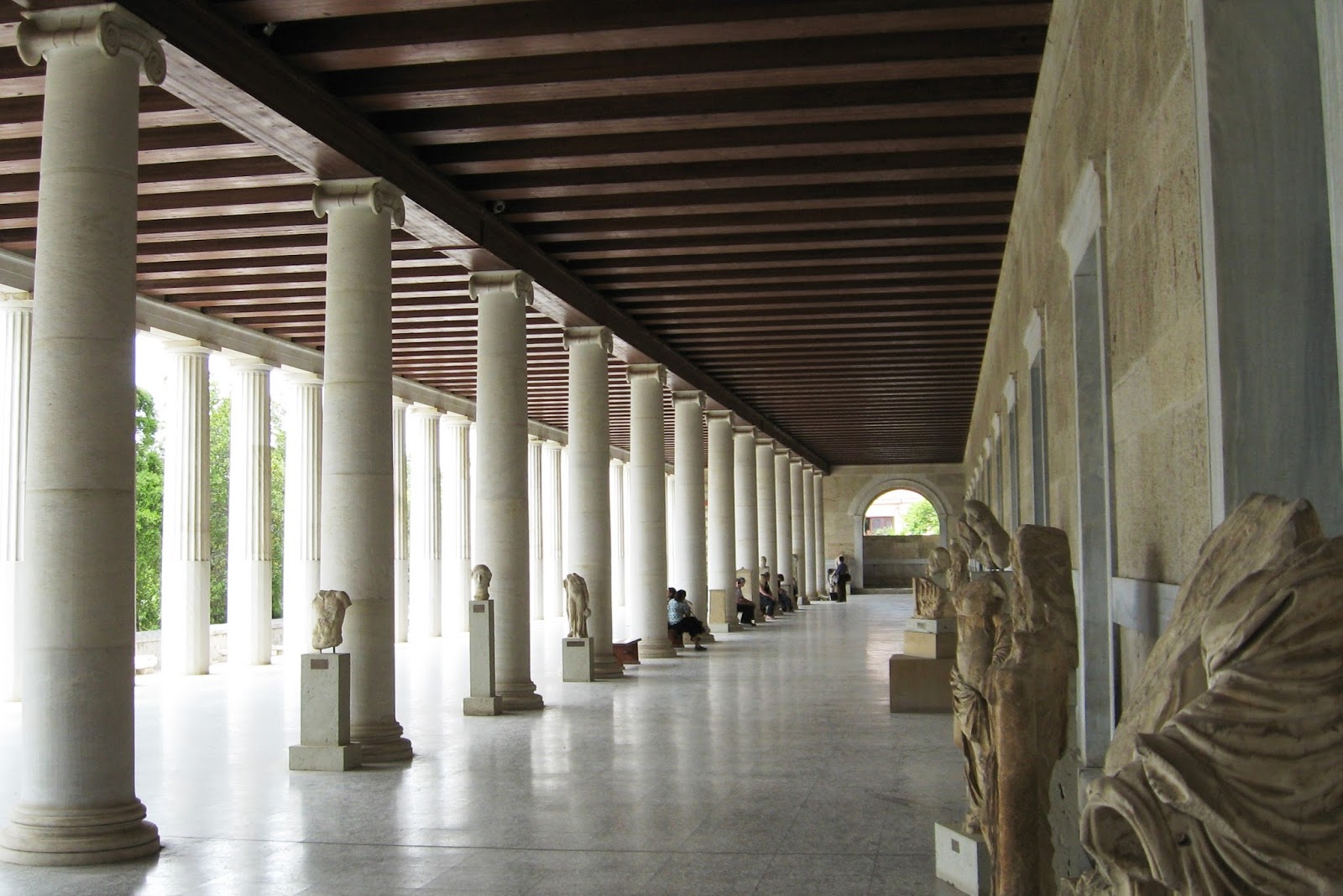
Built between 159 – 138 BCE., the stoa of Attalos II was a high end shopping centre. The two-storied collonaded stoa has two architectural orders: the ‘Doric order’ was used for the exterior colonnade, and the ‘Ionic order’ was used for the interior colonnade. As with other Hellensitic building projects of the time, the stoa was a very large and elaborate – a statement piece.

Theatre of Dionysus Eleuthereus

IMG_4007Considered to be the first theatre in the world, it was used to honour the god of wine, revelry and theatre, Dionysus. Prior to anyone getting on with the show, a jaunty sacrifice of a bull was needed to kick off proceedings and purify the theatre. The festival of the Dionysia was celebrated here, with some of the biggest names in Classical literature of the age: Sophocles, Euripides, Aristophanes and Aeschylus.

That is incredible to me is that you can actually stand in the spot where some of the most famous plays in literature were performed, in the shadow of the Acropolis. Tradition has it that the first tragedy was performed at the Dionysia by actor-playwright Thespis (Thespis- thespian…see what they did there?) in the early 530s BCE.IMG_3940There were several phases of the Theatre of Dionysus, commencing with wooden seating in the 6th century BCE. The theatre is currently in pretty rough shape, though reconstruction work was completed between 2009 – 2015. The main problem, as with most buildings from antiquity, was that much of the stone was pilfered and used in other buildings nearby, or possibly carried off to be burned down in lime kilns.
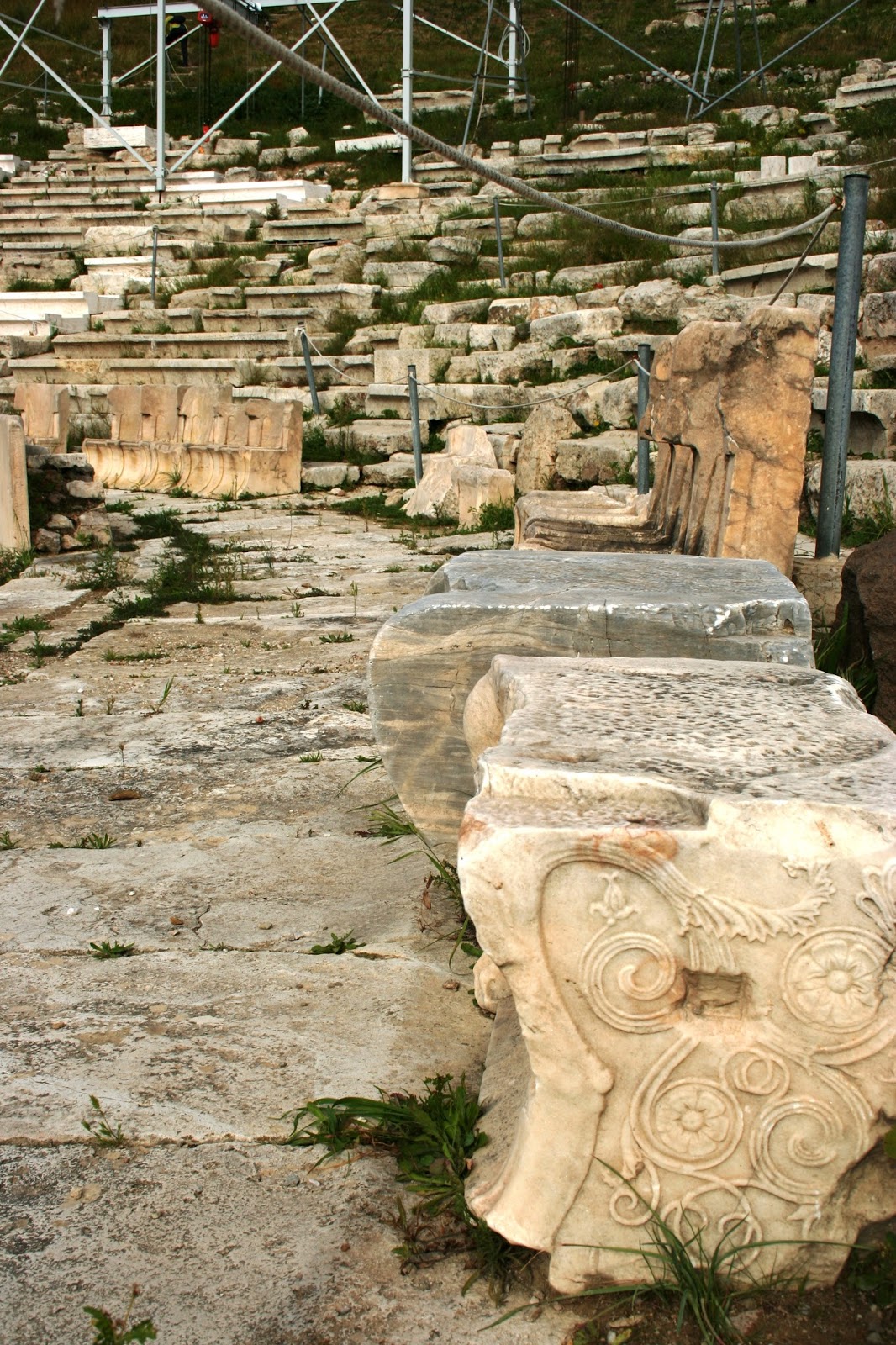
The Theatre of Dionysus held significance for the Athenians’ sense of identity and history. The famous plays, still studied by students today, were a popular feature on this stage, even several hundred years after the initial opening night.

IMG_3931
A detail view of the carved theatre seat – 2016

The presence of the past was notable, even during the Roman period of control over Athens, and this theatre is an interesting case study of a ‘classical nostalgia’ which everyone since the Romans has been guilty of when considering Athens. It has been suggested by scholars that the dearth of new material in the Hellenistic and Roman period in Athens, coupled with the frequent re-staging of the greats by Aechylus and Euripides, can be interpreted as savvy business decisions by elites to invest money in revivals of Athenian theatre for which benefactors could be certain of quality and popular acclaim. IMG_3933Rather than making the riskier financial decision to invest in the support of new plays, which perhaps cut too closely to home (really reflecting the loss of autonomy felt by Greeks), instead the attention was focused on a golden age where their independence was trumpeted and powerful.

The Monument of Lysikrates
Built around 333/334 BCE, this interesting dedicatory monument speaks to a time which is perhaps difficult for us in the modern era to imagine. A time when, wealthy patrons could put on an impressive show for the citizens of Athens, and through their sponsorship of plays, compete against other wealthy elites for honours. Digital camera pictures 546 (2)Awarded to the choregos, who was responsible for the training and sponsoring of the chorus in dramatic contests held in the Dinonysia, this is the only existing example of remaining in Athens today. Sculptures like this, would have been crowned with a bronze tripod which no longer survives. The limestone podium is topped with a cylindrical tholos of Pentelic marble, and six Corinthian columns which are topped by eight acanthus leaves.
Apparently, the Corinthian capital was used for the first time on the exterior of decorative structure or building. It would not be until three hundred years later until the Corinthian ‘order’ became a recurring order in Rome. This type of column capital would go on to become the preeminent Roman capital type. The change of the governance of the Mediterranean would shift, favouring the rising strength of Italy. The Roman period of Athens follows similar pathways towards controlling Greeks through benefactions

and building projects.

The perception and goodwill of the public would be an ongoing preoccupation of the elites and leaders in Greece and Italy moving forward.

7. Classical Athens: The Erechtheion

e9f9d-img_20160112_140040185_hdrThe story of the Erechtheion was one of constant change. Built to replace the Old Temple of Athena, though not atop its foundations, it accommodated several cults in the same space. The building’s namesake was the hero and foster-child of Athena, Erechtheus. The temple was also dedicated to Athena, Poseidon, Hephaistos, and the hero Boutes – all worshiped in the same space.

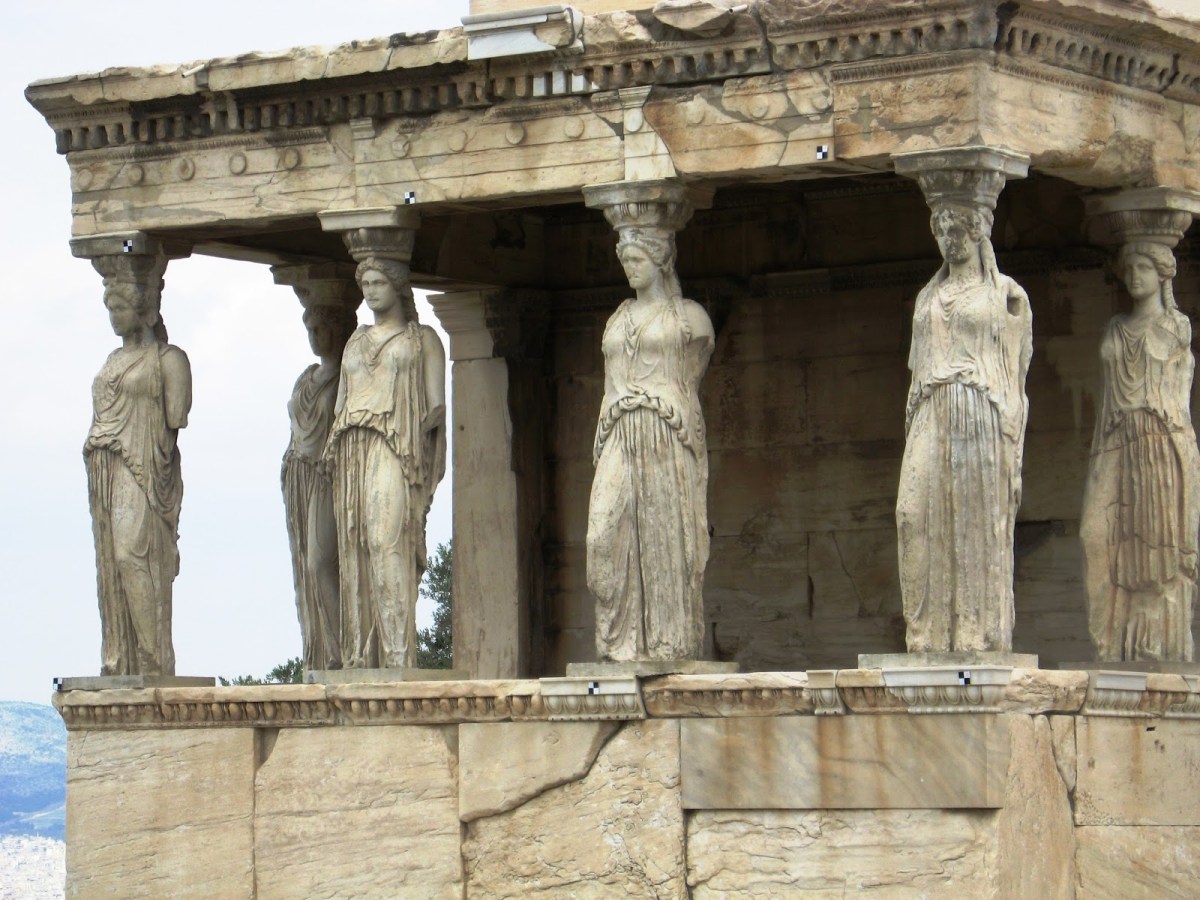
If you have been counting along, that is now three temples to Athena on the Acropolis. 251ba-img_3974  This temple offers an interesting glimpse at what was going on in Athens as it was building an empire. Pericles and other elites of Athensbrought together a mixture of local spaces routed heavily in the foundation mythology of the city and it’s heroes, and built up expensive, impressive buildings around them.7. Classical Athens: The Erechtheion  The temple is on a slope (as you can see above) which sees the west and north side three metreslower than the southeast portion of the temple.The building size was reduced as a result of the shortage in funds during the Peloponnesian War, and the Caryatids placement hid the change in design. 7. Classical Athens: The Erechtheion

The architectural features of the building are really quite unique, in beauty and creativity Phidias out-did himself. The decoration programme included gilded ornamental work, inset glass beads and bronze work. The design incorporated multiple levels, sections and marbles.60599-picture2b073
The frieze (not visible) which was made of dark Eleusinian limestone and the temple was constructed from Pantelic marble. The frieze’s subject matter is unknown, but an inscription recorded payments to the tradesmen who carried out the work.

The female figures which line the porch are called Caryatids. Though made most famous by their presence on the Erechtheion, Caryatids had been an architectural feature in other sacred sites in Greece; during the Archaic period there were possibly other buildings with standing female columns, most notably in Delphi. These Ionic columns carved to look like young women is pretty spectacular by anyone’s standards. The original Caryatids have been moved and restored, using state of the art technology, in the New Acropolis Museum. For quite some time they had been under restoration, but you could view the work being carried out. While visiting in 2016, I was able to walk right up to them (which you cannot do with the replicas), and they were stunning.

Scanned from a Xerox Multifunction Device001(3)
My squint little sketch of the Erechtheion  Z. Guertin – 2008

This cultic complex is an interesting oddity. It drew together many aspects that Athenians could use to define themselves; their foundation myths involved gods and local heroes, and all were represented within the Erechtheion.It was created in the period which followed ahistoric clash of cultures between the Persians and Greeks,and throughout the period of its creation the growing city-state of Athens developed into the imperial power it would belauded as for the next two thousand years.

Thank you for reading my blog!