

This week on Two Friends Talk History, I was joined by expert in the field of Roman history and Classics public engagement powerhouse, Dr Alex Imrie. Dr Imrie’s doctoral thesis concerned the Constitutio Antoniniana (Antonine Constitution), the edict of mass enfranchisement promulgated by the infamously violent emperor Caracalla, and is a self-described Dio nerd. Dr Imrie is a Tutor in Classics at the University of Edinburgh and the National Outreach Co-ordinator for the Classical Association of Scotland. The CAS has been spearheading free and accessible learning for true beginners to the topic of Classics, and Dr Imrie brings together talented and interesting new scholars to share their experience and time with the public.

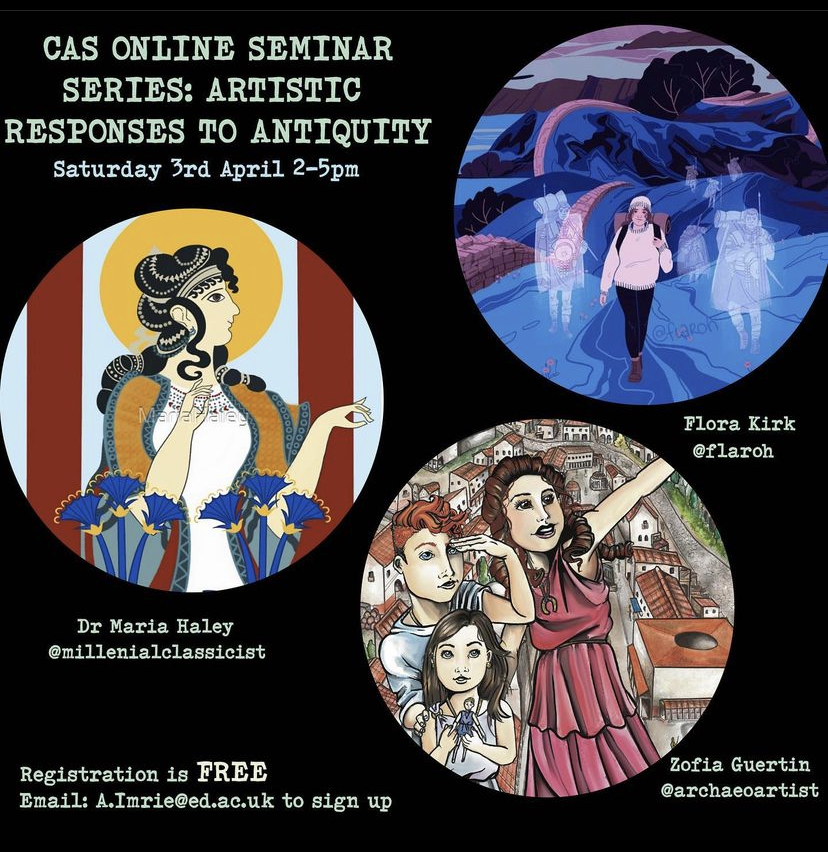
Last year, Dr Imrie and I collaborated on a seminar hosted by the Classical Association of Scotland called, Artistic Responses to Antiquity. We organised this event to host discussions from several artists based in the UK who worked in various mediums to create art inspired by the ancient world. Presenters included Dr Briana King (University of St Andrews), myself, Zofia Guertin (PhD Candidate – University of St Andrews) @ZofiaAstrid, Dr Maria Haley (University of Leeds/University of Manchester) @marianuncsum, and Flora Kirk (MA, University of Durham) @flaroh. The diversity of backgrounds and approaches was really exciting to see. The seminar opened with a discussion of ancient styles and techniques in art, then on to Classical Reception and its ongoing relevance to the modern world. As Dr Imrie and I discuss in the podcast, the final session of the seminar involved thirty or so scholars, interested members of the public, and even some wee ones! The turn out was fabulous, and the art that our attendees created in session three was really fun.

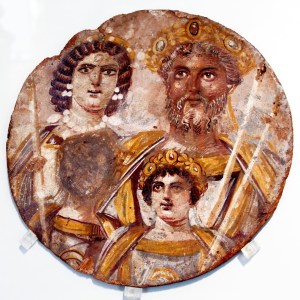
Several months ago, we reconnected to record an episode of TFTH, and dive into the tumultuous history of the Severan dynasty. Admittedly, I was not as familiar with the political and military side of their reign, and it was fascinating to hear about the game of whack-a-mole among generals that eventually led to Septimius Severus taking control of the Empire from 193-211 CE.
Our conversation follows the ups and downs of the imperial familial relationships, particularly the crucial turning points between Caracalla and Geta who were also very keen to exterminate one another. Dr Imrie brings humour and humanity to Caracalla and his family, an emperor that is typically lumped into the ‘bad emperor’ category, and offers a more nuanced reading of these individuals. It was a joy to record, and I hope you take a listen!

The Severans with Alex Imrie – Two Friends Talk History
If you would like to hear more from Dr Imrie, please don’t hesitate to get in touch via Twitter @AlexImrie23 or edinburgh.academia.edu/AlexImrie. In the interview, we discuss his publication on Caracalla’s supposed use of the Macedonian phalanx, which you can read more about HERE.
To find out more about the CAS and register for upcoming 2023 programmes, please check out their website: https://cas.wp.st-andrews.ac.uk/. The upcoming seminars include Greek, Latin and Egyptian Hieroglyphics taught online.

Thank you for reading!
 Deciding to listen to the good advice I was given at the onset of embarking on my PhD, I opted to follow the rule: once you’ve submitted something substantial, take a week and decompress. That can mean many things of course. Understandably, long train rides and walking many miles might not be someone’s idea of decompression, but hey ho.
 1. Go Find Your Chill

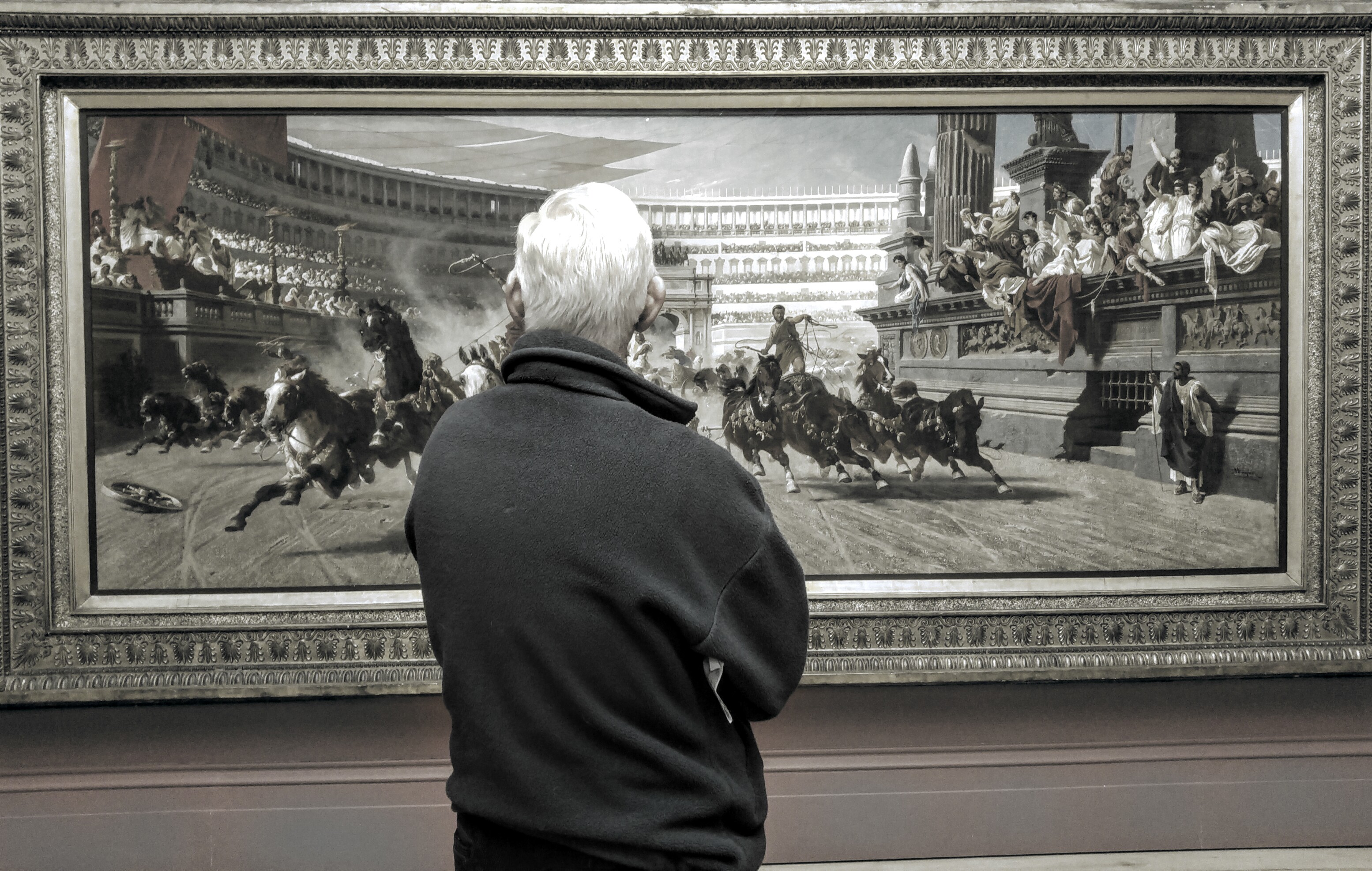 When needing to feel some inspiration, or just wanting a quiet space to draw, museums and galleries tend to be my preferred space to do so. Popping into the Manchester Art Gallery allowed me the rare privilege to see one of my favourite paintings in the flesh – Charles Auguste Mengin’s ‘Sappho’ – which was breath-taking and significantly larger than I’d imagined.
 The depth of the darkness in Sappho’s gown cannot be done justice with a digitized image, and the highlights looked iridescent in some spaces. Sappho, so often presented longingly and wistfully, is shown powerful, dark and mourning. Her angst and colour palette was a natural favourite for me in my high school goth years.
 3. Nightime Walks and Christmas Markets
 While making me homesick, one of the perks of living in the United Kingdom is the on-point Christmas markets. The smells of meat, waffles and mulled wine were amazing. It required all the will-power I possessed not to buy adorable kitsch ceramics, and eat all the treats.
 Onward through town we went, eventually settling into a pub near the university. Ample political debates, methodological discussions and general nerdiness ensued.
 This might seem fairly obvious, but taking 30 minutes out of the day to have a leisurely coffee or popping into a print shop and finding Liam Gallagher greeting cards (nailed it, Manchester) is sometimes the treat you need to clear your head. It doesn’t have to be a big production, but leaving the to-go cup behind and just sitting in nice spaces with friends (or alone) is one of my favourite parts of a solo journey. Seldom do I plan a trip without packing as much as possible into the schedule, but trying it out this month was really rewarding and relaxing.
 Taking stock and heading home, I was thoroughly impressed by the juxtaposition between new and old buildings in the city. There is a lot of effort to create dynamic visual landscapes, which living in the historic neighbourhoods of Edinburgh, I occasionally forget that skyscrapers, tower block flats and vivid colour are normal to see. Shaking off the last few weeks of 14+ hour work days, and stress that ate normal stress for breakfast, I definitely came back feeling more refreshed, and through that, optimistic. Though only a few days, it was a wonderful stop.
 Next stop: BRUSSELS! 48 hours later, my partner and I jumped on a plane and were en route to Eindhoven for a week

 ArchaeoArtist
You must be logged in to post a comment.