Monuments and Memory: Dionysius of Halicarnassus and the Story of Rome


When we think of ancient historians, names like Livy or Herodotus often come to mind. But Dionysius of Halicarnassus deserves a closer look. Around 30 BC, Dionysius was a Greek scholar who moved to Rome during the early days of the Empire. There, he produced Roman Antiquities, a sweeping history of Rome from its mythical beginnings up to the First Punic War. Though 15 titles of his work are known, 13 survived in one form or another; his work remains a crucial source for early Roman history, standing alongside Livy’s accounts.

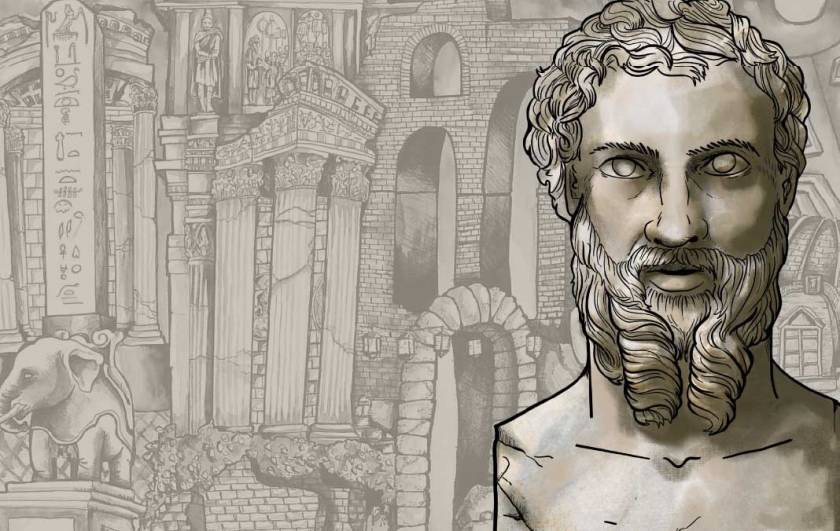
Dionysius of Halicarnassus and ruins of Rome by Zofia Guertin

Theatre of Pompey plan and Dionysius of Halicarnassus. Illustration by Zofia Guertin.

Dionysius wasn’t just a historian—he was also a master of rhetoric. His writings aimed to explain and justify Roman culture to a Greek audience, blending historical detail with rhetorical theory. In fact, he often used his history as a practical showcase of rhetorical principles. Beyond history, he wrote insightful critiques of famous Greek orators like Demosthenes and Isocrates, praising Roman writers for returning to classical Greek ideals over more ornate styles.

In this episode of Two Friends Talk History, Zofia welcomes Stefano Carlo Sala, a PhD candidate at the University of St Andrews, to discuss Dionysius of Halicarnassus—a key figure in Roman historiography.

Dionysius of Halicarnassus with Stefano Carlo Sala Two Friends Talk History

They explore how Dionysius, a Greek historian in Augustan Rome, used monuments and myths to present early Rome as a fundamentally Greek city. Through comparisons with Livy and Polybius, Stefano unpacks Dionysius’ unique approach to storytelling, monumentality, and cultural identity.


Brick and Marble. Illustration by Zofia Guertin.

While Dionysius of Halicarnassus and Livy both wrote about the early history of Rome, their approaches reveal striking differences—especially in how they describe the city’s monuments. Dionysius, writing for a Greek-speaking audience unfamiliar with Rome’s layout, offers detailed observations about buildings still visible in his time, even noting which ones he personally visited. Livy, on the other hand, paints a broader picture centered around familiar Roman landmarks like the Forum and Capitol, assuming a Latin-speaking readership already acquainted with the city. Dionysius’s attention to architectural detail connects to his larger ideological project: presenting Rome as the heir to Classical Greece. This vision runs through his historical work, where he draws frequent parallels between early Roman and Classical Greek monuments, values, and myths. By doing so, Dionysius not only makes Roman history more accessible to Greek readers but also argues that Rome deserves a central place in the Greek cultural tradition. His comparisons—even when archaeologically inaccurate—serve a deeper symbolic purpose, showing Rome as both the continuation and the future of Greece’s classical legacy.

💡 Topics covered:

  • Dionysius’ blending of rhetoric and history
  • Why monuments mattered in shaping Rome’s past
  • Connections between Classical Greece and Archaic Rome
  • How historians under Augustus crafted Rome’s legacy
  • The political and cultural stakes of memory

Whether you’re into ancient history, architecture, or historical narratives, this episode offers a rich perspective on the ways history gets written—and rewritten.

Sources

Edlund, I. (1980). Livy and Dionysios of Halikarnassos as Roman archaeologists in Rivista di Archeologia vol.4, pp. 26-30. You can download for free: Here.

Wiater, N. (2011). The Ideology of Classicism: Language, History, and Identity in Dionysius of Halicarnassus. (Untersuchungen zur antiken Literatur und Geschichte; Vol. 105). de Gruyter.

Stefano’s Academia Page and Publications:

Carlo Sala, S. (2025). Law as a catalyst and remedy for civic violence in early Rome : two examples from Dionysius of Halicarnassus, in Cahiers des études anciennes [En ligne], LXII | 2025. URL: READ HERE ONLINE.

If you would like to follow Stefano, you can join him on LinkedIn: HERE   or Academia.edu: HERE !

🔗 Support the show on Patreon at Patreon.com/Archaeoartist
📸 Follow on Instagram @TwoFriendsTalkHistory

Invisible Chains: Human Trafficking in Antiquity with Florence Felsheim

What did it mean to be bought, sold, and sexually exploited in the ancient world? In this powerful episode of Two Friends Talk History, Zofia is joined by doctoral candidate Florence Felsheim to explore the hidden realities of sexual trafficking in ancient Greece and Rome. Drawing on literary texts, archaeological evidence, and cognitive science, Florence unpacks how systems of enslavement and exploitation operated in societies often romanticized in popular culture.

We examine the scale of the ancient slave trade, the gendered dimensions of exploitation, and how enslaved women were commodified—expected to provide not just labor, but sexual access. From Roman brothels to banquet halls, the episode reveals how normalized sexual violence was embedded in the fabric of ancient daily life.

As part of Sexual Violence Awareness Month, this conversation sheds light on uncomfortable histories, connecting past systems of abuse to present-day conversations on power, consent, and human dignity. Listener discretion is advised.

Invisible Chains: Human Trafficking in Antiquity with Florence Felsheim Two Friends Talk History

Human Trafficking in the Ancient World: A Forgotten Reality

When most people think of human trafficking, they imagine a modern crisis. However, the practice of exploiting people for labor, sex, and servitude dates back thousands of years. In the ancient world, trafficking was not only common—it was institutionalized and deeply woven into the fabric of many societies.

In ancient Mesopotamia, Egypt, Greece, and Rome, slavery was a cornerstone of the economy. Prisoners of war, kidnapped foreigners, and even impoverished citizens were often sold into slavery. Unlike modern trafficking, which is largely illegal and hidden, ancient systems openly supported human trade. Markets for slaves were publicly established and legal codes could regulate their trade and treatment.

Women and children were particularly vulnerable. Many were trafficked for domestic service, labor, alongside sexual exploitation. In ancient Greece, for instance, women were commonly sold into brothels or forced to work as concubines. Rome’s vast empire relied heavily on enslaved people, many of whom were captured from conquered territories and transported long distances.

Though the term “human trafficking” didn’t exist in antiquity, the mechanisms of coercion, transport, and exploitation mirror modern patterns. Individuals lost autonomy, families were torn apart, and countless lives were shaped by violence and subjugation.

Understanding the ancient roots of human trafficking challenges the myth that it’s a purely modern problem. Instead, it reveals a tragic continuity in human history: the persistent commodification of people. While laws and attitudes have evolved, the underlying injustice remains disturbingly familiar.

By studying trafficking in the ancient world, we can better understand the cultural, economic, and political forces that continue to allow it today. Acknowledging its history is a step toward dismantling it in the present.

Speaking Through Objects

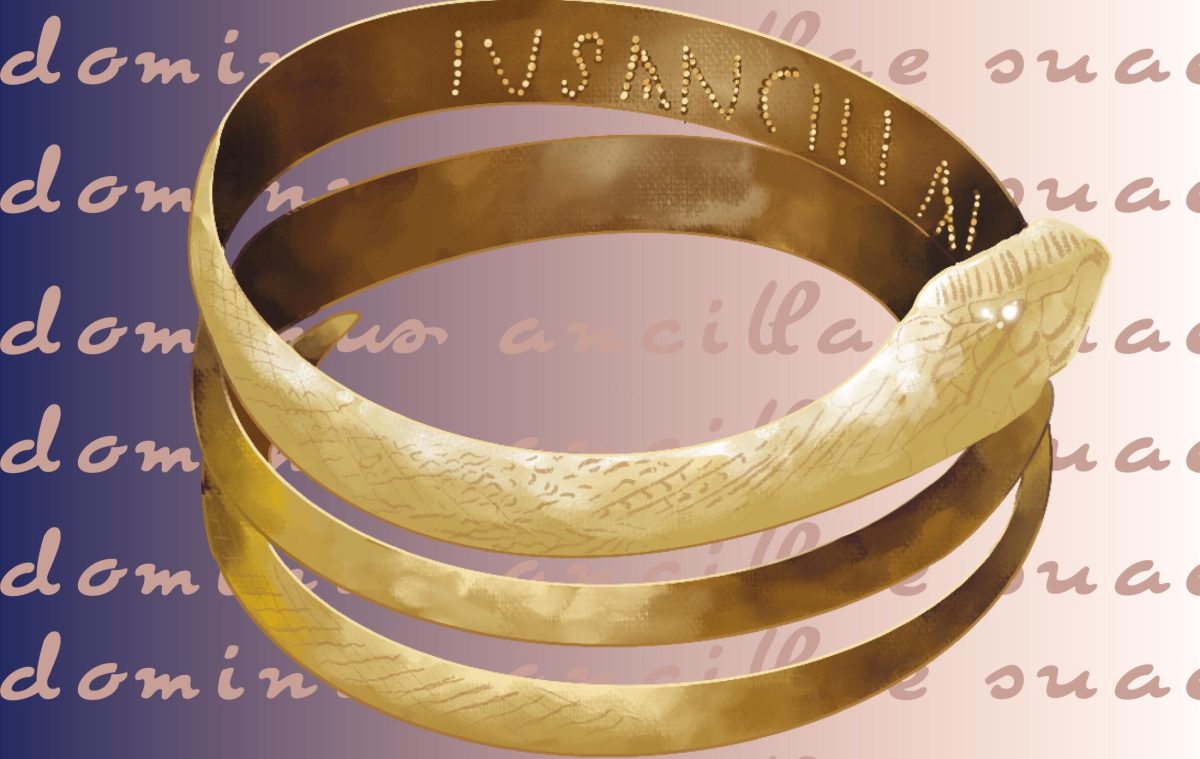
Moregine bracelet, illustrated by Zofia Guertin.

In 2000, archaeologists at Moregine, near Pompeii, uncovered a gold snake-shaped bracelet inscribed “dominus ancillae suae” (“the master to his very own slave girl”) on the body of a woman fleeing the eruption of Vesuvius. Found alongside other jewelry and coins, the bracelet, weighing about 500 grams, is crafted to coil three times around the arm. Its inscription has sparked debate: it may have been a gift to a domestic slave, a freedwoman, or a slave prostitute, or a metaphorical gift between lovers. The discovery highlights complex social dynamics and the harsh realities of slavery in ancient Roman society.

Resources

  • Levin-Richardson, Sarah. “Modern Tourists, Ancient Sexualities.” Pompeii in the Public Imagination from Its Rediscovery to Today. Oxford: Oxford University Press, 2011.
  • Keuls, Eva C. Reign of the Phallus : Sexual Politics in Ancient Athens. Berkeley, CA: University of California Press, 1994.
  • McClure, Laura. Phryne of Thespiae : Courtesan, Muse, and Myth. New York, NY: Oxford University Press, 2024.
  • Funke, Melissa. Phryne : a life in fragments. London : Bloomsbury Academic 

🌍 Sexual Violence Support Resources

If you or someone you know needs support, here are trusted organizations offering help across the globe:

1. RAINN (USA/global support)
🔗 rainn.org
📞 1-800-656-HOPE (4673)
💬 24/7 online chat

2. UN Women – End Violence Against Women
🔗 unwomen.org

3. The Survivors Trust (UK)
🔗 thesurvivorstrust.org
📧 info@thesurvivorstrust.org

4. Women Against Violence Europe (WAVE Network)
🔗 wave-network.org

5. Child Helpline International (for youth/caregivers)
🔗 childhelplineinternational.org

6. UNFPA – Global Helpline Directory
🔗 Global helpline list

7. Amnesty International – Gender & Sexuality Support
🔗 amnesty.org

💻 Online & Anonymous Support

8. Lifeline Chat (24/7, anonymous)
🔗 suicidepreventionlifeline.org/chat

🔐 Tip: Use a VPN or private browser if privacy is a concern. Always contact local emergency services if in immediate danger.

Classical Reception of Sexual Violence in Antiquity in Modern Visual Media

In the latest episode of Two Friends Talk History, Zofia and Dr Briana King return to our discussion into Classical Receptions. This time, we go into some of the heavier subject matter that we felt deserved its own episode. Returning guest, Dr. Briana King, joins me to unpack the dark and often overlooked threads of sexual violence in ancient history and its modern reinterpretations. We discuss ancient precedents for modern cinematic and television representations of sexual violence – made spectacle – in retellings of Roman narratives.

We’re diving deep into how classical reception shapes public perception—and why that matters. This is a heavy but essential conversation about power, misrepresentation, and the stories we choose to tell. 🏛️

📢 Trigger warning: this episode discusses sexual violence and may be distressing to some listeners. Please listen with care.

Classical Reception of Sexual Violence in Antiquity in Modern Visual Media with Briana King Two Friends Talk History

Dr King has argued through her doctoral research, and in her more recent publications, that these scenes can be interpreted as real reflections of actual events. And perhaps, these visualisations were part of shaping realities that they depicted in antiquity, as they appear to be doing now.

Due to copyright, I have drawn the images that we discussed in the episode, since those available for viewing on the Beazley archive are difficult to make out at times.

  • (Left) Athenian red-figure stamnos; c. 430 BCE; Two men lifting a hetaira between them; Polygnotos Painter; Musee du Louvre Cp274/Cp9682; Beazley 213398.
  • (Top Right) Athenian red-figure kylix; c. 510-500 BCE; Orgy scenes; Pedieus Painter; Louvre G13; Beazley 200694.
  • (Bottom Right) Athenian red-figure cup; c. 490 BCE; Orgy scenes; Brygos Painter; Florence 3921; Beazley 203929.

In our discussion, several sculptural pieces from the Roman period were discussed, as representative of the brutal or depraved aspects of Roman society. In 2000 the Museo Nazionale di Napoli opened the “Secret Cabinet”, a special room that had for over a hundred years kept items found in Pompeii that were deemed “pornographic” away from the average viewing public. That these items are still held in this space, though the doors have been opened, still suggests that this is how we ought to understand them, not unlike their first museum display context in the Portici Palace, in Naples.  

Taken from their original contexts, their use as emblems of that can be understandable, but as with all analysis of antiquity, context is key. Items like Pan and the she-goat (found in 1752) were, like many erotic images from the Roman period, in garden or outdoor spaces within a Roman villa. Sexually explicit sculpture – sometimes violent, could be commonly found within Roman society, and was not locked away in secret viewing rooms – it was open access.

Pan and the she-goat were found in a garden, south of the pool in the Villa of the Papyri, in Herculaneum. The garden was filled with several sculptures that included erudite philosophers, animals, and gods. 

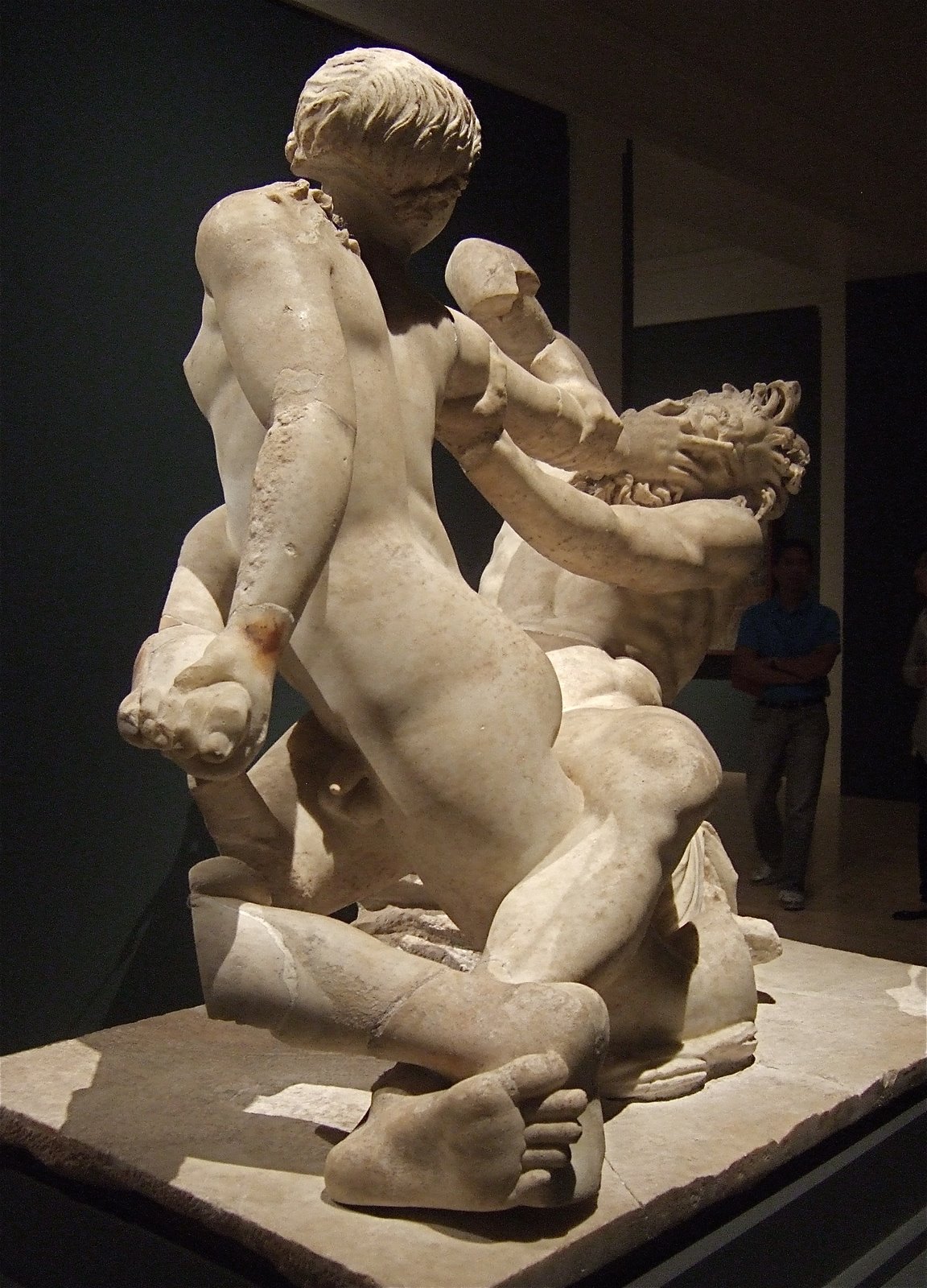
Another sculptural piece discussed in the episode was the Satyr and Hermaphrodite, a type so popular in antiquity that at least 30 replicas survive in marble, bronze, and frescoes. This image was so popular, the reproductions were found across the Roman Empire and likely derived from a Hellenistic model. 

Left: Sculpture of Pan and she-goat, from the Herculaneum villa of the Papyri. National Archaeological Museum, Naples; Right: Hermaphroditus fighting off a Satyr from the Villa of Poppaea, Oplontis. Images from Wikimedia Commons.

This statue group would have likely been displayed in villa (Villa of Poppaea in Oplontis, Italy, and the villa at Chiragan in Gaul) or theatre (Daphne and Side) contexts, and likely among other statues that could be ‘read’ in addition to it. It was very much a public art Retzleff suggests that its interpretation could include: 

“Dionysiac aspects, the reversal of norms, the objectification of the body, the sexual tryst, and the agon.”

Connotations of sexual violence and vulnerability are suggested by the hermaphrodite unclothed state, with her garments below the scene, and a rocky framing- indicating a possible outdoor bathing context.

Dr King also discusses the frescoes from a bathhouse in Pompeii that used erotic imagery above the locker/cubbies in the building’s changing rooms. These have been interpreted as humorous, meant to be read as an aide-mémoire, for where one left their garments. Similar images were found within a Pompeiian brothel, where the context suggests seductive enticements for clients, rather than a funny visual decoration. 

Suburban bath locker frescoes, Pompeii. Left: a foursome; top right: a female and two males; bottom right: male performing cunnilingus.

🎙️ Two Friends Talk History continues to explore the uncomfortable but necessary intersections of ancient narratives and modern storytelling. In this episode, we invite you to listen with openness and care, to reflect on the legacies of representation, and to question how visualisations of sex and violence continue to echo through time.

📚 You can follow Dr Briana King’s work on Academia.edu.
🎧 Subscribe to the podcast via Buzzsprout or wherever you get your podcasts.

Until next time,
— Zofia


To follow the spectacular Dr King’s academic work, check out her page on Academia.edu.

King, B. (2024), ‘Un-silencing the Girls: Critical Classical Reception in Feminist Retellings of Greek Myths’, in Thersites. Journal for Transcultural Presences & Diachronic Identities from Antiquity to Date, vol. 19. 

King, B. (forthcoming), ‘Fatal Attraction: Ancient Precedents, Modern Appropriations’, in Acta Instituti Romani Finlandiae.

Sexual Violence Support Resources

Rape Crisis Scotland: https://www.rapecrisisscotland.org.uk/help-helpline/

For sexual violence or violence against women, the National Domestic Abuse Helpline (0808 2000 247) run by Refuge and Women’s Aid provides 24/7 support and information. 

Additional resources include Rape Crisis England & Wales which offers specialist support for women who have experienced sexual violence. Women’s Aid also offers a live chat service and email support

Visit the Rights of Women website on legal information sheets on a range of issues, including Forced Marriage and the law. Support for victims of ‘honour’-based violence and forced marriage.

References

Images of the pottery we discussed can be found on the Beazley Archive: https://www.carc.ox.ac.uk/XDB/ASP/searchOpen.asp

Cohen, E. E. (2000). “Whoring under Contract: The Legal Context of Prostitution in Fourth-Century Athens.” In V Hunter and J. Edmondson, eds., Law and Social Status in Classical Athens. Oxford. 113-48.

Cohen, E. E. (2006).”Free and Unfree Sexual Work: An Economic Analysis of Athenian Prostitution.” In C. A. Faraone and L. A. McClure, eds., Prostitutes and Courtesans in the Ancient World. Madison. 95-124.

Cohen, E. E. (2014). “Sexual Abuse and Sexual Rights: Slaves’ Erotic Experience at Athens and Rome.” In T. K. Hubbard, ed., A Companion to Greek and Roman Sexualities. Malden, MA. 184-98.

Davidson, J. (1997). Courtesans and Fishcakes: The Consuming Passions of Classical Athens. London.

Gardner, J. (2009), Women in Roman Law and Society. London.

Glazebrook, A. (2017). “Gender and Slavery” in The Oxford Handbook of Greek and Roman Slaveries. Eds. Stephen Hodkinson, Marc Kleijwegt, and Kostas Vlassopoulos. Oxford University Press. Oxford Handbooks Online.

Glazebrook, A. (2016). “Prostitutes, Women, and Gender in Ancient Greece” in Women in Antiquity: Real Women across the Ancient World. Eds. Stephanie Lynn Budin and Jean Macintosh Turfa. Routledge Publishing. 703-13. 

Glazebrook, A. (2011). Greek Prostitutes in the Ancient Mediterranean, 800 BCE to 200 CE. Madison WI: University of Wisconsin Press. (co-edited with M. M. Henry).

Keuls, E. C. (1993). The Reign of the Phallus: Sexual Politics in Ancient Athens. London: University of California Press Ltd.

McGinn, T. A. J. (1998). Prostitution, Sexuality, and the Law in Ancient Rome. Oxford.

McGinn, T. A. J. (2004). The Economy of Prostitution in the Roman World: A Study of Social History and the Brothel. Ann Arbor.

Moses, D. C. (1993), “Livy’s Lucretia and the Validity of Coerced Consent in Roman Law,” in Consent and Coercion to Sex and Marriage in Ancient and Medieval Societies. Dunbarton Oaks.

Retzleff, A. (2007). The Dresden Type Satyr-Hermaphrodite Group in Roman Theatres in the AJA, Vol. 111, No.3, July. Pp. 459-472. 

Stewart, A. F. (1995). ‘Rape?’ In Reeder, E. D. (Ed.). Pandora: Women in Classical Greece. Princeton: Princeton University Press. 74-90.

Thomas, S. (11 June 2019). “‘I’m not watching this’: Film’s brutal account of Australia’s colonial history sparks walkout”ABC News. Retrieved 11 March 2021.

TFTH Digital Archaeology with Florence Felsheim

In the latest episode of Two Friends Talk History, I invited the brilliant Florence Felsheim, a PhD candidate in Classics at the University of St Andrews, for a fascinating deep dive into the intersection of virtual reality (VR) and cultural heritage. Together, they explore how technology is transforming the ways we visualise and interpret the past—and why that matters for both academics and the general public.

The episode kicks off with Florence introducing her work and academic journey. As a scholar specializing in ancient history and human trafficking in ancient Greece and Rome, Florence brings a nuanced perspective to the conversation. But her passion for technological innovation in cultural heritage projects is what makes this discussion particularly captivating.

Florence and Zofia delve into the evolution of virtual archaeology—the application of VR and augmented reality (AR) to reconstruct and visualize historical sites, artifacts, and environments. They discuss how initiatives like the Seville Principles emerged to create ethical and methodological guidelines for these digital reconstructions. These principles emphasize historical accuracy, interdisciplinary collaboration, and transparency, aiming to balance scientific integrity with the creative liberties of visual interpretation.

Why Do Digital Reconstructions Matter?

Throughout the conversation, Florence and I reflect on the “so what?” of VR in archaeology—why does it matter beyond the digital novelty? Florence makes a compelling case for the power of immersive reconstructions to democratize access to heritage. Through VR, people who might never visit physical archaeological sites can explore ancient cities, temples, or objects from the comfort of their homes or local museums. 

The conversation also highlights how VR can provide new layers of interpretation. For example, by digitally reconstructing a ruined temple, researchers can experiment with lighting, architectural features, and hypothetical decorations, offering new insights into how these spaces might have appeared and been experienced by ancient people.

One of the most thought-provoking parts of the discussion is the tension between historical accuracy and artistic license. Florence discusses how art and accuracy can vary through different approaches, questioning where the line should be drawn between creative interpretation and factual representation. The episode explores whether reconstructions should prioritise strict accuracy or allow for some imaginative flair to engage wider audiences.

In our discussion , we touch on a few projects that are really interesting, that you should definitely check out:

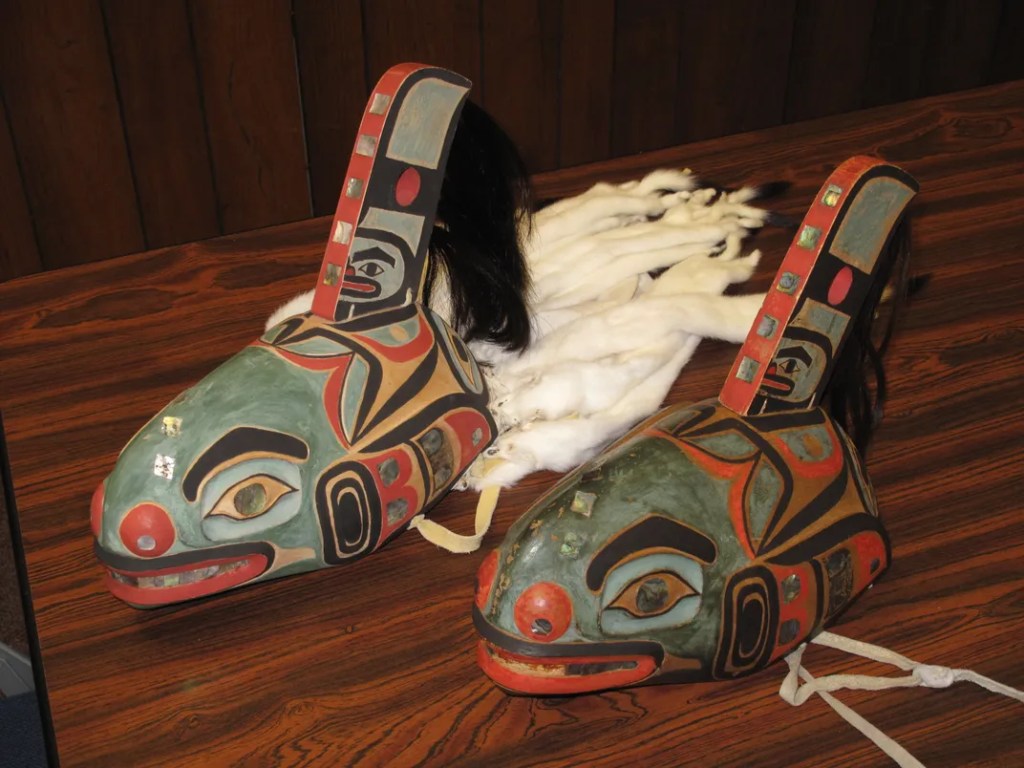
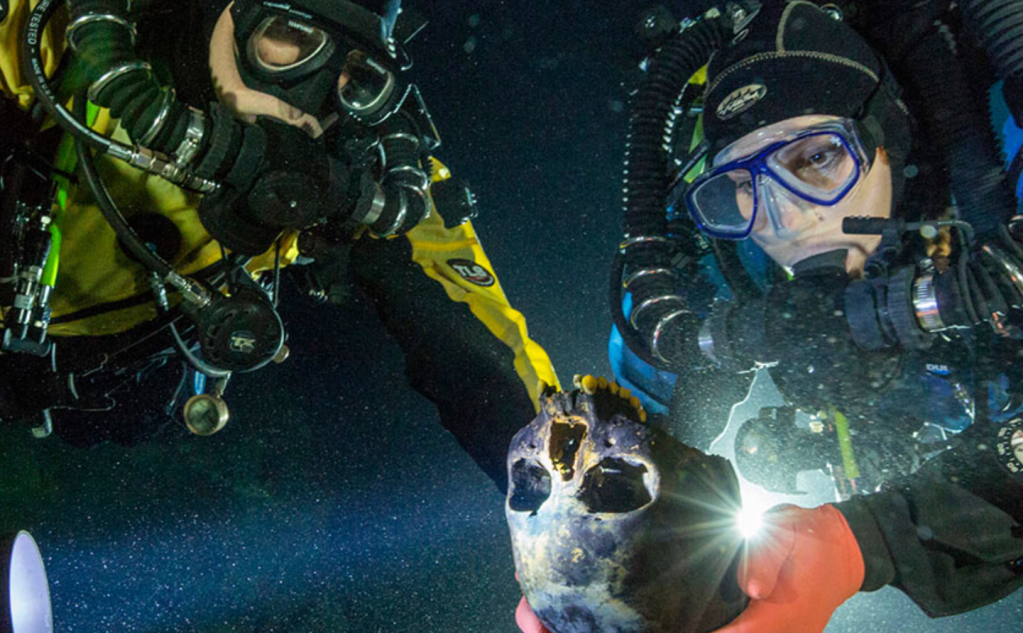
(Photo: Smithsonian Online Magazine, September 11, 2017)

To read the Smithsonian article and find out more about the Tlingit Dakl’aweidi clan’s Killer Whale clan crest hat, or Kéet S’aaxw (photo below from isplayed together at the 2012 clan conference in Sitka, Alaska), click here.

For more information about the virtual environment analysis of the fantastically cool submerged Late Pleistocene cave site in Quintana Roo we discussed, click here.

(Photo https://hoyonegro.ucsd.edu )

Challenges and Opportunities in Virtual Heritage

Despite its immense potential, VR in cultural heritage is not without challenges. Florence and Zofia discuss several hurdles:

  • Resource Intensity: High-quality VR reconstructions require significant technical expertise, funding, and computing power, which can limit accessibility for smaller institutions.
  • Authenticity vs. Engagement: The challenge of making VR experiences both educational and entertaining without distorting historical facts.
  • Interdisciplinary Collaboration: Effective virtual archaeology demands teamwork between archaeologists, historians, engineers, and computer scientists—fields that don’t always speak the same language.

However, the conversation also highlights the exciting opportunities:

  • Public Engagement: Museums and educational institutions are increasingly using VR to create interactive exhibits, sparking new interest in ancient history.
  • Research Innovation: Scholars can use VR models to test theories about ancient structures, city planning, or daily life.

If you’re fascinated by history, technology, or the future of cultural heritage, this episode is a must-listen. Florence’s insights into the ethical and methodological complexities of virtual archaeology will leave you with a deeper appreciation for the ways technology is reshaping our connection to the past.

Tune in to Two Friends Talk History to explore how VR is breathing new life into ancient worlds—and what that means for historians, artists, and the curious minds who love to explore them.

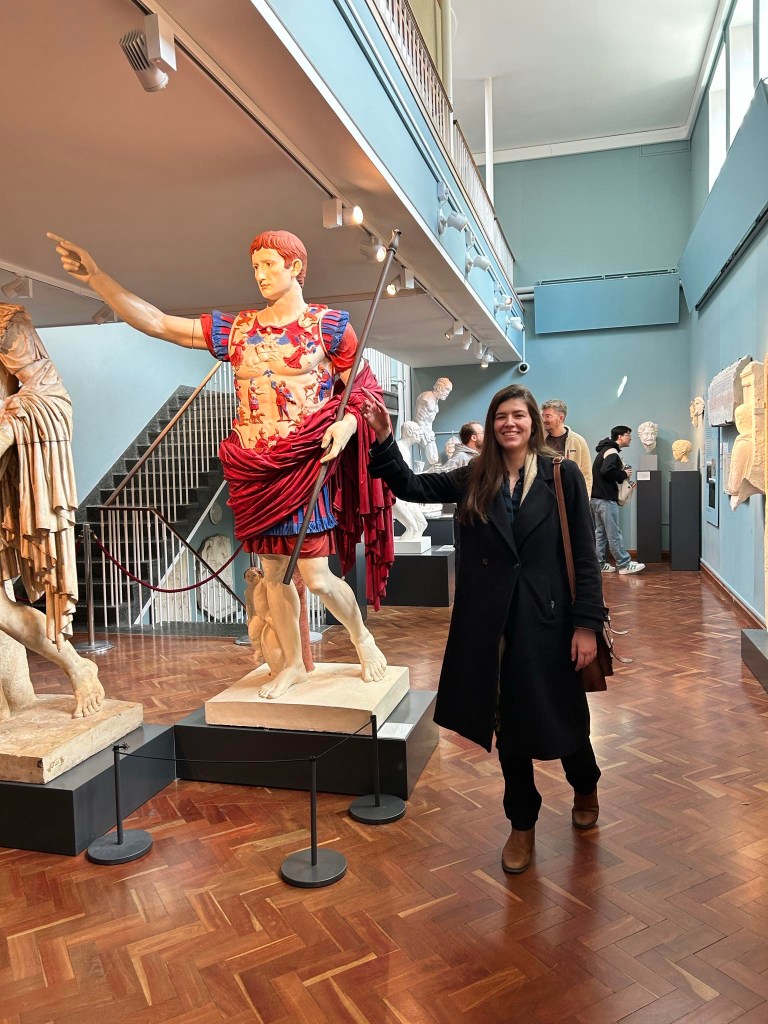
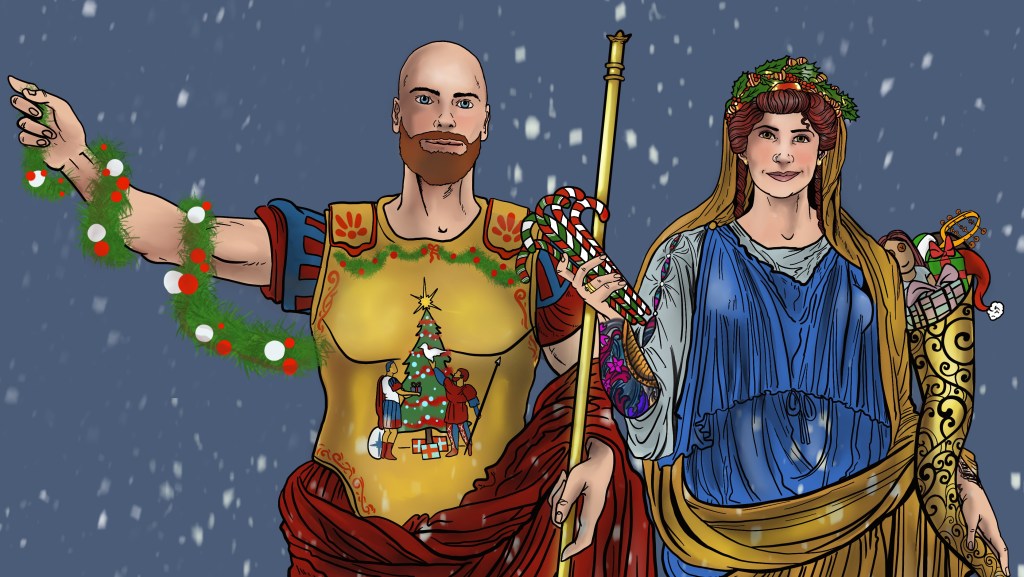
(Photo: The fabulous Florence, meeting our Augustus and his amazing technicolour dream cuirass)!

Sources

Bendicho, V.M.LM., ‘International Guidelines for Virtual Archaeology: The Seville Principles’, in Corsi, C., Slapšak, B., Vermeulen, F. (eds), Good Practice in Archaeological Diagnostics. Natural Science in Archaeology, 2013, 269-283. https://doi.org/10.1007/978-3-319-01784-6_16

Barcelo, J., ‘Visualizing what might be. An introduction to virtual reality in archaeology’, in Barcelo, Fonte and Sanders(eds), Virtual Reality and Archaeology, 2000, 9-36. https://www.researchgate.net/publication/200018330_Visualizing_What_Might_Be_An_Introduction_to_Virtual_Reality_in_Archaeology

Watterson, A., ‘Beyond Digital Dwelling: Re-thinking Interpretive Visualisation in Archaeology’, in Open Archaeology 1 (1), 2015, 119-130. https://doi.org/10.1515/opar-2015-0006

Special interview with Dr Alice König -Part 2: Introducing the Ancient Peace Studies Network

In a world often dominated by narratives of conflict, it can be easy to overlook the significance of peace—what it means, how it is built, and how it is represented. In the latest collab with the Visualising War and Peace podcast and Two Friends Talk History, director of the project and host, Dr. Alice König, offers a compelling exploration of ancient peace studies. Her insights reveal why understanding how past societies visualised and practiced peace can offer valuable lessons for today’s world.

If you haven’t yet tuned in, this episode is a must-listen for anyone interested in history, conflict resolution, and the power of storytelling to shape both ancient and modern societies. Here’s a glimpse of the fascinating conversation that awaits you.

From Visualising War to Visualising Peace

When Dr. König and her colleague, Nicolas Wiater, first launched the Visualising War project in 2017, their goal was to explore how representations of war throughout history have shaped cultural perceptions of conflict. However, as they delved deeper, they realized that one side of the story was missing.

Why was there so much emphasis on war, but so little on peace?

This observation inspired the expansion of the project into Visualising War and Peace, creating space to explore how peace and peacebuilding have been imagined, experienced, and remembered. Through this new lens, König aims to challenge the imbalance in historical narratives and bring peace studies into the spotlight.

Special Episode: The Ancient Peace Studies Network with Alice König Two Friends Talk History

In part 2 of our collaboration, Zofia guest-hosts the Visualising War and Peace Podcast to interview project founder, Dr. Alice König. In this conversation, Alice she unveils the groundbreaking Ancient Peace Studies Network—the first of its kind dedicated to examining how peace was understood, experienced, and represented across different ancient cultures.Discover why peace narratives have received far less scholarly attention than war stories, and how Dr. König's team is working to change that by investigating whose voices and experiences are reflected in ancient accounts of peace and reconciliation.What can ancient approaches to conflict resolution teach us about modern peacebuilding? In this thought-provoking special episode, we explore how elite-centered peace narratives shaped societal attitudes in antiquity and continue to influence our understanding of peace today. Dr. König reveals how her interdisciplinary network is "reading against the grain" of ancient sources to uncover ordinary people's lived experiences of peace—voices that have been historically marginalized but might offer valuable insights for contemporary peace literacy.Don't miss our conversation about bridging academic research with creative outreach, as Dr. König shares details about the network's collaboration with a professional theater company, NMT Automatics, and the upcoming multi-authored publication, "New Visions of Ancient Peace." This episode offers a perfect blend of historical scholarship and practical application, demonstrating how ancient wisdom might help us visualize and build more effective paths to peace in our modern world. We hope you enjoy this collab episode!If you would like to get in touch with Alice regarding her work, please visit the University of St Andrews' Visualising War website and the Visualising Peace Project.The music for the episode was composed by Jonathan Young, and Zofia Guertin mixed the episode. To get in touch and find out more about Two Friends Talk History:Find us on Instagram & TwitterSupport us through PatreonBuy our merch on RedbubbleExplore more resources and topics about the ancient world on ArchaeoArtistIllustration by Zofia GuertinIf you'd like to get in touch, email at twofriendstalkhistory@gmail.com. 

The Rise of Ancient Peace Studies

One of the most exciting aspects of the podcast episode is Dr. König’s introduction of the Ancient Peace Studies Network. This groundbreaking initiative, which she recently founded, is the first of its kind. While ancient military history is a well-established field, ancient peace studies is still in its infancy.

In the podcast, Dr. König explains that the network aims to:

  • Foster interdisciplinary research by bringing together scholars from both ancient and modern peace studies.
  • Challenge the dominance of elite perspectives in historical sources, seeking to reconstruct the lived experiences of ordinary people in times of peace.
  • Generate new insights into how concepts of peace were defined, visualized, and practiced in antiquity.

The network’s ambitious plans include the publication of a multi-authored book titled New Visions of Ancient Peace, which will present fresh perspectives on peace narratives and their real-world implications.

Stories of Peace: What Do We Imagine and Why?

One of the most thought-provoking segments of the interview focuses on peace storytelling. Dr. König highlights how certain depictions of peace became dominant in antiquity while others faded into obscurity. This disparity raises intriguing questions:

  • Why were some peace narratives celebrated while others were ignored?
  • How did stories of peace shape people’s expectations and experiences of stability or conflict?

In the podcast, Dr. König explains that ancient sources often reflect elite biases, focusing on peace as a political achievement of rulers and conquerors. Yet, by reading against the grain, scholars can reconstruct glimpses of peace from the perspective of ordinary citizens—farmers, artisans, and families—who lived through these times of fragile stability.

Why This Matters: The Real-World Impact of Peace Studies

As Dr. König eloquently argues, studying ancient peace is not merely an intellectual exercise—it has real-world implications. By expanding the scope of peace studies to include the ancient world, we gain new insights into how societies have constructed, preserved, and sometimes failed to maintain peace.

In a time when the world faces ongoing conflicts and the challenge of peacebuilding, looking back to the past can provide valuable lessons. The podcast episode leaves listeners with a powerful message: the stories we tell about peace—whether ancient or modern—shape the realities we strive for.

Don’t Miss Out – Listen to the Full Interview

This episode of the Visualising War and Peace podcast offers a rare opportunity to rethink how we conceptualise peace. Dr. Alice König’s passion for unearthing forgotten peace narratives and her commitment to interdisciplinary collaboration make for a captivating conversation that will leave you with plenty to reflect on.

🎧 Tune in now to gain a deeper understanding of the history of peace and its enduring relevance today. And if you find the episode as compelling as we did, share it with friends, colleagues, and anyone interested in exploring the human experience of peace—past and present.

If you would like to check out the volume, Visualising War Across the Ancient Mediterranean, out this month, you can purchase it here.

You can follow the Visualising War and Peace project on social media or get in touch directly by emailing: vispeace@st-andrews.ac.uk.

✨ Let’s keep the conversation going—and keep visualising peace.

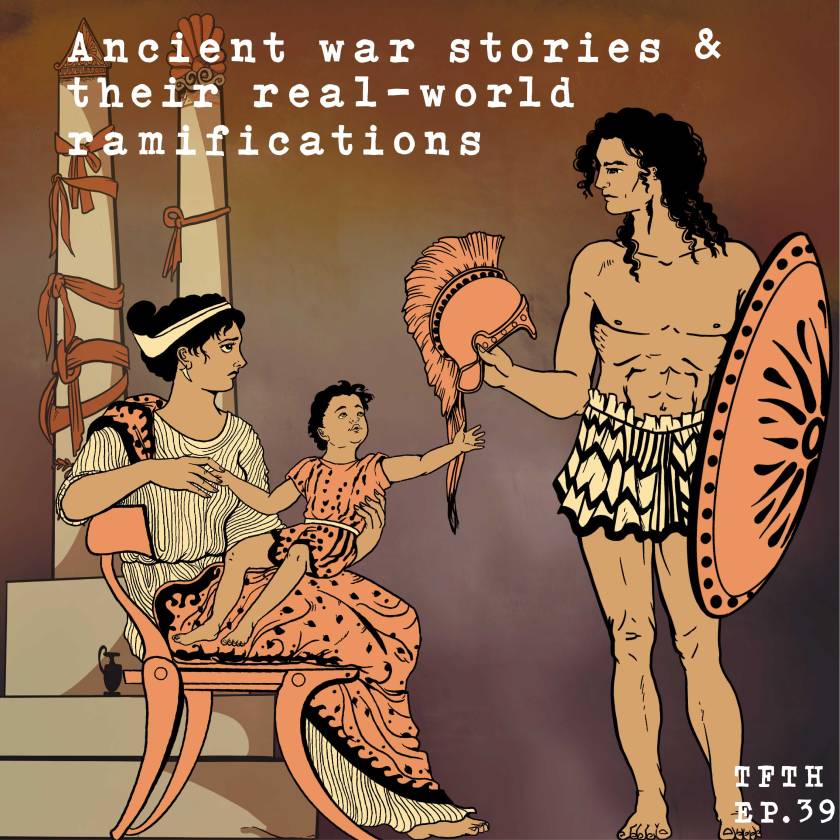
Special interview with Dr Alice König -Part 1: Ancient war stories and their real-world ramifications

To launch series 4 of Two Friends Talk History, I was very fortunate to interview Dr Alice König, for this special crossover episode. Alice’s is the dynamic host of the Visualising War and Peace Podcast, a project that researches ancient habits of visualising war and peace through discussions with multi-disciplinary creators, writers, researchers, soldiers, curators and many more. I spoke with Alice in 2023 about her project as it was then in-progress; in today’s discussion, she reflects on larger themes and the forthcoming publication about the Visualising War and Peace project that is being published by Routledge, titled, Visualising War across the Ancient Mediterranean: Interplay between Conflict Narratives in Different Genres and Media (Routledge 2025).

Podcast art by: Zofia Guertin

Special Episode: Ancient war stories and their real-world ramifications with Alice König Two Friends Talk History

The upcoming volume covers a broad geographic range of topics from several ancient cultures including Jewish, Greek, Roman, Persian and Christian, to unpick how modes of visualising war can be found intertextually across space and time. This innovative series also presents readers with a way to consider pivoting from traditional means of visualising the past and warfare through a detailed methodology in the introduction. It encourages readers and researchers of the future to study conflict narratives with new interrogative methods.

In part two, I will be interviewing Alice about how we tackle the study of war’s aftermath, conflict resolution, peacebuilding and peace itself were understood and experienced in different cultures and communities across antiquity. 

Please join us next time!

Investigating the Severans on TFTH

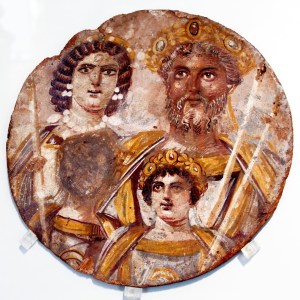
This week on Two Friends Talk History, I was joined by expert in the field of Roman history and Classics public engagement powerhouse, Dr Alex Imrie. Dr Imrie’s doctoral thesis concerned the Constitutio Antoniniana (Antonine Constitution), the edict of mass enfranchisement promulgated by the infamously violent emperor Caracalla, and is a self-described Dio nerd. Dr Imrie is a Tutor in Classics at the University of Edinburgh and the National Outreach Co-ordinator for the Classical Association of Scotland. The CAS has been spearheading free and accessible learning for true beginners to the topic of Classics, and Dr Imrie brings together talented and interesting new scholars to share their experience and time with the public.

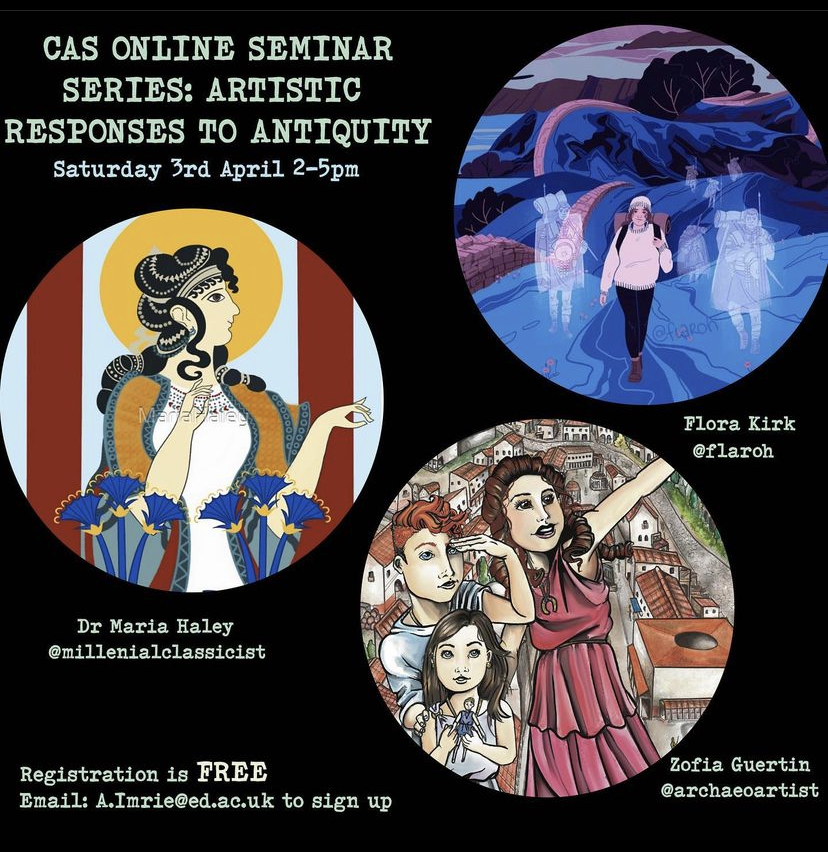
Last year, Dr Imrie and I collaborated on a seminar hosted by the Classical Association of Scotland called, Artistic Responses to Antiquity. We organised this event to host discussions from several artists based in the UK who worked in various mediums to create art inspired by the ancient world. Presenters included Dr Briana King (University of St Andrews), myself, Zofia Guertin (PhD Candidate – University of St Andrews) @ZofiaAstrid, Dr Maria Haley (University of Leeds/University of Manchester) @marianuncsum, and Flora Kirk (MA, University of Durham) @flaroh. The diversity of backgrounds and approaches was really exciting to see. The seminar opened with a discussion of ancient styles and techniques in art, then on to Classical Reception and its ongoing relevance to the modern world. As Dr Imrie and I discuss in the podcast, the final session of the seminar involved thirty or so scholars, interested members of the public, and even some wee ones! The turn out was fabulous, and the art that our attendees created in session three was really fun.


Several months ago, we reconnected to record an episode of TFTH, and dive into the tumultuous history of the Severan dynasty. Admittedly, I was not as familiar with the political and military side of their reign, and it was fascinating to hear about the game of whack-a-mole among generals that eventually led to Septimius Severus taking control of the Empire from 193-211 CE.

Our conversation follows the ups and downs of the imperial familial relationships, particularly the crucial turning points between Caracalla and Geta who were also very keen to exterminate one another. Dr Imrie brings humour and humanity to Caracalla and his family, an emperor that is typically lumped into the ‘bad emperor’ category, and offers a more nuanced reading of these individuals. It was a joy to record, and I hope you take a listen!

The Severans with Alex Imrie Two Friends Talk History

If you would like to hear more from Dr Imrie, please don’t hesitate to get in touch via Twitter @AlexImrie23 or edinburgh.academia.edu/AlexImrie. In the interview, we discuss his publication on Caracalla’s supposed use of the Macedonian phalanx, which you can read more about HERE

To find out more about the CAS and register for upcoming 2023 programmes, please check out their website: https://cas.wp.st-andrews.ac.uk/. The upcoming seminars include Greek, Latin and Egyptian Hieroglyphics taught online.

Thank you for reading!

Kefalonia’s Tzanata tholos tomb and Bronze Age heritage

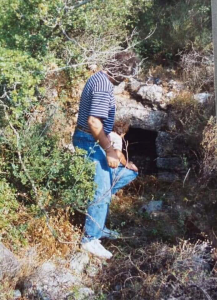
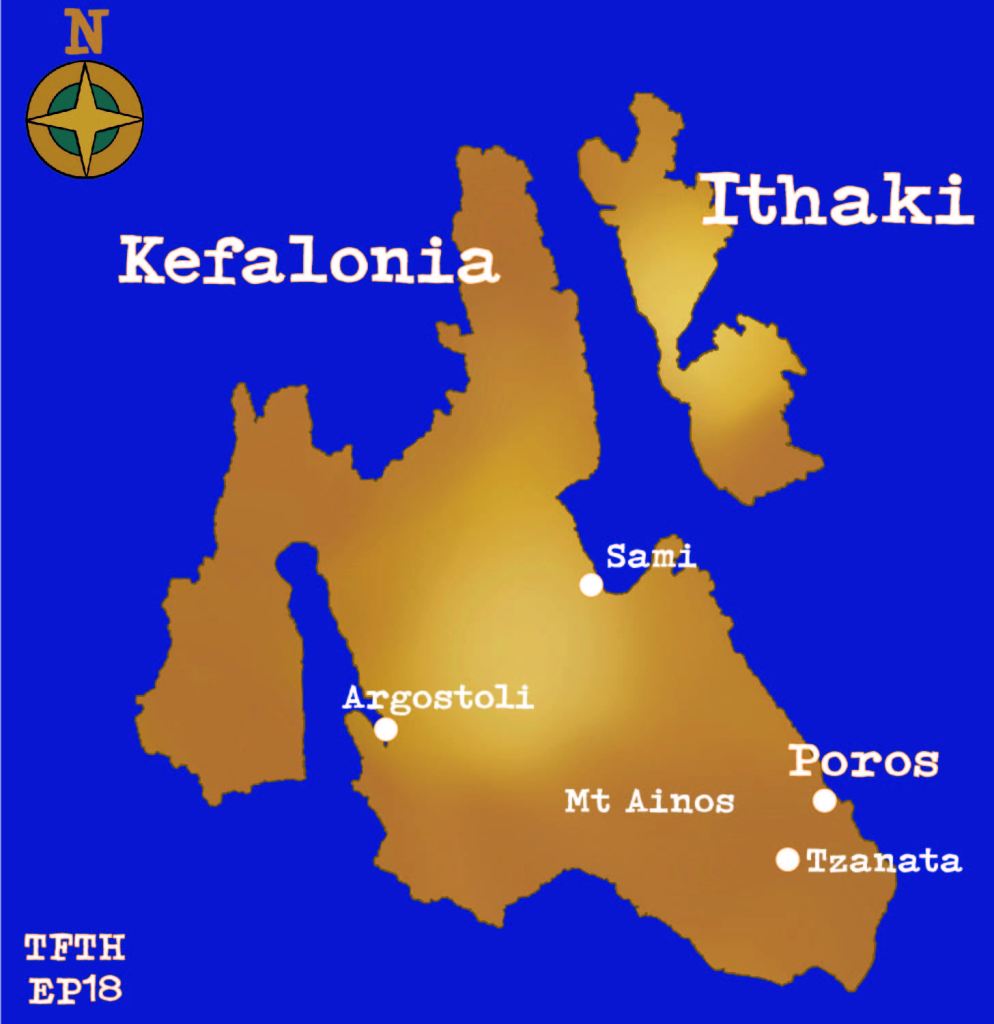
In this week’s episode of Two Friends Talk History, I have the great privilege of interviewing heritage heroes, Makis and Hettie Metaxas from Poros, Kefalonia; two very dear people I met in 2008 while excavating at the ancient necropolis of Pronnoi as an undergraduate. Makis served many years as mayor of Poros, in southeastern Kefalonia, and the mayor of Kefalonia, and continues his passion for monument preservation as the President of the Prehistoric Studies of Kefalonia Society – the perfect role for the man who discovered of the famed Tzannata tholos tomb over thirty years ago.

Henriëtte Metaxas-Putman Cramer, is equally passionate about the conservation and heritage promotion of the island, and even wrote the go-to Travel Guide (now in 8 languages!) for visiting Kefalonia, has worked across many types of media promoting the island and its archaeological sites. After living and working in Poros for several decades, she saw a need to create a guide to the island which brought the richer details of her experience to light for visitors.

Speaking over Zoom this spring, we caught up after ten years since meeting on excavation in the necropolis of ancient Pronnoi. We discussed the exciting discovery of the largest known tholos tomb in the Ionian sea, the responsibility of heritage preservation and conservation, and their hopes for the future. For our full discussion you can listen here: 

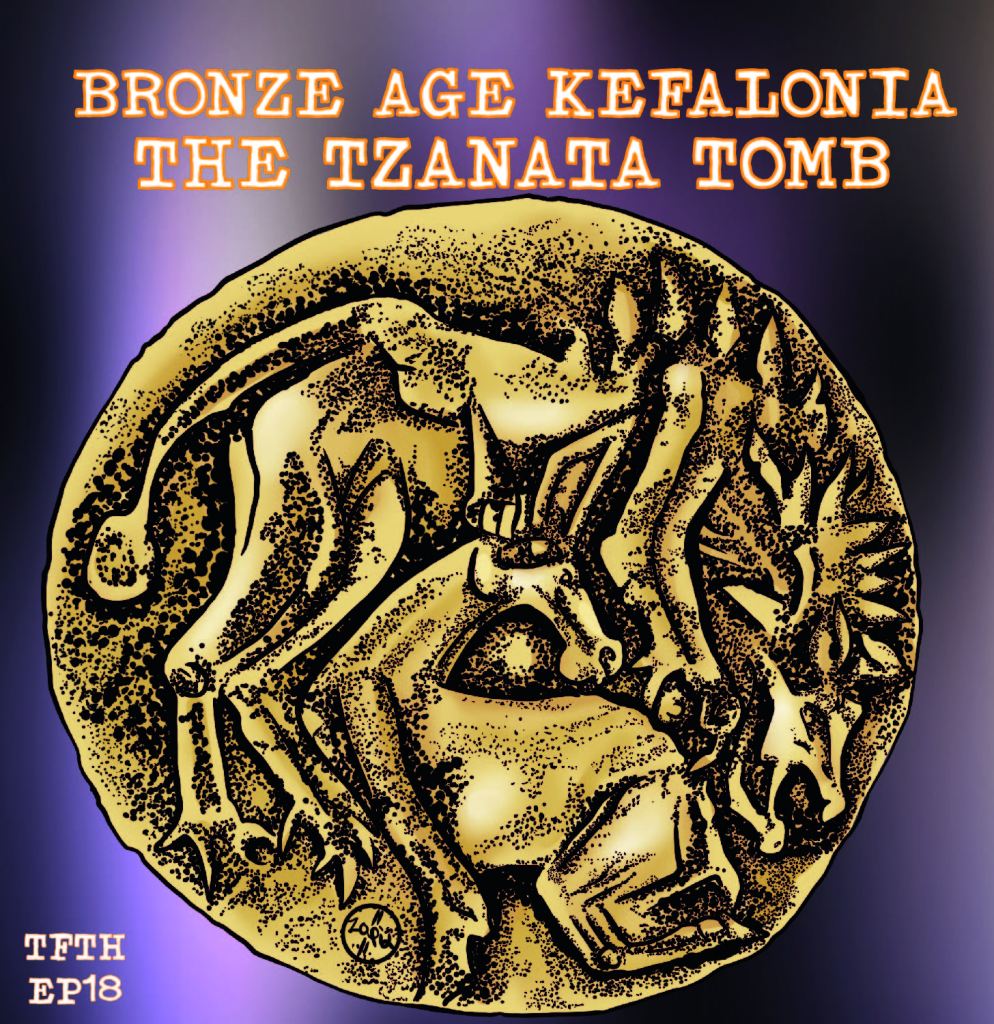
Bronze Age Kefalonia: the Tzanata tomb with Hettie and Makis Metaxas Two Friends Talk History

Recent Developments!

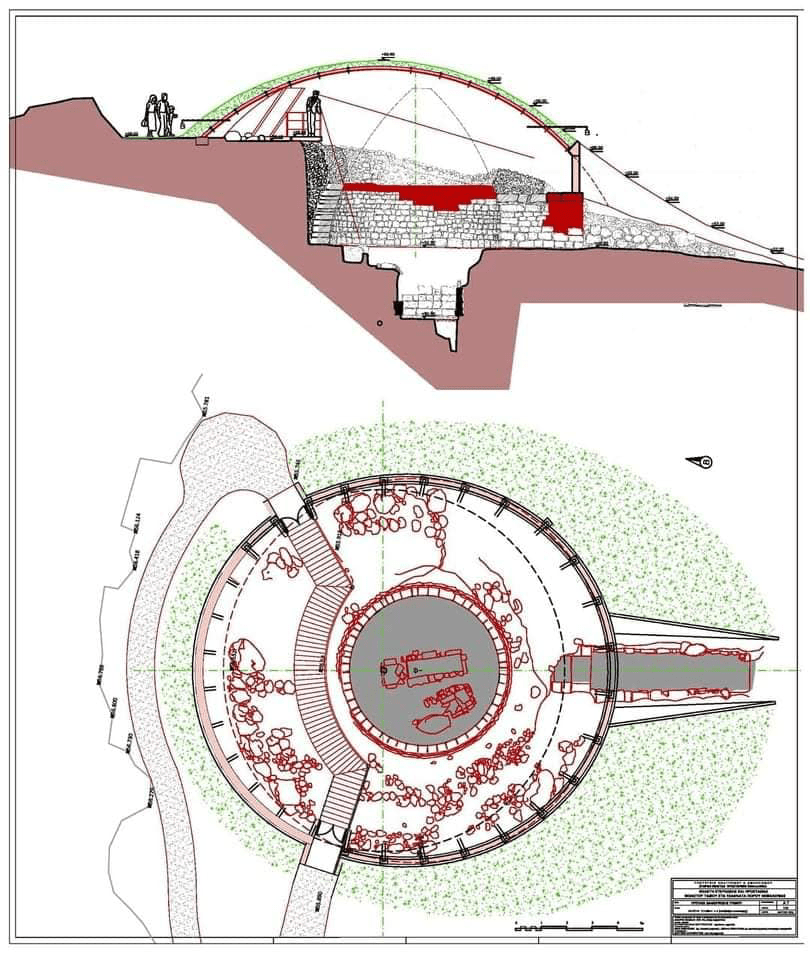
Making news on June 11, 2021, after many years or public outreach, fundraising and conservation advocacy, the Metaxas’ and their colleagues celebrated the news that the Greek government confirmed the scheme to build a gabled, protective roof and access for the archaeological site around the tholos tomb. The roof and maintenance will be funded by the Prehistoric Studies of Kefalonia Society according to Stavros P. Travlos, the Deputy Regional Governor of Kefalonia and Ithaca.  This welcome news means the much needed conservation work will finally happen for the monument, and bring with it considered infrastructure of tourists to safely visit the site. This work will also raise awareness of Kefalonia’s place Bronze Age Mediterranean history, through it’s position as one of the nodes in the network of regional kingdoms for the period.

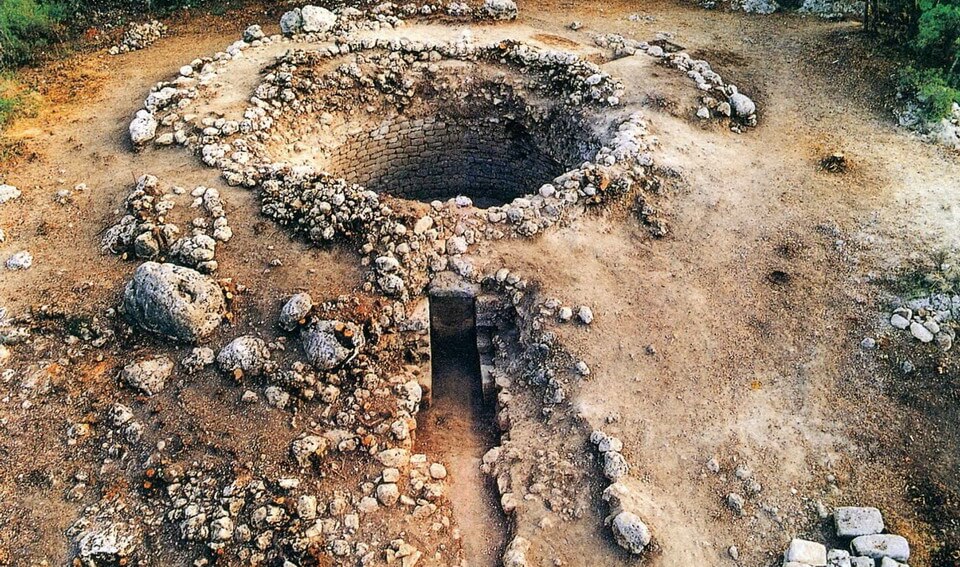
What is the Tzannata Tomb? 
In the Mycenean period, elites burried their dead in large beehive shpaed tombs.  The Tzannata tholos tomb measures 6.8 m in diameter to a maximum heigh of nearly 4m, making it the largest known tomb to date in the Ionian Sea. Inside the tholos – uniquely – were the burials underground, over generations, stacked on top of one another and from DNA testing, believed to be a related kin group.


It is believed that this monument’s erection was linked to an emergence of a powerful local elite in southern Kefalonia, in the Mycenaean period, that used shared burial practices of the mainland. With the discovery of this tholos tomb some thirty years ago, it opened up many questions about the orientation of powers among the island’s elite, it has remained of interest to the local community and international researchers alike, hoping to answer questions about the Bronze Age centres of power in the Mediterranean and how Kefalonia and Ithaka fit into the landscape of Mycenaean palace culture in the period. 

For more information you can follow Hettie and Makis on Facebook groups Discover Kefalonia and Ithaki and their website Homeric Ithaca. They are regularly updating their pages with new and wonderful things going on in Kefalonia, highlighting a truly magical island.

August 28, 2024 Update

A documentary series covering the Tzanata Tomb was released today on PBS called Odysseus Returns! This is super exciting, their hard work is paying off. It is even narrated by Morgan Freeman!

Tis the Saturnalia season!

Tis the season when we celebrate community and the change of the year! How did the Romans celebrate the end of the year?

The Roman celebration of Saturnalia was held for several days in mid-December to celebrate the passing of seasons, with its roots in the worship of the agricultural god Saturn. Saturn was syncretised with the Greek Kronos as the Romans came to control Greece, becoming increasingly invested in their gods. Saturn is often depicted as an older bearded man holding a scythe, an acknowledgement of his agrarian roots. The temple of Saturn in Rome stood prominently in the forum and is evidenced to this day by eight impressive columns and a partial podium.

From the late Republican period (the last 1oo years or so BCE) the midwinter celebration officially grew from three days to five in the Principate (December 17th to December 23rd). These were just official trends as it’s generally believed that unofficially it was a week, a bit like now depending on your employment. For the Romans work, studies and legal actions came to a halt and people were ready to party!

In Lucian’s Saturnalia, he speaks with the voice of Saturn in dialogue with a priest, observing how the revelries in his name should take place among the Romans: gaming, dancing, song and drinking were all part of the celebration of Saturnalia; it also involved things familiar to us today like decorating homes with greenery and wearing bright and colourful clothing (synthesis), like ugly sweater parties! Lucian’s Saturn is a very reasonable god who lays out three “laws” for gifting, celebrating and banqueting, emphasising fairness in all measures and not being compelled to act or gift beyond your means.

The King of Saturnalia

A king of Saturnalia acted as the ‘Lord of Misrule’ (like Carnivale) in these celebrations. Elected as the mock king, the Saturnalicius princeps, this agent of acceptable chaos in the household would walk the line between being a cheeky chap and straight up humorously (presumably) insulting guests and members of the household. Bear in mind that Roman households could be somewhat larger than ours – the nuclear family at the centre could include grandparents, cousins, adopted family members, children from other marriages, guests and the enslaved household labourers. Many of the societal norms were relaxed and played with in the household, where during this period the enslaved could eat at the head of the table with those who owned them taking a lower status position. Women too could mingle with men (in some circumstances) a little more freely and could hang together and gamble.

The fun frivolity of Saturnalia drinking parties!
Gifts for Saturnalia

Gift-giving was an important part of Saturnalia. Gifts of high value were not necessarily what one would expect, generally the humour of lower cost gifts was appreciated- like trolling a friend with a joke gift. Catullus wrote of receiving epically bad poetry for a gift and it is fun to imagine the kind of hilarious insults he possibly wrote for friends for their gifts, like getting ‘read’ by Oscar Wild but smuttier. Saturnalia gifts could include: sausages, dried fruit, wine, piglets, wax candles (cerei), dolls, toys, books, statues, tools, exotic pets and more!

The live piglet is especially appealing !
The last day of Saturnalia

As all good things must come to an end, so too did the annual revels of the Romans. On the last day of Saturnalia one would give sigillaria – terracotta or wax figurines, shaped in the likeness of familiar deities, mythical figures or easily caricatured types (grotesques). The day itself was called ‘Sigillaria‘; the gift type and gift-giving influenced the day’s name. Much like Boxing Day which one theory suggests may have started (according to the OED) as the first weekday after Christmas when postmen, delivery workers and servants of various types would receive a Christmas box, in which was some type of gift or tip. Possibly due in part to the ways gods were part of the everyday lives of Romans, and worshipped in the home in small devotional figures – the Lares – as guardians of the home, it is not surprising that a popular gift would include their likenesses in inexpensive small gifts, conferring further good luck and protection. For the wealthy, these gifts could be made from costly materials like gold or silver. Given their popularity, someone who crafted and sold this merchandise was called a sigillarius. Vendors were quite busy at this time of year, setting up stalls like the Christmas markets we are familiar with today.

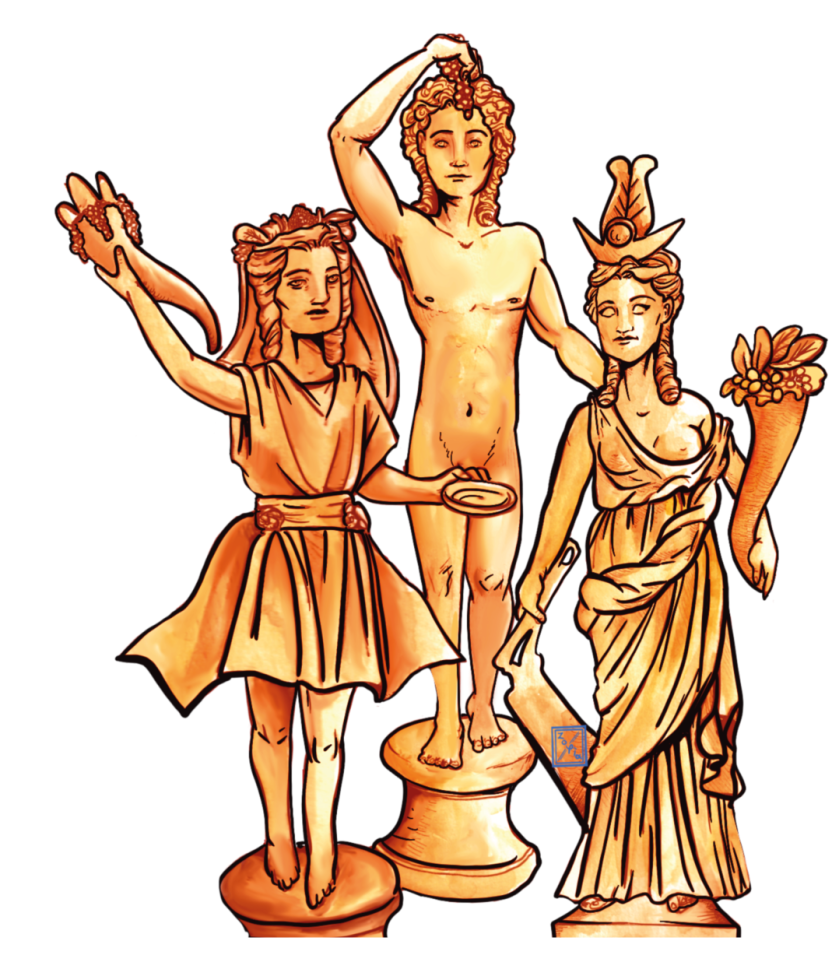
The Lares could be quite varied: a Lar holding a cornucopia from Axatiana, Dionysus and Isis Panthea (all goddess).

The Romans had many festivals throughout the year, and a few days after the wild revels of Saturnalia, they celebrated the sober and solemn Compitalia, another festival in which metaphoric beginnings and endings are associated with the end of the year. Named after compita (crossroads), the recently revelrous enslaved peoples would offer sacrifices on behalf of the households within the neighbourhoods they lived to the Lares of the crossroads. Perhaps it is fitting to have a week of revels which brought families and friends together be followed up with a more sober festival which celebrated the bonds of community. Saying goodbye to the year is always fraught with bittersweet reflections with this year being notable in that regard, as surely in many world-changing years before the communities celebrating these rites would join together to celebrate and pray for better times ahead.

Compitalia fresco from exterior wall of a building in Pompeii, 1st c. CE

Stay safe and thank you for reading!

Io, Saturnalia!

Xox Archaeoartist (Zofia) and Mr Archaeoartist (Chris).

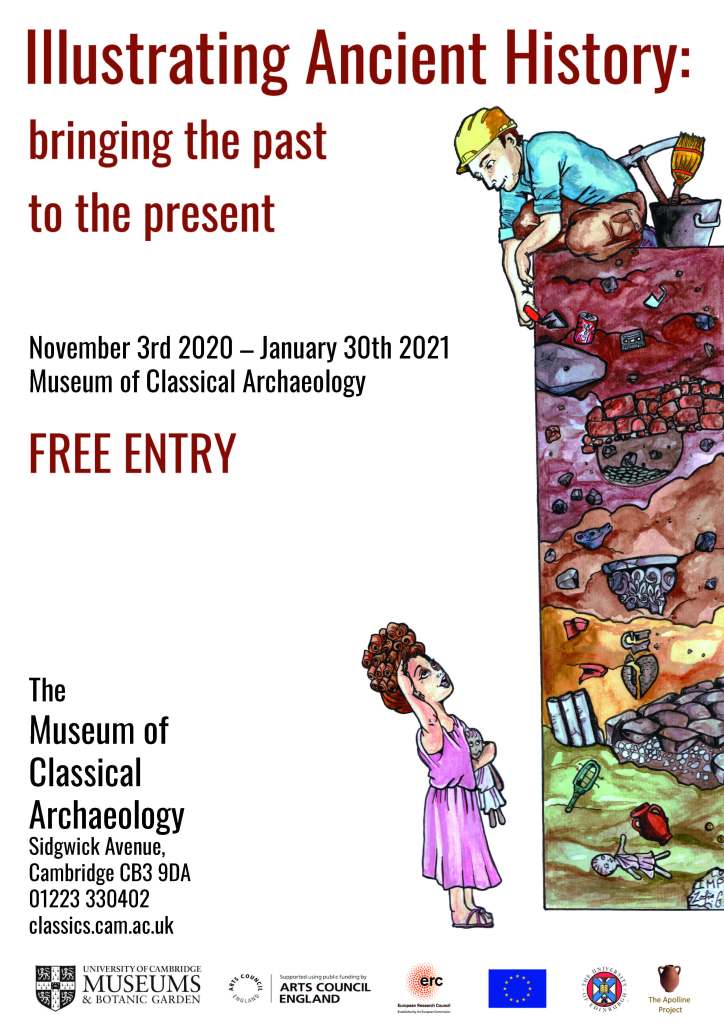
Illustrating Ancient History: Bringing the Past to the Present Exhibition Survey

Do you have 2 minutes for a survey about archaeology & illustrations? We would love to hear from YOU!

As part of the Cambridge Museum of Classical Archaeology exhibition “Illustrating Ancient History”, we have a research questionnaire about the relationship between the public and their archaeological remains! This is relevant to visiting any site from any cultural or historical period.

We would be grateful for your participation & sharing this!