Classical Reception of Sexual Violence in Antiquity in Modern Visual Media

In the latest episode of Two Friends Talk History, Zofia and Dr Briana King return to our discussion into Classical Receptions. This time, we go into some of the heavier subject matter that we felt deserved its own episode. Returning guest, Dr. Briana King, joins me to unpack the dark and often overlooked threads of sexual violence in ancient history and its modern reinterpretations. We discuss ancient precedents for modern cinematic and television representations of sexual violence – made spectacle – in retellings of Roman narratives.

We’re diving deep into how classical reception shapes public perception—and why that matters. This is a heavy but essential conversation about power, misrepresentation, and the stories we choose to tell. 🏛️

📢 Trigger warning: this episode discusses sexual violence and may be distressing to some listeners. Please listen with care.

Classical Reception of Sexual Violence in Antiquity in Modern Visual Media with Briana King Two Friends Talk History

Dr King has argued through her doctoral research, and in her more recent publications, that these scenes can be interpreted as real reflections of actual events. And perhaps, these visualisations were part of shaping realities that they depicted in antiquity, as they appear to be doing now.

Due to copyright, I have drawn the images that we discussed in the episode, since those available for viewing on the Beazley archive are difficult to make out at times.

  • (Left) Athenian red-figure stamnos; c. 430 BCE; Two men lifting a hetaira between them; Polygnotos Painter; Musee du Louvre Cp274/Cp9682; Beazley 213398.
  • (Top Right) Athenian red-figure kylix; c. 510-500 BCE; Orgy scenes; Pedieus Painter; Louvre G13; Beazley 200694.
  • (Bottom Right) Athenian red-figure cup; c. 490 BCE; Orgy scenes; Brygos Painter; Florence 3921; Beazley 203929.

In our discussion, several sculptural pieces from the Roman period were discussed, as representative of the brutal or depraved aspects of Roman society. In 2000 the Museo Nazionale di Napoli opened the “Secret Cabinet”, a special room that had for over a hundred years kept items found in Pompeii that were deemed “pornographic” away from the average viewing public. That these items are still held in this space, though the doors have been opened, still suggests that this is how we ought to understand them, not unlike their first museum display context in the Portici Palace, in Naples.  

Taken from their original contexts, their use as emblems of that can be understandable, but as with all analysis of antiquity, context is key. Items like Pan and the she-goat (found in 1752) were, like many erotic images from the Roman period, in garden or outdoor spaces within a Roman villa. Sexually explicit sculpture – sometimes violent, could be commonly found within Roman society, and was not locked away in secret viewing rooms – it was open access.

Pan and the she-goat were found in a garden, south of the pool in the Villa of the Papyri, in Herculaneum. The garden was filled with several sculptures that included erudite philosophers, animals, and gods. 

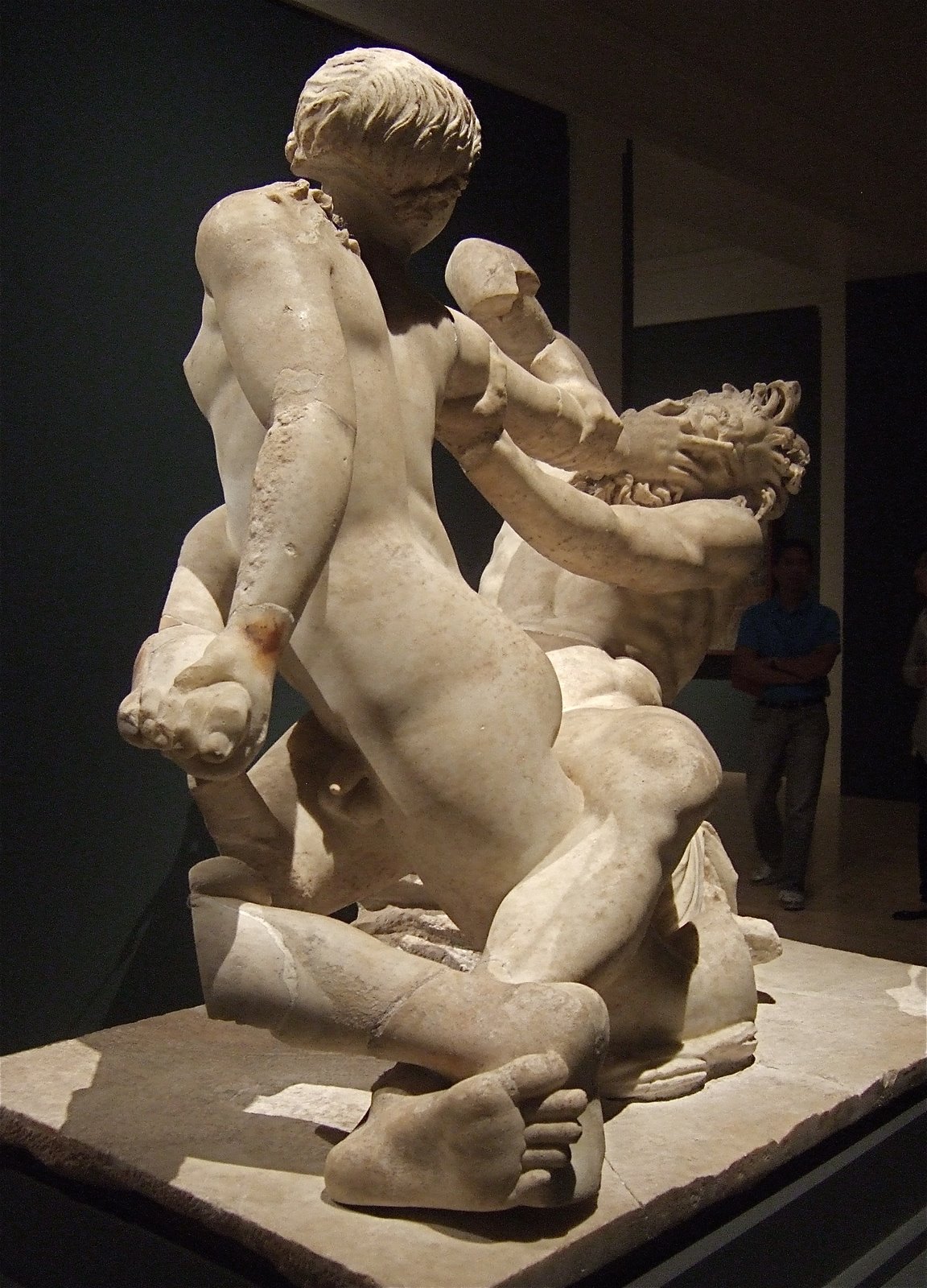
Another sculptural piece discussed in the episode was the Satyr and Hermaphrodite, a type so popular in antiquity that at least 30 replicas survive in marble, bronze, and frescoes. This image was so popular, the reproductions were found across the Roman Empire and likely derived from a Hellenistic model. 

Left: Sculpture of Pan and she-goat, from the Herculaneum villa of the Papyri. National Archaeological Museum, Naples; Right: Hermaphroditus fighting off a Satyr from the Villa of Poppaea, Oplontis. Images from Wikimedia Commons.

This statue group would have likely been displayed in villa (Villa of Poppaea in Oplontis, Italy, and the villa at Chiragan in Gaul) or theatre (Daphne and Side) contexts, and likely among other statues that could be ‘read’ in addition to it. It was very much a public art Retzleff suggests that its interpretation could include: 

“Dionysiac aspects, the reversal of norms, the objectification of the body, the sexual tryst, and the agon.”

Connotations of sexual violence and vulnerability are suggested by the hermaphrodite unclothed state, with her garments below the scene, and a rocky framing- indicating a possible outdoor bathing context.

Dr King also discusses the frescoes from a bathhouse in Pompeii that used erotic imagery above the locker/cubbies in the building’s changing rooms. These have been interpreted as humorous, meant to be read as an aide-mémoire, for where one left their garments. Similar images were found within a Pompeiian brothel, where the context suggests seductive enticements for clients, rather than a funny visual decoration. 

Suburban bath locker frescoes, Pompeii. Left: a foursome; top right: a female and two males; bottom right: male performing cunnilingus.

🎙️ Two Friends Talk History continues to explore the uncomfortable but necessary intersections of ancient narratives and modern storytelling. In this episode, we invite you to listen with openness and care, to reflect on the legacies of representation, and to question how visualisations of sex and violence continue to echo through time.

📚 You can follow Dr Briana King’s work on Academia.edu.
🎧 Subscribe to the podcast via Buzzsprout or wherever you get your podcasts.

Until next time,
— Zofia


To follow the spectacular Dr King’s academic work, check out her page on Academia.edu.

King, B. (2024), ‘Un-silencing the Girls: Critical Classical Reception in Feminist Retellings of Greek Myths’, in Thersites. Journal for Transcultural Presences & Diachronic Identities from Antiquity to Date, vol. 19. 

King, B. (forthcoming), ‘Fatal Attraction: Ancient Precedents, Modern Appropriations’, in Acta Instituti Romani Finlandiae.

Sexual Violence Support Resources

Rape Crisis Scotland: https://www.rapecrisisscotland.org.uk/help-helpline/

For sexual violence or violence against women, the National Domestic Abuse Helpline (0808 2000 247) run by Refuge and Women’s Aid provides 24/7 support and information. 

Additional resources include Rape Crisis England & Wales which offers specialist support for women who have experienced sexual violence. Women’s Aid also offers a live chat service and email support

Visit the Rights of Women website on legal information sheets on a range of issues, including Forced Marriage and the law. Support for victims of ‘honour’-based violence and forced marriage.

References

Images of the pottery we discussed can be found on the Beazley Archive: https://www.carc.ox.ac.uk/XDB/ASP/searchOpen.asp

Cohen, E. E. (2000). “Whoring under Contract: The Legal Context of Prostitution in Fourth-Century Athens.” In V Hunter and J. Edmondson, eds., Law and Social Status in Classical Athens. Oxford. 113-48.

Cohen, E. E. (2006).”Free and Unfree Sexual Work: An Economic Analysis of Athenian Prostitution.” In C. A. Faraone and L. A. McClure, eds., Prostitutes and Courtesans in the Ancient World. Madison. 95-124.

Cohen, E. E. (2014). “Sexual Abuse and Sexual Rights: Slaves’ Erotic Experience at Athens and Rome.” In T. K. Hubbard, ed., A Companion to Greek and Roman Sexualities. Malden, MA. 184-98.

Davidson, J. (1997). Courtesans and Fishcakes: The Consuming Passions of Classical Athens. London.

Gardner, J. (2009), Women in Roman Law and Society. London.

Glazebrook, A. (2017). “Gender and Slavery” in The Oxford Handbook of Greek and Roman Slaveries. Eds. Stephen Hodkinson, Marc Kleijwegt, and Kostas Vlassopoulos. Oxford University Press. Oxford Handbooks Online.

Glazebrook, A. (2016). “Prostitutes, Women, and Gender in Ancient Greece” in Women in Antiquity: Real Women across the Ancient World. Eds. Stephanie Lynn Budin and Jean Macintosh Turfa. Routledge Publishing. 703-13. 

Glazebrook, A. (2011). Greek Prostitutes in the Ancient Mediterranean, 800 BCE to 200 CE. Madison WI: University of Wisconsin Press. (co-edited with M. M. Henry).

Keuls, E. C. (1993). The Reign of the Phallus: Sexual Politics in Ancient Athens. London: University of California Press Ltd.

McGinn, T. A. J. (1998). Prostitution, Sexuality, and the Law in Ancient Rome. Oxford.

McGinn, T. A. J. (2004). The Economy of Prostitution in the Roman World: A Study of Social History and the Brothel. Ann Arbor.

Moses, D. C. (1993), “Livy’s Lucretia and the Validity of Coerced Consent in Roman Law,” in Consent and Coercion to Sex and Marriage in Ancient and Medieval Societies. Dunbarton Oaks.

Retzleff, A. (2007). The Dresden Type Satyr-Hermaphrodite Group in Roman Theatres in the AJA, Vol. 111, No.3, July. Pp. 459-472. 

Stewart, A. F. (1995). ‘Rape?’ In Reeder, E. D. (Ed.). Pandora: Women in Classical Greece. Princeton: Princeton University Press. 74-90.

Thomas, S. (11 June 2019). “‘I’m not watching this’: Film’s brutal account of Australia’s colonial history sparks walkout”ABC News. Retrieved 11 March 2021.

Tyranny in Antiquity on TFTH

In this week’s episode of Two Friends Talk History, Zofia is joined by Dr Sam Ellis, a Leverhulme Postdoctoral Fellow at the Chair of Ancient History in the University of Mannheim where  his project focuses on the use of language to legitimise political power in the Greek polis.  Sam is an expert in the language of tyranny in antiquity and the study of monocratic power in the Greek polis from the Archaic to the Hellenistic period.  

In this episode, we explore how the language used to frame the actions of sole rulers has created a construct of ‘tyrant’ that remains with us today.

Greek attitudes towards tyranny are the topic of this week’s podcast. It may surprise listeners to hear that these attitudes changed over time; from the early stages of the Greek polis (the city-state), the ruling aristocracy ruled as a group over the citizen body, with the eventual rise of some aristocrats into positions of sole-rulership in the mid-7th century BCE. 

These early sole-rulers tended to have popular political support and were generally viewed favourably among the citizens. 

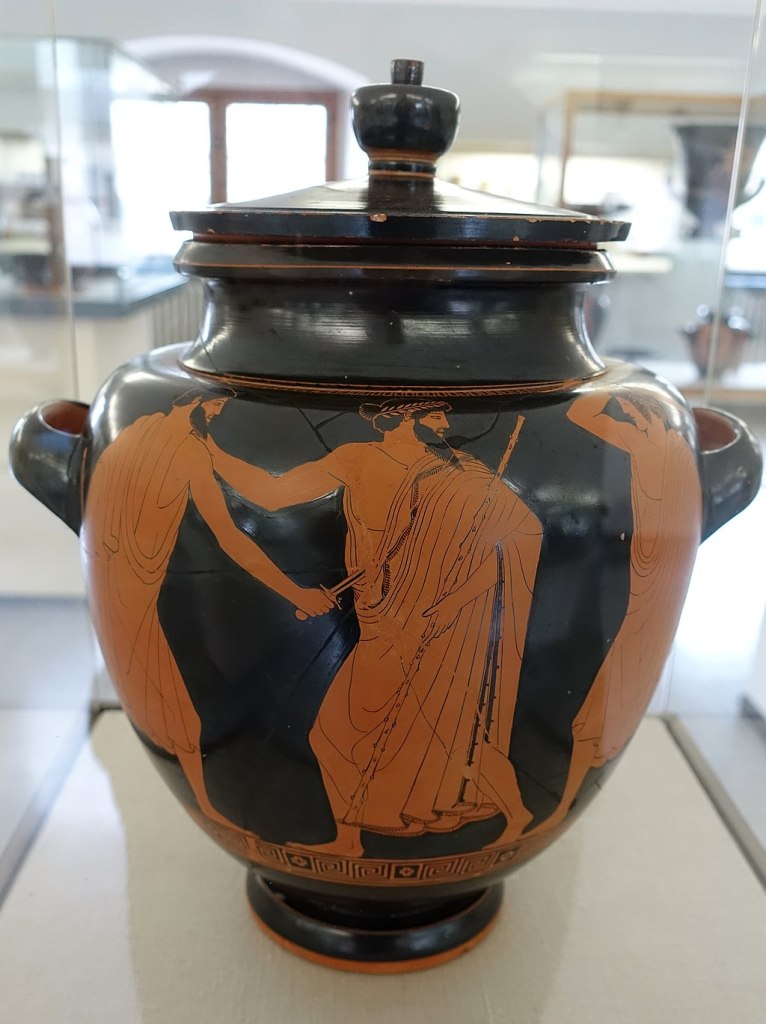
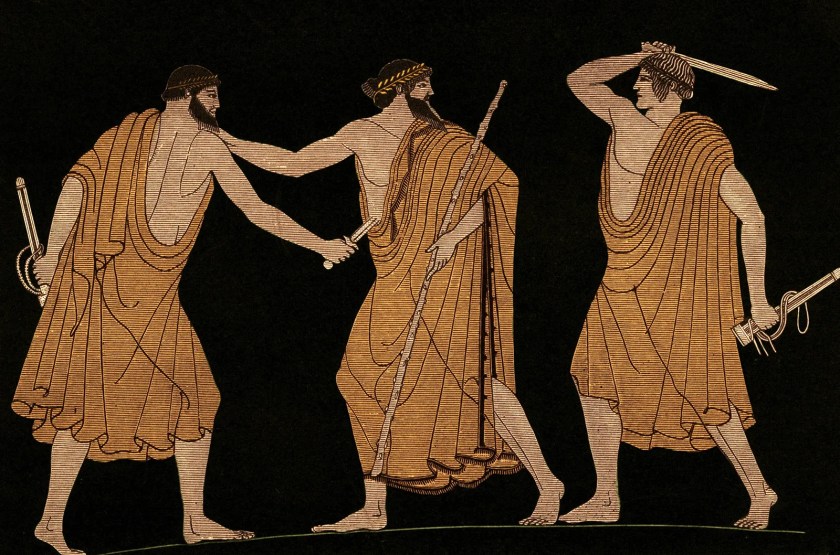
We discuss the Peisistratids of Athens in the podcast, one such family, whose founder, Peisistratus, was popularly received by the people for setting up law courts and investing funds into public projects like water fountains and religious buildings. The charismatic leadership of a sole-ruler could spur a relationship of political control through public support that rewarded the ruler with many types of honours. As we discuss, these types of relationships were precarious and could turn into tyrannicide, as was the case of the assassination of Peisistratus’ son, Hipparchus (brother of the sole-ruler, Hippias). The assassination was carried out by Harmodius and Aristogeiton and remained a famous story replicated across visual media for centuries afterwards.

The Syriskos Painter’s stamnos, ‘Death of the tyrant Hipparchus’, 475-470 BCE (and illustration of actions); Roman copy of Aristogeiton and Harmodius sculpture.

The inspiration for the episode art was the sculptural pair of tyrannicides, originally commissioned by Antenor after the establishment of Athenian democracy. It was taken as war booty during the Persian Wars in 480 BCE, then returned after the fall of the Persian Empire by one of Alexander’s generals-turned-king. The sculpture was so famous that it inspired Roman copies, of which several survive; the most famous of which is in the National Archaeological museum of Naples. 

To learn more about the language, metaphors and stereotypes of ancient tyranny, check out the episode here:

Tyranny in Antiquity with Sam Ellis Two Friends Talk History

You can get in touch with Dr Ellis on the Universität Mannheim website here,  or you can follow him on Academia.edu. Sam is also on Instagram & Twitter @SamEllis1993. Seriously, check out his Instagram. The photos are stunning.

If you would like to check out some of Dr Ellis’ publications:

Ellis, S. (forthcoming). ‘Legitimising sole power in the Greek polis: A New Institutionalist approach’ in M. Canevaro & M. Barbato (eds.) New Institutionalism and Greek Institutions, Edinburgh: Edinburgh University Press.

Ellis, S. (2021). ‘Greek Conceptualisations of Persian Traditions – Gift-giving and Friendship in the Persian Empire’, Classical Quarterly 71.1,Cambridge: Cambridge University Press, 77–88.

Ellis, S. (forthcoming). Review of C. de Lisle (2021). Agathokles of Syracuse: Sicilian Tyrant and Hellenistic King. Oxford: Oxford University Press. Bryn Mawr Classical Review.

For further reading:

Brock, R. (2013). Greek Political Imagery: From Homer to Aristotle. London: Bloomsbury Academic.

Luraghi, N. (2013). The Splendors and Miseries of Ruling Alone. Wiesbaden: Franz Steiner Verlag GMBH.

Börm, H. (ed.). (2015). Antimonarchic Discourse in Antiquity. Stuttgart: Franz Steiner Verlag.

Thank you for checking out my blog !

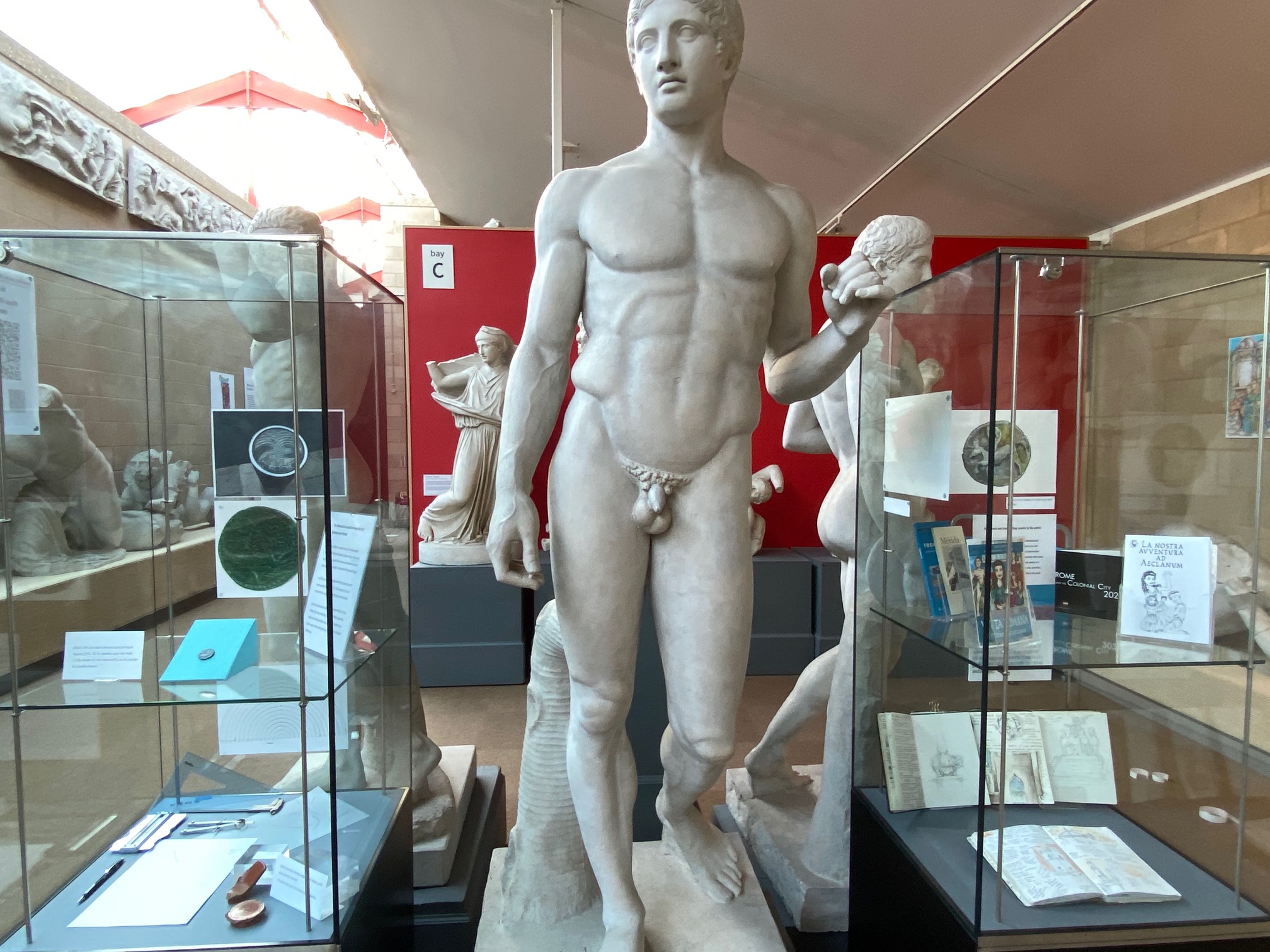
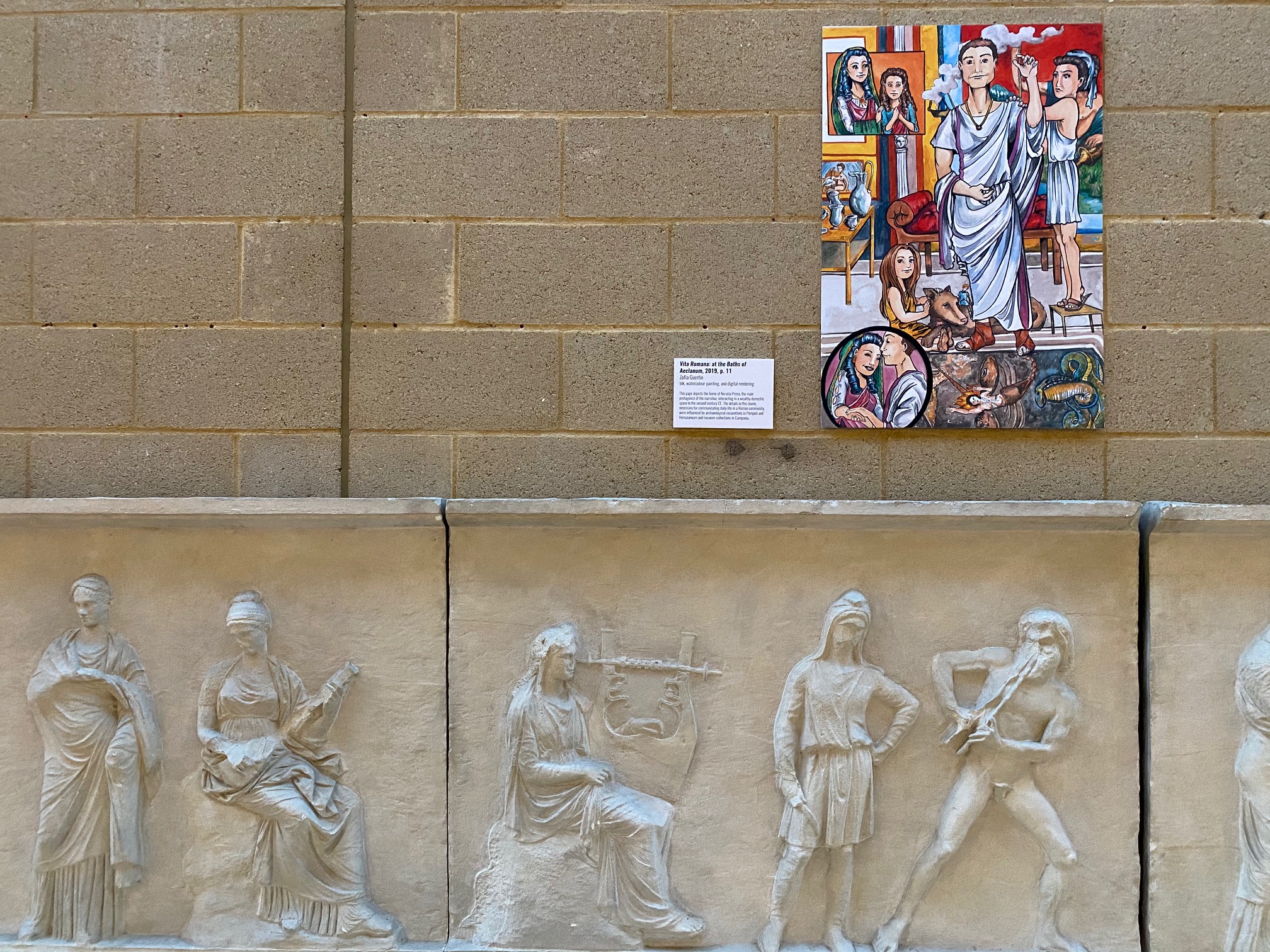
The Cambridge MCA Exhibition: Illustrating Ancient History- bringing the past to life

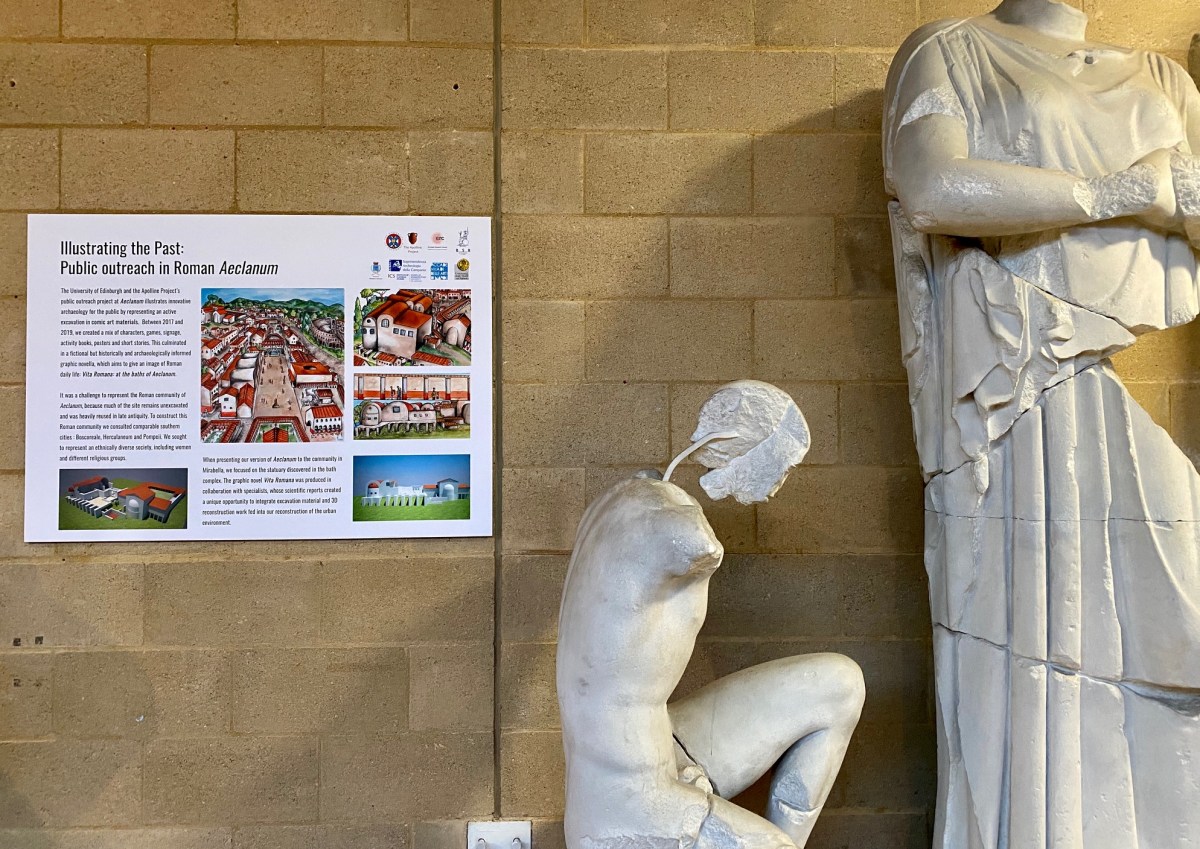
This week my colleagues, Dr Javier Martinez Jimenez and Sofia Greaves and I were thrilled to launch an exhibition we have been collaborating on for quite some time at the Cambridge Museum of Classical Archaeology: “Illustrating Ancient History: bringing the past to life.” The exhibition is now fully online!

As a way of reconstructing the past in Vita Romana, which I’ve discussed on this blog before, I worked with the specialists on-site whose scientific background in the materials I was representing informed much of the illustration work. Intersecting with the aims of the exhibition, the work done at Roman Aeclanum exemplified the way that collaboration between artists and different archaeological specialists can be translated into artistic work that help the public understand the archaeological site and material culture more contextually. I have recorded a podcast with my co-host, Liam, for Two Friends Talk History which allowed me to discuss the public outreach programme I coordinated and created in Aeclanum.

Listen here :

Roman Aeclanum – Public Archaeology in Campania Two Friends Talk History

Sofia’s work brought together ancient spaces with exploration of the layers of building over time through water-colour and mixed media. Sofia and Javier work together on the Impact of the Ancient City project at the University of Cambridge which is a project that has involved a lot of site visits to ancient cities that have inspired her work.

The opening of the exhibition was scaled-down due to Covid safety protocols, with numbers carefully regulated through registration. The exhibition will be in-place until January 30th, and with luck, as many people as possible will be able to explore the museum’s famed collection of plaster statue casts which frame our exhibition images. With these considerations in mind, the museum moved quickly to create a fully online version of the exhibition which you can see here: CHECK IT OUT!

We would love to hear from YOU!

Please take a moment to scan the QR code below with your smartphone for a brief online survey about your experiences with archaeological sites and illustrations. We would like to hear about your experiences!

All data is anonymised and will be used for further research questions related to this exhibit. Surveys also in French and Spanish.

Thank you for checking out my blog! If you are interested in requesting commission art or educational outreach material, you can check out some examples of my work here and please like and subscribe to Two Friends Talk History!

Two Friends Talk History Podcast

Two Friends Talk History is a podcast where public historian, Zofia, chats with scholars, archaeologists, researchers and more to explore fascinating histories, look behind the scenes and ask the big question that’s missing in much academic discourse: so what? Why is this relevant today?

New Friends on Two Friends

Carrying on from season 1 in which Zofia and Liam explored the ancient world through stories and interviews, season 2 invites new friends to Two Friends. Find me on Instagram at Two Friends Talk History and Patreon at ArchaeoArtist.

Dionysius of Halicarnassus with Stefano Carlo Sala Two Friends Talk History

In this episode of Two Friends Talk History, host Zofia is joined by Stefano Carlo Sala, a doctoral researcher at the University of St Andrews, to explore the fascinating world of Dionysius of Halicarnassus—a Greek historian living in Rome at the dawn of the Empire. Together, they dive into how Dionysius used monuments, myth, and memory to connect early Roman history to a classical Greek past. If you’re curious about how contemporaneous historians tried to explain Rome’s rise, justify its rule over the Greek world, and shape cultural identity in an evolving political landscape, this episode is for you.🎧 Subscribe now so you don’t miss an episode! 👉🏼 You can read the BLOG POST HERE.To read his recent publication: Carlo Sala, S. (2025). Law as a catalyst and remedy for civic violence in early Rome : two examples from Dionysius of Halicarnassus, in Cahiers des études anciennes [En ligne], LXII | 2025. URL: READ HERE ONLINE.If you would like to follow Stefano, you can join him on LinkedIn or Academia.EduLinkedIn: HERE  Academia.edu: HERE#twofriendstalkhistory #historypodcast #TFTH #publicoutreach #classics #anienthistory #classicspodcast #AncientHistory #Rome #Podcast #Historiography #receptionstudies #archaeoartist #classicsliterature #literature #archaeoartist To get in touch and find out more about Two Friends Talk History:Find us on Instagram & TwitterSupport us through PatreonBuy our merch on Redbubble🌍 Explore more at http://www.Archaeoartist.com🔗 If you'd like to get in touch, email at Zofia@ArchaeoArtist.com Music by the wonderfully talented Chris SharplesIllustration by Zofia Guertin

Two Friends Talk History Art

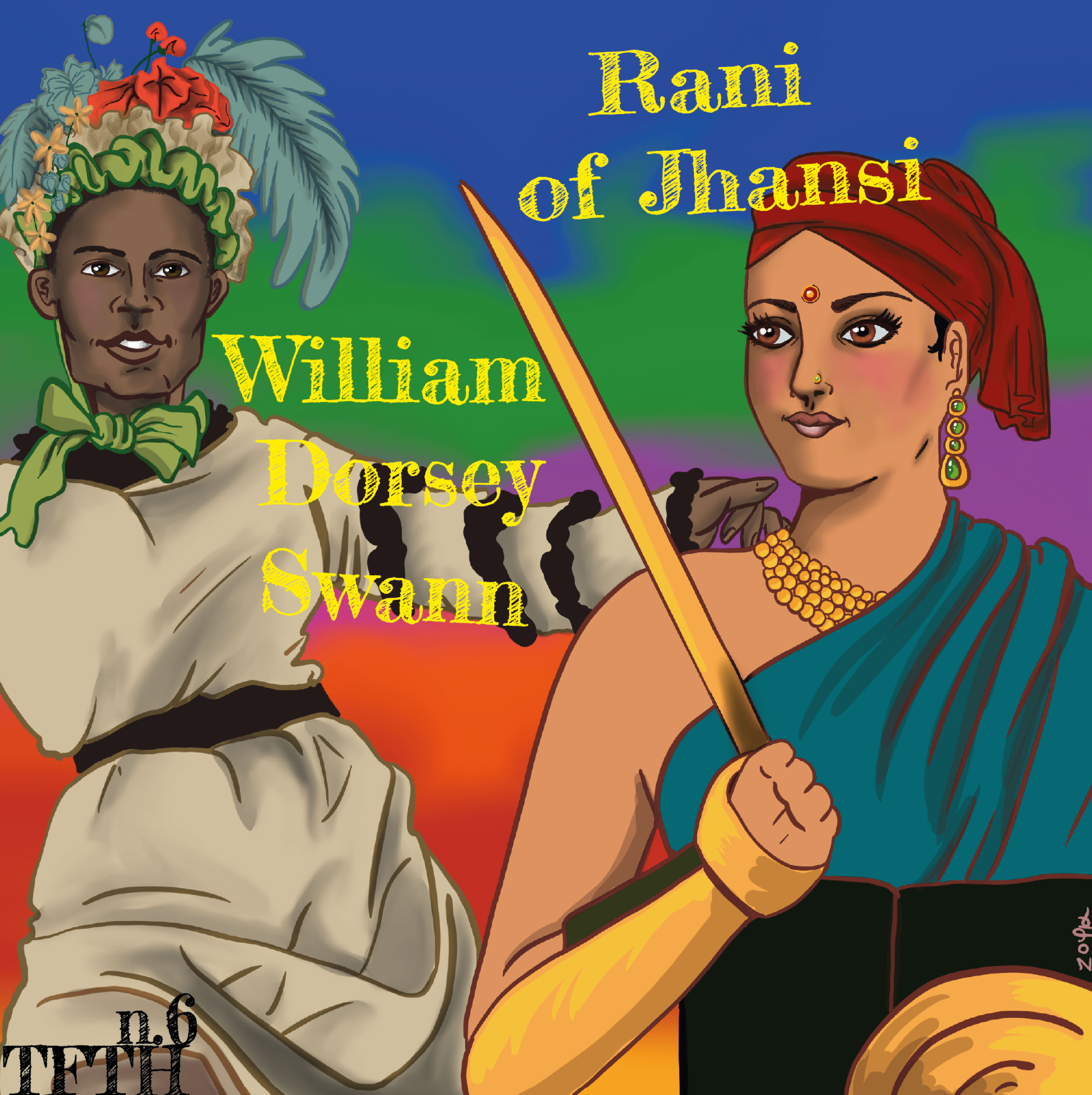
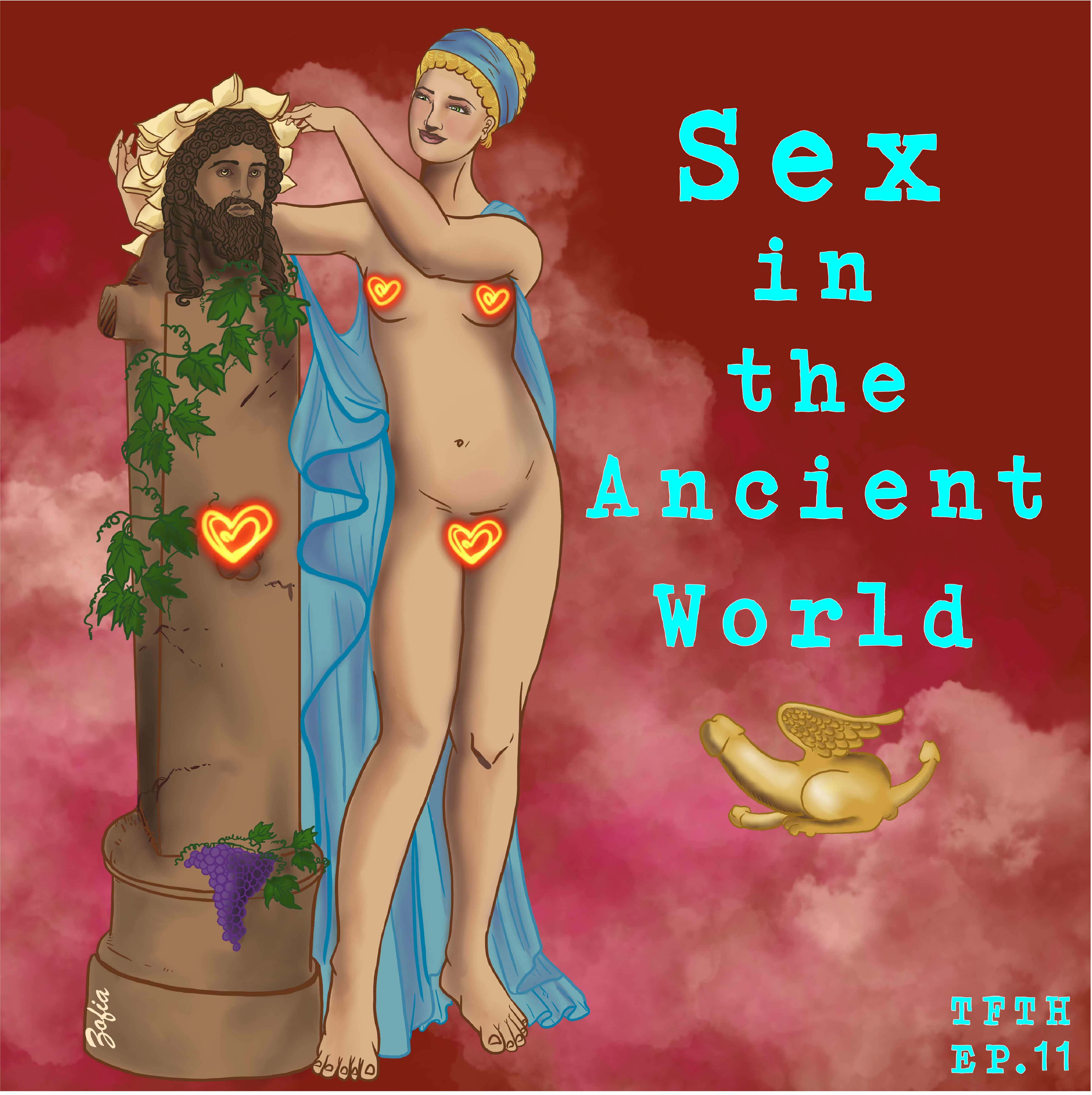
I have been challenging myself with creating the mash-ups in my own digital drawing style but, where appropriate, using the historical style the original image was made in. These episode images are available as mugs, tees and postcards on our Two Friends Talk History Redbubble Shop!

Join us on Patreon!

If you would like to support this podcast, receive behind the scenes extras, and get downloadable episode art, additional content (maps, images and related goodies), Hundred Word Histories join my PATREON. You can sign up for a monthly pledge to support the pod all for the cost of a pint! I also post to our INSTAGRAM account to accompany the episodes.

Check it out on iTunes, Spotify, Soundcloud and anywhere else you listen to your podcasts. Ratings and reviews are fundamental to gaining any visibility, so please check us out and give us a review!