Monuments and Memory: Dionysius of Halicarnassus and the Story of Rome


When we think of ancient historians, names like Livy or Herodotus often come to mind. But Dionysius of Halicarnassus deserves a closer look. Around 30 BC, Dionysius was a Greek scholar who moved to Rome during the early days of the Empire. There, he produced Roman Antiquities, a sweeping history of Rome from its mythical beginnings up to the First Punic War. Though 15 titles of his work are known, 13 survived in one form or another; his work remains a crucial source for early Roman history, standing alongside Livy’s accounts.

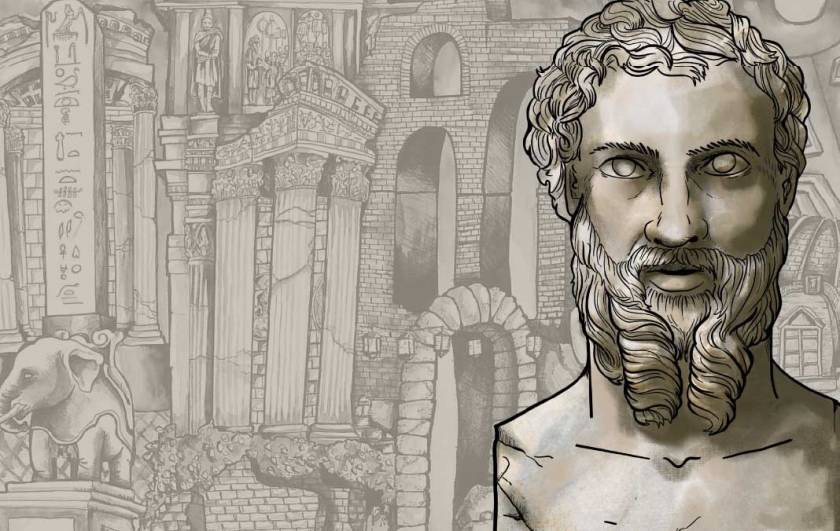
Dionysius of Halicarnassus and ruins of Rome by Zofia Guertin

Theatre of Pompey plan and Dionysius of Halicarnassus. Illustration by Zofia Guertin.

Dionysius wasn’t just a historian—he was also a master of rhetoric. His writings aimed to explain and justify Roman culture to a Greek audience, blending historical detail with rhetorical theory. In fact, he often used his history as a practical showcase of rhetorical principles. Beyond history, he wrote insightful critiques of famous Greek orators like Demosthenes and Isocrates, praising Roman writers for returning to classical Greek ideals over more ornate styles.

In this episode of Two Friends Talk History, Zofia welcomes Stefano Carlo Sala, a PhD candidate at the University of St Andrews, to discuss Dionysius of Halicarnassus—a key figure in Roman historiography.

Dionysius of Halicarnassus with Stefano Carlo Sala Two Friends Talk History

They explore how Dionysius, a Greek historian in Augustan Rome, used monuments and myths to present early Rome as a fundamentally Greek city. Through comparisons with Livy and Polybius, Stefano unpacks Dionysius’ unique approach to storytelling, monumentality, and cultural identity.


Brick and Marble. Illustration by Zofia Guertin.

While Dionysius of Halicarnassus and Livy both wrote about the early history of Rome, their approaches reveal striking differences—especially in how they describe the city’s monuments. Dionysius, writing for a Greek-speaking audience unfamiliar with Rome’s layout, offers detailed observations about buildings still visible in his time, even noting which ones he personally visited. Livy, on the other hand, paints a broader picture centered around familiar Roman landmarks like the Forum and Capitol, assuming a Latin-speaking readership already acquainted with the city. Dionysius’s attention to architectural detail connects to his larger ideological project: presenting Rome as the heir to Classical Greece. This vision runs through his historical work, where he draws frequent parallels between early Roman and Classical Greek monuments, values, and myths. By doing so, Dionysius not only makes Roman history more accessible to Greek readers but also argues that Rome deserves a central place in the Greek cultural tradition. His comparisons—even when archaeologically inaccurate—serve a deeper symbolic purpose, showing Rome as both the continuation and the future of Greece’s classical legacy.

💡 Topics covered:

  • Dionysius’ blending of rhetoric and history
  • Why monuments mattered in shaping Rome’s past
  • Connections between Classical Greece and Archaic Rome
  • How historians under Augustus crafted Rome’s legacy
  • The political and cultural stakes of memory

Whether you’re into ancient history, architecture, or historical narratives, this episode offers a rich perspective on the ways history gets written—and rewritten.

Sources

Edlund, I. (1980). Livy and Dionysios of Halikarnassos as Roman archaeologists in Rivista di Archeologia vol.4, pp. 26-30. You can download for free: Here.

Wiater, N. (2011). The Ideology of Classicism: Language, History, and Identity in Dionysius of Halicarnassus. (Untersuchungen zur antiken Literatur und Geschichte; Vol. 105). de Gruyter.

Stefano’s Academia Page and Publications:

Carlo Sala, S. (2025). Law as a catalyst and remedy for civic violence in early Rome : two examples from Dionysius of Halicarnassus, in Cahiers des études anciennes [En ligne], LXII | 2025. URL: READ HERE ONLINE.

If you would like to follow Stefano, you can join him on LinkedIn: HERE   or Academia.edu: HERE !

🔗 Support the show on Patreon at Patreon.com/Archaeoartist
📸 Follow on Instagram @TwoFriendsTalkHistory

Invisible Chains: Human Trafficking in Antiquity with Florence Felsheim

What did it mean to be bought, sold, and sexually exploited in the ancient world? In this powerful episode of Two Friends Talk History, Zofia is joined by doctoral candidate Florence Felsheim to explore the hidden realities of sexual trafficking in ancient Greece and Rome. Drawing on literary texts, archaeological evidence, and cognitive science, Florence unpacks how systems of enslavement and exploitation operated in societies often romanticized in popular culture.

We examine the scale of the ancient slave trade, the gendered dimensions of exploitation, and how enslaved women were commodified—expected to provide not just labor, but sexual access. From Roman brothels to banquet halls, the episode reveals how normalized sexual violence was embedded in the fabric of ancient daily life.

As part of Sexual Violence Awareness Month, this conversation sheds light on uncomfortable histories, connecting past systems of abuse to present-day conversations on power, consent, and human dignity. Listener discretion is advised.

Invisible Chains: Human Trafficking in Antiquity with Florence Felsheim Two Friends Talk History

Human Trafficking in the Ancient World: A Forgotten Reality

When most people think of human trafficking, they imagine a modern crisis. However, the practice of exploiting people for labor, sex, and servitude dates back thousands of years. In the ancient world, trafficking was not only common—it was institutionalized and deeply woven into the fabric of many societies.

In ancient Mesopotamia, Egypt, Greece, and Rome, slavery was a cornerstone of the economy. Prisoners of war, kidnapped foreigners, and even impoverished citizens were often sold into slavery. Unlike modern trafficking, which is largely illegal and hidden, ancient systems openly supported human trade. Markets for slaves were publicly established and legal codes could regulate their trade and treatment.

Women and children were particularly vulnerable. Many were trafficked for domestic service, labor, alongside sexual exploitation. In ancient Greece, for instance, women were commonly sold into brothels or forced to work as concubines. Rome’s vast empire relied heavily on enslaved people, many of whom were captured from conquered territories and transported long distances.

Though the term “human trafficking” didn’t exist in antiquity, the mechanisms of coercion, transport, and exploitation mirror modern patterns. Individuals lost autonomy, families were torn apart, and countless lives were shaped by violence and subjugation.

Understanding the ancient roots of human trafficking challenges the myth that it’s a purely modern problem. Instead, it reveals a tragic continuity in human history: the persistent commodification of people. While laws and attitudes have evolved, the underlying injustice remains disturbingly familiar.

By studying trafficking in the ancient world, we can better understand the cultural, economic, and political forces that continue to allow it today. Acknowledging its history is a step toward dismantling it in the present.

Speaking Through Objects

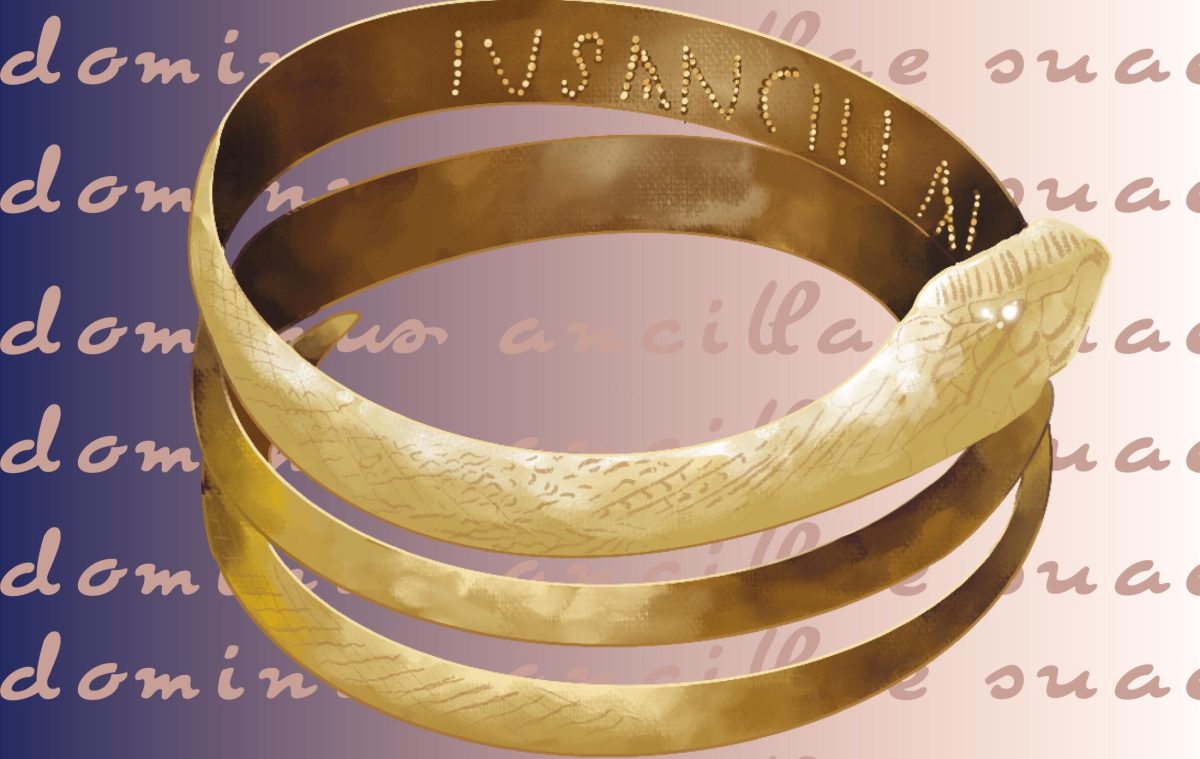
Moregine bracelet, illustrated by Zofia Guertin.

In 2000, archaeologists at Moregine, near Pompeii, uncovered a gold snake-shaped bracelet inscribed “dominus ancillae suae” (“the master to his very own slave girl”) on the body of a woman fleeing the eruption of Vesuvius. Found alongside other jewelry and coins, the bracelet, weighing about 500 grams, is crafted to coil three times around the arm. Its inscription has sparked debate: it may have been a gift to a domestic slave, a freedwoman, or a slave prostitute, or a metaphorical gift between lovers. The discovery highlights complex social dynamics and the harsh realities of slavery in ancient Roman society.

Resources

  • Levin-Richardson, Sarah. “Modern Tourists, Ancient Sexualities.” Pompeii in the Public Imagination from Its Rediscovery to Today. Oxford: Oxford University Press, 2011.
  • Keuls, Eva C. Reign of the Phallus : Sexual Politics in Ancient Athens. Berkeley, CA: University of California Press, 1994.
  • McClure, Laura. Phryne of Thespiae : Courtesan, Muse, and Myth. New York, NY: Oxford University Press, 2024.
  • Funke, Melissa. Phryne : a life in fragments. London : Bloomsbury Academic 

🌍 Sexual Violence Support Resources

If you or someone you know needs support, here are trusted organizations offering help across the globe:

1. RAINN (USA/global support)
🔗 rainn.org
📞 1-800-656-HOPE (4673)
💬 24/7 online chat

2. UN Women – End Violence Against Women
🔗 unwomen.org

3. The Survivors Trust (UK)
🔗 thesurvivorstrust.org
📧 info@thesurvivorstrust.org

4. Women Against Violence Europe (WAVE Network)
🔗 wave-network.org

5. Child Helpline International (for youth/caregivers)
🔗 childhelplineinternational.org

6. UNFPA – Global Helpline Directory
🔗 Global helpline list

7. Amnesty International – Gender & Sexuality Support
🔗 amnesty.org

💻 Online & Anonymous Support

8. Lifeline Chat (24/7, anonymous)
🔗 suicidepreventionlifeline.org/chat

🔐 Tip: Use a VPN or private browser if privacy is a concern. Always contact local emergency services if in immediate danger.

Classical Reception of Sexual Violence in Antiquity in Modern Visual Media

In the latest episode of Two Friends Talk History, Zofia and Dr Briana King return to our discussion into Classical Receptions. This time, we go into some of the heavier subject matter that we felt deserved its own episode. Returning guest, Dr. Briana King, joins me to unpack the dark and often overlooked threads of sexual violence in ancient history and its modern reinterpretations. We discuss ancient precedents for modern cinematic and television representations of sexual violence – made spectacle – in retellings of Roman narratives.

We’re diving deep into how classical reception shapes public perception—and why that matters. This is a heavy but essential conversation about power, misrepresentation, and the stories we choose to tell. 🏛️

📢 Trigger warning: this episode discusses sexual violence and may be distressing to some listeners. Please listen with care.

Classical Reception of Sexual Violence in Antiquity in Modern Visual Media with Briana King Two Friends Talk History

Dr King has argued through her doctoral research, and in her more recent publications, that these scenes can be interpreted as real reflections of actual events. And perhaps, these visualisations were part of shaping realities that they depicted in antiquity, as they appear to be doing now.

Due to copyright, I have drawn the images that we discussed in the episode, since those available for viewing on the Beazley archive are difficult to make out at times.

  • (Left) Athenian red-figure stamnos; c. 430 BCE; Two men lifting a hetaira between them; Polygnotos Painter; Musee du Louvre Cp274/Cp9682; Beazley 213398.
  • (Top Right) Athenian red-figure kylix; c. 510-500 BCE; Orgy scenes; Pedieus Painter; Louvre G13; Beazley 200694.
  • (Bottom Right) Athenian red-figure cup; c. 490 BCE; Orgy scenes; Brygos Painter; Florence 3921; Beazley 203929.

In our discussion, several sculptural pieces from the Roman period were discussed, as representative of the brutal or depraved aspects of Roman society. In 2000 the Museo Nazionale di Napoli opened the “Secret Cabinet”, a special room that had for over a hundred years kept items found in Pompeii that were deemed “pornographic” away from the average viewing public. That these items are still held in this space, though the doors have been opened, still suggests that this is how we ought to understand them, not unlike their first museum display context in the Portici Palace, in Naples.  

Taken from their original contexts, their use as emblems of that can be understandable, but as with all analysis of antiquity, context is key. Items like Pan and the she-goat (found in 1752) were, like many erotic images from the Roman period, in garden or outdoor spaces within a Roman villa. Sexually explicit sculpture – sometimes violent, could be commonly found within Roman society, and was not locked away in secret viewing rooms – it was open access.

Pan and the she-goat were found in a garden, south of the pool in the Villa of the Papyri, in Herculaneum. The garden was filled with several sculptures that included erudite philosophers, animals, and gods. 

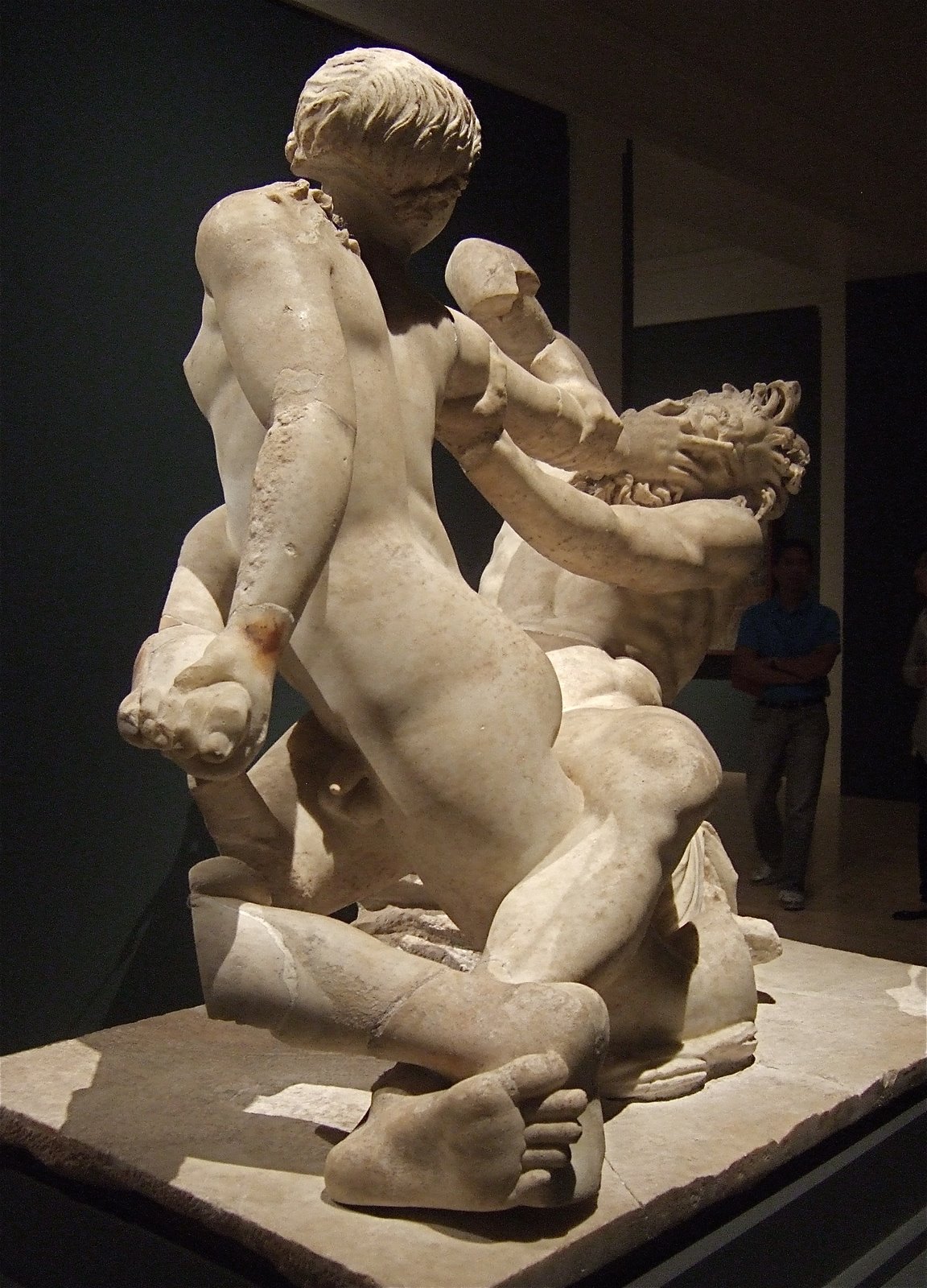
Another sculptural piece discussed in the episode was the Satyr and Hermaphrodite, a type so popular in antiquity that at least 30 replicas survive in marble, bronze, and frescoes. This image was so popular, the reproductions were found across the Roman Empire and likely derived from a Hellenistic model. 

Left: Sculpture of Pan and she-goat, from the Herculaneum villa of the Papyri. National Archaeological Museum, Naples; Right: Hermaphroditus fighting off a Satyr from the Villa of Poppaea, Oplontis. Images from Wikimedia Commons.

This statue group would have likely been displayed in villa (Villa of Poppaea in Oplontis, Italy, and the villa at Chiragan in Gaul) or theatre (Daphne and Side) contexts, and likely among other statues that could be ‘read’ in addition to it. It was very much a public art Retzleff suggests that its interpretation could include: 

“Dionysiac aspects, the reversal of norms, the objectification of the body, the sexual tryst, and the agon.”

Connotations of sexual violence and vulnerability are suggested by the hermaphrodite unclothed state, with her garments below the scene, and a rocky framing- indicating a possible outdoor bathing context.

Dr King also discusses the frescoes from a bathhouse in Pompeii that used erotic imagery above the locker/cubbies in the building’s changing rooms. These have been interpreted as humorous, meant to be read as an aide-mémoire, for where one left their garments. Similar images were found within a Pompeiian brothel, where the context suggests seductive enticements for clients, rather than a funny visual decoration. 

Suburban bath locker frescoes, Pompeii. Left: a foursome; top right: a female and two males; bottom right: male performing cunnilingus.

🎙️ Two Friends Talk History continues to explore the uncomfortable but necessary intersections of ancient narratives and modern storytelling. In this episode, we invite you to listen with openness and care, to reflect on the legacies of representation, and to question how visualisations of sex and violence continue to echo through time.

📚 You can follow Dr Briana King’s work on Academia.edu.
🎧 Subscribe to the podcast via Buzzsprout or wherever you get your podcasts.

Until next time,
— Zofia


To follow the spectacular Dr King’s academic work, check out her page on Academia.edu.

King, B. (2024), ‘Un-silencing the Girls: Critical Classical Reception in Feminist Retellings of Greek Myths’, in Thersites. Journal for Transcultural Presences & Diachronic Identities from Antiquity to Date, vol. 19. 

King, B. (forthcoming), ‘Fatal Attraction: Ancient Precedents, Modern Appropriations’, in Acta Instituti Romani Finlandiae.

Sexual Violence Support Resources

Rape Crisis Scotland: https://www.rapecrisisscotland.org.uk/help-helpline/

For sexual violence or violence against women, the National Domestic Abuse Helpline (0808 2000 247) run by Refuge and Women’s Aid provides 24/7 support and information. 

Additional resources include Rape Crisis England & Wales which offers specialist support for women who have experienced sexual violence. Women’s Aid also offers a live chat service and email support

Visit the Rights of Women website on legal information sheets on a range of issues, including Forced Marriage and the law. Support for victims of ‘honour’-based violence and forced marriage.

References

Images of the pottery we discussed can be found on the Beazley Archive: https://www.carc.ox.ac.uk/XDB/ASP/searchOpen.asp

Cohen, E. E. (2000). “Whoring under Contract: The Legal Context of Prostitution in Fourth-Century Athens.” In V Hunter and J. Edmondson, eds., Law and Social Status in Classical Athens. Oxford. 113-48.

Cohen, E. E. (2006).”Free and Unfree Sexual Work: An Economic Analysis of Athenian Prostitution.” In C. A. Faraone and L. A. McClure, eds., Prostitutes and Courtesans in the Ancient World. Madison. 95-124.

Cohen, E. E. (2014). “Sexual Abuse and Sexual Rights: Slaves’ Erotic Experience at Athens and Rome.” In T. K. Hubbard, ed., A Companion to Greek and Roman Sexualities. Malden, MA. 184-98.

Davidson, J. (1997). Courtesans and Fishcakes: The Consuming Passions of Classical Athens. London.

Gardner, J. (2009), Women in Roman Law and Society. London.

Glazebrook, A. (2017). “Gender and Slavery” in The Oxford Handbook of Greek and Roman Slaveries. Eds. Stephen Hodkinson, Marc Kleijwegt, and Kostas Vlassopoulos. Oxford University Press. Oxford Handbooks Online.

Glazebrook, A. (2016). “Prostitutes, Women, and Gender in Ancient Greece” in Women in Antiquity: Real Women across the Ancient World. Eds. Stephanie Lynn Budin and Jean Macintosh Turfa. Routledge Publishing. 703-13. 

Glazebrook, A. (2011). Greek Prostitutes in the Ancient Mediterranean, 800 BCE to 200 CE. Madison WI: University of Wisconsin Press. (co-edited with M. M. Henry).

Keuls, E. C. (1993). The Reign of the Phallus: Sexual Politics in Ancient Athens. London: University of California Press Ltd.

McGinn, T. A. J. (1998). Prostitution, Sexuality, and the Law in Ancient Rome. Oxford.

McGinn, T. A. J. (2004). The Economy of Prostitution in the Roman World: A Study of Social History and the Brothel. Ann Arbor.

Moses, D. C. (1993), “Livy’s Lucretia and the Validity of Coerced Consent in Roman Law,” in Consent and Coercion to Sex and Marriage in Ancient and Medieval Societies. Dunbarton Oaks.

Retzleff, A. (2007). The Dresden Type Satyr-Hermaphrodite Group in Roman Theatres in the AJA, Vol. 111, No.3, July. Pp. 459-472. 

Stewart, A. F. (1995). ‘Rape?’ In Reeder, E. D. (Ed.). Pandora: Women in Classical Greece. Princeton: Princeton University Press. 74-90.

Thomas, S. (11 June 2019). “‘I’m not watching this’: Film’s brutal account of Australia’s colonial history sparks walkout”ABC News. Retrieved 11 March 2021.

TFTH Digital Archaeology with Florence Felsheim

In the latest episode of Two Friends Talk History, I invited the brilliant Florence Felsheim, a PhD candidate in Classics at the University of St Andrews, for a fascinating deep dive into the intersection of virtual reality (VR) and cultural heritage. Together, they explore how technology is transforming the ways we visualise and interpret the past—and why that matters for both academics and the general public.

The episode kicks off with Florence introducing her work and academic journey. As a scholar specializing in ancient history and human trafficking in ancient Greece and Rome, Florence brings a nuanced perspective to the conversation. But her passion for technological innovation in cultural heritage projects is what makes this discussion particularly captivating.

Florence and Zofia delve into the evolution of virtual archaeology—the application of VR and augmented reality (AR) to reconstruct and visualize historical sites, artifacts, and environments. They discuss how initiatives like the Seville Principles emerged to create ethical and methodological guidelines for these digital reconstructions. These principles emphasize historical accuracy, interdisciplinary collaboration, and transparency, aiming to balance scientific integrity with the creative liberties of visual interpretation.

Why Do Digital Reconstructions Matter?

Throughout the conversation, Florence and I reflect on the “so what?” of VR in archaeology—why does it matter beyond the digital novelty? Florence makes a compelling case for the power of immersive reconstructions to democratize access to heritage. Through VR, people who might never visit physical archaeological sites can explore ancient cities, temples, or objects from the comfort of their homes or local museums. 

The conversation also highlights how VR can provide new layers of interpretation. For example, by digitally reconstructing a ruined temple, researchers can experiment with lighting, architectural features, and hypothetical decorations, offering new insights into how these spaces might have appeared and been experienced by ancient people.

One of the most thought-provoking parts of the discussion is the tension between historical accuracy and artistic license. Florence discusses how art and accuracy can vary through different approaches, questioning where the line should be drawn between creative interpretation and factual representation. The episode explores whether reconstructions should prioritise strict accuracy or allow for some imaginative flair to engage wider audiences.

In our discussion , we touch on a few projects that are really interesting, that you should definitely check out:

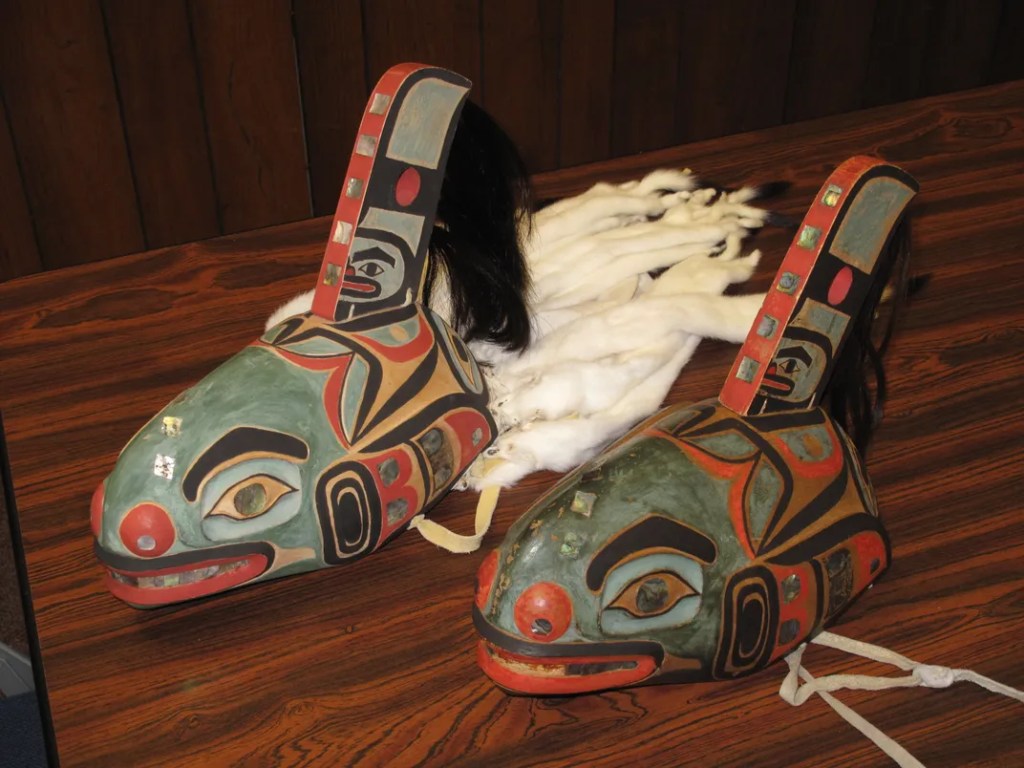
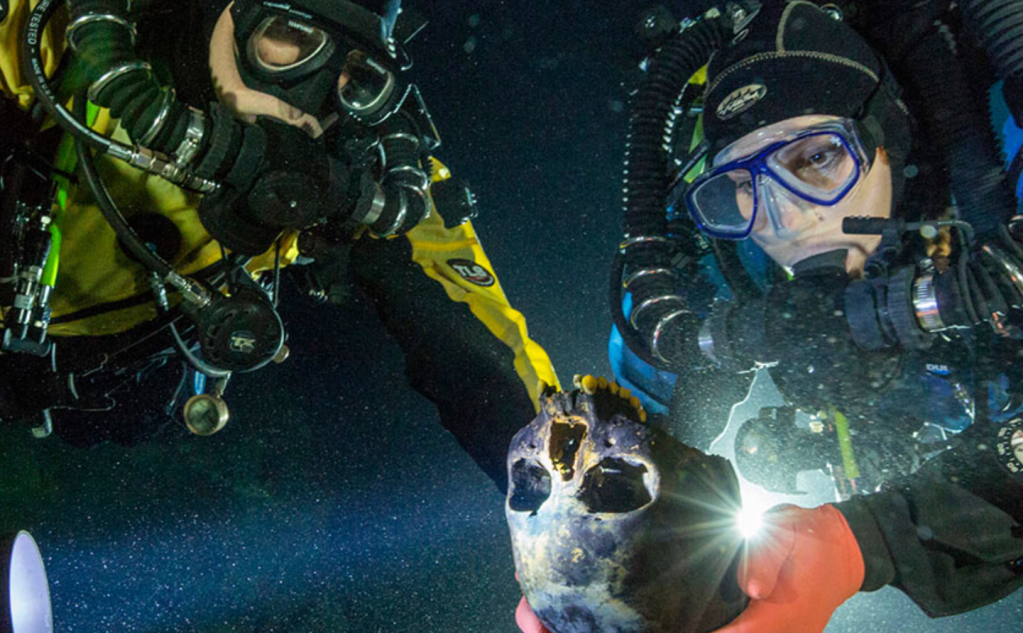
(Photo: Smithsonian Online Magazine, September 11, 2017)

To read the Smithsonian article and find out more about the Tlingit Dakl’aweidi clan’s Killer Whale clan crest hat, or Kéet S’aaxw (photo below from isplayed together at the 2012 clan conference in Sitka, Alaska), click here.

For more information about the virtual environment analysis of the fantastically cool submerged Late Pleistocene cave site in Quintana Roo we discussed, click here.

(Photo https://hoyonegro.ucsd.edu )

Challenges and Opportunities in Virtual Heritage

Despite its immense potential, VR in cultural heritage is not without challenges. Florence and Zofia discuss several hurdles:

  • Resource Intensity: High-quality VR reconstructions require significant technical expertise, funding, and computing power, which can limit accessibility for smaller institutions.
  • Authenticity vs. Engagement: The challenge of making VR experiences both educational and entertaining without distorting historical facts.
  • Interdisciplinary Collaboration: Effective virtual archaeology demands teamwork between archaeologists, historians, engineers, and computer scientists—fields that don’t always speak the same language.

However, the conversation also highlights the exciting opportunities:

  • Public Engagement: Museums and educational institutions are increasingly using VR to create interactive exhibits, sparking new interest in ancient history.
  • Research Innovation: Scholars can use VR models to test theories about ancient structures, city planning, or daily life.

If you’re fascinated by history, technology, or the future of cultural heritage, this episode is a must-listen. Florence’s insights into the ethical and methodological complexities of virtual archaeology will leave you with a deeper appreciation for the ways technology is reshaping our connection to the past.

Tune in to Two Friends Talk History to explore how VR is breathing new life into ancient worlds—and what that means for historians, artists, and the curious minds who love to explore them.

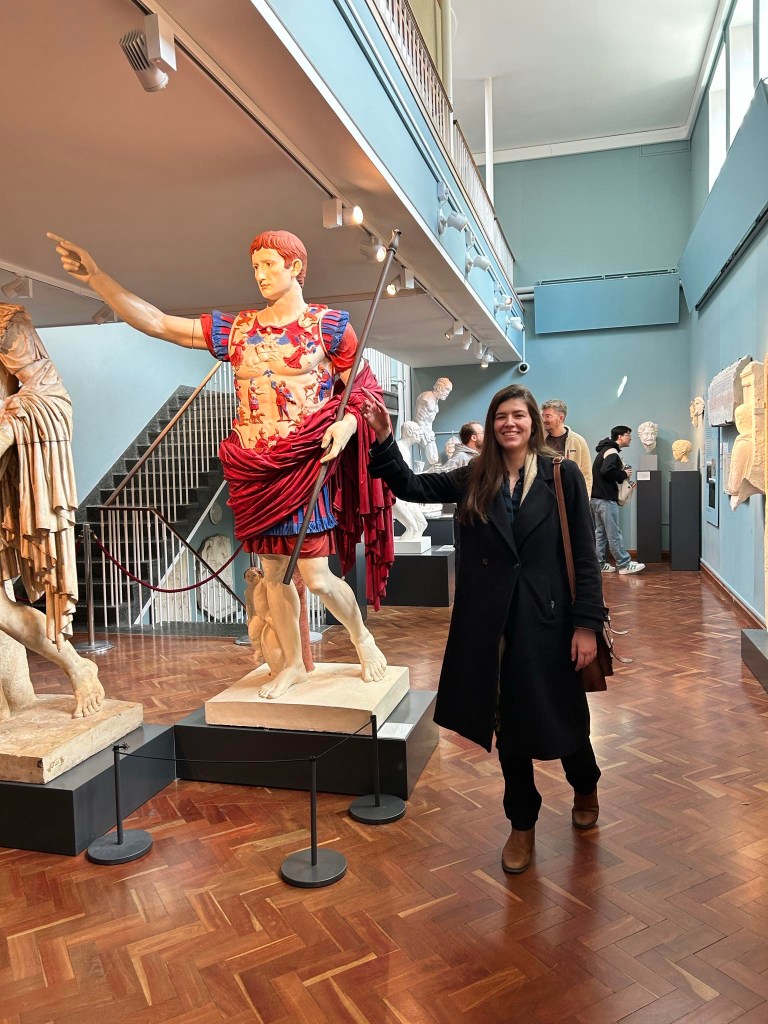
(Photo: The fabulous Florence, meeting our Augustus and his amazing technicolour dream cuirass)!

Sources

Bendicho, V.M.LM., ‘International Guidelines for Virtual Archaeology: The Seville Principles’, in Corsi, C., Slapšak, B., Vermeulen, F. (eds), Good Practice in Archaeological Diagnostics. Natural Science in Archaeology, 2013, 269-283. https://doi.org/10.1007/978-3-319-01784-6_16

Barcelo, J., ‘Visualizing what might be. An introduction to virtual reality in archaeology’, in Barcelo, Fonte and Sanders(eds), Virtual Reality and Archaeology, 2000, 9-36. https://www.researchgate.net/publication/200018330_Visualizing_What_Might_Be_An_Introduction_to_Virtual_Reality_in_Archaeology

Watterson, A., ‘Beyond Digital Dwelling: Re-thinking Interpretive Visualisation in Archaeology’, in Open Archaeology 1 (1), 2015, 119-130. https://doi.org/10.1515/opar-2015-0006

Special interview with Dr Alice König -Part 2: Introducing the Ancient Peace Studies Network

In a world often dominated by narratives of conflict, it can be easy to overlook the significance of peace—what it means, how it is built, and how it is represented. In the latest collab with the Visualising War and Peace podcast and Two Friends Talk History, director of the project and host, Dr. Alice König, offers a compelling exploration of ancient peace studies. Her insights reveal why understanding how past societies visualised and practiced peace can offer valuable lessons for today’s world.

If you haven’t yet tuned in, this episode is a must-listen for anyone interested in history, conflict resolution, and the power of storytelling to shape both ancient and modern societies. Here’s a glimpse of the fascinating conversation that awaits you.

From Visualising War to Visualising Peace

When Dr. König and her colleague, Nicolas Wiater, first launched the Visualising War project in 2017, their goal was to explore how representations of war throughout history have shaped cultural perceptions of conflict. However, as they delved deeper, they realized that one side of the story was missing.

Why was there so much emphasis on war, but so little on peace?

This observation inspired the expansion of the project into Visualising War and Peace, creating space to explore how peace and peacebuilding have been imagined, experienced, and remembered. Through this new lens, König aims to challenge the imbalance in historical narratives and bring peace studies into the spotlight.

Special Episode: The Ancient Peace Studies Network with Alice König Two Friends Talk History

In part 2 of our collaboration, Zofia guest-hosts the Visualising War and Peace Podcast to interview project founder, Dr. Alice König. In this conversation, Alice she unveils the groundbreaking Ancient Peace Studies Network—the first of its kind dedicated to examining how peace was understood, experienced, and represented across different ancient cultures.Discover why peace narratives have received far less scholarly attention than war stories, and how Dr. König's team is working to change that by investigating whose voices and experiences are reflected in ancient accounts of peace and reconciliation.What can ancient approaches to conflict resolution teach us about modern peacebuilding? In this thought-provoking special episode, we explore how elite-centered peace narratives shaped societal attitudes in antiquity and continue to influence our understanding of peace today. Dr. König reveals how her interdisciplinary network is "reading against the grain" of ancient sources to uncover ordinary people's lived experiences of peace—voices that have been historically marginalized but might offer valuable insights for contemporary peace literacy.Don't miss our conversation about bridging academic research with creative outreach, as Dr. König shares details about the network's collaboration with a professional theater company, NMT Automatics, and the upcoming multi-authored publication, "New Visions of Ancient Peace." This episode offers a perfect blend of historical scholarship and practical application, demonstrating how ancient wisdom might help us visualize and build more effective paths to peace in our modern world. We hope you enjoy this collab episode!If you would like to get in touch with Alice regarding her work, please visit the University of St Andrews' Visualising War website and the Visualising Peace Project.The music for the episode was composed by Jonathan Young, and Zofia Guertin mixed the episode. To get in touch and find out more about Two Friends Talk History:Find us on Instagram & TwitterSupport us through PatreonBuy our merch on RedbubbleExplore more resources and topics about the ancient world on ArchaeoArtistIllustration by Zofia GuertinIf you'd like to get in touch, email at twofriendstalkhistory@gmail.com. 

The Rise of Ancient Peace Studies

One of the most exciting aspects of the podcast episode is Dr. König’s introduction of the Ancient Peace Studies Network. This groundbreaking initiative, which she recently founded, is the first of its kind. While ancient military history is a well-established field, ancient peace studies is still in its infancy.

In the podcast, Dr. König explains that the network aims to:

  • Foster interdisciplinary research by bringing together scholars from both ancient and modern peace studies.
  • Challenge the dominance of elite perspectives in historical sources, seeking to reconstruct the lived experiences of ordinary people in times of peace.
  • Generate new insights into how concepts of peace were defined, visualized, and practiced in antiquity.

The network’s ambitious plans include the publication of a multi-authored book titled New Visions of Ancient Peace, which will present fresh perspectives on peace narratives and their real-world implications.

Stories of Peace: What Do We Imagine and Why?

One of the most thought-provoking segments of the interview focuses on peace storytelling. Dr. König highlights how certain depictions of peace became dominant in antiquity while others faded into obscurity. This disparity raises intriguing questions:

  • Why were some peace narratives celebrated while others were ignored?
  • How did stories of peace shape people’s expectations and experiences of stability or conflict?

In the podcast, Dr. König explains that ancient sources often reflect elite biases, focusing on peace as a political achievement of rulers and conquerors. Yet, by reading against the grain, scholars can reconstruct glimpses of peace from the perspective of ordinary citizens—farmers, artisans, and families—who lived through these times of fragile stability.

Why This Matters: The Real-World Impact of Peace Studies

As Dr. König eloquently argues, studying ancient peace is not merely an intellectual exercise—it has real-world implications. By expanding the scope of peace studies to include the ancient world, we gain new insights into how societies have constructed, preserved, and sometimes failed to maintain peace.

In a time when the world faces ongoing conflicts and the challenge of peacebuilding, looking back to the past can provide valuable lessons. The podcast episode leaves listeners with a powerful message: the stories we tell about peace—whether ancient or modern—shape the realities we strive for.

Don’t Miss Out – Listen to the Full Interview

This episode of the Visualising War and Peace podcast offers a rare opportunity to rethink how we conceptualise peace. Dr. Alice König’s passion for unearthing forgotten peace narratives and her commitment to interdisciplinary collaboration make for a captivating conversation that will leave you with plenty to reflect on.

🎧 Tune in now to gain a deeper understanding of the history of peace and its enduring relevance today. And if you find the episode as compelling as we did, share it with friends, colleagues, and anyone interested in exploring the human experience of peace—past and present.

If you would like to check out the volume, Visualising War Across the Ancient Mediterranean, out this month, you can purchase it here.

You can follow the Visualising War and Peace project on social media or get in touch directly by emailing: vispeace@st-andrews.ac.uk.

✨ Let’s keep the conversation going—and keep visualising peace.

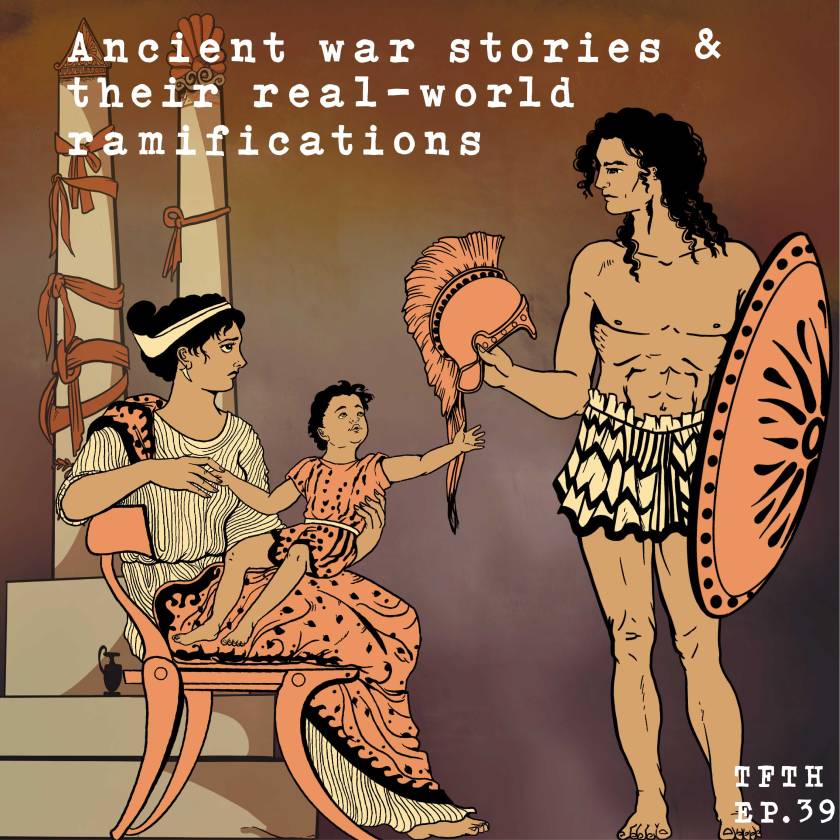
Special interview with Dr Alice König -Part 1: Ancient war stories and their real-world ramifications

To launch series 4 of Two Friends Talk History, I was very fortunate to interview Dr Alice König, for this special crossover episode. Alice’s is the dynamic host of the Visualising War and Peace Podcast, a project that researches ancient habits of visualising war and peace through discussions with multi-disciplinary creators, writers, researchers, soldiers, curators and many more. I spoke with Alice in 2023 about her project as it was then in-progress; in today’s discussion, she reflects on larger themes and the forthcoming publication about the Visualising War and Peace project that is being published by Routledge, titled, Visualising War across the Ancient Mediterranean: Interplay between Conflict Narratives in Different Genres and Media (Routledge 2025).

Podcast art by: Zofia Guertin

Special Episode: Ancient war stories and their real-world ramifications with Alice König Two Friends Talk History

The upcoming volume covers a broad geographic range of topics from several ancient cultures including Jewish, Greek, Roman, Persian and Christian, to unpick how modes of visualising war can be found intertextually across space and time. This innovative series also presents readers with a way to consider pivoting from traditional means of visualising the past and warfare through a detailed methodology in the introduction. It encourages readers and researchers of the future to study conflict narratives with new interrogative methods.

In part two, I will be interviewing Alice about how we tackle the study of war’s aftermath, conflict resolution, peacebuilding and peace itself were understood and experienced in different cultures and communities across antiquity. 

Please join us next time!

TFTH Classical Reception

In this week’s episode, Two Friends Talk History flips the script and I am interviewed by returning guest and expert on sex and gender in antiquity, Dr Briana King. This episode will be part one of an ongoing look at Classical Reception; a field of study that looks at how the ancient world is used in different media today. Our first conversation lays down the foundational context for understanding what it means when classical images and stories are incorporated into modern media through books, music, film and more! 
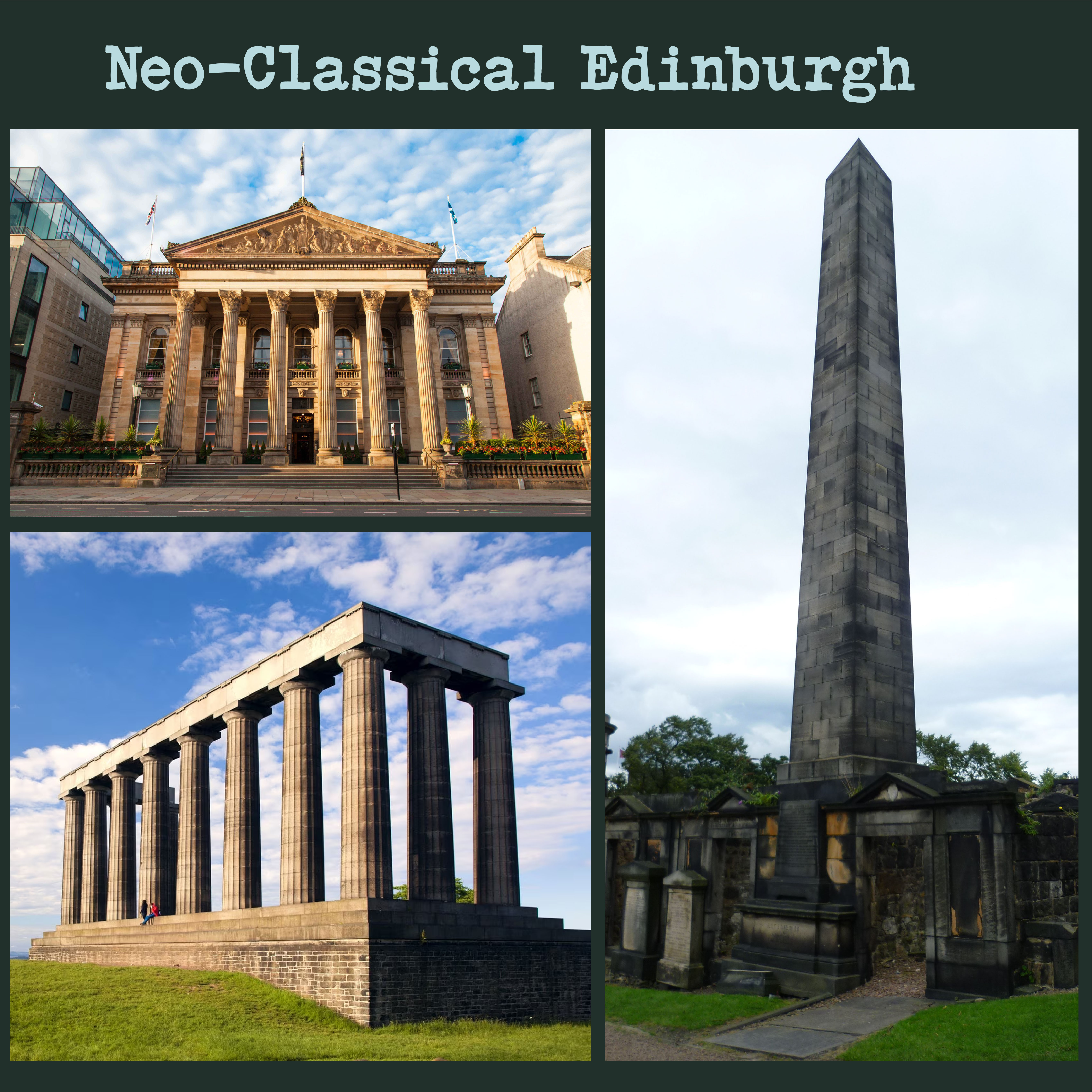
I explore the history of the transmission of the ‘Classical Past’ into the  Renaissance and Enlightenment periods, with a special focus on Neo-Classical Edinburgh and its architectural legacy of appropriating the past to project a colonial future of the British Empire. 

Classical Reception with Briana King Two Friends Talk History

What is Classical Reception?

The field of Classical Reception Studies examines the reception of classical Greco-Roman antiquity by later cultures, especially the post-classical ‘West’. This can involve “texts, images, objects, ideas, institutions, monuments, architecture, cultural artifacts, rituals, practices, and sayings.” (Grafton (2010), vii-viii). Lorna Hardwick, who has many publications on this topic, defines it as “the ways in which Greek and Roman material has been transmitted, translated, excerpted, interpreted, rewritten, re-imaged and represented”. This can encompass everything from the next season of the Blood of Zeus anime coming back to Netflix, a new Percy Jackson series coming soon on Disney+, and the upcoming live action remake of Disney’s Hercules.

Latin was part of the elite education in the middle ages, functioning as the language of scholarship and the church. Greek authors and texts were not available readily in the middle ages among scholars in the west, although the texts did remain in collections among the eastern Christian and Islamic centres of learning. The Renaissance involved an increase in the study and dissemination of classical texts in Greek into western Europe due to the collapsing Byzantine Empire, and its inhabitants relocating, reintroducing elite audiences to these Greek texts. In the 14th and 15th  (13xx seems a little early, are you sure?) centuries, reconstruction and redevelopment of buildings and land in Rome, and in the surrounding principalities, led to the rediscovery of large numbers of classical sculptures and architectural features that influenced art tastes into the 17th and 18th centuries. 

It is within this later phase of the dissemination and appropriation of the ‘classical tradition’ that is most associated with writers, artists, and architects consciously adopting classical models into the mainstream. The wars of the French, English, Portuguese, Spanish, Russians, Ottomans, and Dutch etc were fought to control colonial resources and expanding the home country’s trade interests. At the same time as elements of Humanist philosophies and Enlightenment thinking were circulating these empires, becoming rallying cries for some towards freedom and equality, the trafficking of enslaved people expanded across the contested territories. The virtuous philosophical aims of a shared humankind were reconciled with the barbarity of enslavement by looking to the Classical past to justify their empires, situating themselves within a continuum of conquest, and Empire within the heroic classical past.

Getting a Grand Tour Gap Year

Classical education became emblematic of elite education for the next two hundred years. Thus a “classical education” and defining what the past was and what it meant was only for the wealthy, and reflected their ideas of society, norms and values. 

Young British elites were on “Grand Tour” of the Classical world, served as an educational rite of passage among the young men of primarily British elite families. The travels of these young elites to Italy, Greece, France and Germany brought them in contact with classical art which “completed their education as English gentlemen” according to an 18th century historian Edward Gibbon.

The Neoclassical art movement coincided with the renewed emphasis on classical education the 18th century’s Age of Enlightenment, and was represented in the visual arts, theatre, architecture and decorative arts. This movement was also fuelled importantly by the excavations of Pompeii and Herculaneum. Elite collectors could go on their grand tours, observe excavations and purchase pieces of the ancient past. Once they returned home, they could have their homes decorated in the lasted fashions inspired by the frescos and stuccos being excavated. The principles of symmetry and simplicity within the arts aligned well with the precision of scientific rationality espoused by Enlightenment thinking.

In our next special dive into Classical Reception Studies, Dr King and I will look at the darker side of Classical Reception in a NSFW discussion about how the classical world is used in TV and film to depict acts of violence and sexual brutality. This episode may not be appropriate for younger listeners so listener discretion is advised. 

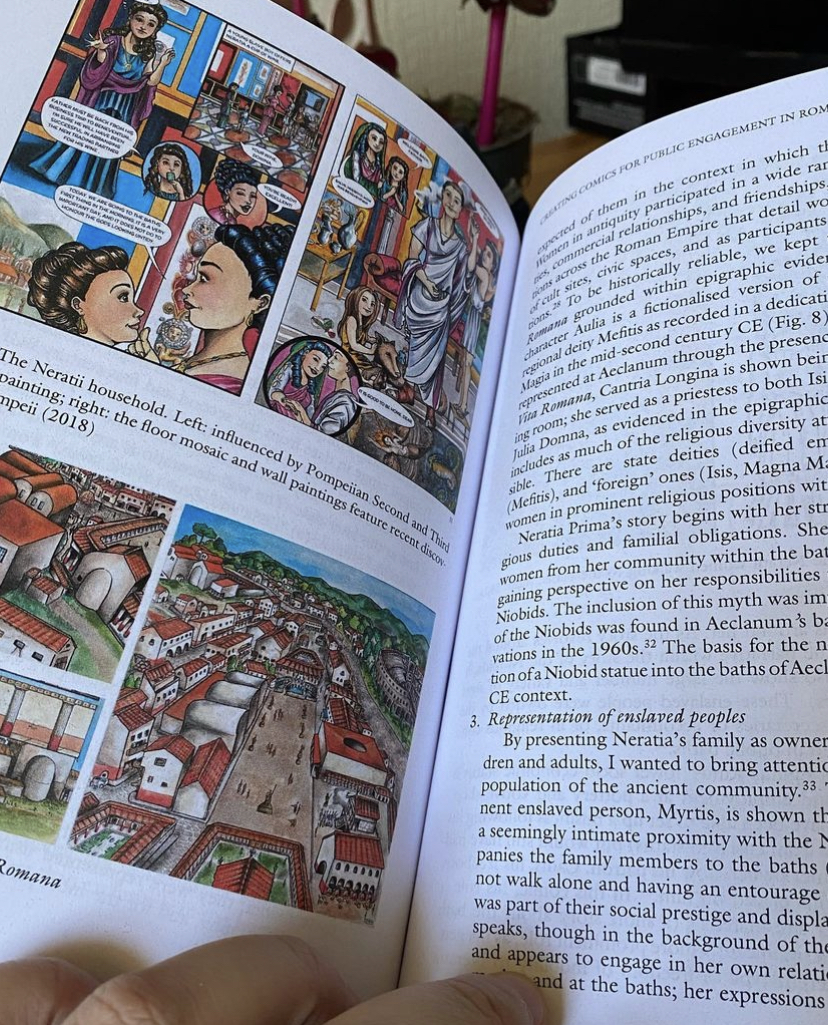
Classics and Comics

At the end of this episode, we discuss the exciting work being done with comics to engage with the ancient world. I will be giving a paper at a conference on Classics and Comics, graciously hosted by Universidad Autónoma de Barcelona (UAB), this October. I am really looking forward to hearing about the work in this field of Classical Reception Studies going on, particularly as it relates to comics! I am also looking forward to sharing my work for this conference with listeners soon.

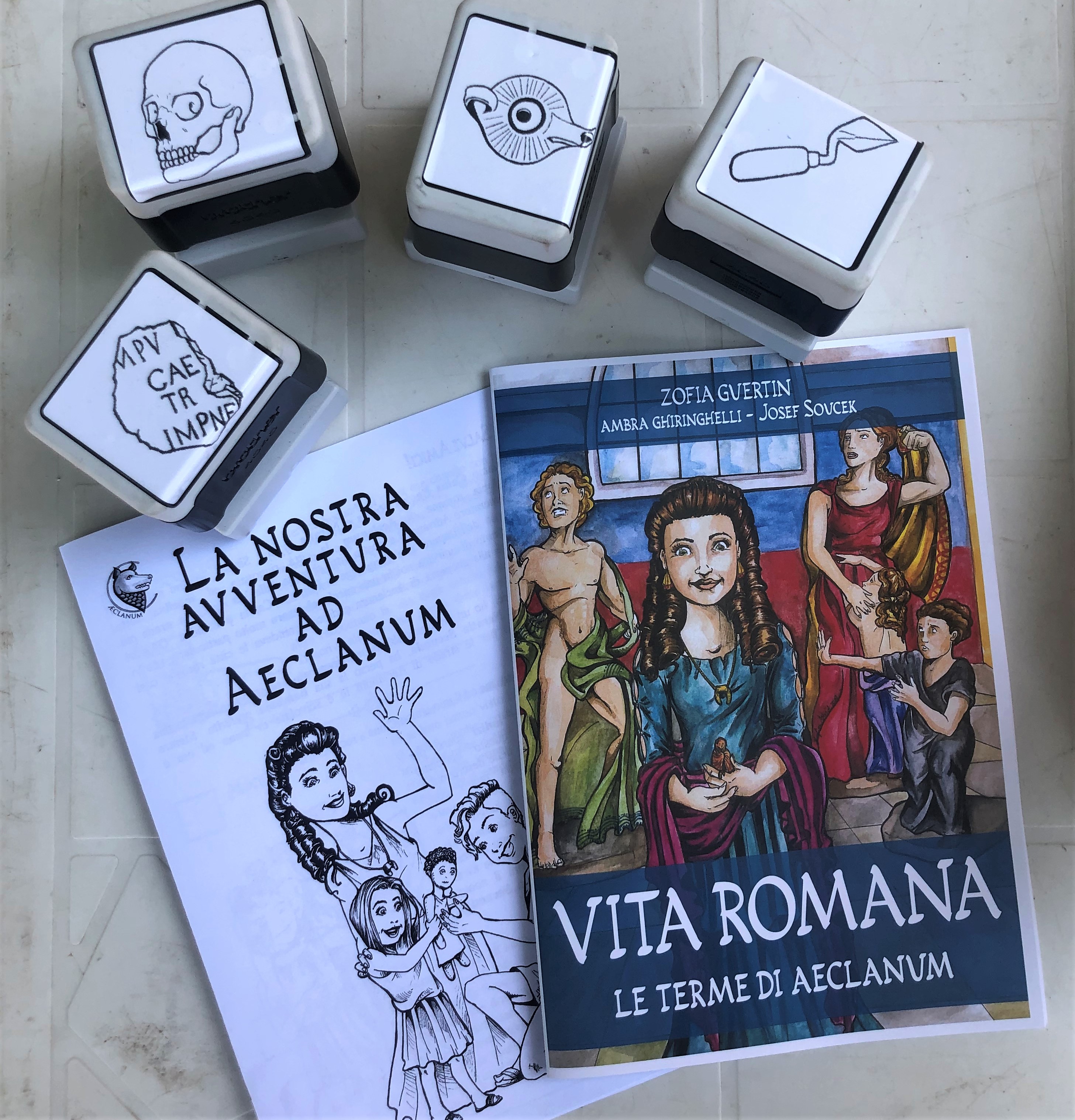
Now, as for my shameless self-promotion, here is a link to my publication on comics and classical archaeology discussed in the episode. My chapter in the Palgrave Macmillan volume, Comics, and Archaeology: https://link.springer.com/chapter/10.1007/978-3-030-98919-4_5

Click HERE download Vita Romana, or activity materials.

I am currently working on Chapter 1 of Ritualia, “Dancing with Dionysos”. Stay tuned for work in progress on Ritualia here on my website, and to view the introduction, check out my Webtoon Comic here!

To follow the spectacular Dr King’s academic work, check out her page on Academia.edu.

Suggested Readings

Grafton, Anthony., Glenn W. Most, and Salvatore, Settis (eds.), (2010). The Classical Tradition. Cambridge, Mass: Harvard University Press.

Beard, Mary; Henderson, John (2000). Classics: A Very Short Introduction. Oxford: Oxford University Press.

Kallendorf, Craig W. (2007). “Introduction”. In Kallendorf, Craig W. (ed.). A Companion to the Classical Tradition. Massachusetts: Blackwell.

Kaminski, Thomas (2007). “Neoclassicism”. In Kallendorf, Craig W. (ed.). A Companion to the Classical Tradition. Massachusetts: Blackwell.

Stray, C., and Hardwick, L. (2008). Companion to Classical Receptions. Hoboken: Wiley. 

Kovacs, & Marshall, C. W. (2016). Son of classics and comics / edited by George Kovacs and C.W. Marshall. (Kovacs & C. W. Marshall, Eds.). Oxford University Press.

Kovacs, & Marshall, C. W. (2011). Classics and comics / edited by George Kovacs and C.W. Marshall. Oxford University Press.

Platt, V. J. (2011). Facing the gods: epiphany and representation in Graeco-Roman art, literature and religion. Cambridge University Press.

Smythe, R. (2021-2023). Lore Olympus: Vol 1-3. Del Rey Publishing: London.

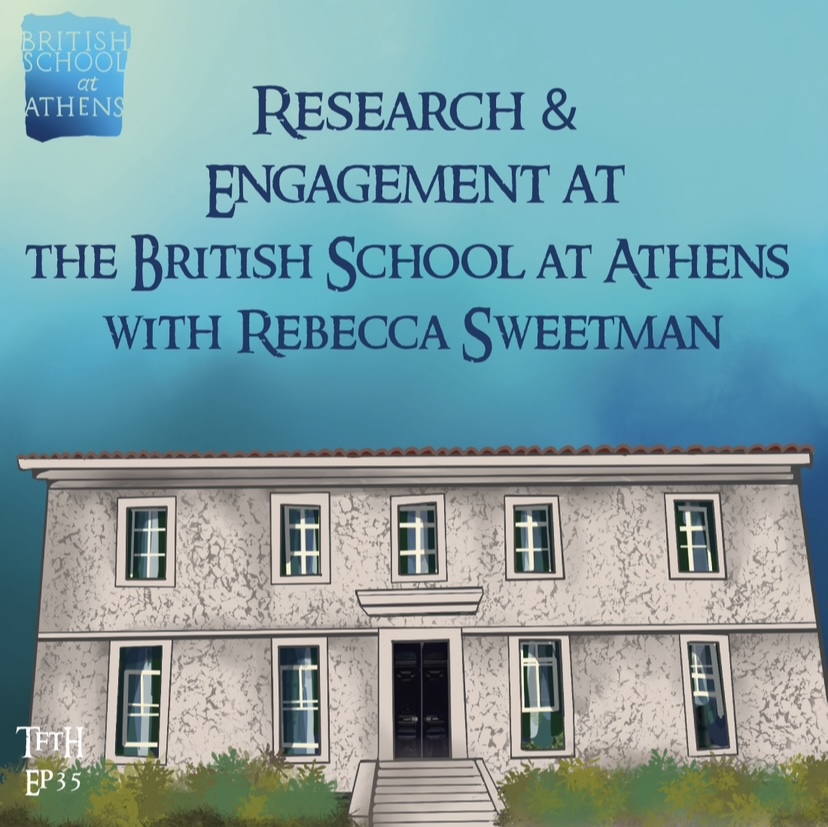
Research and Engagement at the BSA with Rebecca Sweetman

In this week’s episode, Zofia interviews the Director of the British School at Athens (BSA), Professor Rebecca Sweetman. We discuss the role and responsibilities of the institute and the exciting outreach she is leading with her fantastic teams in Athens and Knossos. 
With the 50th anniversary of the Fitch Laboratory coming up next year, we discuss how researchers, academics, artists, poets, and more are making use of the incredible library, archives, and collaborative space to engage with  Greece of the past and future. 

Listen Here to Our Discussion:

Research and Engagement at the BSA with Rebecca Sweetman Two Friends Talk History

Professor Sweetman has published on the religious networks and economies of Roman and Late Antique Crete, and the Peloponnesus. She is currently working on a project on the Cycladic islands and the networks that connected them throughout changing social circumstances in the Roman and Late Antique periods. Rebecca is also one of my PhD supervisors at the University of St Andrews! Follow this link, if you would like to read about Rebecca’s fascinating work!

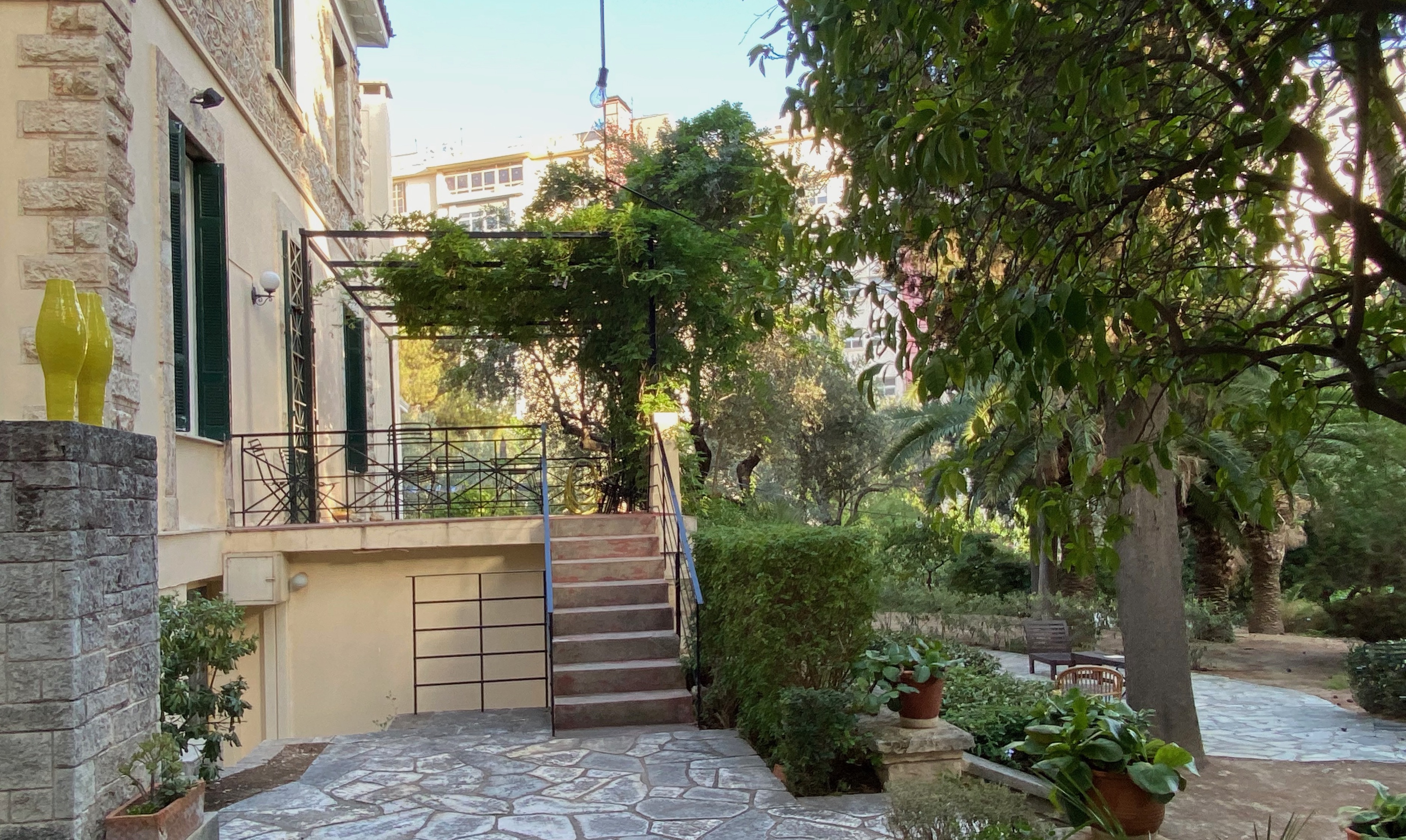
My visits to the BSA have always been productive and inspiring; I have met so many brilliant people there! The grounds of the Institution are gorgeous and like a little oasis in the middle of Athens. It is in the gorgeous and green Kolonaki neighbourhood, which has great amenities and is perfect for strolling. It is such a wonderful space of enriching chat and academic community. 

The BSA has a newsletter you can subscribe to if you’d like to find out more about their research, artist stays, and outreach events! CLICK HERE.


To get in touch with the BSA, you can email admin@bsa.ac.uk, and for more information about the exciting events taking place, check out the link here.
You can follow the exciting events going on at the BSA on TwitterFacebook , and Youtube !

To get in touch and find out more about Two Friends Talk History:
Find us on Instagram | Support us through Patreon  | Buy our merch on Redbubble

See you soon with new friends, on Two Friends.

Visualising War and Peace in Antiquity on TFTH

In this episode of Two Friends Talk History, I interviewed Senior Lecturer in Classics at the University of St Andrews, and founder of the Visualising War and Peace Project, Dr Alice König. In this interview, I asked Alice about ideas of representing war in antiquity, and if a concept like a ‘peace movement’ was possible in a period of Roman Imperium. We discuss the absences in war narratives, and war’s impacts on women and children, and then turn our attention to the podcast series that Dr König and Dr Nicolas Wiater, launched in 2021, the Visualising War and Peace podcast. The Visualsing War and Peace podcast has over 60 episodes and seeks to present listeners with cross-disciplinary and cross-cultural perspectives on how war and peace were visualised in the past and how new narratives these established frameworks are seeking to disrupt the ways we talk about, teach and reproduce conflicts.

Visualising War and Peace in Antiquity with Alice König Two Friends Talk History

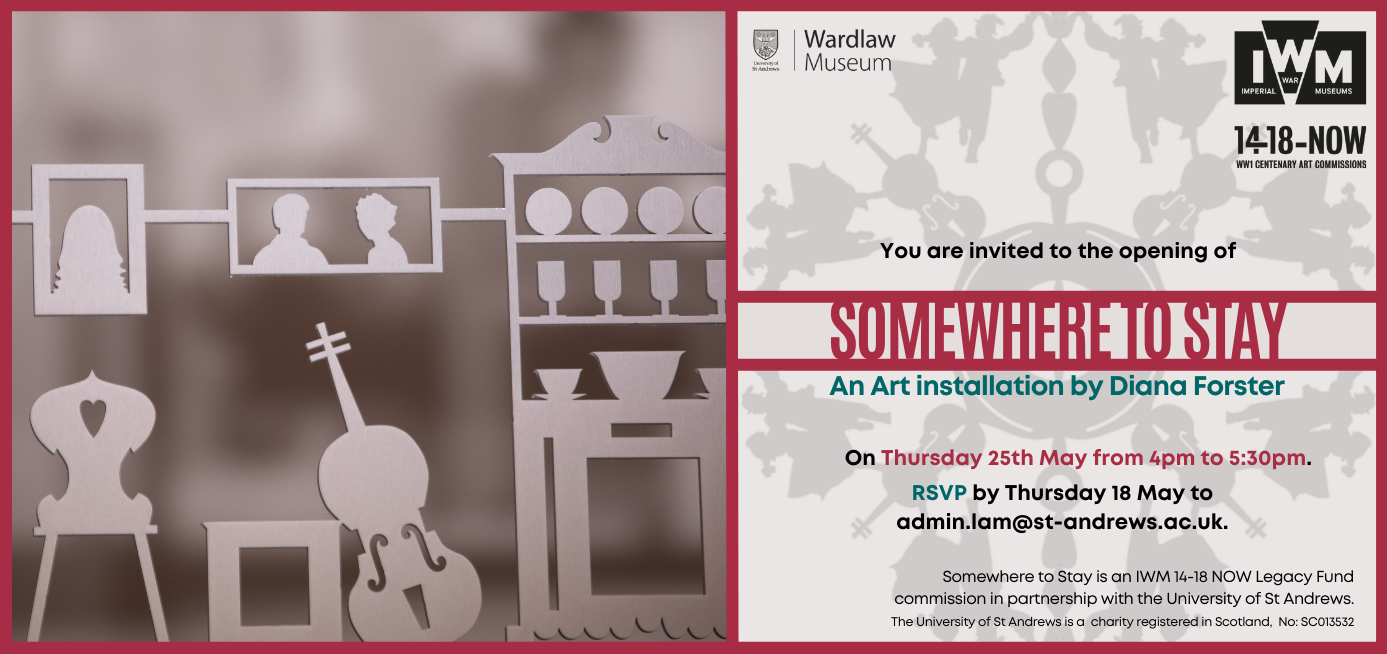
We also discuss the upcoming exhibition Alice has organised with the artist, Diana Forster, opening May 25th at the Wardlaw Museum in St Andrews, ‘Somewhere to Stay’. The exhibition focuses on the forced migration experienced by Diana’s mother, a young Polish woman, during WWII.
To hear Diana’s episodes, you can listen to Art and War with Diana Forster or Visualising Forced Migration Through History.

We also discussed the upcoming exhibition collaboration with Hugh Kinsella Cunningham,  titled ‘Picturing Peace in the Congo‘. If you would like to learn more, the exhibition is linked here.

You can get in touch with Dr Konig at the University of St Andrews and her work on the Visualising War and Peace project here. Alice is also on Twitter @KonigAlice or @VisualisingWar. You can also follow the project on Facebook and Instagram, and there is an excellent blog series that you can follow through the project website.

For links to show topics:
On the appropriation of Classics topics/symbols etc by alt-right groups, helpful scholarship can be read here on Pharos’ website: https://pharos.vassarspaces.net/

Tyranny in Antiquity on TFTH

In this week’s episode of Two Friends Talk History, Zofia is joined by Dr Sam Ellis, a Leverhulme Postdoctoral Fellow at the Chair of Ancient History in the University of Mannheim where  his project focuses on the use of language to legitimise political power in the Greek polis.  Sam is an expert in the language of tyranny in antiquity and the study of monocratic power in the Greek polis from the Archaic to the Hellenistic period.  

In this episode, we explore how the language used to frame the actions of sole rulers has created a construct of ‘tyrant’ that remains with us today.

Greek attitudes towards tyranny are the topic of this week’s podcast. It may surprise listeners to hear that these attitudes changed over time; from the early stages of the Greek polis (the city-state), the ruling aristocracy ruled as a group over the citizen body, with the eventual rise of some aristocrats into positions of sole-rulership in the mid-7th century BCE. 

These early sole-rulers tended to have popular political support and were generally viewed favourably among the citizens. 

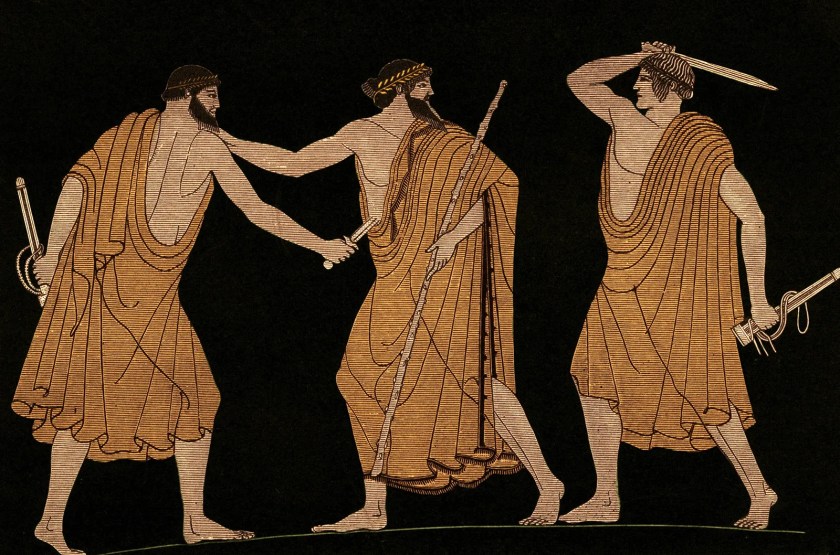
We discuss the Peisistratids of Athens in the podcast, one such family, whose founder, Peisistratus, was popularly received by the people for setting up law courts and investing funds into public projects like water fountains and religious buildings. The charismatic leadership of a sole-ruler could spur a relationship of political control through public support that rewarded the ruler with many types of honours. As we discuss, these types of relationships were precarious and could turn into tyrannicide, as was the case of the assassination of Peisistratus’ son, Hipparchus (brother of the sole-ruler, Hippias). The assassination was carried out by Harmodius and Aristogeiton and remained a famous story replicated across visual media for centuries afterwards.

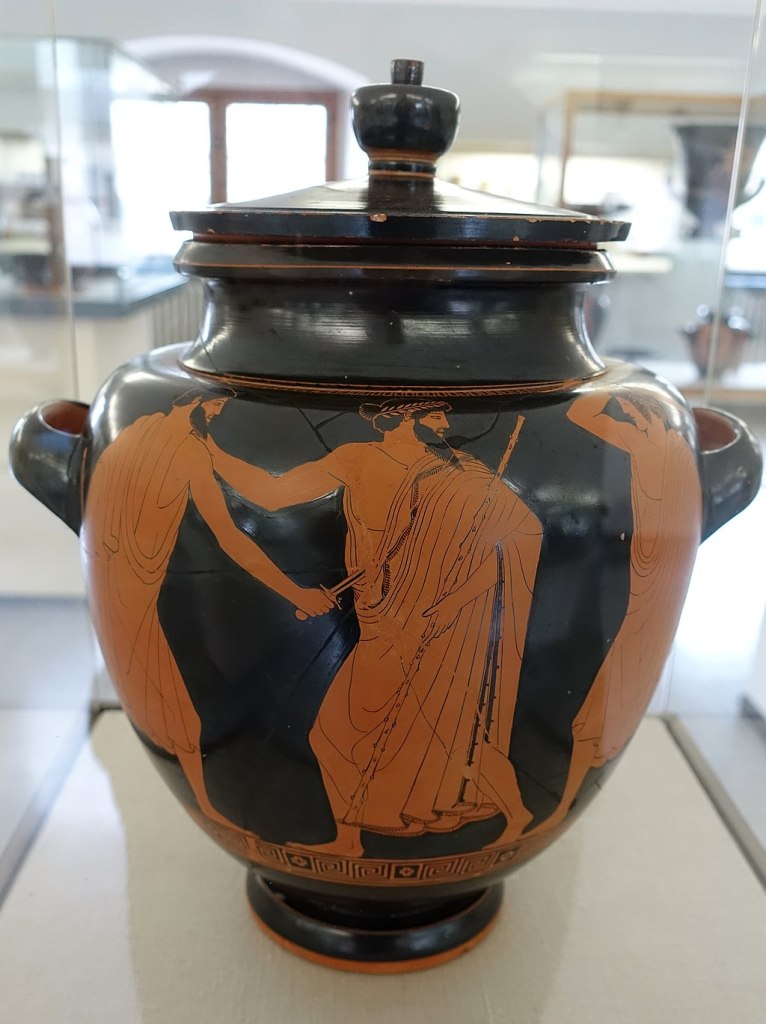
The Syriskos Painter’s stamnos, ‘Death of the tyrant Hipparchus’, 475-470 BCE (and illustration of actions); Roman copy of Aristogeiton and Harmodius sculpture.

The inspiration for the episode art was the sculptural pair of tyrannicides, originally commissioned by Antenor after the establishment of Athenian democracy. It was taken as war booty during the Persian Wars in 480 BCE, then returned after the fall of the Persian Empire by one of Alexander’s generals-turned-king. The sculpture was so famous that it inspired Roman copies, of which several survive; the most famous of which is in the National Archaeological museum of Naples. 

To learn more about the language, metaphors and stereotypes of ancient tyranny, check out the episode here:

Tyranny in Antiquity with Sam Ellis Two Friends Talk History

You can get in touch with Dr Ellis on the Universität Mannheim website here,  or you can follow him on Academia.edu. Sam is also on Instagram & Twitter @SamEllis1993. Seriously, check out his Instagram. The photos are stunning.

If you would like to check out some of Dr Ellis’ publications:

Ellis, S. (forthcoming). ‘Legitimising sole power in the Greek polis: A New Institutionalist approach’ in M. Canevaro & M. Barbato (eds.) New Institutionalism and Greek Institutions, Edinburgh: Edinburgh University Press.

Ellis, S. (2021). ‘Greek Conceptualisations of Persian Traditions – Gift-giving and Friendship in the Persian Empire’, Classical Quarterly 71.1,Cambridge: Cambridge University Press, 77–88.

Ellis, S. (forthcoming). Review of C. de Lisle (2021). Agathokles of Syracuse: Sicilian Tyrant and Hellenistic King. Oxford: Oxford University Press. Bryn Mawr Classical Review.

For further reading:

Brock, R. (2013). Greek Political Imagery: From Homer to Aristotle. London: Bloomsbury Academic.

Luraghi, N. (2013). The Splendors and Miseries of Ruling Alone. Wiesbaden: Franz Steiner Verlag GMBH.

Börm, H. (ed.). (2015). Antimonarchic Discourse in Antiquity. Stuttgart: Franz Steiner Verlag.

Thank you for checking out my blog !