October in Scotland has been, on occasion, described as so windy, “it’ll cut ye in half”. Locking myself indoors over this month to re-learn how to study has arguably been made easier by the poor weather. With the first month of my PhD done, and the piles of books I need to read steadily increasing, a kindly offer from my incredibly talented and successful bestie from Vancouver, to meet in Nice for a weekend, was pure class.
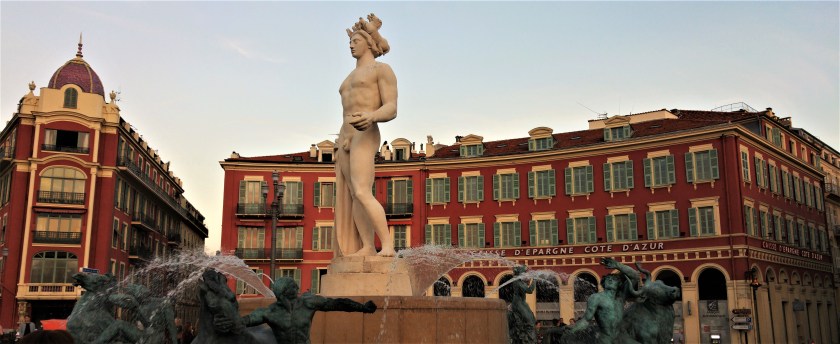
Place Massena et la Fontaine du Soleil.
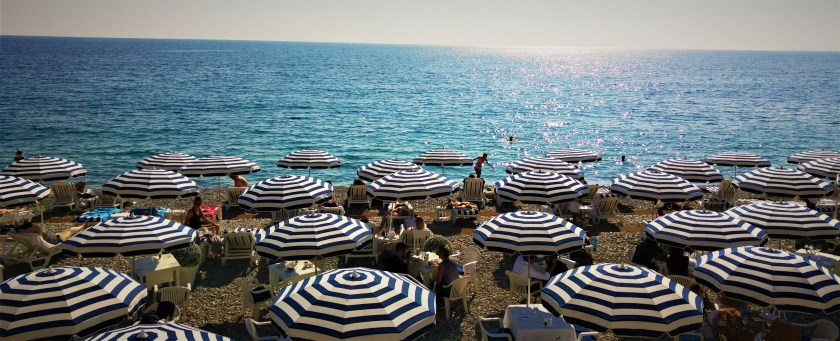
My last rendezvous with Nice was in 2008 (the youthful and relatively tattoo free main picture dates to then); the sights and smells of Nice are summed up for me by ‘ça m’a marqué’. To walk the Promenade des Anglais again in the October sunshine was a welcome change of study space.I wish I could say that I studiously read up on much of the history of Nice, but that would be a lie. We came for sun, beaches and the famous cuisine that characterize this gorgeous little spot of paradise.The open-air markets had spectacular varieties of sea salts and spices, with dried herbs and lavender filling the air in the narrow winding streets.
A picnic of local specialties
For a few short days, the ambling life was pretty spectacular. But the itch to see some of the ancient history in Nice was more powerful than delicious paté and fancy cocktails.
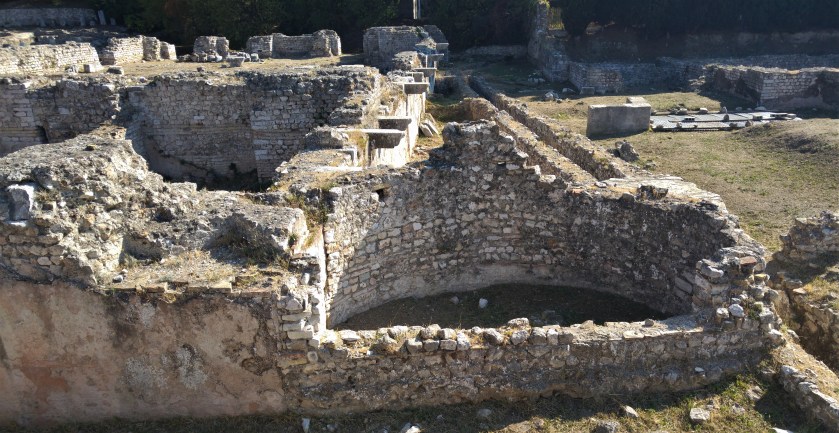
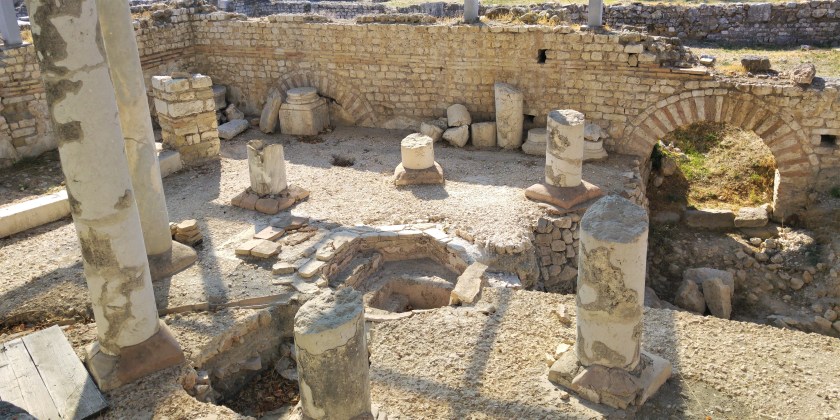
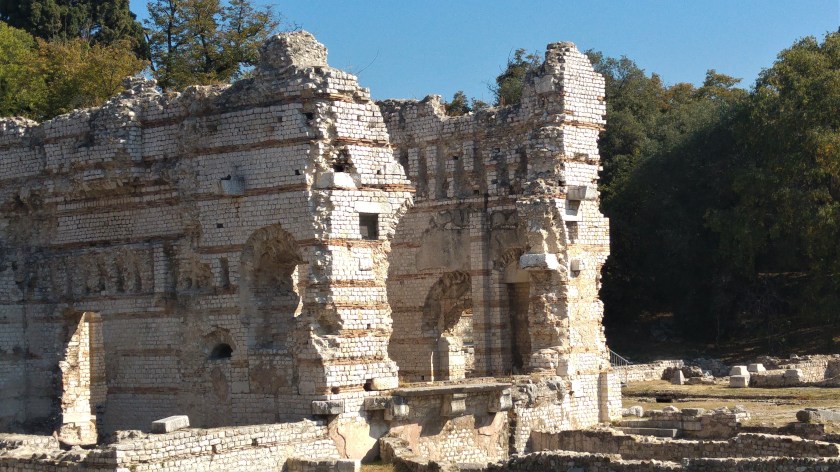
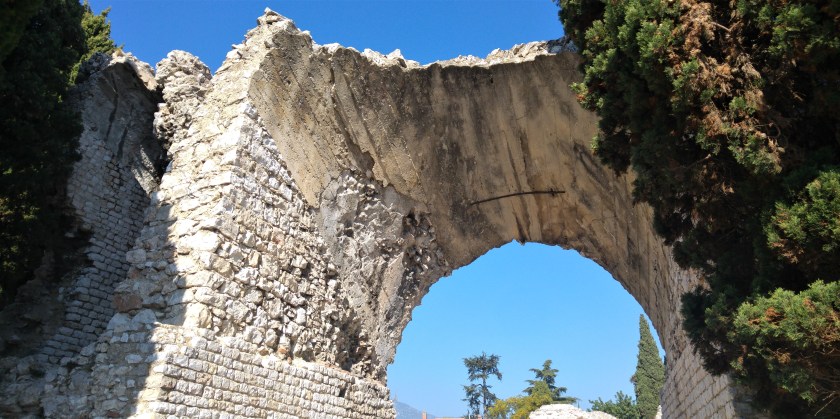
Site Archéologiques de Nice-Cimiez
Though in the city centre of Vieulle Nice the shops and amenities were all bustling, Sunday morning in the outskirts of town was effectively closed for business. The imperative task of finding coffee and croissants before exploring Roman ruins was nearly impossible. Eventually, we secured essential pastries and found the archaeological site of Cemenelum. The hilltop archaeological park is situated in the fairly posh and residential neighborhood of Cimiez, and contains a small but interesting portion of the Roman baths.
Eastern bath complex
This Roman city was built not far from an established Greek city, Nikaia, and under Augustus, it became the capital of the province of Alpes Maritmae, with occupation and development into the 4th century AD.
Western bath complex
Northern baths frigidarium
The bath complex and partial roads that remain were part of a bustling military encampment, servicing the legions as they passed through or remained stationed there. Some estimates have placed the inhabitants at 10,000, with a decent amount of seating in the amphitheater, back when it still had seats.
Amphitheater entrance
The face of habitation changed over time, and even with incursions from hostile tribes, Cemenelum maintained a community of Christians into the 7th and 8th centuries AD. The evidence of this phase is present in the houses that were built into the abandoned baths.
After a solid hike up to the site, it was time for a few remaining hours on the beach, and one last swim in the Mediterranean. With the first month of my PhD over, and the piles of books to read getting ever higher, a sunny weekend of ambling around in Nice was the perfect excursion as fall quickly turns to winter. Merci pour ce merveilleux voyage ma chère amie! A la bientot!
“I divided the earth from the heaven. I showed the paths of the stars. I ordered the course of the sun and the moon”. (Kyme Aretalogy in honour of Isis)
Since backpacking in Europe in 2001, I have been drawn to images and archaeological sites relating to Isis. There are some things that just strike the right chord for you. My first experience with Isis (in a Greco-Roman style) was at the Capitoline Museum in Rome.
Capitoline Isis, Rome (2014).
The statue fit my understanding of what classical sculpture was, and simultaneously had something a bit unusual. The features were so exquisitely carved, and the goddess’s accoutrements were unlike anything I had seen before. While visiting Pompeii during the same trip, I didn’t quite make the connection between the figure in the statue that I’d seen in Rome and the temple in which I had been standing.
During my undergraduate studies, I came across her again while reading Lucian’s ‘Metamorphosis (The Golden Ass)’. My attention was drawn to the way that Lucian described the power of this mysterious foreign goddess. What was so brash about Lucian’s novel was how much he subtly revealed, through winks and nods, about the mystery cult. He described esoteric celebrations, events and magical healing, all the while saying, ‘but it’s a secret, so I can’t really talk about it’. The story is familiar, in a Shakespearean kind of way, through all the hubris, metamorphoses, changes of fortune, and bawdy humour.
Isis-Thermoutis, Musee des Beaux Arts, Lyon (2017).
I was fascinated by this religious movement and how it functioned within the religiously pluralistic Roman society. Isis and her cult would ultimately provide some of the foundation of early Christian practices such as baptism, in addition to the depictions with Horus (the infant nursing on her lap is a dead ringer for the baby Jesus), presaging the metamorphosis into the Virgin Mary.
Isis (holding the snake) and Io (sitting atop the shoulders of the personified Nile) wall painting, Museo Nazionale Napoli (2014).
Jumping in with both feet, I was excited and wanted to understand more about this deity. However, my introduction to the topic began at a much later point in the history of the Cult of Isis; to understand the cult and its significance, I would need to go farther back and approach it more broadly.My Masters at the University of Edinburgh was spent exploring the Greek and Hellenistic routes of the cult, from multiple angles, to start filling in the picture (and creating many of my own pictures).
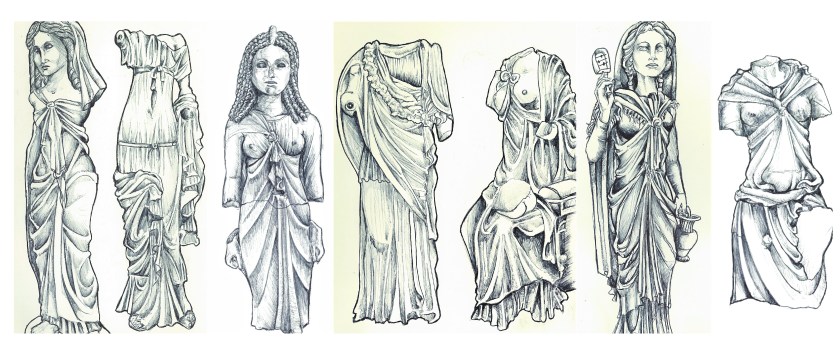
Some of my sketches of Isis statues over the last 4 years.
Isis’s power as a deity in Egypt rested in being the wife of Osiris and mother of Horus. She bridged the continuity of kingship from one king to his descendant. Her original function as the literal and symbolic role – as the throne and king-maker in Ancient Egypt – changes quite dramatically once the cult is exported into Greece and Italy.
Isis cradling Horus – from the MET archives.
While the period of Isis worship in the pre-Hellenistic era (before 323 BCE) is interesting, what has captivated me more specifically is what happens with the cult in the Hellenistic-to-Roman period. Like a character from Sailor Moon, she gained many headdresses, wands, tools, and visual associations with other deities (Demeter, Aphrodite, Athena, Nike).
This is the period that I focused on during my MSc, researching the symbols and iconography over time, with an emphasis on the tiny figurines used in her worship. What I discovered was that her strength was in her flexibility. Her image could be adapted to all needs, wants and interests. She could be a local or international deity. She could be closely affiliated with a particular ruling dynasty, or one specific location.
Another investigation looked at the cult’s relationship with Athenian government in Delos, and some of the territorial quarrels that occurred between temples run by different factions on the island. The evidence of a push and pull scenario between Delos’ new overlords (the Athenians) and the previous residents, in the mid-second century BCE. Running cults was big business and politically useful to establishing ones career, and the Athenians had no interest in allowing an Alexandrian ‘Egyptian’ to maintain a monopoly on the worship of Isis in this economically powerful port.
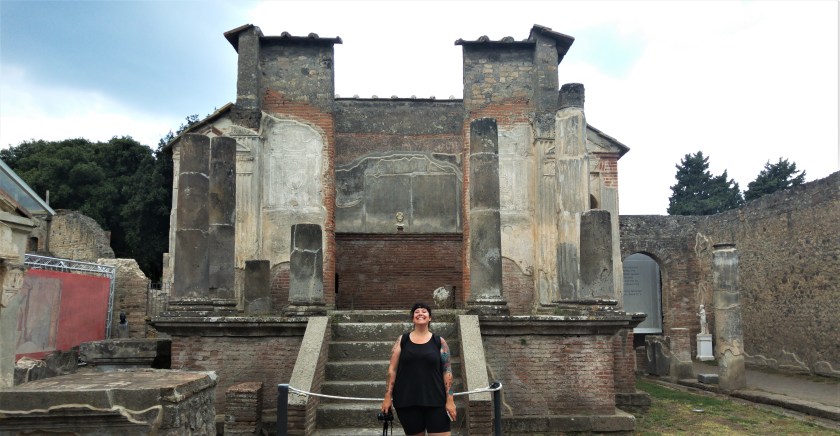
While few temples of Isis remain in even remotely good shape, Pompeii possesses on of the most famous examples.
Temple of Isis and her #1 fan, Pompeii (2016).
Pompeii had one of the best-preserved temples (though most of the decorations were long since removed and put in museums). It was fascinating to see the spread of Egyptian-looking artefacts which tend to denote cult membership. The items that were recovered from Pompeii are varied and showed decorations and materials of incredibly high quality that were made for, and used by, the Temple of Isis.
Another leg of the journey in my first large research project involved a trip to Palestrina (ancient Praeneste), some 40 km east of Rome. Part of what I wanted to see was the Egyptian artefacts, which remain some of the most exquisite examples of mosaic work from ancient history.
The Nile Mosaic of Palestrina, Italy (2014).
The Nile Mosaic of Palestrina was breath-taking in person and represented an interesting fusion of culture and appropriation of the Hellenistic Alexandrians and the native Egyptians. Although it is an uneven cultural balance, with the prioritising of the Macedonian elite over the native Egyptians.
It is a rare gem of the exquisite mosaic work that was part of art market in Italy, before the Rome dominated the Mediterranean. It highlighted aspects of Egyptian cult which would find its way into Italy, though altered for Italian tastes.
This September I will be stepping into the subject and delving deeper into urban design, Egyptian architecture and the art styles that appear in Roman cities. There are so many aspects and angles to investigate with this topic, and being able to work on a PhD toward this end is like a dream come true. There are still so many sites, statues, and sistrums to see in my journey into my studies of this Cult of Isis!
For the last few months I have taken a hiatus from writing my blog to focus on applying for a PhD at the University of St. Andrews. What a harrowing adventure! From start to finish, it was a good 3-month process with dozens of re-writes, stress and the agonizing wait to hear back. Even starting early, and following advice from friends and online, there were so many unknowns going into it. There were many moments of self-doubt, which had the uncanny ability to creep in when I needed it the least. With the support of some amazing teachers, mentors and friends, I managed to get someone interested in the incredibly nerdy stuff I love – Roman Aegyptiaca. In a post coming soon I will write about what that is, but for now…I will be studying Egyptian-looking things in Roman cities.
Khoiak Procession from the Nile Mosaic of Palestrina, Italy (2014)
While the outcome might seem straightforward, (person X likes (topic), studies Y = goes on to PhD) the path is rarely as clear as this. An interesting part of the curation on social media, is all of the crap that you don’t want people to see can easily be ignored, not reported or underplayed. I focus and emphasize the things that I am most proud of, that arguably demonstrate a clear connection to my goals and objectives. It’s not always a conscious choice, but it excites me to share upcoming adventures (research trips, excavation work, conferences etc), and even if those activities are the exception to fairly humdrum periods of time, I try focus on the positive and engaging elements in my life. That curation presents a deceptively well-planned and linear pathway however.
Roman road excavation. Merida, Spain (2014)
Like many people in the ‘millennial’ category, I have taken a strange circuitous route to finding a path. For many years I was uncertain what it was I wanted to do, or how I would even get there. My professional or academic shortcomings would emerge when I contemplated pursuing any concrete direction. Supporting myself through school involved things that looked remarkably unrelated: Italian train information CSR, custom picture framer, freelance artist, call centre CSR, book and video store sales person, maternity store sales clerk, telecommunications CSR, office administrator for an engineering firm, work-study intern with a museum, housing assistant, university credit secretary, repairs assistant, catering delivery driver, and endless amounts of ‘exposure’ work (free) and side-hustle to get through.
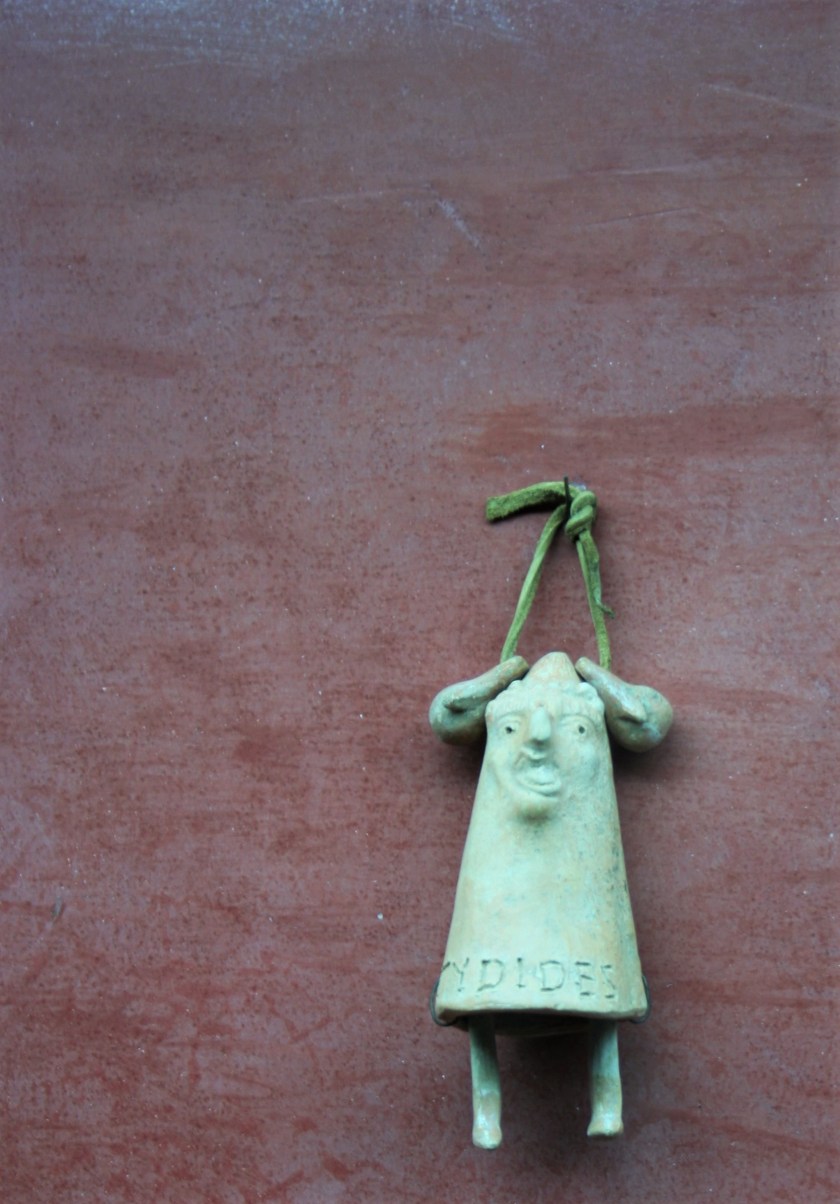
‘Work for exposure? Oh can I?’ Roman wind chime. Merida, Spain (2014)
Despite working in areas that for many would happily suffice as a career, I have always been half in and half out. Every work placement is an opportunity to learn useful skills, but nothing had any real resonance to me or inducement to stay long term. I always had an eye to what might be ahead and to apply to any and every opportunity, often ending comfortable employment for a scrambling uncertainty.
Egyptian relief. Louvre, Paris (2016)
Sure, I love ancient history, archaeology and art…but what can I really do with all this?
Throughout all of that, I knew I wanted to spend my life studying and sharing aspects of ancient history through art and writing, but unsure as to what my mixed-bag of skills would allow me to do. When I drew all of my work experience, hobbies and passions together a picture emerged that put the question to rest: I want to be an educator of Ancient History. Fundamental to this was attaining a PhD, and getting more focused and industry specific work experience.
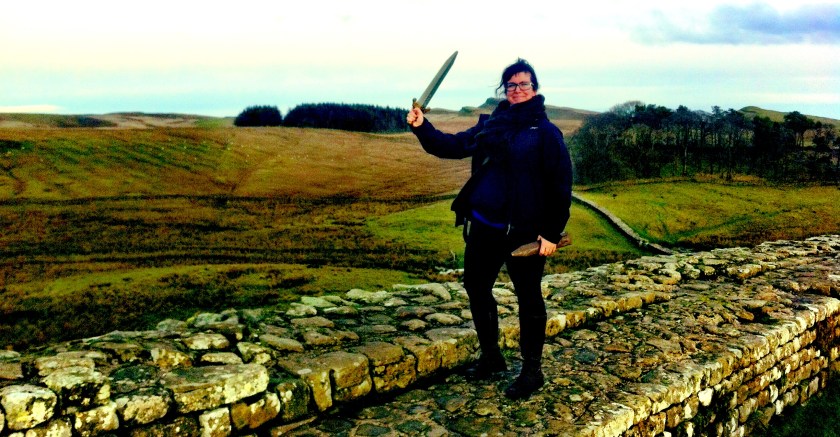
See? So much time spent on ancient walls. Hadrian’s Wall, England (2013)
Having been accepted to St. Andrews, I now have several months to plan and prepare – skills my varied work experience has hammered into me. Much of the existential angst of ‘what will I do and where will I be next?’ can finally be put to rest for the next few years. With the patchwork of experience that has sustained me, now behind, I look forward with more clarity and focus.

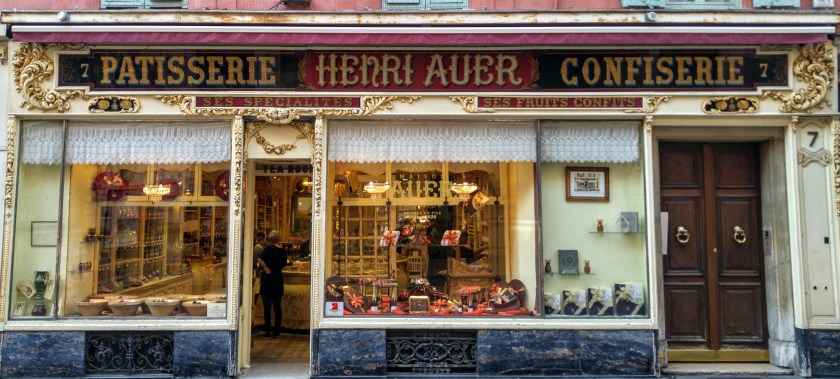
 I wish I could say that I studiously read up on much of the history of Nice, but that would be a lie. We came for sun, beaches and the famous cuisine that characterize this gorgeous little spot of paradise.
 The open-air markets had spectacular varieties of sea salts and spices, with dried herbs and lavender filling the air in the narrow winding streets.


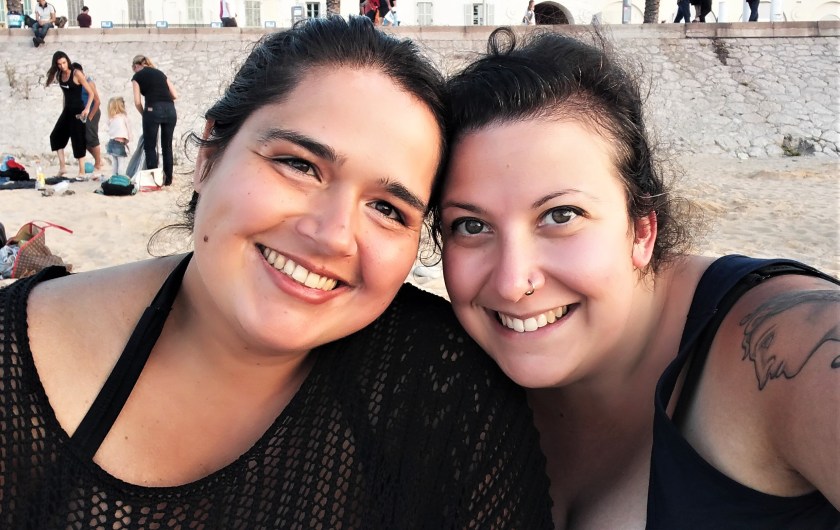 Merci pour ce merveilleux voyage ma chère amie!
 “I divided the earth from the heaven. I showed the paths of the stars. I ordered the course of the sun and the moon”. (Kyme Aretalogy in honour of Isis)


 My Masters at the University of Edinburgh was spent exploring the Greek and Hellenistic routes of the cult, from multiple angles, to start filling in the picture (and creating many of my own pictures).




 There are still so many sites, statues, and sistrums to see in my journey into my studies of this Cult of Isis!



 ArchaeoArtist
You must be logged in to post a comment.