Monuments and Memory: Dionysius of Halicarnassus and the Story of Rome


When we think of ancient historians, names like Livy or Herodotus often come to mind. But Dionysius of Halicarnassus deserves a closer look. Around 30 BC, Dionysius was a Greek scholar who moved to Rome during the early days of the Empire. There, he produced Roman Antiquities, a sweeping history of Rome from its mythical beginnings up to the First Punic War. Though 15 titles of his work are known, 13 survived in one form or another; his work remains a crucial source for early Roman history, standing alongside Livy’s accounts.
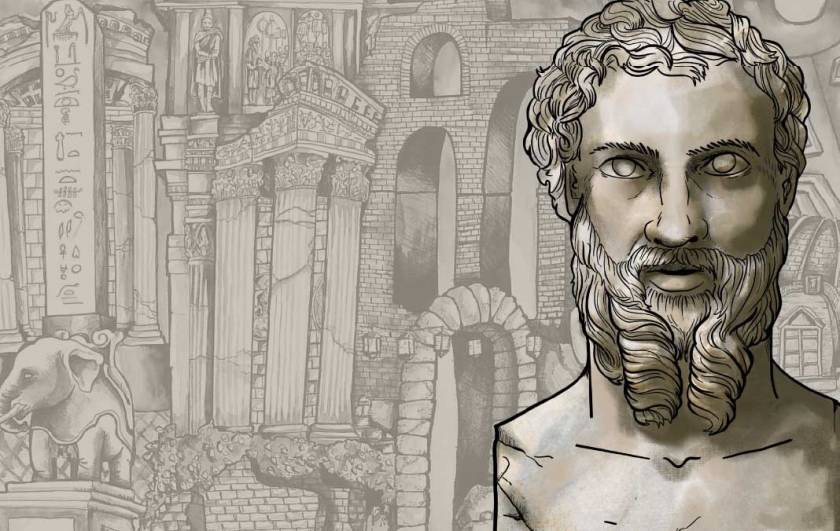
Dionysius of Halicarnassus and ruins of Rome by Zofia Guertin

Theatre of Pompey plan and Dionysius of Halicarnassus. Illustration by Zofia Guertin.

Dionysius wasn’t just a historian—he was also a master of rhetoric. His writings aimed to explain and justify Roman culture to a Greek audience, blending historical detail with rhetorical theory. In fact, he often used his history as a practical showcase of rhetorical principles. Beyond history, he wrote insightful critiques of famous Greek orators like Demosthenes and Isocrates, praising Roman writers for returning to classical Greek ideals over more ornate styles.

In this episode of Two Friends Talk History, Zofia welcomes Stefano Carlo Sala, a PhD candidate at the University of St Andrews, to discuss Dionysius of Halicarnassus—a key figure in Roman historiography.

Dionysius of Halicarnassus with Stefano Carlo Sala Two Friends Talk History

They explore how Dionysius, a Greek historian in Augustan Rome, used monuments and myths to present early Rome as a fundamentally Greek city. Through comparisons with Livy and Polybius, Stefano unpacks Dionysius’ unique approach to storytelling, monumentality, and cultural identity.


Brick and Marble. Illustration by Zofia Guertin.

While Dionysius of Halicarnassus and Livy both wrote about the early history of Rome, their approaches reveal striking differences—especially in how they describe the city’s monuments. Dionysius, writing for a Greek-speaking audience unfamiliar with Rome’s layout, offers detailed observations about buildings still visible in his time, even noting which ones he personally visited. Livy, on the other hand, paints a broader picture centered around familiar Roman landmarks like the Forum and Capitol, assuming a Latin-speaking readership already acquainted with the city. Dionysius’s attention to architectural detail connects to his larger ideological project: presenting Rome as the heir to Classical Greece. This vision runs through his historical work, where he draws frequent parallels between early Roman and Classical Greek monuments, values, and myths. By doing so, Dionysius not only makes Roman history more accessible to Greek readers but also argues that Rome deserves a central place in the Greek cultural tradition. His comparisons—even when archaeologically inaccurate—serve a deeper symbolic purpose, showing Rome as both the continuation and the future of Greece’s classical legacy.

💡 Topics covered:

  • Dionysius’ blending of rhetoric and history
  • Why monuments mattered in shaping Rome’s past
  • Connections between Classical Greece and Archaic Rome
  • How historians under Augustus crafted Rome’s legacy
  • The political and cultural stakes of memory

Whether you’re into ancient history, architecture, or historical narratives, this episode offers a rich perspective on the ways history gets written—and rewritten.

Sources

Edlund, I. (1980). Livy and Dionysios of Halikarnassos as Roman archaeologists in Rivista di Archeologia vol.4, pp. 26-30. You can download for free: Here.

Wiater, N. (2011). The Ideology of Classicism: Language, History, and Identity in Dionysius of Halicarnassus. (Untersuchungen zur antiken Literatur und Geschichte; Vol. 105). de Gruyter.

Stefano’s Academia Page and Publications:

Carlo Sala, S. (2025). Law as a catalyst and remedy for civic violence in early Rome : two examples from Dionysius of Halicarnassus, in Cahiers des études anciennes [En ligne], LXII | 2025. URL: READ HERE ONLINE.

If you would like to follow Stefano, you can join him on LinkedIn: HERE   or Academia.edu: HERE !

🔗 Support the show on Patreon at Patreon.com/Archaeoartist
📸 Follow on Instagram @TwoFriendsTalkHistory

Invisible Chains: Human Trafficking in Antiquity with Florence Felsheim

What did it mean to be bought, sold, and sexually exploited in the ancient world? In this powerful episode of Two Friends Talk History, Zofia is joined by doctoral candidate Florence Felsheim to explore the hidden realities of sexual trafficking in ancient Greece and Rome. Drawing on literary texts, archaeological evidence, and cognitive science, Florence unpacks how systems of enslavement and exploitation operated in societies often romanticized in popular culture.

We examine the scale of the ancient slave trade, the gendered dimensions of exploitation, and how enslaved women were commodified—expected to provide not just labor, but sexual access. From Roman brothels to banquet halls, the episode reveals how normalized sexual violence was embedded in the fabric of ancient daily life.

As part of Sexual Violence Awareness Month, this conversation sheds light on uncomfortable histories, connecting past systems of abuse to present-day conversations on power, consent, and human dignity. Listener discretion is advised.

Invisible Chains: Human Trafficking in Antiquity with Florence Felsheim Two Friends Talk History

Human Trafficking in the Ancient World: A Forgotten Reality

When most people think of human trafficking, they imagine a modern crisis. However, the practice of exploiting people for labor, sex, and servitude dates back thousands of years. In the ancient world, trafficking was not only common—it was institutionalized and deeply woven into the fabric of many societies.

In ancient Mesopotamia, Egypt, Greece, and Rome, slavery was a cornerstone of the economy. Prisoners of war, kidnapped foreigners, and even impoverished citizens were often sold into slavery. Unlike modern trafficking, which is largely illegal and hidden, ancient systems openly supported human trade. Markets for slaves were publicly established and legal codes could regulate their trade and treatment.

Women and children were particularly vulnerable. Many were trafficked for domestic service, labor, alongside sexual exploitation. In ancient Greece, for instance, women were commonly sold into brothels or forced to work as concubines. Rome’s vast empire relied heavily on enslaved people, many of whom were captured from conquered territories and transported long distances.

Though the term “human trafficking” didn’t exist in antiquity, the mechanisms of coercion, transport, and exploitation mirror modern patterns. Individuals lost autonomy, families were torn apart, and countless lives were shaped by violence and subjugation.

Understanding the ancient roots of human trafficking challenges the myth that it’s a purely modern problem. Instead, it reveals a tragic continuity in human history: the persistent commodification of people. While laws and attitudes have evolved, the underlying injustice remains disturbingly familiar.

By studying trafficking in the ancient world, we can better understand the cultural, economic, and political forces that continue to allow it today. Acknowledging its history is a step toward dismantling it in the present.

Speaking Through Objects

Moregine bracelet, illustrated by Zofia Guertin.

In 2000, archaeologists at Moregine, near Pompeii, uncovered a gold snake-shaped bracelet inscribed “dominus ancillae suae” (“the master to his very own slave girl”) on the body of a woman fleeing the eruption of Vesuvius. Found alongside other jewelry and coins, the bracelet, weighing about 500 grams, is crafted to coil three times around the arm. Its inscription has sparked debate: it may have been a gift to a domestic slave, a freedwoman, or a slave prostitute, or a metaphorical gift between lovers. The discovery highlights complex social dynamics and the harsh realities of slavery in ancient Roman society.

Resources

  • Levin-Richardson, Sarah. “Modern Tourists, Ancient Sexualities.” Pompeii in the Public Imagination from Its Rediscovery to Today. Oxford: Oxford University Press, 2011.
  • Keuls, Eva C. Reign of the Phallus : Sexual Politics in Ancient Athens. Berkeley, CA: University of California Press, 1994.
  • McClure, Laura. Phryne of Thespiae : Courtesan, Muse, and Myth. New York, NY: Oxford University Press, 2024.
  • Funke, Melissa. Phryne : a life in fragments. London : Bloomsbury Academic 

🌍 Sexual Violence Support Resources

If you or someone you know needs support, here are trusted organizations offering help across the globe:

1. RAINN (USA/global support)
🔗 rainn.org
📞 1-800-656-HOPE (4673)
💬 24/7 online chat

2. UN Women – End Violence Against Women
🔗 unwomen.org

3. The Survivors Trust (UK)
🔗 thesurvivorstrust.org
📧 info@thesurvivorstrust.org

4. Women Against Violence Europe (WAVE Network)
🔗 wave-network.org

5. Child Helpline International (for youth/caregivers)
🔗 childhelplineinternational.org

6. UNFPA – Global Helpline Directory
🔗 Global helpline list

7. Amnesty International – Gender & Sexuality Support
🔗 amnesty.org

💻 Online & Anonymous Support

8. Lifeline Chat (24/7, anonymous)
🔗 suicidepreventionlifeline.org/chat

🔐 Tip: Use a VPN or private browser if privacy is a concern. Always contact local emergency services if in immediate danger.

Visualising War and Peace in Antiquity on TFTH

In this episode of Two Friends Talk History, I interviewed Senior Lecturer in Classics at the University of St Andrews, and founder of the Visualising War and Peace Project, Dr Alice König. In this interview, I asked Alice about ideas of representing war in antiquity, and if a concept like a ‘peace movement’ was possible in a period of Roman Imperium. We discuss the absences in war narratives, and war’s impacts on women and children, and then turn our attention to the podcast series that Dr König and Dr Nicolas Wiater, launched in 2021, the Visualising War and Peace podcast. The Visualsing War and Peace podcast has over 60 episodes and seeks to present listeners with cross-disciplinary and cross-cultural perspectives on how war and peace were visualised in the past and how new narratives these established frameworks are seeking to disrupt the ways we talk about, teach and reproduce conflicts.

Visualising War and Peace in Antiquity with Alice König Two Friends Talk History

We also discuss the upcoming exhibition Alice has organised with the artist, Diana Forster, opening May 25th at the Wardlaw Museum in St Andrews, ‘Somewhere to Stay’. The exhibition focuses on the forced migration experienced by Diana’s mother, a young Polish woman, during WWII.
To hear Diana’s episodes, you can listen to Art and War with Diana Forster or Visualising Forced Migration Through History.

We also discussed the upcoming exhibition collaboration with Hugh Kinsella Cunningham,  titled ‘Picturing Peace in the Congo‘. If you would like to learn more, the exhibition is linked here.

You can get in touch with Dr Konig at the University of St Andrews and her work on the Visualising War and Peace project here. Alice is also on Twitter @KonigAlice or @VisualisingWar. You can also follow the project on Facebook and Instagram, and there is an excellent blog series that you can follow through the project website.

For links to show topics:
On the appropriation of Classics topics/symbols etc by alt-right groups, helpful scholarship can be read here on Pharos’ website: https://pharos.vassarspaces.net/

Tyranny in Antiquity on TFTH

In this week’s episode of Two Friends Talk History, Zofia is joined by Dr Sam Ellis, a Leverhulme Postdoctoral Fellow at the Chair of Ancient History in the University of Mannheim where  his project focuses on the use of language to legitimise political power in the Greek polis.  Sam is an expert in the language of tyranny in antiquity and the study of monocratic power in the Greek polis from the Archaic to the Hellenistic period.  

In this episode, we explore how the language used to frame the actions of sole rulers has created a construct of ‘tyrant’ that remains with us today.

Greek attitudes towards tyranny are the topic of this week’s podcast. It may surprise listeners to hear that these attitudes changed over time; from the early stages of the Greek polis (the city-state), the ruling aristocracy ruled as a group over the citizen body, with the eventual rise of some aristocrats into positions of sole-rulership in the mid-7th century BCE. 

These early sole-rulers tended to have popular political support and were generally viewed favourably among the citizens. 

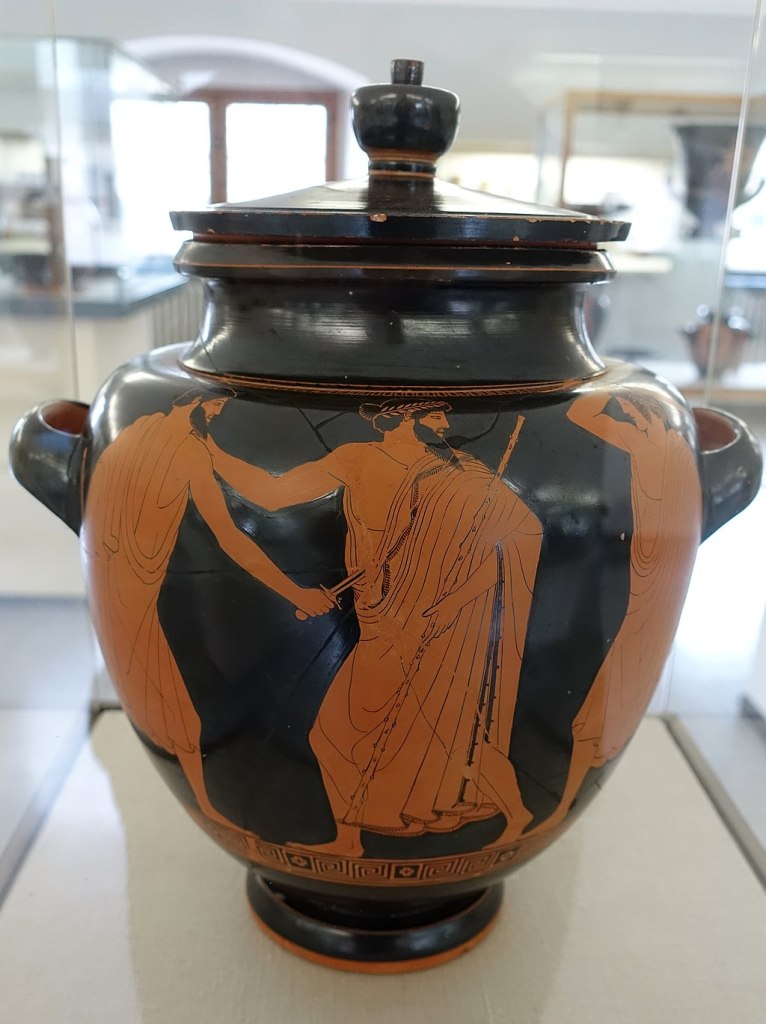
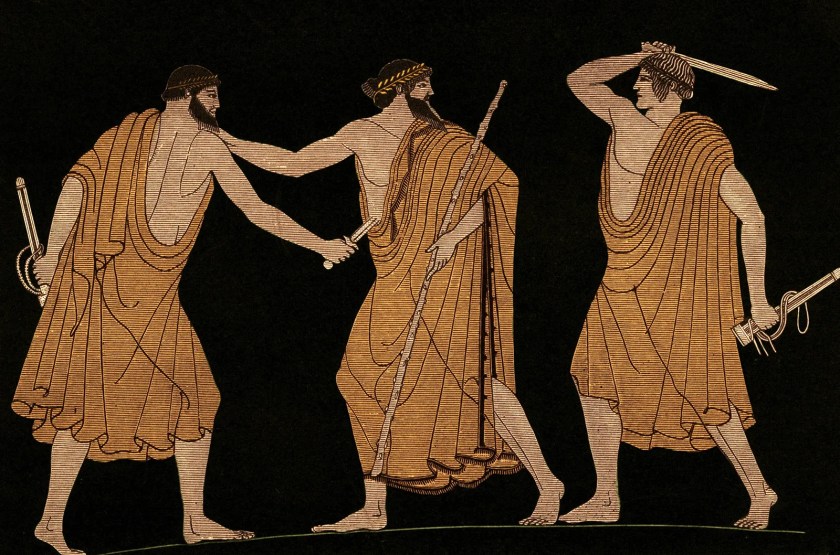
We discuss the Peisistratids of Athens in the podcast, one such family, whose founder, Peisistratus, was popularly received by the people for setting up law courts and investing funds into public projects like water fountains and religious buildings. The charismatic leadership of a sole-ruler could spur a relationship of political control through public support that rewarded the ruler with many types of honours. As we discuss, these types of relationships were precarious and could turn into tyrannicide, as was the case of the assassination of Peisistratus’ son, Hipparchus (brother of the sole-ruler, Hippias). The assassination was carried out by Harmodius and Aristogeiton and remained a famous story replicated across visual media for centuries afterwards.

The Syriskos Painter’s stamnos, ‘Death of the tyrant Hipparchus’, 475-470 BCE (and illustration of actions); Roman copy of Aristogeiton and Harmodius sculpture.

The inspiration for the episode art was the sculptural pair of tyrannicides, originally commissioned by Antenor after the establishment of Athenian democracy. It was taken as war booty during the Persian Wars in 480 BCE, then returned after the fall of the Persian Empire by one of Alexander’s generals-turned-king. The sculpture was so famous that it inspired Roman copies, of which several survive; the most famous of which is in the National Archaeological museum of Naples. 

To learn more about the language, metaphors and stereotypes of ancient tyranny, check out the episode here:

Tyranny in Antiquity with Sam Ellis Two Friends Talk History

You can get in touch with Dr Ellis on the Universität Mannheim website here,  or you can follow him on Academia.edu. Sam is also on Instagram & Twitter @SamEllis1993. Seriously, check out his Instagram. The photos are stunning.

If you would like to check out some of Dr Ellis’ publications:

Ellis, S. (forthcoming). ‘Legitimising sole power in the Greek polis: A New Institutionalist approach’ in M. Canevaro & M. Barbato (eds.) New Institutionalism and Greek Institutions, Edinburgh: Edinburgh University Press.

Ellis, S. (2021). ‘Greek Conceptualisations of Persian Traditions – Gift-giving and Friendship in the Persian Empire’, Classical Quarterly 71.1,Cambridge: Cambridge University Press, 77–88.

Ellis, S. (forthcoming). Review of C. de Lisle (2021). Agathokles of Syracuse: Sicilian Tyrant and Hellenistic King. Oxford: Oxford University Press. Bryn Mawr Classical Review.

For further reading:

Brock, R. (2013). Greek Political Imagery: From Homer to Aristotle. London: Bloomsbury Academic.

Luraghi, N. (2013). The Splendors and Miseries of Ruling Alone. Wiesbaden: Franz Steiner Verlag GMBH.

Börm, H. (ed.). (2015). Antimonarchic Discourse in Antiquity. Stuttgart: Franz Steiner Verlag.

Thank you for checking out my blog !

Archaeology of Alcohol on TFTH

This week on Two Friends Talk History, I interview returning guest, Alex Slucky. Alex is an archaeologist with Atkins and archaeobotanist, whose work has taken her to Italy, Australia and most recently in Uzbekistan. Alex discusses her work in the ancient city of Bukhara which was a prominent stop on the so-called Silk Road trade route that linked East and West. We discuss vessels as material culture, and embodied archaeological processes of alcohol consumption.

Suggested Readings and Courses

The Archaeology of Alcohol with Alexandra Slucky Two Friends Talk History

If you would like to get in touch, you can find Alex on Instagram or on Twitter @SluckyAlex

For readers of Spanish, these resources were recommended to me by friend and listener, Rodrigo: “Las drogas en la prehistoria. Evidencias arqueológicas del consumo de sustancias psicoactivas en Europa”, by Dr. Elisa Guerra Doce, from the University of Valladolid. She also discusses prehistoric psychoactive in: https://www.researchgate.net/publication/360789885_Psychoactive_Drugs_in_European_Prehistory

To get in touch and find out more about Two Friends Talk History:
Find us on Instagram
Support us through Patreon 
Buy our merch on Redbubble
Explore more resources and topics about the ancient world on ArchaeoArtist

Thank you for reading. See you soon with new friends on Two Friends!

Polybius’ Histories on TFTH

This week on Two Friends Talk History, Zofia interviews Dr Elke Close about Polybius, an Achaean statesman, teacher, and historian from the Hellenistic period. Polybius was active in Megalopolis at the tail end of the period of Greek independence following the wars of the Hellenistic kings and the rise of the Roman empire. His surviving text, Histories, has provided scholars with unparalleled evidence for the social and political changes that led to the changing balance of power in the Mediterranean in the second century BCE.

Dr Close has published a short introduction to Polybius on her website, Hellenistic History, which I would encourage you to check out!

From the introduction of Polybius’ Histories, we are told of the weight and significance of his treatise for readers to understand the rise to power of Rome, while synthesising the events more broadly around the Mediterranean.

But all historians, one may say without exception, and in no half-hearted manner, but making this the beginning and end of their labour, have impressed on us that the soundest education and training for political actions is the study of History.

Polybius' Histories with Elke Close Two Friends Talk History

Polybius (His.1)

His aims are outlined, and through his unique position as Achaean statesman and hostage in Rome, Polybius had intimate access as a teacher and client to one of the most powerful Roman families, the Cornelii Scipiones. Due to his proximity to power and usefulness, Polybius rode shotgun on several watershed moments of the Republic. 

If you would like to find out more from Dr Close, you can follow her Hellenistic History project:
WebsiteHellenistic History
Twitter @HellenisticHist 
Instagram
 @drawingancienthistory  and @hellenistichistory

Thank you for reading!

Two Friends Talk History Podcast

Two Friends Talk History is a podcast where public historian, Zofia, chats with scholars, archaeologists, researchers and more to explore fascinating histories, look behind the scenes and ask the big question that’s missing in much academic discourse: so what? Why is this relevant today?

New Friends on Two Friends

Carrying on from season 1 in which Zofia and Liam explored the ancient world through stories and interviews, season 2 invites new friends to Two Friends. Find me on Instagram at Two Friends Talk History and Patreon at ArchaeoArtist.

Dionysius of Halicarnassus with Stefano Carlo Sala Two Friends Talk History

In this episode of Two Friends Talk History, host Zofia is joined by Stefano Carlo Sala, a doctoral researcher at the University of St Andrews, to explore the fascinating world of Dionysius of Halicarnassus—a Greek historian living in Rome at the dawn of the Empire. Together, they dive into how Dionysius used monuments, myth, and memory to connect early Roman history to a classical Greek past. If you’re curious about how contemporaneous historians tried to explain Rome’s rise, justify its rule over the Greek world, and shape cultural identity in an evolving political landscape, this episode is for you.🎧 Subscribe now so you don’t miss an episode! 👉🏼 You can read the BLOG POST HERE.To read his recent publication: Carlo Sala, S. (2025). Law as a catalyst and remedy for civic violence in early Rome : two examples from Dionysius of Halicarnassus, in Cahiers des études anciennes [En ligne], LXII | 2025. URL: READ HERE ONLINE.If you would like to follow Stefano, you can join him on LinkedIn or Academia.EduLinkedIn: HERE  Academia.edu: HERE#twofriendstalkhistory #historypodcast #TFTH #publicoutreach #classics #anienthistory #classicspodcast #AncientHistory #Rome #Podcast #Historiography #receptionstudies #archaeoartist #classicsliterature #literature #archaeoartist To get in touch and find out more about Two Friends Talk History:Find us on Instagram & TwitterSupport us through PatreonBuy our merch on Redbubble🌍 Explore more at http://www.Archaeoartist.com🔗 If you'd like to get in touch, email at Zofia@ArchaeoArtist.com Music by the wonderfully talented Chris SharplesIllustration by Zofia Guertin

Two Friends Talk History Art

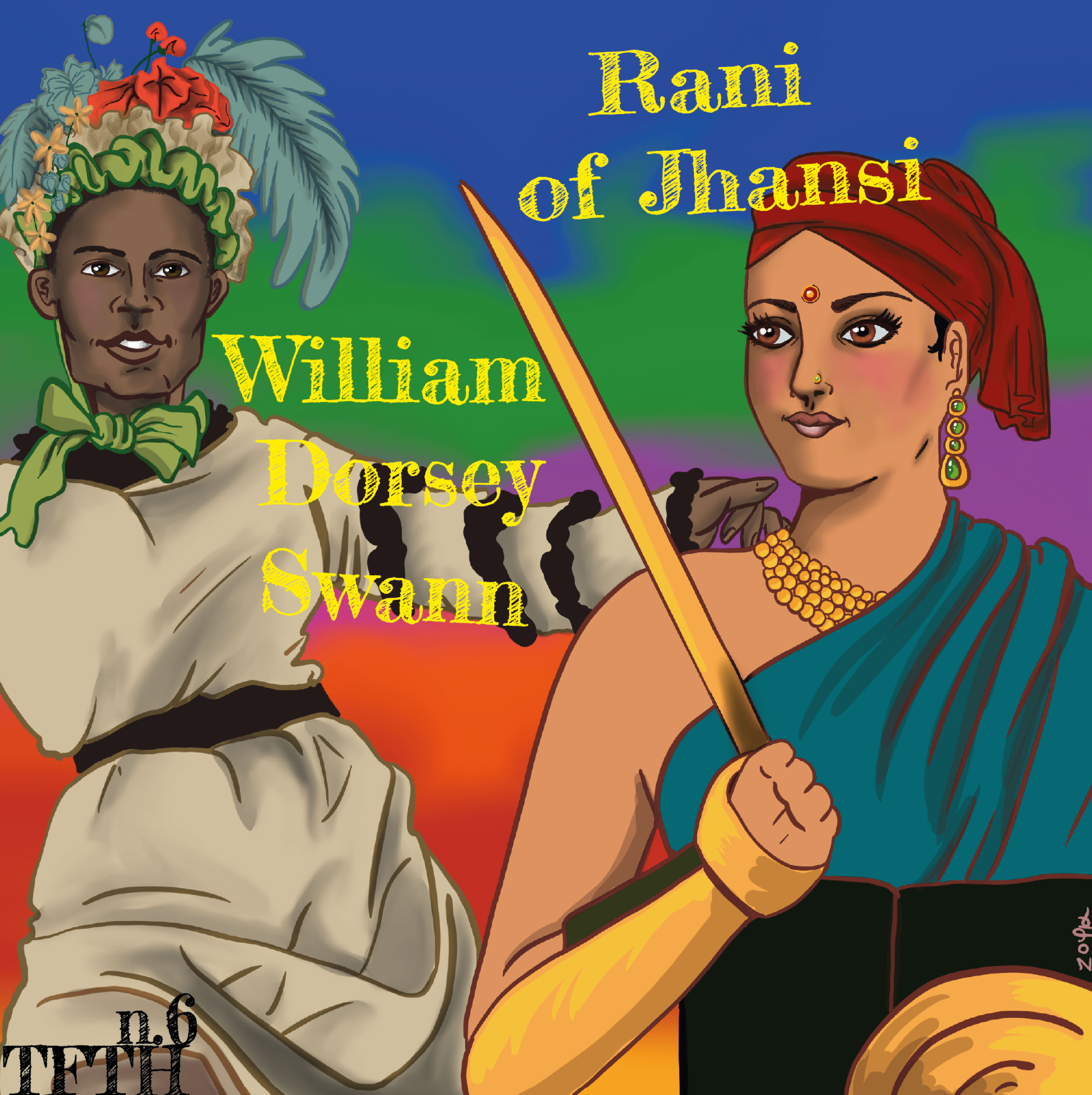
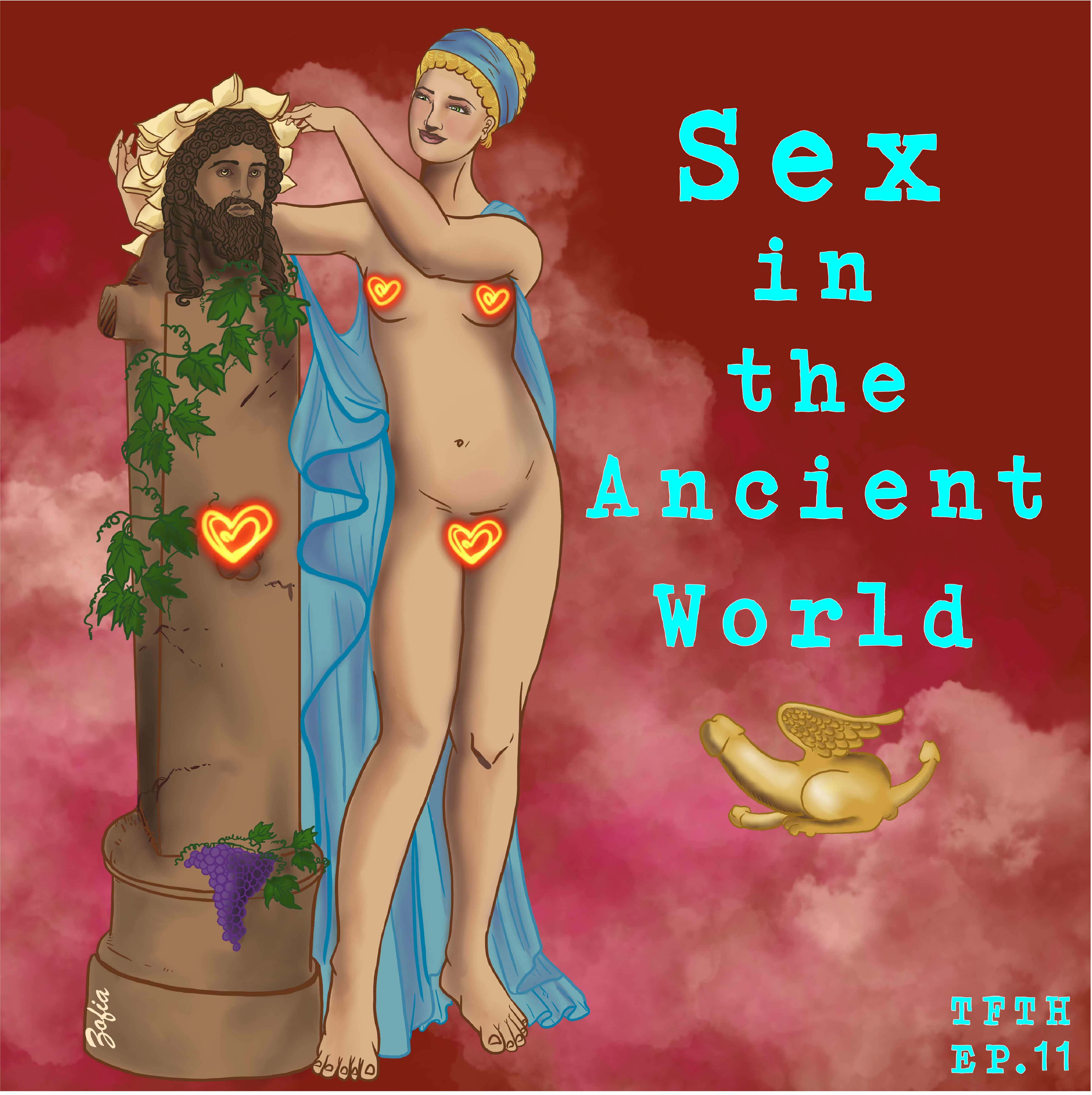
I have been challenging myself with creating the mash-ups in my own digital drawing style but, where appropriate, using the historical style the original image was made in. These episode images are available as mugs, tees and postcards on our Two Friends Talk History Redbubble Shop!

Join us on Patreon!

If you would like to support this podcast, receive behind the scenes extras, and get downloadable episode art, additional content (maps, images and related goodies), Hundred Word Histories join my PATREON. You can sign up for a monthly pledge to support the pod all for the cost of a pint! I also post to our INSTAGRAM account to accompany the episodes.

Check it out on iTunes, Spotify, Soundcloud and anywhere else you listen to your podcasts. Ratings and reviews are fundamental to gaining any visibility, so please check us out and give us a review!