Monuments and Memory: Dionysius of Halicarnassus and the Story of Rome


When we think of ancient historians, names like Livy or Herodotus often come to mind. But Dionysius of Halicarnassus deserves a closer look. Around 30 BC, Dionysius was a Greek scholar who moved to Rome during the early days of the Empire. There, he produced Roman Antiquities, a sweeping history of Rome from its mythical beginnings up to the First Punic War. Though 15 titles of his work are known, 13 survived in one form or another; his work remains a crucial source for early Roman history, standing alongside Livy’s accounts.

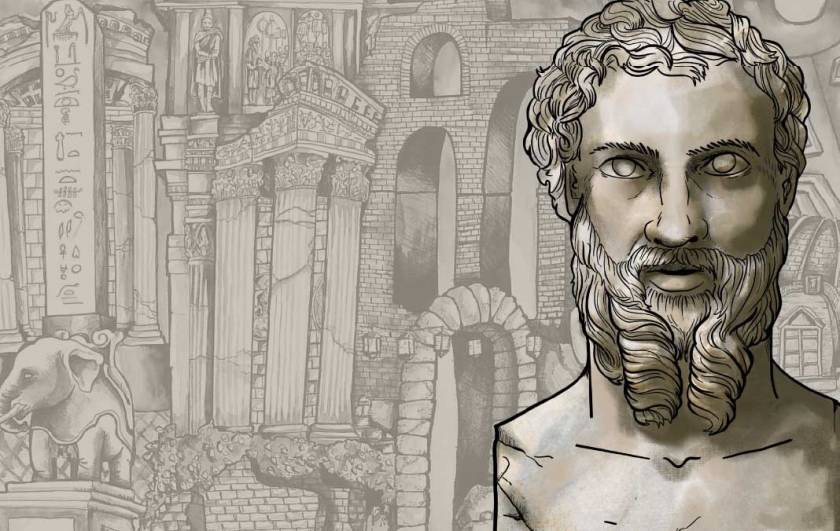
Dionysius of Halicarnassus and ruins of Rome by Zofia Guertin

Theatre of Pompey plan and Dionysius of Halicarnassus. Illustration by Zofia Guertin.

Dionysius wasn’t just a historian—he was also a master of rhetoric. His writings aimed to explain and justify Roman culture to a Greek audience, blending historical detail with rhetorical theory. In fact, he often used his history as a practical showcase of rhetorical principles. Beyond history, he wrote insightful critiques of famous Greek orators like Demosthenes and Isocrates, praising Roman writers for returning to classical Greek ideals over more ornate styles.

In this episode of Two Friends Talk History, Zofia welcomes Stefano Carlo Sala, a PhD candidate at the University of St Andrews, to discuss Dionysius of Halicarnassus—a key figure in Roman historiography.

Dionysius of Halicarnassus with Stefano Carlo Sala Two Friends Talk History

They explore how Dionysius, a Greek historian in Augustan Rome, used monuments and myths to present early Rome as a fundamentally Greek city. Through comparisons with Livy and Polybius, Stefano unpacks Dionysius’ unique approach to storytelling, monumentality, and cultural identity.


Brick and Marble. Illustration by Zofia Guertin.

While Dionysius of Halicarnassus and Livy both wrote about the early history of Rome, their approaches reveal striking differences—especially in how they describe the city’s monuments. Dionysius, writing for a Greek-speaking audience unfamiliar with Rome’s layout, offers detailed observations about buildings still visible in his time, even noting which ones he personally visited. Livy, on the other hand, paints a broader picture centered around familiar Roman landmarks like the Forum and Capitol, assuming a Latin-speaking readership already acquainted with the city. Dionysius’s attention to architectural detail connects to his larger ideological project: presenting Rome as the heir to Classical Greece. This vision runs through his historical work, where he draws frequent parallels between early Roman and Classical Greek monuments, values, and myths. By doing so, Dionysius not only makes Roman history more accessible to Greek readers but also argues that Rome deserves a central place in the Greek cultural tradition. His comparisons—even when archaeologically inaccurate—serve a deeper symbolic purpose, showing Rome as both the continuation and the future of Greece’s classical legacy.

💡 Topics covered:

  • Dionysius’ blending of rhetoric and history
  • Why monuments mattered in shaping Rome’s past
  • Connections between Classical Greece and Archaic Rome
  • How historians under Augustus crafted Rome’s legacy
  • The political and cultural stakes of memory

Whether you’re into ancient history, architecture, or historical narratives, this episode offers a rich perspective on the ways history gets written—and rewritten.

Sources

Edlund, I. (1980). Livy and Dionysios of Halikarnassos as Roman archaeologists in Rivista di Archeologia vol.4, pp. 26-30. You can download for free: Here.

Wiater, N. (2011). The Ideology of Classicism: Language, History, and Identity in Dionysius of Halicarnassus. (Untersuchungen zur antiken Literatur und Geschichte; Vol. 105). de Gruyter.

Stefano’s Academia Page and Publications:

Carlo Sala, S. (2025). Law as a catalyst and remedy for civic violence in early Rome : two examples from Dionysius of Halicarnassus, in Cahiers des études anciennes [En ligne], LXII | 2025. URL: READ HERE ONLINE.

If you would like to follow Stefano, you can join him on LinkedIn: HERE   or Academia.edu: HERE !

🔗 Support the show on Patreon at Patreon.com/Archaeoartist
📸 Follow on Instagram @TwoFriendsTalkHistory

Classical Reception of Sexual Violence in Antiquity in Modern Visual Media

In the latest episode of Two Friends Talk History, Zofia and Dr Briana King return to our discussion into Classical Receptions. This time, we go into some of the heavier subject matter that we felt deserved its own episode. Returning guest, Dr. Briana King, joins me to unpack the dark and often overlooked threads of sexual violence in ancient history and its modern reinterpretations. We discuss ancient precedents for modern cinematic and television representations of sexual violence – made spectacle – in retellings of Roman narratives.

We’re diving deep into how classical reception shapes public perception—and why that matters. This is a heavy but essential conversation about power, misrepresentation, and the stories we choose to tell. 🏛️

📢 Trigger warning: this episode discusses sexual violence and may be distressing to some listeners. Please listen with care.

Classical Reception of Sexual Violence in Antiquity in Modern Visual Media with Briana King Two Friends Talk History

Dr King has argued through her doctoral research, and in her more recent publications, that these scenes can be interpreted as real reflections of actual events. And perhaps, these visualisations were part of shaping realities that they depicted in antiquity, as they appear to be doing now.

Due to copyright, I have drawn the images that we discussed in the episode, since those available for viewing on the Beazley archive are difficult to make out at times.

  • (Left) Athenian red-figure stamnos; c. 430 BCE; Two men lifting a hetaira between them; Polygnotos Painter; Musee du Louvre Cp274/Cp9682; Beazley 213398.
  • (Top Right) Athenian red-figure kylix; c. 510-500 BCE; Orgy scenes; Pedieus Painter; Louvre G13; Beazley 200694.
  • (Bottom Right) Athenian red-figure cup; c. 490 BCE; Orgy scenes; Brygos Painter; Florence 3921; Beazley 203929.

In our discussion, several sculptural pieces from the Roman period were discussed, as representative of the brutal or depraved aspects of Roman society. In 2000 the Museo Nazionale di Napoli opened the “Secret Cabinet”, a special room that had for over a hundred years kept items found in Pompeii that were deemed “pornographic” away from the average viewing public. That these items are still held in this space, though the doors have been opened, still suggests that this is how we ought to understand them, not unlike their first museum display context in the Portici Palace, in Naples.  

Taken from their original contexts, their use as emblems of that can be understandable, but as with all analysis of antiquity, context is key. Items like Pan and the she-goat (found in 1752) were, like many erotic images from the Roman period, in garden or outdoor spaces within a Roman villa. Sexually explicit sculpture – sometimes violent, could be commonly found within Roman society, and was not locked away in secret viewing rooms – it was open access.

Pan and the she-goat were found in a garden, south of the pool in the Villa of the Papyri, in Herculaneum. The garden was filled with several sculptures that included erudite philosophers, animals, and gods. 

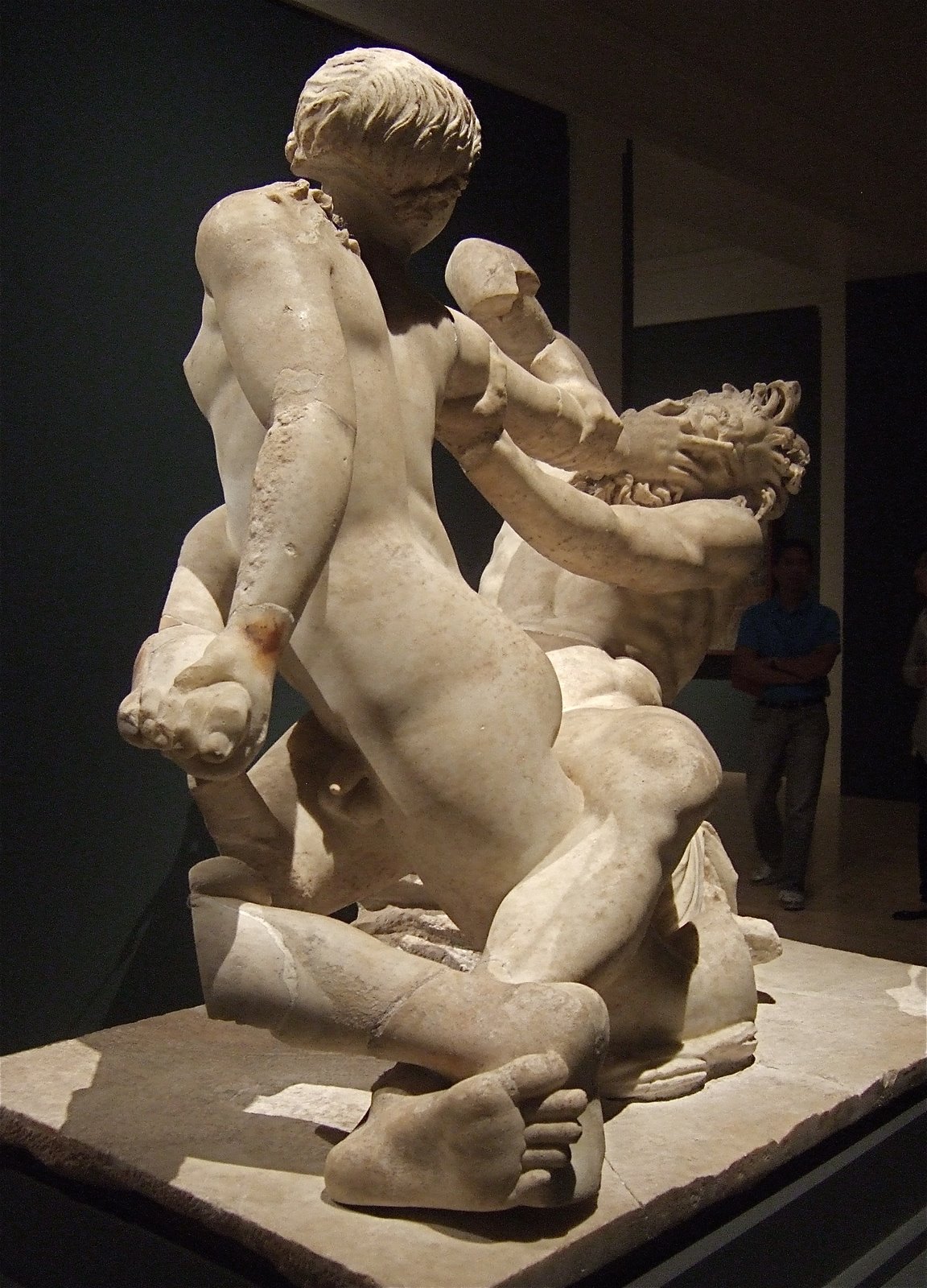
Another sculptural piece discussed in the episode was the Satyr and Hermaphrodite, a type so popular in antiquity that at least 30 replicas survive in marble, bronze, and frescoes. This image was so popular, the reproductions were found across the Roman Empire and likely derived from a Hellenistic model. 

Left: Sculpture of Pan and she-goat, from the Herculaneum villa of the Papyri. National Archaeological Museum, Naples; Right: Hermaphroditus fighting off a Satyr from the Villa of Poppaea, Oplontis. Images from Wikimedia Commons.

This statue group would have likely been displayed in villa (Villa of Poppaea in Oplontis, Italy, and the villa at Chiragan in Gaul) or theatre (Daphne and Side) contexts, and likely among other statues that could be ‘read’ in addition to it. It was very much a public art Retzleff suggests that its interpretation could include: 

“Dionysiac aspects, the reversal of norms, the objectification of the body, the sexual tryst, and the agon.”

Connotations of sexual violence and vulnerability are suggested by the hermaphrodite unclothed state, with her garments below the scene, and a rocky framing- indicating a possible outdoor bathing context.

Dr King also discusses the frescoes from a bathhouse in Pompeii that used erotic imagery above the locker/cubbies in the building’s changing rooms. These have been interpreted as humorous, meant to be read as an aide-mémoire, for where one left their garments. Similar images were found within a Pompeiian brothel, where the context suggests seductive enticements for clients, rather than a funny visual decoration. 

Suburban bath locker frescoes, Pompeii. Left: a foursome; top right: a female and two males; bottom right: male performing cunnilingus.

🎙️ Two Friends Talk History continues to explore the uncomfortable but necessary intersections of ancient narratives and modern storytelling. In this episode, we invite you to listen with openness and care, to reflect on the legacies of representation, and to question how visualisations of sex and violence continue to echo through time.

📚 You can follow Dr Briana King’s work on Academia.edu.
🎧 Subscribe to the podcast via Buzzsprout or wherever you get your podcasts.

Until next time,
— Zofia


To follow the spectacular Dr King’s academic work, check out her page on Academia.edu.

King, B. (2024), ‘Un-silencing the Girls: Critical Classical Reception in Feminist Retellings of Greek Myths’, in Thersites. Journal for Transcultural Presences & Diachronic Identities from Antiquity to Date, vol. 19. 

King, B. (forthcoming), ‘Fatal Attraction: Ancient Precedents, Modern Appropriations’, in Acta Instituti Romani Finlandiae.

Sexual Violence Support Resources

Rape Crisis Scotland: https://www.rapecrisisscotland.org.uk/help-helpline/

For sexual violence or violence against women, the National Domestic Abuse Helpline (0808 2000 247) run by Refuge and Women’s Aid provides 24/7 support and information. 

Additional resources include Rape Crisis England & Wales which offers specialist support for women who have experienced sexual violence. Women’s Aid also offers a live chat service and email support

Visit the Rights of Women website on legal information sheets on a range of issues, including Forced Marriage and the law. Support for victims of ‘honour’-based violence and forced marriage.

References

Images of the pottery we discussed can be found on the Beazley Archive: https://www.carc.ox.ac.uk/XDB/ASP/searchOpen.asp

Cohen, E. E. (2000). “Whoring under Contract: The Legal Context of Prostitution in Fourth-Century Athens.” In V Hunter and J. Edmondson, eds., Law and Social Status in Classical Athens. Oxford. 113-48.

Cohen, E. E. (2006).”Free and Unfree Sexual Work: An Economic Analysis of Athenian Prostitution.” In C. A. Faraone and L. A. McClure, eds., Prostitutes and Courtesans in the Ancient World. Madison. 95-124.

Cohen, E. E. (2014). “Sexual Abuse and Sexual Rights: Slaves’ Erotic Experience at Athens and Rome.” In T. K. Hubbard, ed., A Companion to Greek and Roman Sexualities. Malden, MA. 184-98.

Davidson, J. (1997). Courtesans and Fishcakes: The Consuming Passions of Classical Athens. London.

Gardner, J. (2009), Women in Roman Law and Society. London.

Glazebrook, A. (2017). “Gender and Slavery” in The Oxford Handbook of Greek and Roman Slaveries. Eds. Stephen Hodkinson, Marc Kleijwegt, and Kostas Vlassopoulos. Oxford University Press. Oxford Handbooks Online.

Glazebrook, A. (2016). “Prostitutes, Women, and Gender in Ancient Greece” in Women in Antiquity: Real Women across the Ancient World. Eds. Stephanie Lynn Budin and Jean Macintosh Turfa. Routledge Publishing. 703-13. 

Glazebrook, A. (2011). Greek Prostitutes in the Ancient Mediterranean, 800 BCE to 200 CE. Madison WI: University of Wisconsin Press. (co-edited with M. M. Henry).

Keuls, E. C. (1993). The Reign of the Phallus: Sexual Politics in Ancient Athens. London: University of California Press Ltd.

McGinn, T. A. J. (1998). Prostitution, Sexuality, and the Law in Ancient Rome. Oxford.

McGinn, T. A. J. (2004). The Economy of Prostitution in the Roman World: A Study of Social History and the Brothel. Ann Arbor.

Moses, D. C. (1993), “Livy’s Lucretia and the Validity of Coerced Consent in Roman Law,” in Consent and Coercion to Sex and Marriage in Ancient and Medieval Societies. Dunbarton Oaks.

Retzleff, A. (2007). The Dresden Type Satyr-Hermaphrodite Group in Roman Theatres in the AJA, Vol. 111, No.3, July. Pp. 459-472. 

Stewart, A. F. (1995). ‘Rape?’ In Reeder, E. D. (Ed.). Pandora: Women in Classical Greece. Princeton: Princeton University Press. 74-90.

Thomas, S. (11 June 2019). “‘I’m not watching this’: Film’s brutal account of Australia’s colonial history sparks walkout”ABC News. Retrieved 11 March 2021.

Two Friends Talk History Podcast

Two Friends Talk History is a podcast where public historian, Zofia, chats with scholars, archaeologists, researchers and more to explore fascinating histories, look behind the scenes and ask the big question that’s missing in much academic discourse: so what? Why is this relevant today?

New Friends on Two Friends

Carrying on from season 1 in which Zofia and Liam explored the ancient world through stories and interviews, season 2 invites new friends to Two Friends. Find me on Instagram at Two Friends Talk History and Patreon at ArchaeoArtist.

Dionysius of Halicarnassus with Stefano Carlo Sala Two Friends Talk History

In this episode of Two Friends Talk History, host Zofia is joined by Stefano Carlo Sala, a doctoral researcher at the University of St Andrews, to explore the fascinating world of Dionysius of Halicarnassus—a Greek historian living in Rome at the dawn of the Empire. Together, they dive into how Dionysius used monuments, myth, and memory to connect early Roman history to a classical Greek past. If you’re curious about how contemporaneous historians tried to explain Rome’s rise, justify its rule over the Greek world, and shape cultural identity in an evolving political landscape, this episode is for you.🎧 Subscribe now so you don’t miss an episode! 👉🏼 You can read the BLOG POST HERE.To read his recent publication: Carlo Sala, S. (2025). Law as a catalyst and remedy for civic violence in early Rome : two examples from Dionysius of Halicarnassus, in Cahiers des études anciennes [En ligne], LXII | 2025. URL: READ HERE ONLINE.If you would like to follow Stefano, you can join him on LinkedIn or Academia.EduLinkedIn: HERE  Academia.edu: HERE#twofriendstalkhistory #historypodcast #TFTH #publicoutreach #classics #anienthistory #classicspodcast #AncientHistory #Rome #Podcast #Historiography #receptionstudies #archaeoartist #classicsliterature #literature #archaeoartist To get in touch and find out more about Two Friends Talk History:Find us on Instagram & TwitterSupport us through PatreonBuy our merch on Redbubble🌍 Explore more at http://www.Archaeoartist.com🔗 If you'd like to get in touch, email at Zofia@ArchaeoArtist.com Music by the wonderfully talented Chris SharplesIllustration by Zofia Guertin

Two Friends Talk History Art

I have been challenging myself with creating the mash-ups in my own digital drawing style but, where appropriate, using the historical style the original image was made in. These episode images are available as mugs, tees and postcards on our Two Friends Talk History Redbubble Shop!

Join us on Patreon!

If you would like to support this podcast, receive behind the scenes extras, and get downloadable episode art, additional content (maps, images and related goodies), Hundred Word Histories join my PATREON. You can sign up for a monthly pledge to support the pod all for the cost of a pint! I also post to our INSTAGRAM account to accompany the episodes.

Check it out on iTunes, Spotify, Soundcloud and anywhere else you listen to your podcasts. Ratings and reviews are fundamental to gaining any visibility, so please check us out and give us a review!

24. Planning on a summer of Archaeology? 10 Pro-tips for going on a dig.

Whether it is your first time on an excavation, or another chapter in your journey of archaeological field or laboratory work, fellow archaeologists, students and specialists have channelled their experience for you!

After years of going on digs, several archaeology students and I are passing on our pro-tips for planning a summer excavation season. From essentials, tech tips to creature comforts, here are some tips for a stress-free excavation!

Since beginning my journey in 2008 with field schools, excavating and studying abroad, I have progressed along in my journey from dig student to project manager. There are always so many more skills to learn and wonderful experiences to share. As the following list items will show, there are some handy things to bring on a dig, while others you can pick up wherever you are doing field work and save yourself the bag space!

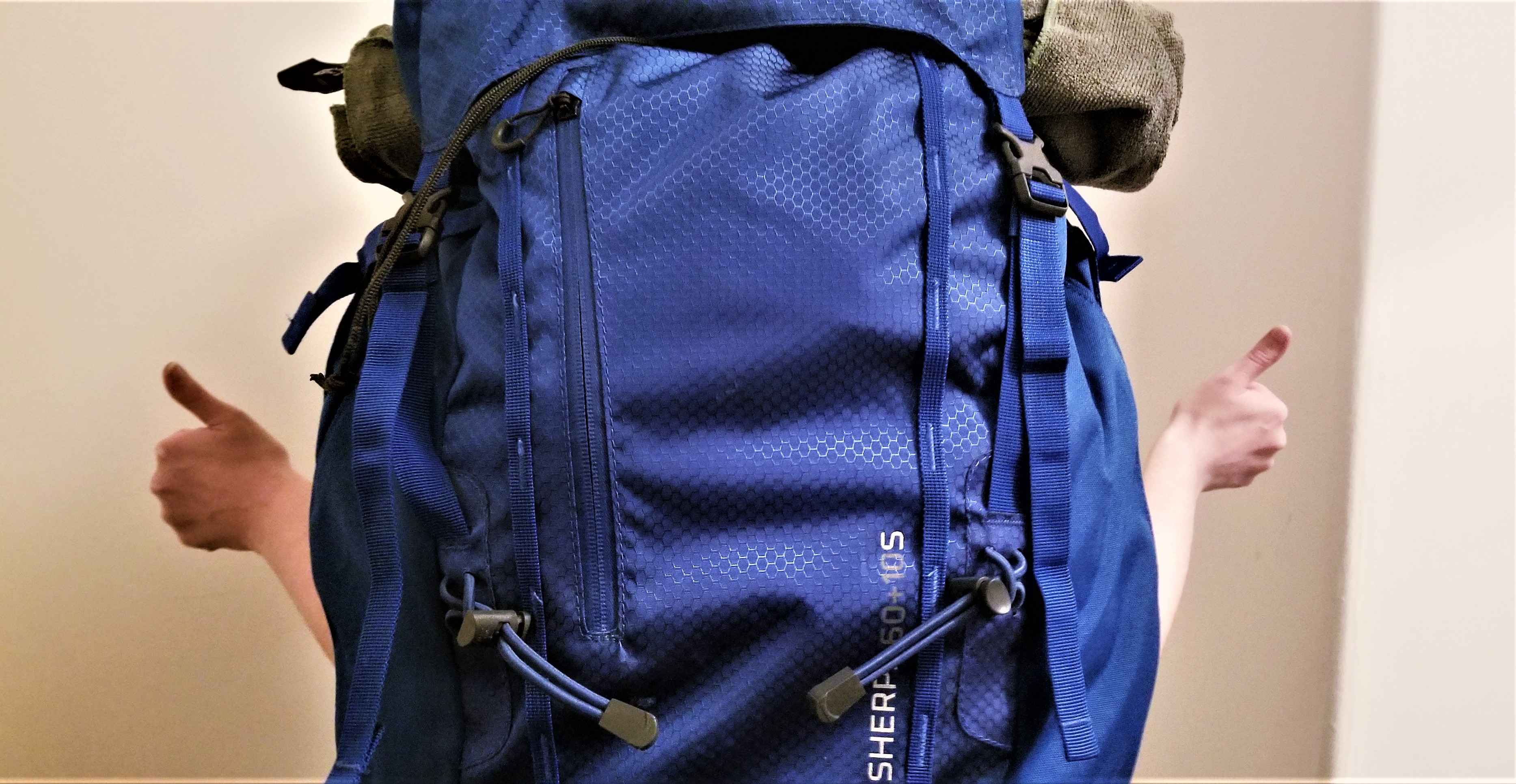
10. Start with a good rucksack. Your journey begins by investing in something that is comfortable and that you can move with minimal effort.
Big wheelie bags can seem easier, but if you have any major walking to do, or plan to travel afterwards, aim to have something you can easily move and ALWAYS be able to lift it yourself. I have helped many a random traveler over the years because they couldn’t manage their own luggage.

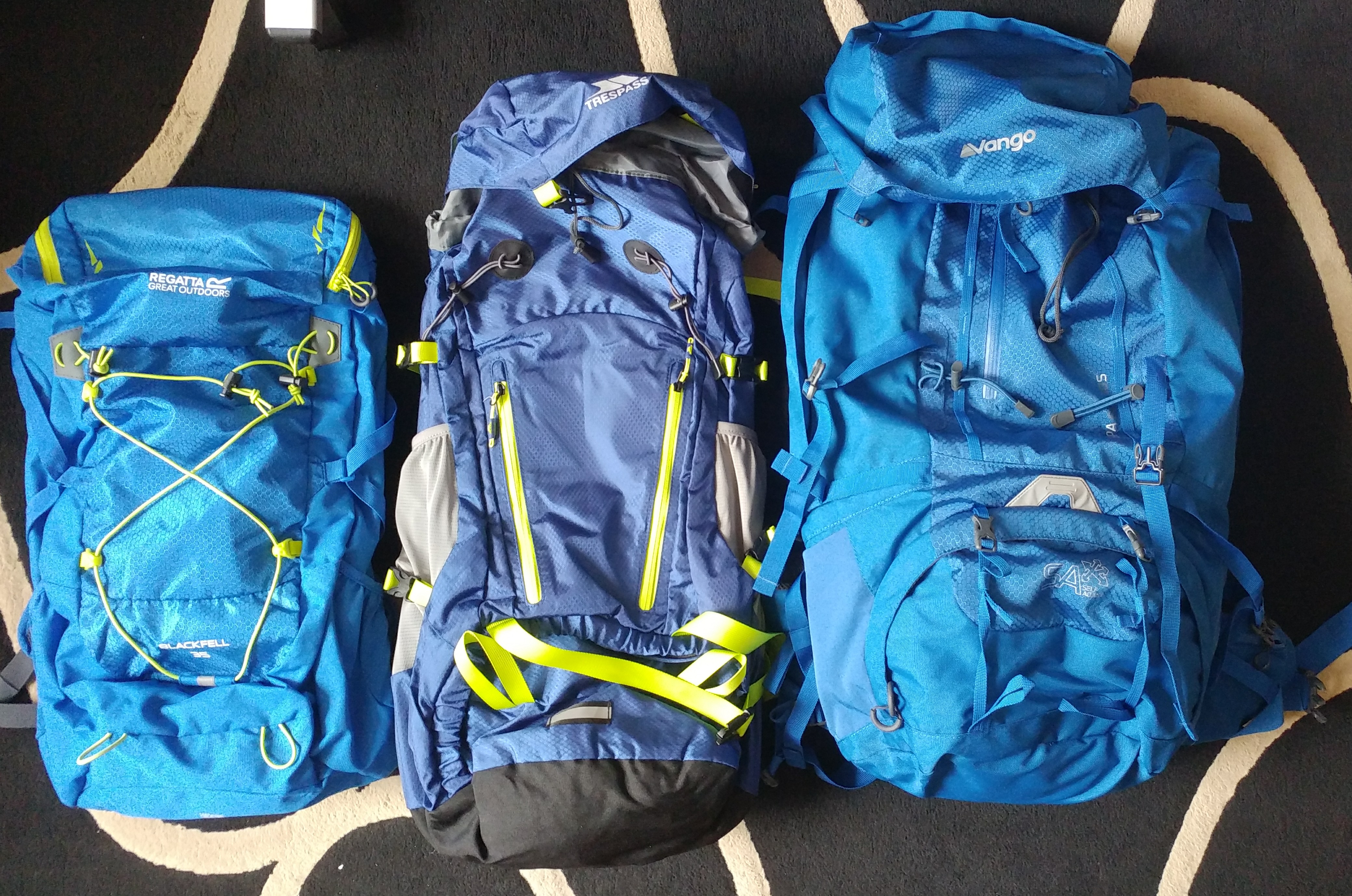
Packing for field work for a few days (1), a fortnight (2) or a month (3), pick the right bag for the job!

The weekender (1) is good to bring along with you as a personal item so you can spend a night or two sightseeing while you are on an excavation season. The fortnight (2) can cover a two week dig, but if that is all you are packing, pick up towels/toiletries in the location you are ending up. The month-long (3) should be spacious enough for all your necessities and still leave you enough space for souvenirs.

9. Doing your research pays off. Buying your gear off-season is always significantly cheaper. If you cross-check prices on a few different sites once you find a bag that catches your eye, you can often get it for a fraction of the cost. The three rucksacks pictured above were each 50-70% off, totaling £110.00 for all three!

8. Pack for the job you have and the experience you want. My packing list might look a little different than yours might this season, as a big part of my work tends to be organizational (project management) and art /writing (public archaeology) . However, there are some basics for organizing your belongings that are handy no matter what your role on a dig. Organizing by theme, by grouping what those needs are into little related clusters/packing cubes can help you avoid losing things or over-packing. Prioritizing what is a must to bring, and what you can probably just pick up at a shop when you arrive, will keep you on track. Pro-tip: bringing a small bundle of elastic bands and some Ziploc bags helps to compress your belongings in for space (or keep gross things away from nice things) by doing that Marie Kondo style roll, held with a rubber band will do the trick. Packing cubes are quite helpful, as once there you won’t have dressers to put your things away in, and some semblance of organization may spark joy.

Field Gear: Rules and regulations vary by country and sometimes site, but these are some general principles from my experience in Italy. Full-length trousers and steel toe boots are required for excavating. No exceptions. Trench supervisors will check this type of thing, since foot protection is a site safety issue. What styles of boots and trousers is entirely up to you. Long sleeve shirts are going to keep you from becoming a lobster, and a good option for layering between chillier mornings to hot afternoons.

From Primark to Jack Woolfskin, it’s up to you and your budget. There are frequently low-cost options highlighted on online shops, but comfort/breathability are pretty important. Quick dry (wicking) options make laundry less of a chore, especially in Mediterranean heat you can dry your washed clothes in 20 minutes. Pro-tip: break in new boots before arrival to avoid blisters and Merino wool socks help protect your feet from over-heating, wicking away moisture and avoiding odor.

Optional items: Fancy kit and tools is unnecessary for first-time excavations, as the programmes will provide the tools you need, mostly centrally-held by a trench supervisor. You can buy little handy tools and so on, but it is likely to go unused and just adds weight to your luggage.

Trowel

Not all trowels are made equally. My favourite is the WHS trowel. It is a British design that feels good in your hand and has a lot of durability. I prefer the soft-handle WHS trowel, but many others like the wooden handle. You can check out dig tools on the Past Horizons website: here or Strati-Concept: here. Order your kit several weeks before you expect to head off to dig, because having mail sent to you.

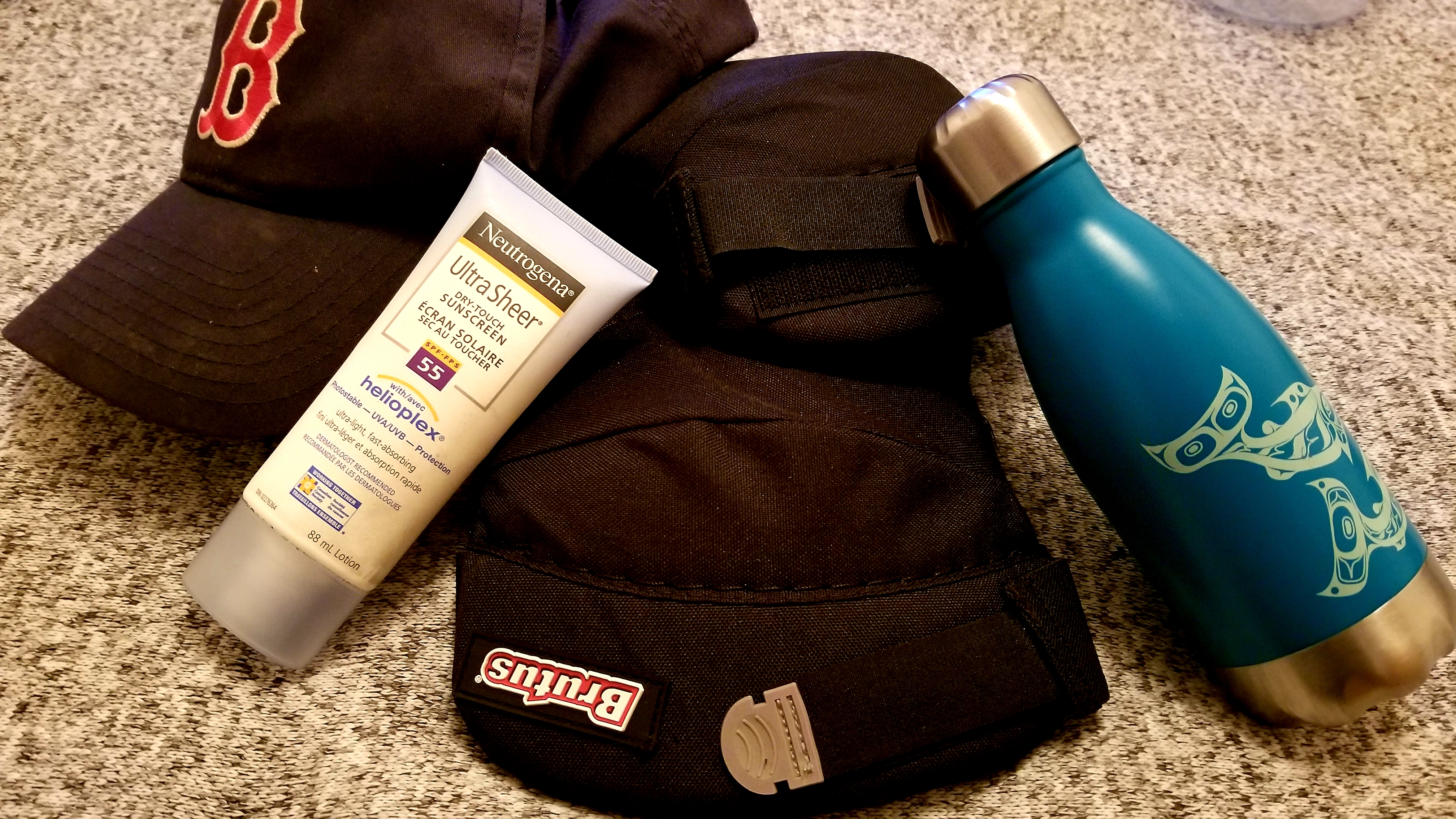
7. Working in the sun safely. Suncare products should be rigorously applied and re-applied throughout the day, especially after sifting for an hour and pushing up your 20th wheelbarrow to the spoil heap. Hats are a must, and shirts with built-in sun protection or that are at least long enough to cover your skin are essential. Staying hydrated is going to be paramount if you plan to get the most out of your field work experience and avoid overexerting yourself. Safety is always the most important thing.

6. Tech: should it stay or should it go? Working on my thesis and part-time job while on excavation means that a lightweight tablet-laptop hybrid is essential so I can take my work with me. The DSLR is also part of my art and field work kit for my thesis and public archaeology. I still optimistically bring dig boots and a trowel every year but my path has diverged slightly from within the trench to working on public engagement. It is worth considering leaving your expensive tech at home if you don’t really need it. I.e, if you aren’t writing a PhD or Masters, you actually may have the summer off, so why not enjoy it? Kick back with a kindle or a real paperback and soak in the sun or debate the classics over wine with fieldwork colleagues!

5. Entertainment items are important additions to your time away on excavation. If you enjoy photography, bring your camera. There will be amazing moments that you will capture through the camera lens that you will enjoy reflecting on. If you are an artist, bring a travel sketch and paint kit! Bringing something small for your downtime, that is still social, is a great way to meet new people. This is a great opportunity to try travel blogging or leveling-up your Instagram game. #DigSeason #ArchaeologyLife #QueensOfTheLab. If after a full day of working with others you would prefer some quiet time, ebooks and headphones are a good (lightweight) idea, as there will be plenty of time to rest and relax. Tech-tip extra: multi-plug usb and universal adapters will save your life. Most dig houses have limited plugs, and 50 people needing to charge their phones can be hard to accommodate.

4. Working with injuries and staying healthy. Many of us have bad knees, sore backs and a host of other potential aches and pains. Knee pads are a must if you have any knee problems, but even if you are blessed with injury-free knees, they are a huge help for long periods of kneeling on hard surfaces. Necessary medications should be brought with you, you might find it hard to find an Italian equivalent. Things like painkillers and hydration aids are commonly available and not challenging to get a hold of.  Keeping healthy extras: bug spray, flip flops (for showers), bandaids (plasters) and hand sanitizer/hand wipes are cheap as chips and good to have in your pack.

If you are going to bring toiletries, just grab enough for the travel to and fro. Anything you need at your dig, you can grab nearby once you arrive.

Hydration in high temperatures is tackled by investing in good insulated water bottles. Gulping down a mouthful of hot water is not the most refreshing while working, so insulated water bottles can keep your drinking water chilled for several hours. I typically have two with me and there are all sorts available on Amazon.

3. Mental health and wellness while working abroad. Excavation situations abroad can be full of life-changing experiences and new friends. They can also be very stressful, living with 50 strangers doing manual labour in a foreign country where you may not speak the language. This might be the first time experiencing a shared eating, washing and sleeping space. Even for those who are not shy or prone to a bit of social anxiety, this can seem like a pretty intense prospect. However, it is incredibly common to feel this way, and there are some great relaxation and mindfulness approaches to help and get the most out of your time abroad!

This might require you to actively seek some time alone on a walk, write in a travel journal to reflect on some of your experiences and don’t be afraid to carve out the time for you that you need to feel rested. If you are lucky enough to be working in or near a town, grabbing some colleagues and having a cheeky dinner out together is a nice break from the larger group.

2. Be open minded to new cultures. If this is your first time abroad or just in the location you will be digging, it goes without saying that you will encounter customs that are unfamiliar to you. Much of what you read online can be quite negative. If you read about places like Naples, there are a variety of opinions that are often quite apprehensive. Treat everything you read with a grain of salt. Some people have had bad experiences, but like all travel a trip is as good as you make it. If you pack smart, don’t flash your valuables around and keep important items secured, you should have no problems. Just as traveling anywhere, train and bus stations are not safe places to hang around full stop and often give a slightly grim impression. Take a breath, chill out and be smart.

Things [in Italy] run a little differently and certainly much slower than many of you will be used to (which you may not like at first), but if you are patient and keep an open mind you will find the beauty within the relaxed style of living, vibrant and passionate people, delicious food, and charming architecture.

Caity Concannon, pottery specialist in-training, Aeclanum
Alex Slucky, Archaeobotany specialist, Aeclanum, presenting culinary delights of southern Italy.

Rather than looking for what is familiar, you are perfectly poised to learn new things about yourself and the world around you. Breaking out of your comfort zone by trying new foods, talking to locals and getting to know the culture and history of the place you are going to spend a few weeks or a full season excavating in is incredibly rewarding.

  1. An Archaeological mindset, positive attitude and a trowel. Really there isn’t much else you need.

You have an incredible opportunity ahead of you. Everyone will have different backgrounds and varying amounts of experience, so use that to your advantage! Ask questions on and off site. You can learn so much from everyone around you. Many people will be coming to your dig without knowing anyone. Don’t be afraid to start a conversation with someone, they are likely in the same boat as you! If you are coming with friends, branch out and include others!

Many thanks to the feedback from students: Alex Slucky, Caity Concannon, Chanchal Rm, Erik Niskanen, Jazz Demetrioff, Jessica Staples, Kathleen Emily Ann O’Donnell, Max Ratcliffe, Mickey Ferguson, Emma Watts.
With special thanks to Briana King for modeling gear!

Thank you for checking out my blog and have a great field school and excavation season!

From 2008 – 2018, so many wonderful people have come into my life, and I am so grateful for the experiences we have shared.