


Roman glass collection at Three Hills Roman Heritage Museum – Melrose, Scotland 2016
Spending time in museums throughout Europe, you frequently see examples of ancient glass. When I started to look through my photos, I noticed that I am consistently drawn to the delicacy and incredible skill of glass objects. Egyptians, Greeks and Romans achieved incredible feats through their splendidly colourful, highly decorated and inventive glassware. As broadly as we might imagine using glass objects today, there were items for specific purposes (perfumes) or more banal uses (water). From the most utilitarian to the highest prestige item, the presence of Roman glassware is one of the most enduring, yet delicate, symbols of empire that remain.

The Portland Vase, British Museum. 1st century CE cameo glass, 2016.
Early glass production was an elite (read: desperately expensive) tradition from the Hellenistic period, inherited from the Egyptians, which involved densely coloured glass. The small faces below give you an indication of the opaque colors, often used in beads and small functional objects d’art.

Small glass theatre mask ornaments, Museum of Egyptology of Turin, 2016.
The consumption of glass items before the 1st century AD, would have been limited by cost and access to skilled artisans. The Romans incorporated previous techniques and over time made it’s production truly their own. Interestingly, however, at this point there was still no Latin word associated with it.
Through changes to techniques of manufacturing glass, new styles and skills were developed in Italy.
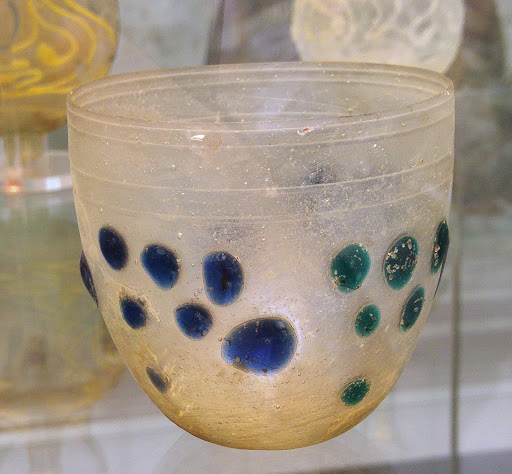
Roman Vessel, British Museum, 2016.
The production of glass during the 1st century CE was so ubiquitous that the ‘Aqua’ and clear coloured glasses produced within the empire were priced into common consumption. Glass was no longer simply a decorative series of beads on elite necklaces, or thick-walled vessels of the Hellenistic period into the late 1st century,. With Roman inventiveness, soaring thin-walled vessels which used pigments and lines display the skill of the craftsmen to show pearl hues, and movement on the vessels’ surface.
The dexterity, grace and occasional silliness in the manufacture of Roman glass products is a overlooked aspect of the study of Roman material culture. Not ignored, but next to a beautiful statue or sword, a tiny perfume bottle might not seem that interesting.
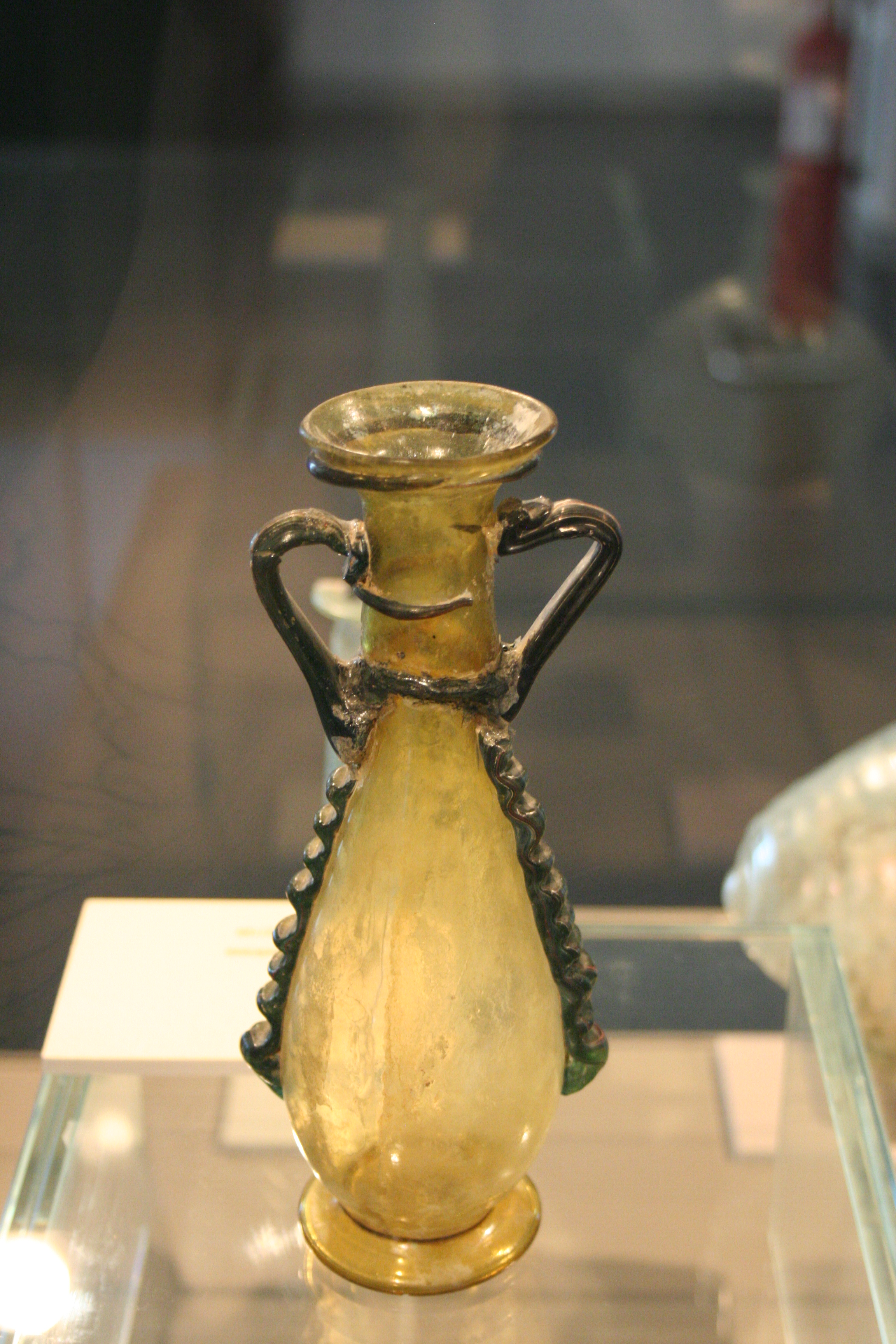
Roman Perfume holder, Museo di Antichità Turin, 2016.
These small vials contained perfumes and precious oils, chalices for fine mixed wines, and other vessels for elite good. Sometimes I wonder if they were show-pieces or of a more personal nature perhaps?

Portrait on glass , Naples National Archaeology Museum, 2015.
The cost of the items would suggest they were probably kept on display, but it is hard to know. Serving items would imply a public-use, and thus on show, but perfume bottles for a woman’s toilet could have been a more private piece of consumption.

These gorgeous glasses were made of combinations of these elements pictured below, with added including colourants:1.Sand; 2.Potash; 3. Seaweed ash; 4.Lime; National Museum of Scotland.
The Cage-Cup
On a recent visit to Milan in April, I had the incredible fortune to not only meet up a burgeoning academic in the fields of religion and slavery in the Ancient World, but also a local expert of Milan’s historic sites! Ambra Ghiringhelli, an PhD student with the University of Edinburgh, showed me some of the wonderful archaeological sites in Milan with fantastic local details. One such item she drew my attention to was the cage-cup of Milan.

Cage cup of Milan, Museo Archeologico Milano, 2016.
The striking combination of glass colours and types; geometrical patterns, in contrasting colours from the inner cup, sit on top with lettering. The skill required in putting together something like this would have been quite sophisticated. There are multiple techniques involved, which scholars are still not in total agreement on how this was precisely done.
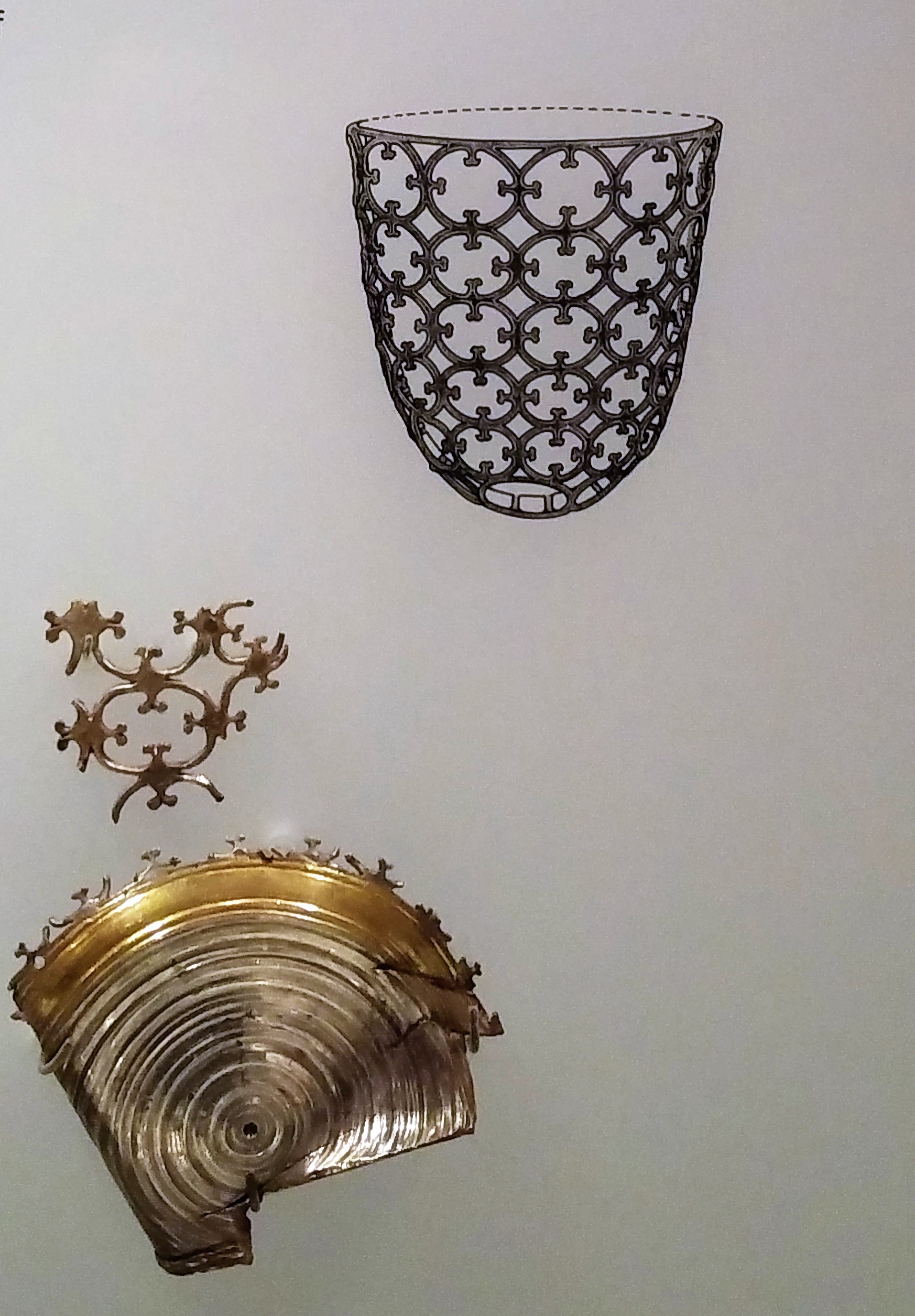
Silver base cage cup in National Museum of Scotland, 2016.
The National Museum of Scotland, in Edinburgh, has its own example of a Roman cage cup found northern province of Britannia. The Edinburgh cup is made from metal but follows the same principles.
There are around 50 examples of cage-cups examples found so far, though the Milan cup is truly a wonder of antiquity.
Thank you for checking out my blog, and feel free leave questions or comments!

 ArchaeoArtist